Principality Stadium solar installation goes live
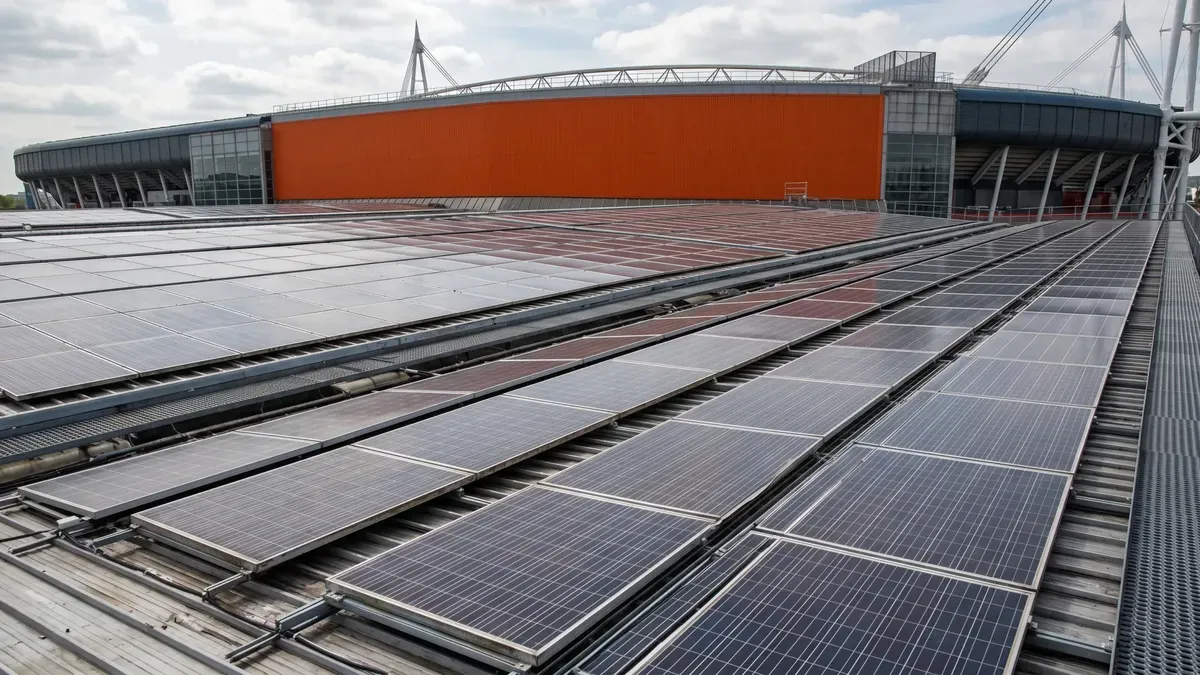
The Principality Stadium in Cardiff has made headlines with the activation of the UK's largest solar panel installation at a sports venue. This significant project offers a powerful blueprint for how large public venues can embrace renewable energy, reduce their carbon footprint, and achieve long-term financial sustainability. For facility managers and sustainability officers navigating the complexities of decarbonisation, the stadium's initiative provides practical insights into the benefits and considerations of large-scale commercial solar.
The Principality Stadium's solar project shows how large venues can embrace clean energy. For your home, Fuse Energy is building a future where energy is abundant and affordable. Click here to switch to Fuse Energy today.
Enter your address to get a quote and see how much you could save
The principality stadium: a landmark solar installation
The Principality Stadium, a renowned venue for Welsh rugby and major events, has taken a bold step towards a cleaner energy future. Its recent solar installation is not merely an upgrade; it is a statement of intent for sustainable sports infrastructure.
UK's largest sports venue solar project
At the heart of this initiative lies a massive solar array featuring over 3,250 panels meticulously installed across the stadium's roof1. This impressive system, delivered by EvoEnergy, marks a significant achievement, positioning the Principality Stadium as home to the largest solar panel installation of its kind at a UK sports venue. It demonstrates the feasibility and impact of integrating renewable energy at a grand scale within existing public infrastructure.
Powering matchdays with clean energy
The sheer scale of the installation translates into substantial energy generation. The system is projected to generate an impressive 1.25 million kilowatt-hours (kWh) of electricity annually. To put that into perspective, this output is sufficient to power more than 50 matchdays at the stadium each year. This ensures that the roar of the crowd and the thrill of the game are increasingly powered by clean, locally generated energy.
A commitment to decarbonisation
Beyond powering events, the solar installation is a cornerstone of the Welsh Rugby Union's (WRU) broader decarbonisation efforts. The panels are anticipated to reduce the stadium's carbon output by a substantial 219,791kg each year. This commitment extends beyond solar, with the WRU also implementing LED lighting and rainwater harvesting, and planning to publish its first sustainability strategy later this year.
"While matchdays here will always be ignited by a sea of red jerseys, we're proud that they will now be powered by clean green energy." - Gavin Marshall, WRU Chief Financial and Operating Officer
Benefits of large-scale commercial solar for public venues
The Principality Stadium project highlights a multitude of advantages that large-scale commercial solar installations can offer public venues, extending far beyond simple energy generation.
Environmental impact and carbon footprint reduction
The most immediate and tangible benefit is the significant reduction in environmental impact. By generating clean electricity, venues can drastically cut their carbon emissions, contributing to national and global climate goals. The Principality Stadium's projected annual carbon reduction of nearly 220 tonnes is a powerful example, showcasing how such projects can make a measurable difference in the fight against climate change. This also aligns with growing public demand for organisations to demonstrate environmental responsibility.
Strengthening financial sustainability
While the environmental benefits are clear, the financial implications are equally compelling. Large-scale solar installations provide a source of low-cost, clean energy, leading to substantial operational savings over the long term. Gavin Marshall emphasised this point, stating, "We're not only reducing our carbon footprint but also strengthening the financial sustainability of the Union through the money we will save, creating long-term value that can be reinvested into Welsh rugby at every level." This demonstrates how an upfront investment in renewable energy can create a robust financial foundation, freeing up resources for core activities.
Enhancing brand image and community engagement
Public venues, especially those with high visibility like sports stadiums, have a unique opportunity to enhance their brand image through sustainability initiatives. By visibly committing to clean energy, they can resonate positively with fans, sponsors, and the wider community. Such projects can inspire local action, educate the public on renewable energy, and foster a sense of shared responsibility for a greener future. It positions the venue as a forward-thinking leader, attracting new partnerships and strengthening existing relationships.
Key considerations for implementing stadium solar
Implementing a project of this magnitude requires careful planning and execution. The Principality Stadium's success offers valuable lessons for other venues considering similar ventures.
Feasibility and site assessment
Before any installation begins, a thorough feasibility study is paramount. This includes assessing the venue's energy demand, available space for panels (especially roof-mounted systems), and the structural integrity of existing buildings. For a stadium like the Principality, with its unique architectural demands, detailed structural assessments are critical to ensure the roof can safely support the weight of thousands of solar panels. This initial phase helps to identify potential challenges and inform the optimal system design.
Navigating installation and grid integration
Large-scale projects involve navigating complex planning permissions, particularly for prominent public venues. Additionally, systems generating significant amounts of electricity require grid connection agreements, often involving Distribution Network Operators (DNOs). Darren Crossman, WRU Head of Facilities and Safety and Sustainability, noted that "the project was about embedding sustainability into daily stadium operations," highlighting the need for seamless integration into existing infrastructure and operational workflows.
Financing models and return on investment
The upfront capital expenditure for large-scale commercial solar installations can be substantial. However, the long-term financial returns, driven by energy savings and potential revenue from excess power generation, are significant. Understanding various financing models, such as Power Purchase Agreements (PPAs) or green loans, is crucial. Calculating the projected Return on Investment (ROI) is a key step for facility managers and sustainability officers to justify the investment to stakeholders.
What is the typical Return on Investment for large-scale commercial solar?
The Return on Investment (ROI) for large-scale commercial solar projects varies significantly based on factors like system size, energy consumption, local electricity prices, and available incentives. While upfront costs are considerable, industry estimates suggest projects often see payback periods of 5-10 years, followed by decades of low-cost, clean energy generation. A detailed financial analysis is essential for accurate projections.
The broader vision for sustainable sports infrastructure
The Principality Stadium's solar project is not an isolated effort but part of a broader, holistic approach to sustainability within sports.
Beyond solar: holistic sustainability strategies
True sustainability extends beyond a single technology. The WRU's initiative includes other environmental measures such as LED lighting upgrades, which significantly reduce energy consumption, and rainwater harvesting systems, which conserve water resources. These integrated strategies demonstrate a comprehensive commitment to reducing environmental impact across all aspects of stadium operations. Such an approach ensures that sustainability is embedded into daily practices, creating a resilient and future-proof venue.
The role of technology in energy independence
The drive towards energy independence is a key motivator for many large organisations. By adopting technologies like solar photovoltaic (PV) systems, venues can reduce their reliance on grid electricity, mitigate exposure to volatile energy prices, and enhance their operational resilience. This move towards self-sufficiency, powered by clean energy, aligns with a vision of energy abundance where constraints on power no longer limit ambition or progress.
Partnering for an abundant energy future
The Principality Stadium's solar installation stands as a testament to what is achievable when organisations commit to clean energy. It offers valuable lessons for any facility looking to embark on a similar journey.
Lessons from the principality stadium project
The success of the Principality Stadium project underscores several critical points: the importance of visionary leadership, the necessity of expert partners like EvoEnergy for installation, and the dual benefits of environmental stewardship and financial prudence. It proves that large-scale clean energy projects are not just aspirational but entirely practical, delivering tangible results for both the planet and the balance sheet.
Fuse Energy's vision for clean energy
The Principality Stadium project exemplifies the potential for large-scale clean energy generation, aligning perfectly with Fuse Energy's mission: to deliver the abundant, clean energy the future requires. We believe that energy is the fundamental source for human progress, and projects like this demonstrate how solving energy constraints for public venues can unlock broader societal benefits, from financial stability to environmental stewardship. Fuse Energy currently focuses on residential energy supply, but we are building towards a future where such large-scale solutions are commonplace, envisioning a world where energy is no longer a constraint on ambition.
Managing your home's energy should be simple and transparent. Fuse Energy offers clear pricing, real-time usage data through our app, and 24/7 human customer support to help you take control of your bills. We're building a future where clean, abundant energy powers every home. Click here to switch to Fuse Energy today. Learn more about our mission to deliver abundant, clean energy by clicking here.
References
Disclaimer
For the avoidance of doubt, this article is provided for informational purposes only and is not intended to constitute legal or financial advice. The author and/or Fuse Energy shall not be responsible for any losses arising out of any reliance on the information contained herein.