UK On-Street EV charging: half of councils lack options
For many electric vehicle (EV) owners in the UK, the convenience of home charging is a significant draw. However, for the 40% of EV drivers without access to off-street parking, finding reliable and accessible on-street charging options remains a critical challenge. While over 90% of UK councils now provide at least one public EV charger, only 39% offer on-street charging, leaving a substantial gap in infrastructure provision.1
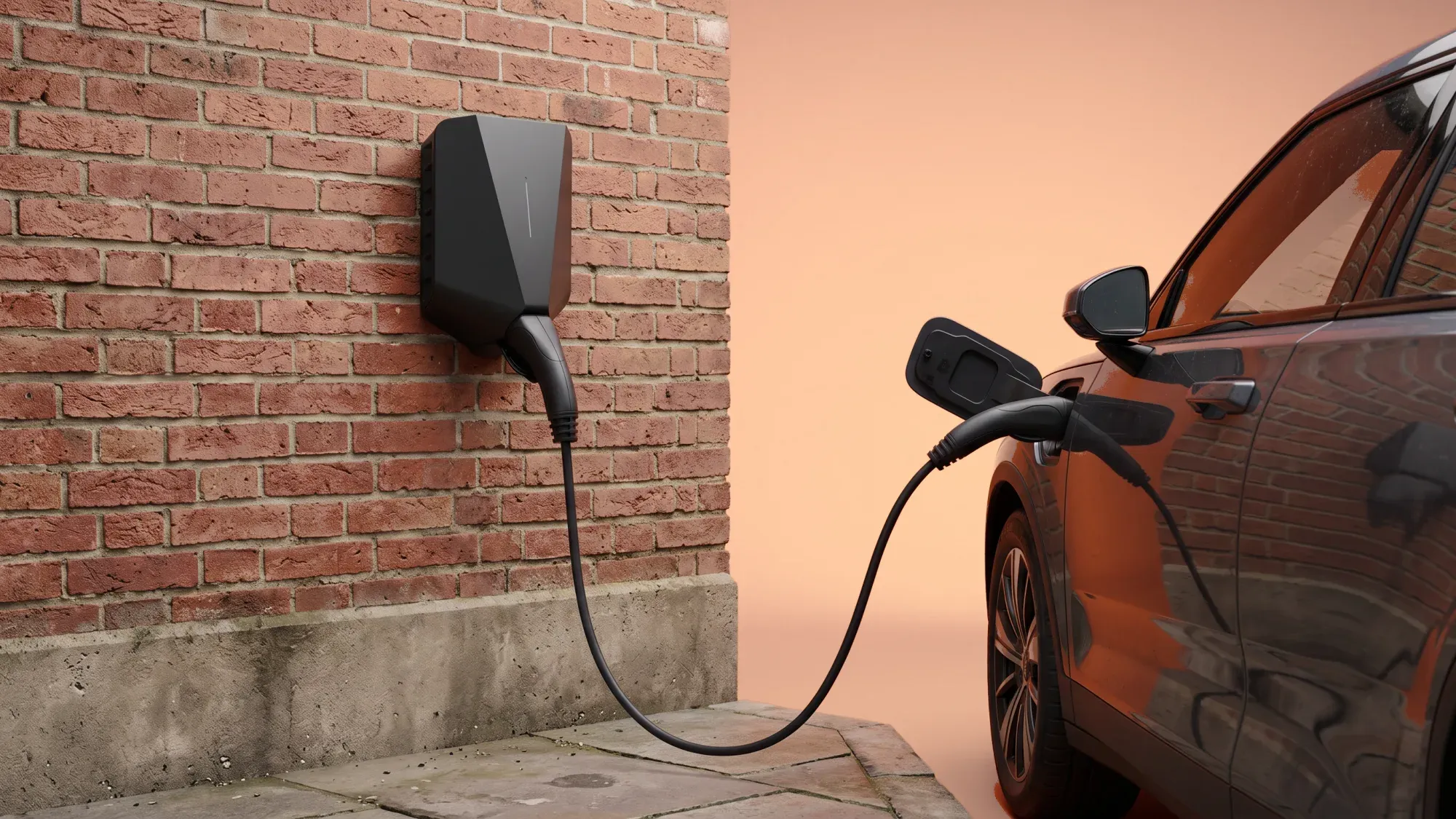
Thinking about UK On-Street EV charging? Fuse Energy installs the Easee One smart home EV charger for a flat £899 including full installation, up to 15m of cabling, surge protection, and a 3-year warranty. Tap the quote button below to get started.
The on-street EV charging challenge in the UK
The transition to electric vehicles is a key part of the UK's net-zero transport goals, but it hinges on accessible charging infrastructure for all. For those living in urban areas without driveways, on-street charging isn't just a convenience; it's a necessity for EV adoption.
Why on-street charging is crucial for urban EV owners
Without a dedicated driveway or garage, urban EV owners rely heavily on public charging points. On-Street chargers, often integrated into lampposts or dedicated bays, provide a practical solution for overnight or daytime charging close to home. This access is vital for the 40% of EV drivers who cannot charge at home, ensuring they are not left behind in the shift to electric transport.
Understanding the current infrastructure landscape and disparities
A recent report by Vauxhall highlights both progress and persistent issues in the UK's on-street EV charging landscape. While the provision of on-street EV charging in UK councils has improved by 8 percentage points since 2023, reaching 39%, half of all councils still lack any on-street EV charging options. This creates significant regional disparities. London, for instance, is projected to host over 70% of on-street chargers installed across the country by the end of 2025, indicating a concentration of infrastructure that leaves other regions underserved.
The role of local councils in provision
Local councils play a crucial role in the deployment and strategic planning of on-street EV charging infrastructure. They are responsible for assessing local demand, securing funding, and working with charging providers to install and maintain charge points. The government supports these efforts through initiatives like the Local Electric Vehicle Infrastructure (LEVI) Fund and the On-Street Residential Chargepoint Scheme (ORCS), which provide funding to help councils expand access, particularly for residents without off-street parking.
Finding available on-street EV chargers
Navigating the fragmented landscape of public EV charging requires knowing where to look and how to use the available tools.
Essential apps and maps for locating charge points
Several apps and online maps can help you find on-street EV chargers. Zap-Map is widely considered one of the most comprehensive, covering around 95% of the UK's public charging infrastructure with real-time availability data for many chargers. Other popular options include Octopus Electroverse, Pod Point, BP Pulse, and Shell Recharge, each offering features like filtering by socket type, speed, network, and payment options. Many of these apps also allow you to plan routes around charging stops and provide user reviews.
Utilising local council resources and websites
Your local council's website is often a valuable resource for finding EV charging points in your area. Many councils publish maps or lists of public chargers, including those on residential streets. Some also provide information on their EV charging strategy and future installation plans.
Reporting demand and requesting new installations
If you find a lack of on-street charging in your area, you can actively engage with your local authority. Many councils offer online forms or dedicated contact points for residents to request new EV charge points. This information helps councils map demand and prioritise installations. Vauxhall's "Electric Streets of Britain" campaign also allows drivers to register the need for on-street charging, providing valuable data to councils and charging providers.
How can I request an on-street EV charger in my area?
Most local councils provide an online form or contact details for residents to request new EV charge points. This helps them understand local demand and prioritise installations. You may need to provide personal details, your current EV ownership status, and your proximity to existing chargers.
Types, speeds, and costs of on-street charging
On-Street charging comes in various forms, each with different speeds and pricing structures. Understanding these can help you make informed choices.
Different on-street charger technologies (lamppost, pop-up, dedicated bays)
On-Street chargers are designed to integrate into urban environments. Common types include:
Lamppost chargers: These utilise existing street lighting infrastructure, offering a discreet and often widespread solution for slow to fast charging.
Dedicated charging bays: These are purpose-built units, often found in designated parking spaces, offering a range of speeds from slow to rapid.
Pop-up chargers: Innovative solutions like those from providers such as Connected Kerb can emerge from the pavement when needed and retract when not in use, minimising street clutter.
Understanding charging speeds and connector types
Charging speeds are categorised as slow, fast, rapid, and ultra-rapid. On-Street chargers typically fall into the slow or fast categories, suitable for longer parking durations. Rapid and ultra-rapid chargers are less common on residential streets and are usually found at motorway service stations or charging hubs. Most public chargers in the UK use Type 2 connectors for AC charging and CCS or CHAdeMO for DC rapid charging.
Navigating payment models and tariffs
Public charging costs vary significantly based on the network, charger speed, and payment method. As of March 2026, you can typically expect to pay around 54p/kWh for standard and fast chargers, and about 76p/kWh for rapid and ultra-rapid chargers on a pay-as-you-go basis. Many networks offer their own apps for activation and payment, while others support contactless payment or RFID cards. Some providers also offer subscription models that can reduce per-kWh costs for frequent users.
Optimising your on-street charging experience
Making the most of on-street charging requires a bit of planning and consideration for other EV drivers.
Best practices for efficient charging sessions
To optimise your charging, consider charging overnight when demand is lower and electricity might be cheaper. If your EV allows, pre-condition your battery before charging in cold weather to improve efficiency. Always check the charger's speed and cost before plugging in to ensure it meets your needs and budget.
Managing availability and occupied bays
Public chargers, especially on-street ones, can be in high demand. Using apps with real-time availability data can save you time and frustration. If a bay is occupied, consider alternative chargers nearby or adjust your charging schedule. Avoid leaving your vehicle in a charging bay once it's fully charged, as this can prevent others from using it and may incur idle fees.
Charging etiquette for shared public infrastructure
Good etiquette ensures a positive experience for everyone. Only park in EV charging bays when you intend to charge. If you see a vehicle that has finished charging but is still occupying a bay, you might leave a polite note or use the app's reporting feature if available. Always return cables neatly and report any faults promptly.
The future of on-street EV charging infrastructure
The landscape of on-street EV charging is continuously evolving, driven by government support and technological advancements.
Government initiatives and policy support
The UK government is committed to accelerating the roll-out of public EV charging infrastructure as part of its net-zero transport goals. Schemes like the LEVI Fund and ORCS are designed to support local authorities in expanding their networks, particularly in residential areas without off-street parking. These policies aim to address regional disparities and ensure a more equitable distribution of charge points across the country.
Innovations in charging technology
Innovations are making on-street charging more accessible and less intrusive. This includes more efficient lamppost chargers, pop-up units, and even solutions that allow residents to charge from their home electricity supply via discreet pavement channels. Companies like Connected Kerb, Char.gy, and Kerbo Charge are at the forefront of these developments, working with councils to deploy smart, scalable solutions.
How to contribute to infrastructure development in your area
Your voice can significantly influence the development of local charging infrastructure. Continue to report demand to your local council and participate in any local consultations on EV charging. By actively engaging with authorities and campaigns like Vauxhall's Electric Streets of Britain, you contribute to building a more robust and accessible charging network for all.
Thinking about UK On-Street EV charging? Fuse Energy installs the Easee One smart home EV charger for a flat £899 including full installation, up to 15m of cabling, surge protection, and a 3-year warranty. Tap the quote button below to get started.
For the avoidance of doubt, this article is provided for informational purposes only and is not intended to constitute legal or financial advice. The author and/or Fuse Energy shall not be responsible for any losses arising out of any reliance on the information contained herein.