OEUK urges energy Secretary to back North Sea production
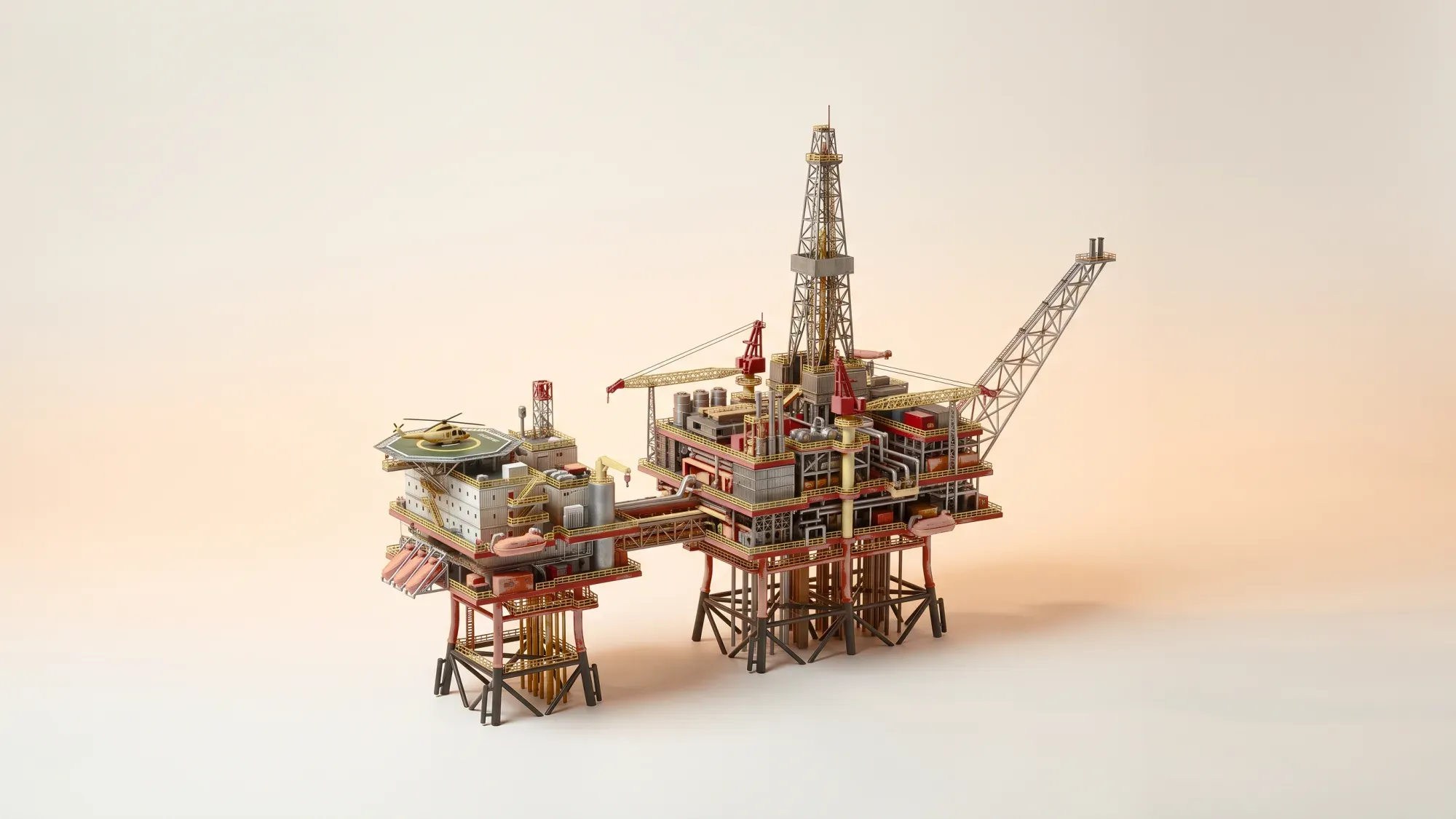
The UK faces a complex challenge in balancing its energy needs with environmental commitments. Offshore Energies UK (OEUK) has urged the newly appointed Energy Secretary, Miatta Fahnbulleh, to prioritise domestic energy production in the North Sea, advocating for regulatory approval of key projects and a reversal of the ban on new exploration.1 This call highlights the ongoing debate about how the UK can best secure its energy future while transitioning to net zero.
Understanding the complexities of the UK's energy landscape, from North Sea production to renewable potential, is key to making informed choices for your home. Fuse Energy is committed to providing clear, affordable energy, helping you manage your usage and contribute to a more sustainable future. Switch to Fuse Energy today to take control of your energy bills.
Thinking about OEUK urges Energy Secretary to back North Sea production? With Fuse Energy, you get clear pricing, real-time usage data, 24/7 human customer support, and a modern energy experience designed around you. Signing up takes just a few minutes, so you can take control of your bills from day one. Click here to switch to Fuse Energy today and start saving.
Enter your address to get a quote and see how much you could save
The current landscape of North Sea oil and gas
The North Sea has been a cornerstone of the UK's energy supply for decades, but its role is evolving. Understanding the current state of its reserves and the ongoing investment debates is crucial for grasping the broader energy security discussion.
Declining reserves and production trends
The UK Continental Shelf (UKCS) is a mature basin, with oil and gas production having peaked in 1999. Official projections indicate that around 93% of the oil and gas likely to be produced from the North Sea has already been extracted since commercial operations began. New drilling is projected to yield only a small fraction, potentially 1-2%, of the total extracted between 1975 and 2050. Production is expected to decline significantly further by 2050; for example, gas production is set to fall to 99% below 2025 levels by 2050 and oil by 94%, with new drilling pushing these figures to 97% for gas and 91% for oil.
Key projects and investment debates
Projects like Jackdaw and Rosebank have become central to the debate over the UK's fossil fuel future. OEUK is calling for regulatory approval of these projects. If approved, these projects could contribute to UK gas and oil production, with Jackdaw alone potentially supplying over 6% of UK gas needs by winter, enough to heat 1.4 million homes. However, activists argue that proceeding with such projects is incompatible with the UK's climate commitments.
Industry's call for domestic production
Offshore Energies UK (OEUK) argues that maintaining and increasing domestic North Sea production is vital for the UK's energy security and economic stability.
OEUK's arguments for energy security and jobs
OEUK has urged the Energy Secretary, Miatta Fahnbulleh, to back homegrown energy, emphasising that the UK will still require oil and gas for decades to come. The trade body contends that relying on imports increases geopolitical risk and exposes the country to greater price volatility. Producing energy domestically supports jobs, communities, and the economy, rather than exporting investment and economic value overseas. David Whitehouse, OEUK chief executive, stated that the central question is whether the UK produces its own resources or becomes increasingly reliant on imports.
"The UK will still need oil and gas for decades to come. The question is whether we produce as much of that energy as possible here, supporting our own jobs, communities and economy, or become increasingly reliant on imports while exporting investment and economic value overseas." — David Whitehouse, Chief Executive of Offshore Energies UK
The emissions debate: domestic gas vs imported LNG
A key argument from OEUK is that liquefied natural gas (LNG) imported from countries like the United States and Qatar generates four times the carbon emissions of UK-produced North Sea gas. Importing LNG involves energy-intensive processes such as chilling gas to -160°C, shipping it thousands of miles, and then regasifying it, all of which contribute to a higher carbon footprint for production and transport compared to domestic gas.
However, it is important to note that this "four times cleaner" figure does not include the emissions from burning the gas, which is the main source of emissions. When both production and combustion emissions are considered, the CO2 emissions from UK production are only around 15% lower than those from LNG imports, according to analysis by Carbon Brief.
Economic impact and policy framework
The future of North Sea oil and gas is heavily influenced by regulatory and tax policies, which can significantly impact investment and revenue generation.
Potential investment and tax revenues
Reforms to the North Sea's regulatory and tax framework could unlock substantial economic benefits. OEUK estimates that such reforms could attract an additional £50 billion in oil and gas investment. Over the next decade, this could lead to an increase of £26 billion in capital investment and generate over £13 billion in tax revenues. These investments are also projected to support thousands of jobs across the offshore energy supply chain.
What economic benefits could North Sea policy reforms bring?
Reforms to the North Sea's regulatory and tax framework could unlock an additional £50 billion in oil and gas investment. This could boost capital investment by £26 billion over the next decade and generate over £13 billion in tax revenues, while supporting thousands of jobs.
The role of regulatory and tax reforms
OEUK has called for the introduction of the proposed Oil and Gas Revenue Levy and a reversal of the current ban on new exploration. They argue that faster reform could significantly reduce the UK's reliance on imported LNG, cutting its share in UK gas supplies to 6% by 2035, compared with 46% without such policy changes. The industry seeks a more competitive and predictable fiscal and regulatory environment to encourage investment and ensure a fair return to the Treasury.
Beyond scarcity: a future with abundant renewables
While North Sea resources are a current focus, the UK's long-term energy security and economic prosperity lie in harnessing its vast renewable energy potential.
The UK's renewable energy potential
The UK possesses significant renewable energy resources, particularly wind, and its renewable energy market is projected for substantial growth. Renewables accounted for 47.1% of the UK's energy mix in the 12 months to June 2026, a substantial increase from 15.3% a decade prior. In 2024, renewables generated 50.4% of the UK's electricity. The UK is a global leader in offshore wind capacity, with strong and consistent wind resources in the North Sea. Wind power alone generated around 29.2% of the country's electricity in 2024. The potential for onshore wind and solar is also considerable, with research suggesting England alone could generate 50 times more renewable energy than it currently does from these sources. Many homeowners are also exploring options like solar panel grants to contribute to this shift.
Achieving true energy independence
True energy independence means moving beyond the finite nature of fossil fuels and embracing abundant, clean energy sources. The rapid deployment of renewables is already helping to reduce the UK's reliance on imported gas, with renewables generating a record 53.1% of the UK's electricity in the first quarter of 2026. This shift not only enhances energy security but also insulates the UK from volatile global fossil fuel markets. Understanding your energy usage can also help you manage costs, and you can find more energy efficiency tips to reduce your consumption. Investing in domestic renewable generation capacity, such as offshore wind, solar, and nuclear power, is a key part of the British Energy Security Strategy.
Navigating the energy transition
The path to a sustainable energy future requires careful navigation of immediate needs and long-term climate goals.
Balancing short-term needs with net-zero targets
Government forecasts indicate that oil and gas will still be needed for the foreseeable future, even under net-zero scenarios. However, organisations like the International Energy Agency (IEA) and the Climate Change Committee (CCC) have stated that achieving the 1.5°C global warming target requires no new oil and gas fields to be approved for development. This creates a tension between the immediate need for energy security and the long-term imperative of decarbonisation.
Public opinion and political will
Public opinion plays a significant role in shaping energy policy. Polling by Opinium found that almost 70% of Labour voters believe the UK should prioritise North Sea oil and gas production over reliance on imports. This public sentiment underscores the political challenge of balancing climate action with perceived energy security and economic benefits. The new Energy Secretary, Miatta Fahnbulleh, faces the task of shaping UK energy policy to deliver on the Prime Minister's vision to reindustrialise Britain while navigating these complex trade-offs.
Managing your home's energy should be straightforward and transparent. Fuse Energy offers clear pricing, real-time usage data through our app, and 24/7 human customer support to help you stay in control. We believe in making energy abundant and accessible, empowering you to make informed decisions about your consumption.
Click here to switch to Fuse Energy today and join us in building a future with power to play with. You can also learn more about our mission to transform the energy landscape by visiting our mission page.
References
- Energy Live News. OEUK tells Energy Secretary to back North Sea
Disclaimer
For the avoidance of doubt, this article is provided for informational purposes only and is not intended to constitute legal or financial advice. The author and/or Fuse Energy shall not be responsible for any losses arising out of any reliance on the information contained herein.