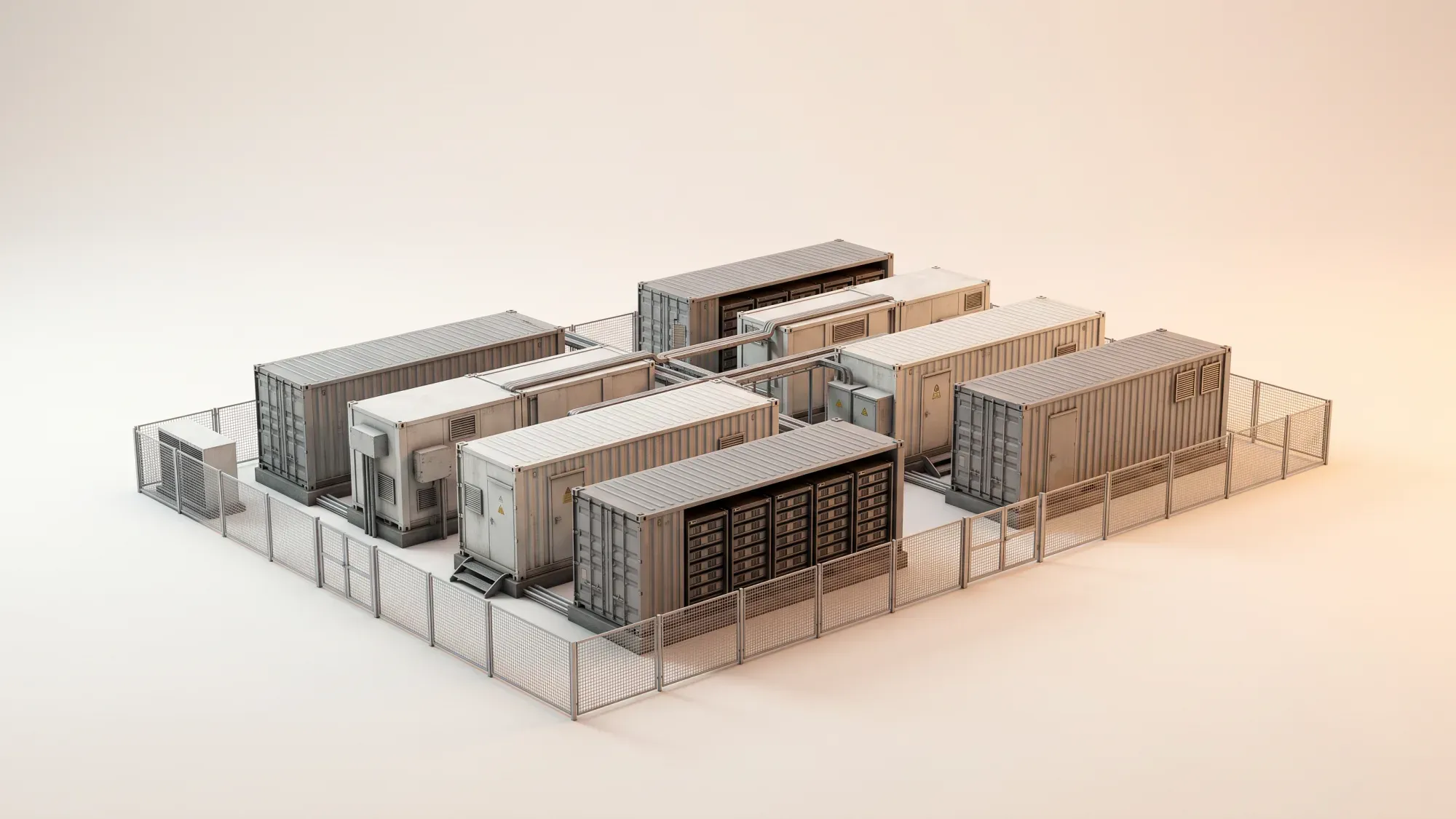
Masdar, the Abu Dhabi Future Energy Company, has begun commercial operations at its second battery energy storage system (BESS) project in the United Kingdom. This development is part of a planned £1 billion investment programme in UK BESS projects, equivalent to approximately $1.36 billion1. These utility-scale projects are crucial for integrating intermittent renewable energy sources into the National Grid, enhancing stability, and supporting the UK's ambitious decarbonisation targets. This strategic commitment highlights the growing importance of energy storage in modernising energy infrastructure and achieving a reliable, clean power supply.
Masdar's strategic commitment to UK energy storage
Masdar's investment in the UK's battery storage sector is a key component of its global clean energy strategy, driven by the UK's clear decarbonisation goals and the increasing need for grid modernisation.
Overview of Masdar's global clean energy strategy
Masdar, a global leader in clean energy, has a broad portfolio spanning solar, onshore and offshore wind, battery storage, and hybrid solutions across over 40 countries. The company aims to reach 100 gigawatts (GW) of energy capacity by 2030. This global vision underpins its strategic focus on key markets like the UK.
The £1 billion investment plan and 3 GWh pipeline
Masdar has committed to a £1 billion investment programme in UK battery storage projects, equivalent to approximately $1.36 billion. This substantial financial backing is aimed at developing a 3 gigawatt-hour (GWh) pipeline of BESS projects across the country, positioning Masdar as one of the largest battery energy storage portfolios in the UK.
Why the UK is a key market for Masdar
The UK is a strategic market for energy storage investment due to its ambitious net-zero targets and its Clean Power 2030 Action Plan, which aims for up to 27 GW of battery storage capacity by the end of the decade. The increasing integration of intermittent renewable energy sources like wind and solar necessitates robust energy storage solutions to maintain grid stability and ensure energy security. Masdar's investment aligns directly with these national objectives, supporting the UK's transition to a low-carbon economy.
Key Masdar battery energy storage system (BESS) projects in the UK
Masdar's UK BESS portfolio is rapidly expanding, with several projects already operational or under development.
The operational 35MW/70MWh Rochdale BESS
Masdar recently commenced commercial operations at its 35 megawatt (MW)/70 megawatt-hour (MWh) BESS facility in Rochdale, northern England. This facility is Masdar's second operational battery storage project in the UK and is designed to provide enough clean power for approximately 35,000 homes per day, based on two charging and discharging cycles. The Rochdale plant can respond to fluctuations in electricity supply and demand within milliseconds, offering critical grid balancing services.
What is the capacity of Masdar's Rochdale BESS project?
Masdar's Rochdale BESS project has a capacity of 35 megawatts (MW) and 70 megawatt-hours (MWh). This facility is designed to provide enough clean power for approximately 35,000 homes per day, based on two charging and discharging cycles, and offers rapid grid balancing services.
Masdar's acquisition of Arlington energy and portfolio development
The foundation for Masdar's significant UK presence was laid with its acquisition of UK-based battery energy storage system developer Arlington Energy in October 2022. This acquisition enabled Masdar to expand its footprint in the UK and European renewable energy markets, facilitating the development, construction, and financing of BESS projects under a unified platform.
Future project pipeline and locations
The Rochdale project follows Masdar's first operational UK BESS, the 20 MW/40 MWh Welkin Road project in Stockport, which began commercial operations in December 2025. Masdar is also developing additional BESS projects in Chesterfield and Cardiff, which will have a combined capacity of 150 MW/300 MWh. These projects are part of the broader 3 GWh pipeline that Masdar is advancing across the UK.
The critical role of battery storage in the UK grid
Utility-scale battery energy storage systems are indispensable for the UK's evolving energy landscape, particularly as the nation increases its reliance on renewable sources.
Enhancing grid stability and resilience
Battery storage systems enhance grid stability by providing rapid response services, balancing supply and demand fluctuations within milliseconds. This capability is crucial for maintaining a secure and reliable electricity network, especially as the grid integrates more variable renewable generation. They act as a buffer, preventing grid instability that could arise from sudden changes in wind or solar output.
Enabling greater renewable energy integration
Renewable energy sources like wind and solar are intermittent, meaning their output fluctuates depending on weather conditions. BESS solutions store excess electricity generated during periods of high renewable output and discharge it when demand is high or renewable generation is low. This flexibility maximises the utilisation of clean energy, reducing curtailment and enabling a higher penetration of renewables into the UK's energy mix.
Addressing intermittency and balancing supply and demand
The ability of battery storage to quickly absorb and release energy is vital for addressing the intermittency of renewables and balancing the grid. By storing energy when it is abundant and releasing it when needed, BESS helps to smooth out peaks and troughs in supply and demand, ensuring a continuous and stable power supply. This dynamic balancing act is fundamental to the modernisation of the UK's energy infrastructure.
Impact on UK energy security and decarbonisation goals
Masdar's battery projects contribute significantly to the UK's strategic energy objectives.
Contributing to net-zero targets
The UK government is committed to reaching net-zero carbon emissions by 2050, with a target to decarbonise the power sector by 2035. Battery storage systems are a key technology in achieving these goals by facilitating the integration of low-carbon energy generation and reducing reliance on fossil fuels. Masdar's investments directly support the UK's Clean Power 2030 Action Plan and its broader decarbonisation efforts.
Reducing reliance on fossil fuels
Historically, fossil fuel power plants have been used to manage grid stability and peak demand. However, battery energy storage facilities are increasingly replacing these polluting power stations, contributing to a reduction in fossil fuel consumption. By storing renewable energy, BESS projects lessen the need for gas-fired power plants to balance the grid, thereby enhancing energy independence and reducing carbon emissions.
Modernising energy infrastructure for a low-carbon economy
These utility-scale battery projects are critical components of the modernised energy infrastructure required to move beyond older grid models. They provide the flexibility and resilience needed for a grid dominated by renewables, supporting the UK's transition to a secure, reliable, and affordable low-carbon economy.
The future landscape of UK energy storage
The UK's energy storage market is poised for substantial growth, driven by investment, policy, and technological advancements.
Investment trends and market growth
The UK's battery storage market is experiencing significant investment, with targets for grid-scale capacity expected to rise substantially by 2030. This growth is fuelled by the increasing demand for electricity, the expansion of renewable generation, and the need for flexible energy solutions.
Policy support and regulatory environment
The UK government's Clean Power 2030 Action Plan and its net-zero targets provide a strong policy framework supporting investment in battery storage. Ofgem, the UK energy regulator, plays a role in ensuring grid stability requirements are met, which large-scale battery storage systems help address. This supportive regulatory environment encourages further development and deployment of BESS projects.
How utility-scale storage benefits the wider energy system
Utility-scale battery storage systems are fundamental to creating an energy system with "power to play with." By stabilising the grid and enabling more renewable integration, they contribute to an abundant, clean energy future. These large-scale systems are critical components of the modernised energy infrastructure required to move beyond outdated grid models, ensuring that the UK can meet its energy demands reliably and sustainably.
For the avoidance of doubt, this article is provided for informational purposes only and is not intended to constitute legal or financial advice. The author and/or Fuse Energy shall not be responsible for any losses arising out of any reliance on the information contained herein.