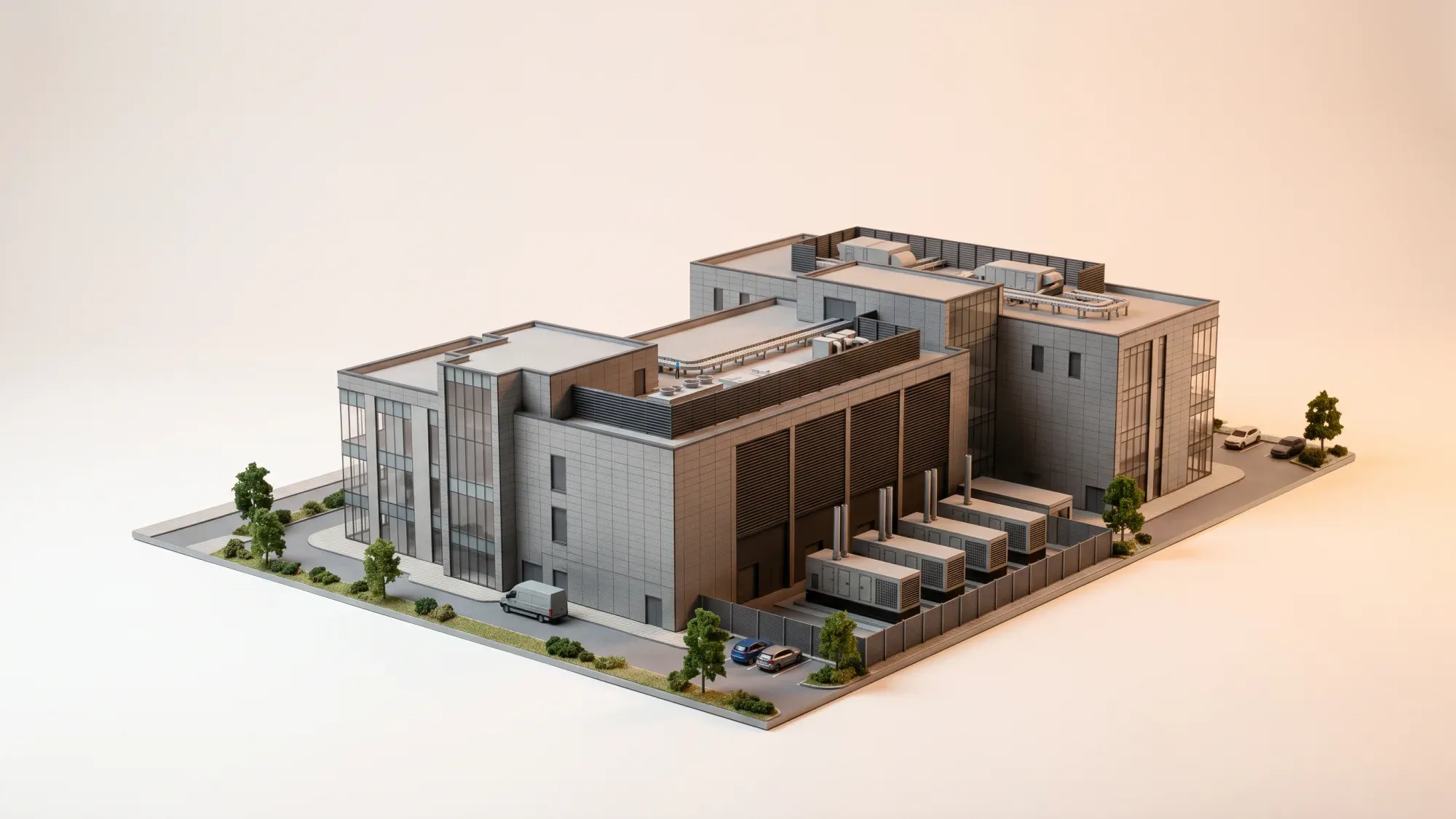
London's proposed East Havering Data Centre Campus (EHDCC) is projected to generate over 1 million tonnes of carbon dioxide annually1, highlighting the significant carbon footprint of hyperscale facilities and posing a challenge to the UK's net-zero goals. This expansion directly conflicts with the UK's legally binding target to achieve net-zero carbon emissions by 2050, raising critical questions about how digital infrastructure growth can be reconciled with climate targets.
The growing energy demands of data centres highlight the urgent need for a more sustainable energy future. At Fuse Energy, we are building that future, making clean, abundant energy accessible for homes across the UK. Click here to switch to Fuse Energy today.
The digital economy relies heavily on data centres, which form the physical backbone of cloud computing, artificial intelligence (AI), and data storage systems. However, their operation comes with a substantial environmental cost, primarily due to immense energy consumption.
The East Havering project: a case study in conflict
The EHDCC, planned for 218 hectares of green belt land in North Ockendon, exemplifies the tension between technological advancement and environmental sustainability. Its developer, Digital Reef, has described the scheme as "a unique opportunity to create a sustainable data centre campus of the future". Yet, Digital Reef's own planning application states that the £14.7 billion project "does not align with a science-based 1.5C compatible trajectory and achieving net zero by 2050". Donald Campbell, advocacy director at the tech justice non-profit Foxglove, called the projected emissions "staggering" and added that they posed "a big threat to the ability to decarbonise in the UK".
The scale of energy consumption and emissions
Once fully operational, the proposed East Havering data centre is projected to generate over 1 million tonnes of carbon dioxide annually. This projected emission is equivalent to the carbon footprint of 8,480 flights from London to New York. The campus would consume 2.65 billion kWh of electricity annually, a figure comparable to the demand of over 1 million UK households, based on Ofgem's average UK household electricity consumption of 2,500 kWh per year. Some reports indicate the annual emissions could reach 1.2 million tonnes.
A data centre's carbon footprint encompasses the total greenhouse gas emissions associated with its construction, operation, and decommissioning. This is typically measured in carbon dioxide equivalent (CO2e).
Direct energy consumption: powering servers and cooling
The largest contributor to a data centre's carbon footprint is its direct energy consumption. This includes the electricity used to power IT equipment like servers, storage, and networking gear, as well as the extensive cooling systems required to maintain optimal operating temperatures. The source of this electricity is a critical factor; reliance on fossil fuel-generated grid electricity significantly increases emissions.
Embodied carbon: infrastructure and hardware
Beyond operational energy, the embodied carbon in the data centre's infrastructure and hardware contributes to its overall footprint. This includes emissions from the manufacturing, transportation, and disposal of building materials, servers, and other IT equipment.
Supply chain emissions and Scope 3 impacts
A comprehensive assessment of a data centre's carbon footprint also considers broader supply chain emissions, often categorised as Scope 3 emissions. These can include emissions from the production of components, logistics, and even the end-of-life processing of equipment.
Accurate measurement and reporting are crucial for managing and reducing a data centre's environmental impact.
Key metrics: PUE, CUE, and carbon accounting
Several metrics are used to assess data centre efficiency and environmental performance:
- Power usage effectiveness (PUE): This widely adopted metric quantifies the power efficiency of a data centre by dividing the total facility power by the power consumed solely by IT equipment. A lower PUE indicates better energy efficiency.
- Carbon usage effectiveness (CUE): CUE measures the total carbon dioxide emissions from a data centre's energy use against the energy consumed by its IT equipment. IT provides a direct link between operations and carbon emissions.
Challenges in data collection and standardisation
Measuring emissions can be complex, particularly for cloud users who do not own the physical infrastructure and share resources with others. Standardisation of reporting methods is an ongoing challenge, though efforts are being made to improve consistency across the industry.
Regulatory requirements and environmental impact assessments
The UK's legally binding net-zero target by 2050 influences planning and environmental impact assessments (EIAs) for large infrastructure projects like data centres. EIAs are required for major developments, evaluating potential environmental effects and proposing mitigation measures.
Addressing the carbon footprint of data centres requires a multi-faceted approach, focusing on efficiency, renewable energy, and sustainable design.
Optimising energy efficiency and cooling systems
Implementing advanced energy efficiency measures is fundamental. This includes optimising server utilisation, upgrading to more efficient hardware, and deploying advanced cooling technologies such as liquid cooling or free cooling, which can significantly reduce energy consumption.
Managing your energy bills should be clear and easy to understand. Fuse Energy focuses on straightforward pricing, so you can see exactly what you are paying without unnecessary complexity. If you have a smart meter, you can view detailed usage data through the app or website, helping you understand how you can lower your bills. Our 24/7 human support team is always on hand with fast response times whenever you need help. Click here to switch to Fuse Energy today. Find out about our mission by clicking here.