UK home EV charging surges as public rollout slows
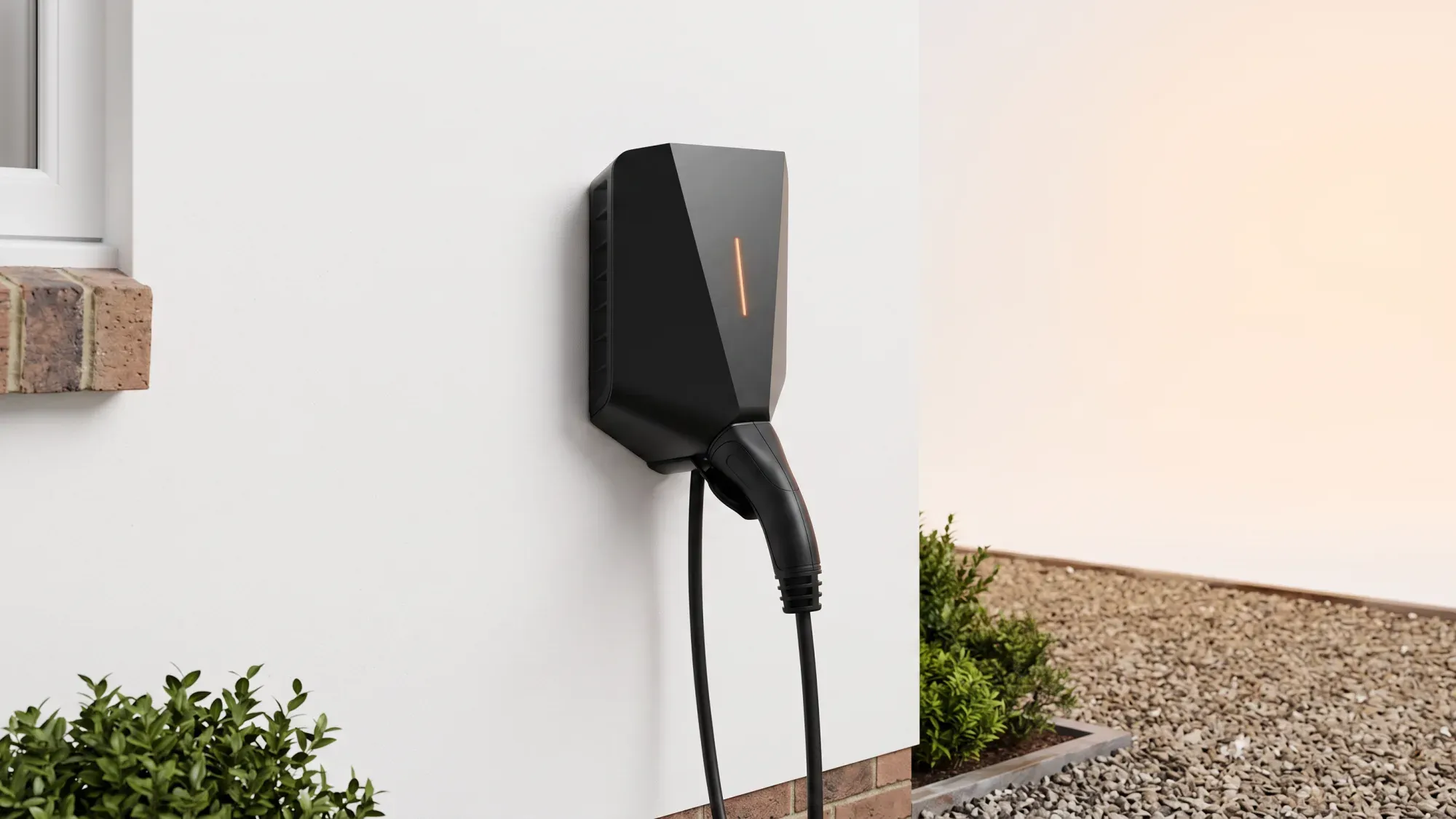
Home electric vehicle (EV) charging is fast becoming the primary method for EV owners in the UK, as a recent report highlights a significant shift in charging habits. While home charger installations surged, the expansion of public charging infrastructure experienced a notable slowdown in 2025.1 This trend underscores the growing importance of convenient and cost-effective home charging solutions for UK homeowners.
Thinking about UK home EV charging surges as public rollout slows? Fuse Energy installs the Easee One smart home EV charger for a flat £899 including full installation, up to 15m of cabling, surge protection, and a 3-year warranty. Tap the quote button below to get started.
The shifting landscape of UK EV charging
The UK's electric vehicle charging landscape is undergoing a transformation, with a clear divergence between residential and public infrastructure growth. Data analysts Barbour ABI reported that around 366,325 EV chargers were installed in the UK in 2025.
Home charging dominance
A staggering 96% of all EV charger installations in the UK in 2025 were home chargers, according to Barbour ABI. This represents a nearly 30% increase in home charger installations year-on-year, driven by the continued rise in EV registrations. This surge indicates that most EV owners prefer the convenience and control of charging their vehicles at home.
Public infrastructure challenges
Conversely, the rollout of new public charging installations saw a sharp decline, falling by 46% in 2025, Barbour ABI noted. This slowdown is largely attributed to issues such as delays in Distribution Network Operator (DNO) substation upgrades and bureaucratic hurdles, which have hampered the pace of new installations. Despite these challenges, public charging remains a crucial component of the overall EV ecosystem, especially for longer journeys and for households without off-street parking.
The rise of ultra-rapid charging
An exception to the public charging slowdown is the ultra-rapid charging sector, which continued its strong growth trajectory. Ultra-rapid public charging expanded by 40% year-on-year in 2025, with 3,425 new units added to the network. This segment caters to drivers needing quick top-ups on the go, indicating a strategic focus on high-speed en-route solutions.
"We are seeing a clear shift towards home charging where drivers have the ability to install their own charge point. Public charging remains essential, particularly for longer journeys and households without off-street parking, but the pace of new public installations slowed markedly in 2025." — Ed Griffiths, Barbour ABI's head of business and client analytics
Why home EV charging is a game changer
For UK homeowners, installing an EV charger at home offers a strategic advantage, transforming the daily routine of EV ownership.
Unmatched convenience and control
Charging your EV at home provides unparalleled convenience. You can simply plug in your vehicle overnight, waking up to a fully charged battery every morning. This eliminates the need to seek out public charging points, saving time and reducing range anxiety. Home charging also offers greater control over your charging schedule, allowing you to align it with your lifestyle and energy tariffs.
Potential for significant cost savings
Home charging can lead to substantial cost savings compared to relying solely on public networks. By utilising off-peak electricity tariffs, often available overnight, you can charge your EV when electricity prices are at their lowest. This smart approach to energy consumption makes EV ownership more economical.
Enhancing energy independence
Integrating home EV charging into a broader home energy system, potentially alongside solar panels and battery storage, enhances your energy independence. This holistic approach allows you to generate your own clean energy, store it, and use it to power your home and vehicle, reducing reliance on the grid and fluctuating energy prices.
Choosing the right home EV charger
Selecting the appropriate home EV charger is crucial for optimising your charging experience. Various factors, including charger type, speed, and features, should influence your decision.
Understanding charger types and speeds
Home EV chargers typically fall into two main categories: slow and fast. Slow chargers (up to 3kW) are suitable for overnight charging but can take 12 hours or more for a full charge. Fast chargers are more common for home installations, significantly reducing charging times. A 7kW charger can fully charge most EVs in 6-8 hours, adding around 25-30 miles of range per hour. A 22kW charger, though faster with a typical charge time of 3-4 hours, often requires a three-phase electricity supply, which is not standard in most UK homes.
Tethered vs untethered
Home chargers come in two designs: tethered and untethered. A tethered charger has a cable permanently attached, offering convenience as you do not need to retrieve your car's charging cable each time. An untethered charger, on the other hand, requires you to use your vehicle's portable charging cable, providing flexibility if your car uses a different connector type or if you upgrade your EV in the future.
Smart charging capabilities
Modern EV chargers often include smart charging capabilities, which are essential for maximising efficiency and savings. These features allow you to schedule charging sessions, monitor energy consumption, and even integrate with smart home energy management systems. Smart chargers can automatically charge your vehicle during off-peak hours or when renewable energy generation is high, optimising both cost and environmental impact.
The home EV charger installation process
Installing an EV charger at home requires careful planning and adherence to safety regulations. The process typically involves assessing your home's electrical infrastructure, navigating necessary approvals, and ensuring professional installation.
Assessing your home's suitability
Before installation, an electrician will assess your home's electrical capacity and off-street parking availability. Off-street parking is a prerequisite for most home charger installations. The assessment will determine if your existing electrical supply can support the charger or if an upgrade to your consumer unit or mains supply is necessary.
Navigating DNO approvals
You must notify your DNO of any EV charger installation. This is a legal requirement to ensure the local electricity grid can handle the additional demand. In many standard domestic cases, the installer can notify the DNO after installation, but for higher-power chargers or older properties, pre-approval may be required.
Professional installation and safety
All EV charger installations in the UK must comply with the IET Wiring Regulations (BS 7671). It is crucial to use a qualified and certified electrician to ensure the installation is safe, compliant, and efficient. Professional installers will handle all aspects, from wiring to testing, and provide the necessary documentation.
Maximising savings with smart home EV charging
Beyond the initial installation, smart charging offers ongoing opportunities to optimise your EV's energy consumption and reduce costs.
Optimising with time-of-use tariffs
Smart chargers, when paired with time-of-use (ToU) electricity tariffs, allow you to automatically charge your EV during periods when electricity is cheapest. These tariffs typically offer lower rates during off-peak hours, such as overnight. By scheduling your charging to coincide with these periods, you can significantly reduce your running costs.
Integrating with home energy systems
For homeowners looking to take control of their energy, integrating EV charging with a broader home energy system is a powerful step. This can involve connecting your charger with solar panels, home battery storage, and smart meters. Such an integrated system allows you to prioritise charging with self-generated renewable energy or store excess energy for later use, making your EV a flexible asset within your home's energy ecosystem. The average UK home uses around 2,500 kWh of electricity per year, and an EV can add significantly to this demand, making smart management even more critical.
Future-proofing your charging setup
As EV technology and energy demands evolve, future-proofing your charging setup is a smart move. This involves considering scalability for potential future EV purchases or higher battery capacities. By embracing smart energy management, homeowners can ensure their charging infrastructure remains efficient and cost-effective, aligning with a future where energy is abundant and easily managed.
Thinking about UK home EV charging surges as public rollout slows? Fuse Energy installs the Easee One smart home EV charger for a flat £899 including full installation, up to 15m of cabling, surge protection, and a 3-year warranty. Tap the quote button below to get started.
References
Disclaimer
For the avoidance of doubt, this article is provided for informational purposes only and is not intended to constitute legal or financial advice. The author and/or Fuse Energy shall not be responsible for any losses arising out of any reliance on the information contained herein.