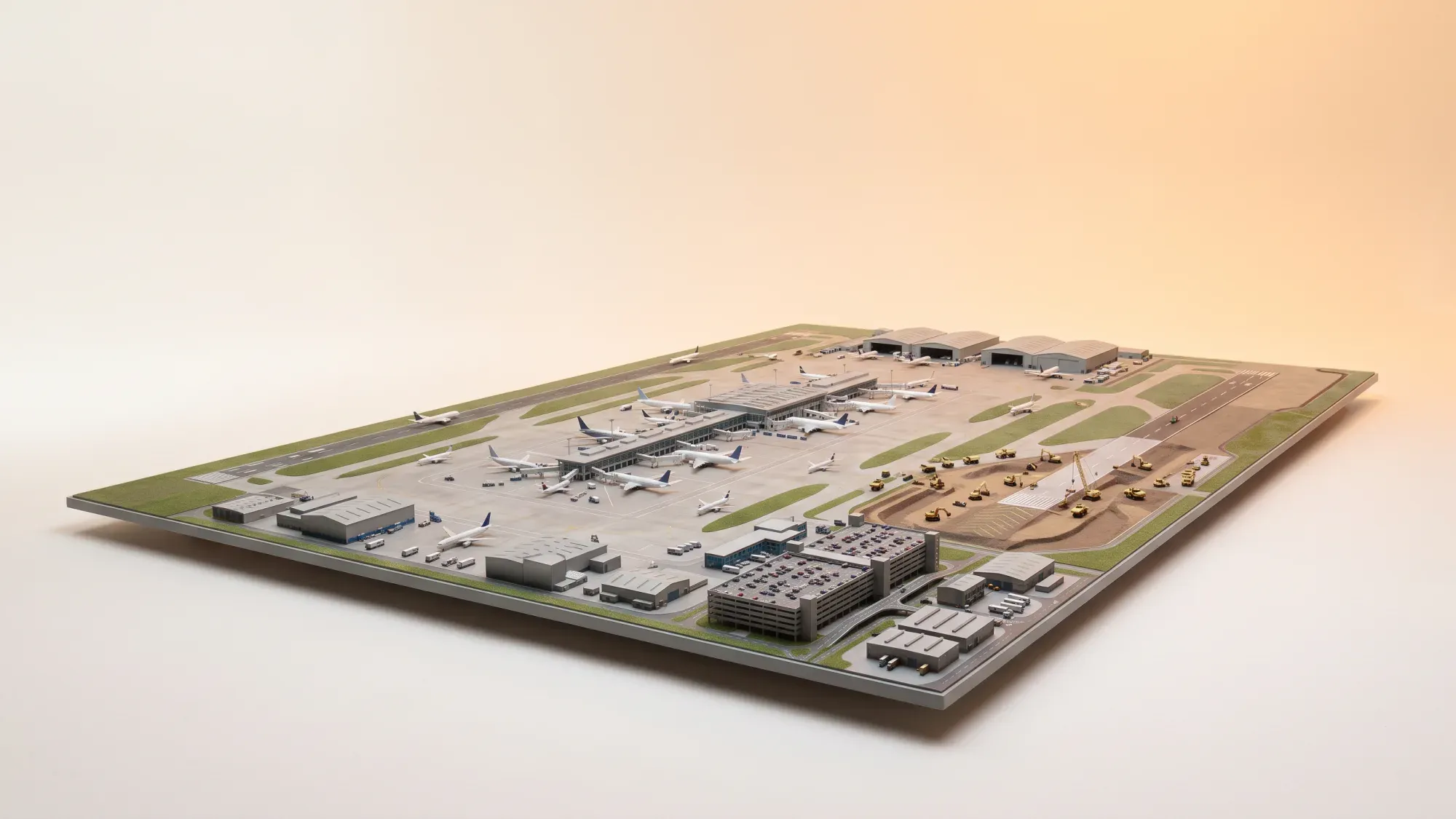
Heathrow Airport's proposed expansion faces a significant hurdle: it cannot proceed unless the aviation industry substantially reduces its climate emissions, according to the Climate Change Committee (CCC)1. The independent advisory body has warned there is "no credible pathway" for the expansion within the UK's legal climate targets under current policies for cutting aviation emissions. The CCC emphasises that the aviation sector must manage and pay for its emissions. This warning underscores the critical challenge of balancing economic growth with the UK's ambitious net-zero ambitions.
For your home energy needs, Fuse Energy is committed to building a future with abundant clean energy. We believe in making energy so plentiful it stops being a constraint, enabling a more sustainable future for everyone. Click here to switch to Fuse Energy today.
Understanding the UK's 2050 climate target
The UK is legally committed to achieving net-zero greenhouse gas emissions by 2050, a target established under the Climate Change Act. This commitment necessitates a radical overhaul across all sectors of the economy, aiming to reduce emissions as close to zero as possible, with any residual emissions offset by carbon removal technologies or natural sinks. The Department for Transport is responsible for aviation policy, including the Jet Zero Strategy, which is expected to set out a credible plan for achieving net-zero aviation by 2050.
The growing footprint of aviation emissions
Aviation emissions represent a growing proportion of the UK's total emissions, posing a serious challenge to national climate goals. Emissions from flying have more than doubled in the UK since 1990, even as overall climate pollution has halved. Heathrow Airport alone is currently responsible for approximately half of the aviation industry's emissions. The CCC has warned that by 2050, aviation emissions will dwarf all other parts of the economy, and Heathrow expansion alone would produce more emissions than any other sector.
"No credible pathway" for expansion
The CCC's advice to the government is clear: "no credible pathway" exists for Heathrow expansion within the UK's legal climate targets under current policies for cutting aviation emissions. Nigel Topping, chairman of the CCC, stressed that "Expansion cannot mean more climate pollution" and that the aviation sector must manage and pay for its emissions. The committee argues that the only way expansion could align with the UK's climate commitments is if robust policies are implemented, requiring the aviation industry to achieve zero emissions by 2050 through direct reductions and engineered removals.
Projected flight cost increases and industry response
To fund the necessary net-zero measures, the CCC suggests that international flight costs may need to increase substantially by 2050. This could potentially add "£150 to a return flight to Alicante, Spain, by 2050, and £400 to a return flight to New York". The committee noted that action now could ensure these costs are phased in slowly to avoid sudden jumps in price.
In response, Tim Alderslade, chief executive of Airlines UK, argued for affordable sustainable aviation fuel (SAF) and airspace reform. He stated, "We should focus on delivering them, not pricing ordinary people out of the joys of travel". Alderslade highlighted that airlines are already investing in new aircraft, SAF, and airspace upgrades, and that both SAF and greenhouse gas removals are technically viable.
Government's position on net-zero alignment
The Department for Transport has confirmed that any expansion proposal must align with net-zero targets and will carefully consider the CCC's advice. The government is investing £219 million in sustainable aviation fuel production and a further £43 million in cleaner technologies to support greener aviation. They also noted that expansion could deliver around £40 billion to the economy and support up to 60,000 local jobs.
The role of sustainable aviation fuels (SAF)
Sustainable Aviation Fuels (SAF) are a key component in the strategy to decarbonise aviation. These fuels, produced from sustainable feedstocks, can significantly reduce lifecycle greenhouse gas emissions compared to conventional jet fuel. Airlines UK chief executive Tim Alderslade mentioned that SAF is "already cutting emissions since the mandate began".
Airspace modernisation and demand management
Beyond SAF, other strategies include airspace modernisation, which aims to deliver quicker, quieter, and more efficient flights with lower emissions by optimising flight paths. This reform is considered an important strategy for the industry to achieve net-zero emissions. Demand management, potentially through increased flight costs, is also a consideration to help limit the growth in aviation emissions.
Carbon removal technologies and future innovations
Carbon removal technologies, such as direct air capture, are also part of the long-term decarbonisation strategy for aviation. These engineered removals would capture CO2 directly from the atmosphere, offsetting emissions that cannot be eliminated through other means. The CCC suggests that engineered removals will be necessary to cut or offset 100% of the aviation industry's emissions.
Abundant clean energy as the enabler
The challenge of aviation decarbonisation, particularly for large-scale projects like Heathrow's expansion, can be reframed through the lens of abundant clean energy. Fuse Energy believes in a future where energy is so plentiful it stops being a constraint, enabling sectors like aviation to achieve net-zero without compromising economic growth or the joys of travel. This vision contrasts with a scarcity mindset, offering an optimistic path where technological advancement and energy abundance reconcile economic activity with ambitious climate goals.
Electrifying airport operations and ground infrastructure
While direct flight emissions are a primary concern, airport operations and ground infrastructure also contribute to the carbon footprint. An abundance of clean energy can facilitate the widespread electrification of these operations, from ground support equipment and passenger transport to heating and cooling airport buildings. This shift would significantly reduce emissions associated with airport activities, further contributing to overall decarbonisation efforts.
Reconciling economic growth with net-zero goals
The debate around Heathrow's expansion highlights a perceived conflict between economic growth and climate targets. However, with foundational shifts in energy systems, this need not be a zero-sum game. By delivering terawatt-hours of the cheapest, cleanest energy possible, Fuse Energy aims to make scalable Sustainable Aviation Fuel production and electrified airport operations economically viable. This approach allows for continued economic activity and travel, demonstrating how a future with abundant clean energy can enable both prosperity and environmental responsibility.
Managing your home's energy bills should be clear and easy to understand. Fuse Energy focuses on straightforward pricing, so you can see exactly what you're paying without unnecessary complexity. Our 24/7 human support team is always on hand with fast response times whenever you need help. Click here to switch to Fuse Energy today. Find out about our mission by clicking here.
References
- MarketScreener. Advisers warn no go for Heathrow expansion without cutting emissions