Heat pump installation: prioritise amid job losses
The UK government is facing calls to prioritise heat pump installation to tackle climate change and boost green job creation. Colin Hines, Convener of the Green New Deal Group, has urged a rapid shift away from fossil fuels, emphasising the need for increased heat pump installations and improved building energy efficiency.1 This comes as Andrew Warren, chair of the British Energy Efficiency Federation, highlighted significant job losses in the energy efficiency sector, with 12,100 skilled professionals already made redundant and an estimated 80,000 more expected in the next year. This article explores the benefits of heat pumps, the installation process, and available financial support, framing it as a crucial step towards a more sustainable and economically resilient energy future for UK homes.
Why consider a heat pump for your UK home?
Reducing your carbon footprint
Heat pumps are a cornerstone of the UK's strategy to combat climate change and reduce reliance on fossil fuels. The UK government aims to phase out gas boilers in new homes from 2028, with a full ban on fossil fuel heating in new builds targeted for 2035, and is targeting 600,000 heat pump installations per year by 2028. An air source heat pump can reduce carbon emissions by around 2.5 tonnes of CO2 equivalent per year compared to an old gas boiler. Air source heat pumps typically emit 66-83% less CO₂ than gas boilers, with ground source heat pumps offering even greater reductions of around 67%.
Lowering energy bills
While the upfront cost can be a consideration, heat pumps are significantly more energy-efficient than traditional boilers. They transfer heat rather than generating it by burning fuel, leading to lower running costs over time. This energy efficiency translates into noticeable reductions in household energy bills, especially when paired with smart energy management.
Enhancing home comfort
Heat pumps provide a consistent and comfortable level of heating throughout your home. Unlike the on-off cycles of some traditional systems, heat pumps deliver a steady warmth, often working more effectively with underfloor heating or larger radiators to maintain an even temperature.
Contributing to green job growth
The transition to low-carbon heating systems like heat pumps presents a significant opportunity for green job creation across the UK. However, the sector has faced challenges. Andrew Warren, chair of the British Energy Efficiency Federation, highlighted the impact of policy changes:
"a staggering 12,100 skilled professionals have already been made redundant, with a further 80,000 estimated to be made redundant in the next 12 months." — Andrew Warren, Chair of the British Energy Efficiency Federation
Prioritising heat pump installation can help reverse this trend, creating secure jobs through devolved energy programmes and addressing youth unemployment through apprenticeships.
Understanding heat pumps: types and how they work
Heat pumps operate on a simple principle: they move heat from one place to another, rather than generating it. This makes them highly efficient.
Air source heat pumps
Air source heat pumps (ASHPs) extract heat from the outside air, even when temperatures are low. This heat is then compressed to increase its temperature and transferred into your home's heating and hot water systems. They are a popular choice due to their relative ease of installation and versatility.
Ground source heat pumps
Ground source heat pumps (GSHPs) harness heat from the ground, where temperatures remain more stable throughout the year. This involves burying pipes in your garden, which then circulate a fluid to absorb heat. While installation is more complex, GSHPs can offer higher efficiency and lower running costs.
How heat pumps generate heat
All heat pumps work by exploiting the refrigeration cycle in reverse. A refrigerant fluid absorbs heat from a source (air or ground), then a compressor increases the temperature of this fluid. The now-hot fluid transfers its heat to your home's heating system, and as it cools, it expands and returns to absorb more heat, continuing the cycle.
Is your home suitable for a heat pump?
Not every home is immediately suitable for a heat pump without some preparation. Assessing your property's characteristics is a crucial first step.
Assessing insulation and energy efficiency
Proper home insulation is paramount for a heat pump to operate efficiently. Heat pumps work best in well-insulated properties that retain heat effectively. If your home is draughty or poorly insulated, a heat pump may struggle to maintain comfortable temperatures, leading to higher running costs. New homes, built under the Future Homes Standard from 2028, will have high energy efficiency standards, making them ideal for heat pumps.
Radiator and hot water system compatibility
Heat pumps typically operate at lower flow temperatures than traditional gas boilers, meaning they work most effectively with larger radiators or underfloor heating systems. Your existing hot water cylinder may also need to be replaced with a heat pump-compatible model. An installer will assess your current system to recommend any necessary upgrades.
Space requirements
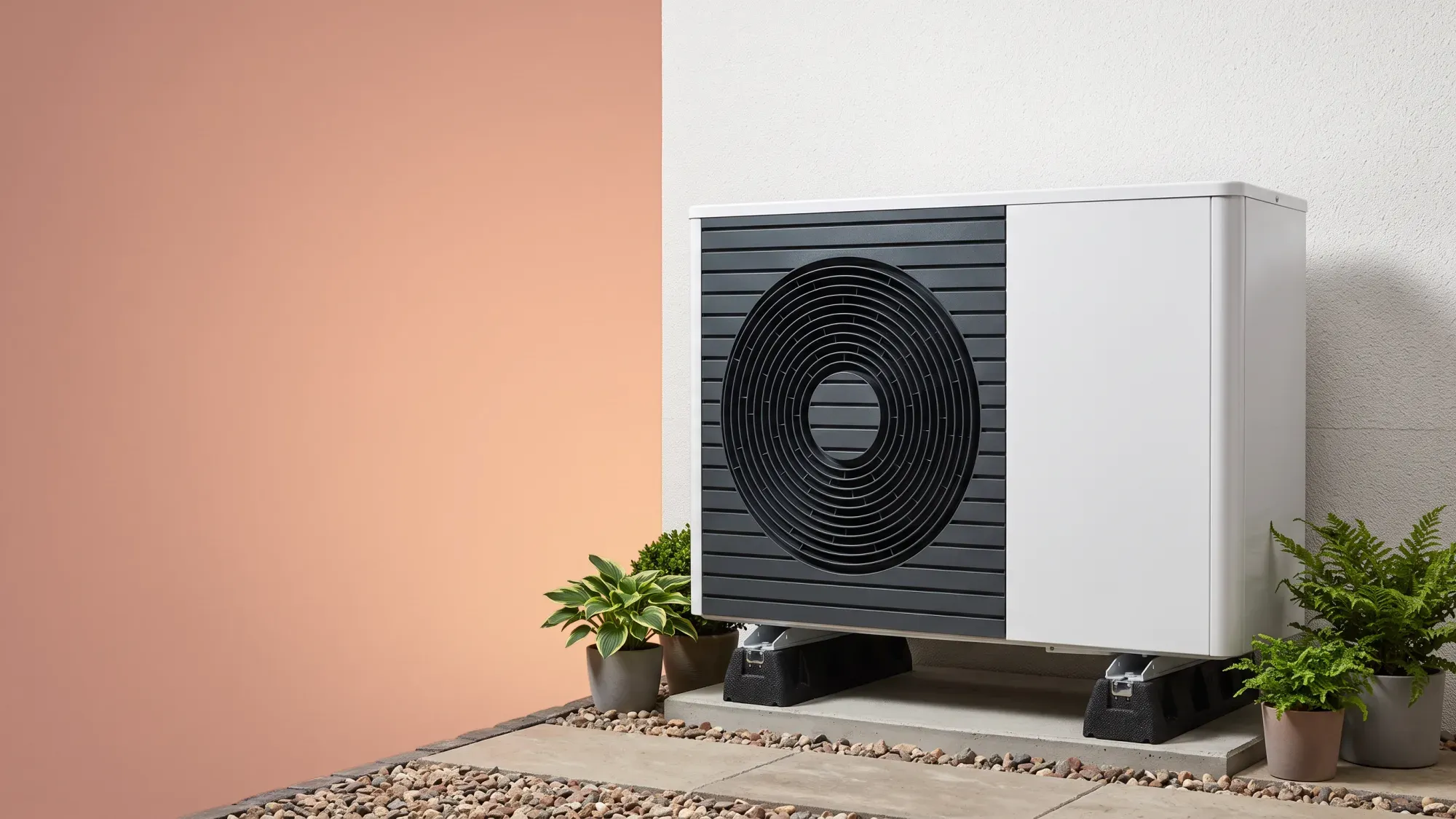
Air source heat pumps require an outdoor unit, similar in size to an air conditioning unit, which needs adequate space and airflow. Ground source heat pumps require significant outdoor space for the ground loops to be buried, making them more suitable for properties with larger gardens.
The heat pump installation process in the UK
Installing a heat pump involves several key stages, from initial assessment to ongoing operation.
Initial assessment and design
The process begins with a detailed assessment of your home by a qualified installer. They will evaluate your property's heat loss, insulation levels, existing heating system, and hot water demands to design a bespoke heat pump system that meets your needs. This stage is critical for ensuring optimal performance and efficiency.
Grant application and funding
Once a suitable system is designed, your installer will typically assist with applying for available government grants, such as the Boiler Upgrade Scheme.
Installation day
The installation itself involves fitting the outdoor or ground array unit, connecting it to your indoor heating system, and integrating it with your hot water cylinder. The duration of this stage can vary depending on the complexity of the system and any necessary modifications to your existing pipework or radiators.
Commissioning and handover
After installation, the system is commissioned, meaning it's thoroughly tested and optimised for your home. Your installer will then provide a comprehensive handover, explaining how to operate your new heat pump, its controls, and any maintenance requirements.
Costs, grants, and financial support
Understanding the financial aspects of heat pump installation is key to making an informed decision.
Typical installation costs
The cost of installing a heat pump can vary significantly based on the type of heat pump, the size of your property, and any necessary upgrades to your existing heating system or insulation. While generally higher than a like-for-like boiler replacement, government grants aim to make them more accessible.
The Boiler Upgrade Scheme (BUS)
The Boiler Upgrade Scheme (BUS) is a government initiative designed to help homeowners in England and Wales reduce the upfront cost of installing low-carbon heating systems. It offers grants of £7,500 towards the cost of air source and ground source heat pump installation. For eligible off-gas grid properties currently heated by oil or LPG, a temporary increase to £9,000 is available from 21 July 2026 to 31 March 2027. Your chosen installer will apply for the grant on your behalf, and the amount will be deducted from your bill. The scheme is expected to run until at least 2028.
Who is eligible for the BUS?
The BUS is available to homeowners in England and Wales who are replacing a fossil fuel heating system. Your installer must be MCS-certified, and self-build new properties can qualify, but developer-led new builds are generally not eligible.
Other potential incentives
Beyond the BUS, other local or regional schemes may offer additional support for energy efficiency upgrades. It's worth researching what might be available in your specific area. Always consult with your installer or local authorities for the most up-to-date information on grants and incentives.
Choosing the right heat pump installer
The quality of your heat pump installation is crucial for its long-term performance and efficiency. Choosing the right installer is therefore paramount.
Importance of MCS certification
Always choose an installer certified by the Microgeneration Certification Scheme (MCS). MCS certification is the industry standard, demonstrating that an installer meets rigorous quality and reliability benchmarks for product and installation. Crucially, installations must be MCS certified to be eligible for government grants like the BUS.
Getting multiple quotes
Obtain several quotes from different MCS-certified installers. This allows you to compare not only prices but also the proposed system designs, warranties, and customer service offerings. Don't just focus on the lowest price; consider the overall value and the installer's reputation.
Checking references and warranties
Ask for references from previous customers and check online reviews. A reputable installer will be transparent about their work and happy to provide testimonials. Also, thoroughly review the warranties offered on both the heat pump equipment and the installation itself, ensuring you are protected in the long term.
Living with a heat pump: operation and maintenance
Optimising your heat pump's performance
Heat pumps work most efficiently when set to a consistent temperature, rather than frequently turning them on and off. Using smart controls and thermostats can help optimise performance, allowing the system to learn your preferences and adjust to external conditions. While Fuse Energy does not install heat pumps, its app and smart tariffs can help homeowners monitor and optimise their heat pump's operation, maximising efficiency and savings.
Routine maintenance
Heat pumps generally require less maintenance than traditional boilers. However, annual servicing by a qualified technician is recommended to ensure optimal performance and longevity. Regular checks of the outdoor unit for obstructions and keeping filters clean can also help maintain efficiency.
Long-term savings and benefits
Over its lifespan, a heat pump can deliver significant long-term savings on energy bills and substantially reduce your home's carbon emissions. Beyond the financial and environmental benefits, it provides a reliable, comfortable heating solution, contributing to a more energy-independent and sustainable future for your home.
References
Disclaimer
For the avoidance of doubt, this article is provided for informational purposes only and is not intended to constitute legal or financial advice. The author and/or Fuse Energy shall not be responsible for any losses arising out of any reliance on the information contained herein.