Cierco secures seabed rights for 200 MW floating wind in Wales
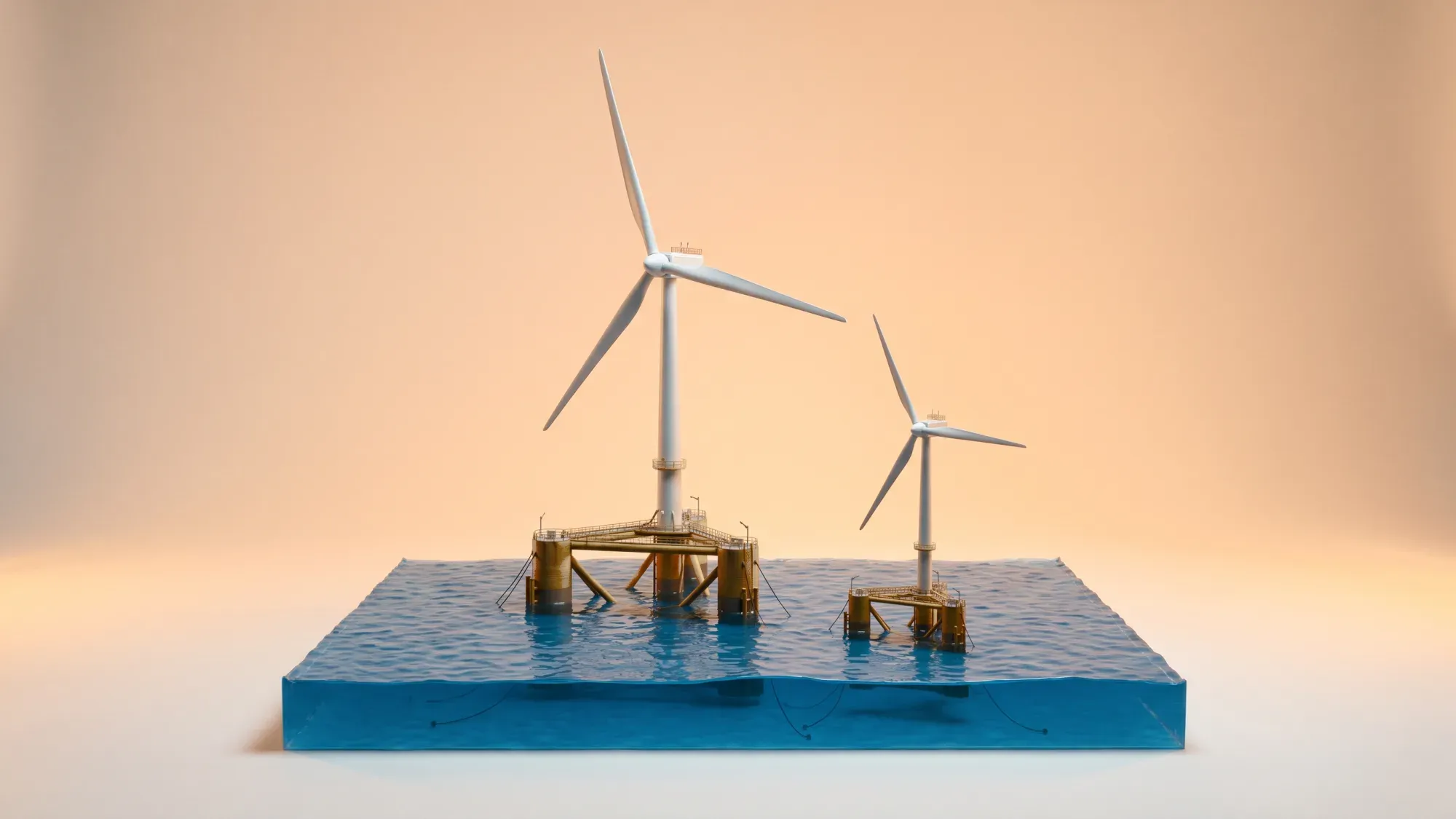
Cierco Energy has secured seabed rights for its 200 MW floating wind demonstration projects in Wales1, marking a significant stride in the UK's renewable energy landscape. This development, encompassing the Llŷr 1 and Llŷr 2 projects in the Celtic Sea, positions Wales at the forefront of innovative offshore wind technology and the nation's clean energy ambitions. These projects are crucial for testing next-generation offshore wind technologies at scale, paving the way for future large-scale commercial deployments.
Floating offshore wind (FLOW) technology is rapidly emerging as a critical enabler for the UK's energy transition, offering access to vast, untapped wind resources in deeper waters. This shift is fundamental to moving beyond an energy scarcity mindset towards one of abundance, aligning with a vision where energy is a catalyst for growth and innovation.
For homeowners interested in understanding how renewable energy developments like these impact the wider energy market and potentially your home, Fuse Energy offers clear pricing and real-time usage data. Click here to switch to Fuse Energy today.
Enter your address to get a quote and see how much you could save
Introduction to floating offshore wind in Wales
The strategic importance of Welsh waters
Wales possesses substantial natural resources for floating offshore wind, particularly within the Celtic Sea. This region, situated off the coasts of South Wales and South West England, features water depths ranging from 90 to 250 metres, which were previously inaccessible for traditional fixed-bottom turbines. Floating technology unlocks this immense potential, making Wales a key region for developing a competitive floating offshore wind industry.
Why floating wind technology?
Floating wind technology allows turbines to be deployed in waters deeper than 60 metres, where fixed-bottom solutions are not economically competitive or technically feasible. This capability significantly expands the areas suitable for offshore wind development, enabling access to stronger and more consistent winds further from shore. The ability to site wind farms in deeper, windier locations contributes to higher capacity factors, meaning the turbines generate electricity for a greater proportion of the time. The average UK offshore wind farm operates with a capacity factor of around 41%.
Key floating wind projects and developments
The development of floating offshore wind in Wales is spearheaded by pioneering demonstration projects designed to prove commercial viability and advance technological readiness.
Cierco's 200 MW demonstration project
Cierco Energy's Llŷr Wind projects, comprising two 100 MW sites (Llŷr 1 and Llŷr 2), are set to be among the first floating offshore wind test and demonstration facilities in the UK. Located off the Pembrokeshire coast in the Celtic Sea, these projects will trial next-generation offshore wind technologies, including advanced foundations, mooring systems, and dynamic cabling. Once operational, the 200 MW capacity is poised to power up to 200,000 homes. An average UK home uses approximately 2,500 kWh of electricity per year. Natural Resources Wales granted a marine licence for the Llŷr project in early July.
The Llŷr project and Celtic Sea potential
The Llŷr projects are not just about generating electricity; they are pathfinder initiatives accelerating the development of the entire UK floating offshore wind industry. They aim to pilot the construction, installation, and operation of floating offshore wind at a large scale, while also studying its interaction with the marine environment. The Celtic Sea itself is a focal point for future development, with Offshore Wind Leasing Round 5 by The Crown Estate seeking to establish a new floating wind sector capable of creating up to 4.5 GW of new renewable energy capacity. The UK government has further confirmed its intention to unlock space for an additional 12 GW of capacity in the Celtic Sea.
Technological advancements and challenges
The journey to widespread floating offshore wind deployment involves continuous innovation and overcoming significant technical hurdles.
Innovations in floating platform design
Floating wind technology draws on expertise from the offshore oil and gas industry, adapting designs such as semi-submersible, spar, and tension leg platforms. Recent advancements focus on optimising these designs for enhanced stability, cost-efficiency, and energy output. Innovations include larger rotor diameters and longer blades to maximise energy capture, even in lower wind conditions, and adaptive control systems that allow turbines to respond to dynamic ocean waves and currents in real-time. Digital twins and advanced data analytics are also being used to monitor performance, predict maintenance needs, and optimise operations.
Overcoming marine environment hurdles
Despite the promise, floating offshore wind faces challenges such as structural instability in extreme weather, high material and manufacturing costs, and complex hydrodynamic interactions. The development of specific port facilities and specialised vessels for construction and deployment is also critical. Furthermore, ensuring the long-term durability of components and efficient energy transmission solutions from deep-water sites are ongoing areas of research.
What are the main advantages of floating offshore wind?
Floating offshore wind turbines can be deployed in deeper waters, unlocking vast wind resources previously inaccessible to fixed-bottom turbines. This allows for placement in areas with stronger, more consistent winds, leading to higher energy generation. It also reduces visual impact by siting farms further from shore and expands the potential for renewable energy production.
Policy, regulation, and investment landscape
A supportive policy and regulatory framework, coupled with strategic investment, is essential for the growth of floating offshore wind.
UK government support and targets
The UK government has set ambitious targets for offshore wind deployment, aiming for up to 50 GW of offshore wind capacity by 2030, with up to 5 GW specifically from floating wind. To achieve this, initiatives include speeding up the consenting process for offshore wind developments and providing funding through schemes like the Floating Offshore Wind Manufacturing Investment Scheme (FLOWMIS). Ofgem, the independent energy regulator for Great Britain, plays a crucial role in overseeing energy markets and ensuring a fair, secure, and sustainable energy system, aligning with net-zero targets.
Securing seabed rights and funding
The Crown Estate is responsible for granting seabed rights for offshore renewable energy projects in the UK. Cierco's agreement for lease with The Crown Estate for the Llŷr projects is a foundational step, enabling the company to progress with environmental assessments, secure grid access, and seek planning consent. This process is vital for unlocking investment and driving economic growth. The UK's Contracts for Difference (CfD) scheme also incentivises investment by providing developers with long-term price certainty for the electricity generated.
Economic and environmental impact
The expansion of floating offshore wind in Wales promises significant economic benefits and requires careful environmental stewardship.
Boosting local supply chains and job creation
Floating offshore wind projects in the Celtic Sea are expected to create thousands of jobs and provide substantial opportunities for local businesses and supply chains. The first 4.5 GW of floating offshore wind in the Celtic Sea alone is predicted to create over 5,300 jobs during the construction phase and generate approximately £1.4 billion in Gross Value Added (GVA) for the UK economy. This industrial growth can transform regions like South West Wales into powerhouses for offshore engineering and manufacturing.
Minimising ecological footprint
While floating offshore wind farms offer significant environmental benefits by reducing carbon emissions, their potential impact on marine life and habitats requires thorough assessment. Developers conduct Environmental Impact Assessments (EIAs) to evaluate and mitigate potential effects. Unique considerations for floating wind include the interactions of anchors, mooring lines, and dynamic cables with the seabed and water column, which can cause localised disturbance. Pilot projects like Llŷr are valuable for testing novel monitoring methods and nature-inclusive design approaches to ensure sustainable development.
The future of floating wind in Wales and the UK
Floating offshore wind is poised to become a cornerstone of the UK's energy future, driving abundance and security.
Contribution to energy abundance and security
The vast, consistent clean energy potential of floating offshore wind in Wales can fundamentally shift the UK from an energy scarcity mindset to one of abundance. By tapping into deeper, windier waters, floating wind can provide a reliable and significant source of renewable electricity, reducing reliance on imported energy and enhancing national energy security. This aligns with the UK's goal of decarbonising its power system by 2035 and achieving net-zero emissions by 2050.
Long-term vision for renewable energy
The integration of large-scale floating wind capacity necessitates a reimagined energy system, from generation to grid management. The demonstration projects in Wales are vital stepping stones, providing crucial learning and de-risking for future gigawatt-scale developments. This forward-looking perspective, backed by data and rigorous engineering, reflects an optimistic vision for a future where abundant, clean energy from sources like Welsh floating wind empowers industries, drives innovation, and frees consumers from energy anxiety.
Managing your energy bills should be clear and easy to understand. Fuse Energy focuses on straightforward pricing, so you can see exactly what you're paying without unnecessary complexity. If you have a smart meter, you can view detailed usage data through the app or website, helping you understand how you can lower your bills. Our 24/7 human support team is always on hand with fast response times whenever you need help. Click here to switch to Fuse Energy today. Find out about our mission by clicking here.
References
Disclaimer
For the avoidance of doubt, this article is provided for informational purposes only and is not intended to constitute legal or financial advice. The author and/or Fuse Energy shall not be responsible for any losses arising out of any reliance on the information contained herein.