Farmland protection and energy transition
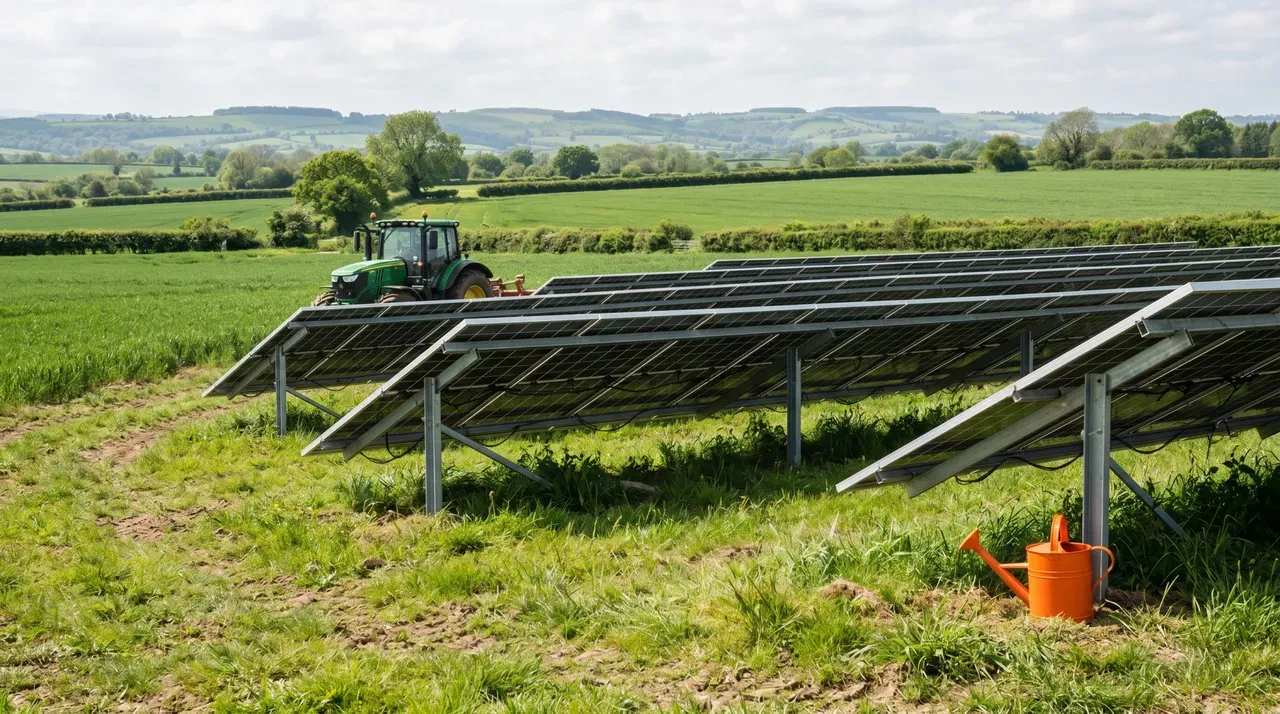
The UK's energy transition requires significant new infrastructure, but how can this be built without sacrificing the agricultural land crucial for food security? This isn't a simple choice between energy and food; it's a complex balancing act that demands thoughtful policy and innovative development.
Fuse Energy believes the UK can achieve its clean energy goals without compromising its agricultural heritage. We focus on rebuilding the energy system to deliver abundant, cheap, clean energy while integrating responsibly with existing land uses. Click here to switch to Fuse Energy.
Enter your address to get a quote and see how much you could save
The UK's dual challenge: energy transition and farmland protection
The United Kingdom faces a pressing dual challenge: rapidly expanding its renewable energy capacity to meet climate targets while simultaneously safeguarding its vital agricultural land. This tension is at the heart of many land use debates across the country.
The imperative for renewable energy
The drive towards a net-zero future means a fundamental shift in how the UK generates its power. This requires deploying vast amounts of renewable energy infrastructure, from solar farms and wind turbines to new transmission lines and substations. These projects inevitably require land, placing pressure on the countryside. The scale of this transition means that every part of the UK, including its rural areas, will see changes as the national energy system evolves.
Safeguarding UK food security and rural communities
Protecting agricultural land isn't just about preserving green spaces; it's fundamental to the UK's food security and the health of its rural communities. A thriving domestic agricultural sector underpins local economies, supports livelihoods, and ensures a stable food supply. Losing productive farmland to energy infrastructure can have long-term consequences, impacting everything from local employment to the nation's ability to feed itself. Organisations like the Countryside Alliance are vocal advocates for this balance, emphasising the importance of a strong farming sector.
Shaping policy: the role of NESO and government
Navigating this complex landscape requires clear policy direction and proactive engagement from key bodies. The National Energy System Operator (NESO) and the Energy Secretary are central to shaping the UK's energy future and, by extension, its land use policies.
The national energy system operator's influence
The National Energy System Operator (NESO) plays a pivotal role in determining the future of the UK’s energy system. It is currently preparing a key report for the Energy Secretary, which will have critical implications for the continued availability of agricultural land1. This report is expected to outline various energy pathways, each with different land use requirements. Understanding NESO's recommendations is crucial for anyone involved in land management or energy development.
Advocating for land use minimisation
Recognising the potential impact on agricultural land, organisations like the Countryside Alliance are actively collaborating with NESO to safeguard farmland during the energy transition. They have engaged through various channels, including sitting on NESO's societal forum and responding to consultations. Their advocacy has been successful, leading to the inclusion of a 'land use minimisation' pathway in NESO's shortlist for the Energy Secretary. This approach seeks to reduce the footprint of new energy infrastructure on productive land, aiming to minimise and mitigate negative impacts on the countryside.
What is 'land use minimisation' in energy development?
'Land use minimisation' is a strategy in energy development that prioritises reducing the amount of agricultural or environmentally sensitive land taken for new infrastructure. It advocates for careful site selection, efficient design, and the use of existing or less impactful sites, such as brownfield land, to protect food security and rural aesthetics.
Strategies for responsible energy development on land
Achieving both energy and food security requires practical strategies that go beyond simply choosing one over the other. Responsible energy development means adopting approaches that mitigate impact and maximise efficiency.
Prioritising retrofitting and brownfield sites
One of the most effective ways to minimise agricultural land loss is to prioritise retrofitting existing infrastructure and utilising brownfield sites. This means upgrading current energy facilities, integrating renewables into developed areas, or repurposing previously industrial land for energy generation. This approach reduces the need to develop greenfield agricultural land, preserving it for food production. It's a pragmatic step towards sustainable energy development that respects the value of our rural landscapes.
Implementing dual land use (agri-voltaics and more)
Dual land use, often exemplified by agri-voltaics, offers a promising pathway to generate energy and maintain agricultural productivity simultaneously. This involves integrating solar panels with farming activities, such as grazing livestock under elevated panels or cultivating shade-tolerant crops between rows. While not universally simple, these solutions, when carefully planned, can contribute to both food and energy security. Beyond solar, other forms of dual use, like co-locating wind turbines with farming, also offer opportunities to maximise land utility without creating unnecessary trade-offs.
Mitigating impact on rural aesthetics and infrastructure
The impact of energy infrastructure, such as new pylon lines and substations, on rural aesthetics and communities is a significant concern. These developments can alter cherished landscapes and affect the character of rural areas. Strategies for mitigation include careful routing, undergrounding cables where feasible, and thoughtful design that integrates infrastructure more harmoniously with its surroundings. Engaging with rural communities and organisations like the Countryside Alliance is crucial to address these concerns and ensure that energy development respects the unique value of the British countryside.
Fuse Energy's commitment to balanced development
At Fuse Energy, we believe that the UK can achieve its clean energy goals without compromising its agricultural heritage or food security. Our approach to developing renewable projects demonstrates a commitment to thoughtful site selection and land management.
Our philosophy: abundance, not scarcity
Fuse operates on a philosophy of abundance, not scarcity. We reject the false dilemma that suggests we must choose between a thriving agricultural sector and a robust clean energy system. Instead, we focus on rebuilding the energy system in a way that delivers abundant, cheap, clean kWh while integrating responsibly with existing land uses. Our projects aim to achieve energy independence and food security simultaneously, proving that there are no trade-offs between living today and securing a better tomorrow.
Real-world examples: Fuse's projects and land stewardship
Fuse Energy's operational projects serve as practical examples of balancing energy generation with land protection. Our solar sites, such as Netley North - a 5.2 MW solar site in Hampshire - and Bullous Park - a 12 MW solar site in Devon - are developed with land use considerations at the forefront. Similarly, our wind site, Balnamoon - a 0.8 MW wind site in Moray - demonstrates how new energy infrastructure can integrate responsibly with the landscape. These projects showcase how careful planning, site selection, and ongoing land stewardship can deliver clean energy while respecting the agricultural and environmental value of the land.
“Because we understand the importance of a thriving domestic agricultural sector to UK food security and to the communities that are underpinned by farming, the Countryside Alliance has been working closely with NESO to advance the view that these losses must be minimised and mitigated – as must other negative impacts on the countryside.” - The Countryside Alliance
Navigating the future: policy, innovation, and collaboration
The path ahead requires a concerted effort from policymakers, innovators, and all stakeholders to ensure a sustainable future for both energy and agriculture.
The importance of a national land use framework
The development of a comprehensive national land use framework is crucial for balancing the protection of high-quality farmland with the ambitions for renewable energy deployment. Such a framework would provide clear guidelines for planning regimes, helping to ensure that solar energy development, for instance, does not unduly compromise arable land. It would offer predictability for developers and protection for farmers, fostering a more coherent approach to land management across the UK.
Engaging stakeholders for sustainable outcomes
Effective engagement with all stakeholders - including landowners, farmers, rural communities, energy developers, and policy professionals - is vital for achieving sustainable outcomes. Forums like NESO's societal forum, where organisations like the Countryside Alliance participate, are essential for advancing diverse perspectives and finding common ground. By fostering open dialogue and collaboration, the UK can develop energy pathways that not only meet its climate goals but also support its agricultural sector and protect its cherished rural landscapes.
Conclusion: cultivating a sustainable future
The UK's energy transition presents both challenges and opportunities for farmland protection. While the need for renewable energy infrastructure is undeniable, it does not have to come at the expense of our food security or rural communities. By embracing strategies like land use minimisation, prioritising brownfield development, exploring dual land use, and fostering collaborative policy-making, the UK can cultivate a future where abundant clean energy and a thriving agricultural sector coexist. This balanced approach, exemplified by thoughtful development and proactive engagement, ensures that we build the energy system of tomorrow without compromising the foundations of today.
Managing your home energy bills should be clear and easy to understand. Fuse Energy focuses on straightforward pricing, so you can see exactly what you're paying without unnecessary complexity. If you have a smart meter, you can view detailed usage data through the app or website, helping you understand how you can lower your bills. If you don't have a smart meter, Fuse Energy can upgrade your non-smart meter, completely for free. Our 24/7 human support team is always on hand with fast response times whenever you need help. Click here to switch to Fuse Energy in as little as 3 minutes. Find out about our mission by clicking here.
References
- Countryside Alliance. Protecting farmland in the energy transition.
Disclaimer
For the avoidance of doubt, this article is provided for informational purposes only and is not intended to constitute legal or financial advice. The author and/or Fuse Energy shall not be responsible for any losses arising out of any reliance on the information contained herein.