EV charging innovation explained
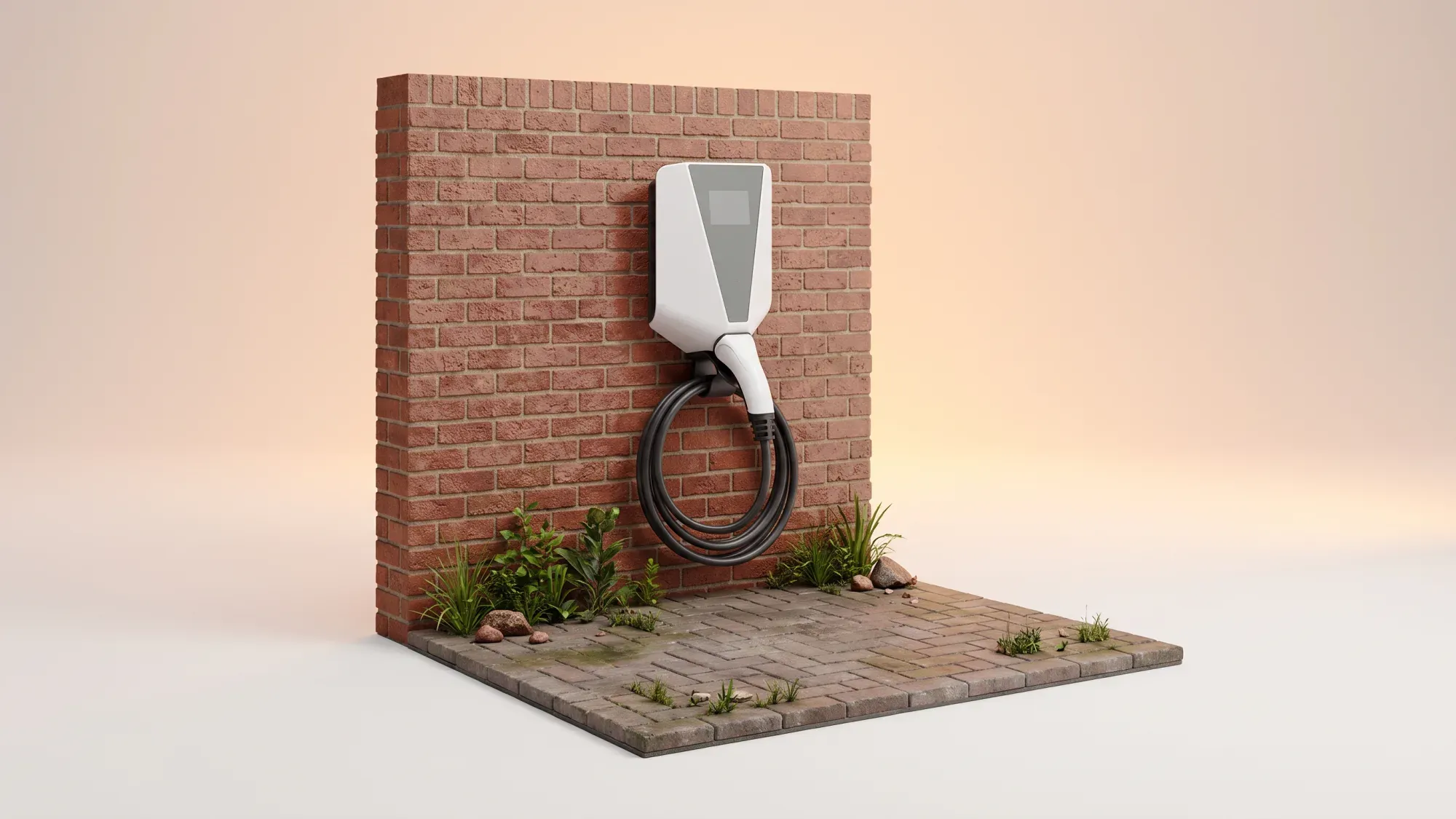
Many UK EV owners and prospective buyers are asking a fair question: how do you keep up with the rapid pace of change in electric vehicle (EV) charging? It often feels like every new scheme promises something slightly different, making it hard to know what is genuinely efficient, cost-effective, and future-proof. The good news is that innovation is not just about faster public chargers; it is about making your EV a seamless, affordable part of your home energy system.
Thinking about EV charging innovation explained? Fuse Energy installs the Easee One smart home EV charger for a flat £899 including full installation, up to 15m of cabling, surge protection, and a 3-year warranty. Tap the quote button below to get started.
The evolving landscape of electric vehicle charging
The days of simply plugging in your electric car and hoping for the best are quickly fading. We are moving into an era where your EV can do much more than just drive; it can become a dynamic part of your home and the wider energy grid. This shift is driven by a need for greater efficiency, lower costs, and genuine sustainability.
Why EV charging innovation matters for UK drivers
For UK drivers, innovation in EV charging is not just a technical curiosity; it directly impacts your wallet and your daily routine. Smart charging, for instance, can significantly reduce your running costs by optimising when and how your car charges. Beyond that, new technologies are making EVs more integrated with renewable energy sources, offering a path to greater energy independence and a lower carbon footprint. It is about making electric driving not just viable, but genuinely advantageous.
Moving beyond basic charging: efficiency and sustainability
Basic charging gets the job done, but it does not unlock the full potential of an electric vehicle. The focus is now firmly on efficiency and sustainability. This means developing systems that minimise energy waste, integrate seamlessly with renewable generation, and even allow your EV to give energy back to your home or the grid. These advancements are crucial for both individual drivers looking to save money and the UK's broader goal of achieving zero-emission mobility.
Smart charging solutions: optimising your EV's energy use
Smart charging is perhaps the most immediate and impactful innovation for many EV owners. It is about making your car's charging schedule work for you, your budget, and the National Grid.
What is smart charging and how does it work?
Smart charging involves intelligent communication between your EV, its charger, and the electricity grid. Instead of charging immediately at maximum power, a smart charging system can delay or adjust charging times. It typically does this by responding to signals about electricity prices, grid demand, or the availability of renewable energy. For example, it might automatically charge your car overnight when electricity is cheaper and demand on the grid is lower.
Benefits of smart charging for cost and grid stability
The benefits are twofold. For you, it means lower electricity bills, as your car charges during off-peak hours or when renewable energy is abundant. For the wider energy system, smart charging helps to balance demand, reducing strain on the grid and making it more stable. This prevents costly infrastructure upgrades and makes the integration of more intermittent renewable sources, like solar and wind, much smoother.
The role of AI technology in electric vehicle charging
Artificial intelligence (AI) is playing an increasingly vital role in smart charging. AI algorithms can analyse your driving patterns, local energy prices, weather forecasts (for renewable generation predictions), and grid conditions to create an optimal charging schedule. This goes beyond simple timers, allowing for dynamic adjustments that maximise savings and efficiency without you needing to lift a finger. It makes complex energy management accessible and automatic.
How does AI improve EV charging?
AI technology enhances EV charging by analysing real-time data on electricity prices, grid demand, and renewable energy availability. It then intelligently optimises charging schedules to minimise costs for the driver and reduce strain on the electricity grid, making the process more efficient and sustainable.
Vehicle-to-grid (V2G) technology: your EV as a power hub
If smart charging is about optimising when your car takes power, V2G technology takes it a step further, allowing your EV to become a mobile energy storage unit.
Understanding V2G charging and its potential
V2G technology enables bidirectional energy flow, meaning your electric vehicle can not only draw power from the grid but also send electricity back to it. This transforms your EV's battery into a flexible energy resource. The potential is immense: imagine your car powering your home during a blackout, or selling excess energy back to the grid when prices are high.
How V2G can reduce EV charging cost and support the grid
With V2G, your EV can effectively "arbitrage" electricity prices. It can charge when electricity is cheap (e.g., overnight or when solar generation is high) and then discharge power back to your home or the grid when prices are higher or demand is peaking. This can significantly reduce your overall EV charging cost and even generate revenue. For the grid, V2G provides a distributed network of flexible storage, helping to manage fluctuations in renewable energy supply and demand.
Real-world applications and future prospects for V2G
While still in its early stages of widespread adoption, V2G is already being tested in various pilot projects across the UK. Nissan LEAFs, for example, are frequently used in these trials. The future prospects include EVs playing a central role in home energy management systems, acting as backup power during outages, and providing grid services that help integrate even more renewable energy. As V2G technology matures, it promises to make EVs even more valuable assets.
Integrating renewable energy with EV charging
The drive for sustainability means connecting EV charging directly to clean energy sources, reducing reliance on fossil fuels and cutting household emissions.
Solar panel EV integration for sustainable mobility
Integrating solar panels with EV charging is a natural fit for sustainable mobility. By installing solar panels on your roof, you can generate your own clean electricity to power your car. This reduces your dependence on grid electricity and significantly lowers your running costs. Smart systems can even prioritise charging your EV directly from your solar panels when they are generating power, maximising self-consumption.
Home energy bill reduction through renewable charging
Charging your EV with self-generated renewable energy, particularly from solar panels, can lead to substantial home energy bill reduction. Instead of buying electricity from the grid, you are using free, clean power from your roof. This not only makes your EV cheaper to run but also contributes to a more energy-independent household, especially when combined with home battery storage.
Power electronics and gallium nitride inverters for efficiency
Behind the scenes, advanced power electronics are crucial for making these integrations efficient. Components like gallium nitride (GaN) inverters are key. GaN is a semiconductor material that allows for much higher efficiency and smaller, lighter designs compared to traditional silicon-based inverters. This means less energy is lost during conversion, whether it is from your solar panels to your EV, or from your EV back to your home, making the entire system more effective.
UK innovation at the forefront: project suite and beyond
The UK is actively investing in and developing these next-generation EV charging technologies, with government-backed initiatives leading the way.
Project suite: a deep dive into UK government-backed research
One of the most exciting developments is Project SUITE, a £10 million UK Government-backed research initiative spearheaded by Nissan1. Project SUITE, which stands for "Smart Use of Integrated Technology for EVs," is designed to transform electric vehicle charging by focusing on three core areas: reducing charging expenses, enhancing EV efficiency, and promoting sustainability. It is a comprehensive approach to making EVs work better for both drivers and the planet.
Key innovations within Project SUITE include vehicle-integrated tandem solar panels, which can generate power directly on the car itself, an Intelligent Charging Management System to optimise energy flow, and advanced bidirectional Vehicle-to-Grid (V2G) connections. These elements work together to create a more integrated and flexible energy ecosystem around the EV. The project also incorporates a high-efficiency Gallium Nitride (GaN) traction inverter, further boosting the overall efficiency of the vehicle's power systems.
Nissan leaf and other test vehicles driving innovation
To test these cutting-edge technologies in real-world conditions, Nissan LEAFs are currently serving as test vehicles for Project SUITE. This practical application allows researchers to gather valuable data and refine the systems before wider deployment. Such real-world testing is vital for ensuring that innovations are robust and effective for everyday drivers.
The advanced propulsion centre and innovate UK's contribution
Organisations like the Advanced Propulsion Centre UK and Innovate UK play a critical role in fostering such innovation. They provide crucial funding and support for research and development projects like Project SUITE. Ian Constance, CEO of the Advanced Propulsion Centre UK, highlighted this commitment, stating that such projects "demonstrate the UK's determination to lead the shift to zero-emission mobility". This government backing is essential for accelerating the transition to a sustainable transport future.
"This project highlights the strength of UK innovation and marks a significant step towards the next generation of integrated energy technologies for electric vehicles." — David Moss, Senior Vice President at Nissan AMIEO
Future-proofing your EV charging: what's next?
The pace of change in EV technology shows no signs of slowing. Staying informed and making smart choices today can help you prepare for what is coming.
Anticipating future electric vehicle technology trends
Looking ahead, we can anticipate even more sophisticated integration between EVs, homes, and the grid. Wireless charging, faster charging speeds, and even more compact and efficient battery technologies are on the horizon. The trend is towards making EV ownership as convenient and cost-effective as possible, with minimal intervention required from the driver.
EV battery management and electricity grid integration
Advanced EV battery management systems will become increasingly important. These systems will not only optimise battery health and longevity but also facilitate seamless interaction with the electricity grid. This deeper integration will allow EVs to contribute more effectively to grid stability, acting as flexible energy storage that can respond to real-time energy demands and renewable energy fluctuations.
Choosing a smart charging solution for your home
When considering a smart charging solution for your home, look for systems that offer flexibility, connectivity, and compatibility with future technologies. Prioritise chargers that can integrate with renewable energy sources like solar panels and that offer smart scheduling features. As the energy landscape evolves, having a charger that can adapt will be key to maximising your savings and environmental benefits.
Embracing the future of EV charging innovation
The innovations in EV charging are rapidly transforming how we power our vehicles and interact with energy. For UK EV owners and prospective buyers, this means a future where driving electric is not only cleaner but also more affordable and convenient than ever before.
Key takeaways for UK EV owners and prospective buyers
The key takeaway is that EV charging is no longer a static process. Smart charging and V2G technologies, supported by advanced power electronics and AI, are making it dynamic, cost-effective, and sustainable. UK-specific projects like Project SUITE demonstrate the nation's commitment to leading this charge. By understanding these innovations, you can make informed decisions that reduce your home energy bills, lower your carbon footprint, and future-proof your electric driving experience.
How innovation creates abundant, clean energy for all
Ultimately, these innovations align with a broader vision of abundant, clean energy. By making EV charging more efficient, affordable, and integrated with renewables, we move away from a scarcity mindset. Instead, we embrace a future where energy is plentiful, clean, and readily available for all our needs, including mobility. This allows us to use more clean energy, not less, empowering us to live fully and build the future we imagine.
Thinking about EV charging innovation explained? Fuse Energy installs the Easee One smart home EV charger for a flat £899 including full installation, up to 15m of cabling, surge protection, and a 3-year warranty. Tap the quote button below to get started.
References
Disclaimer
For the avoidance of doubt, this article is provided for informational purposes only and is not intended to constitute legal or financial advice. The author and/or Fuse Energy shall not be responsible for any losses arising out of any reliance on the information contained herein.