Linca secures NZ$5 million for UK EV battery recycling facility
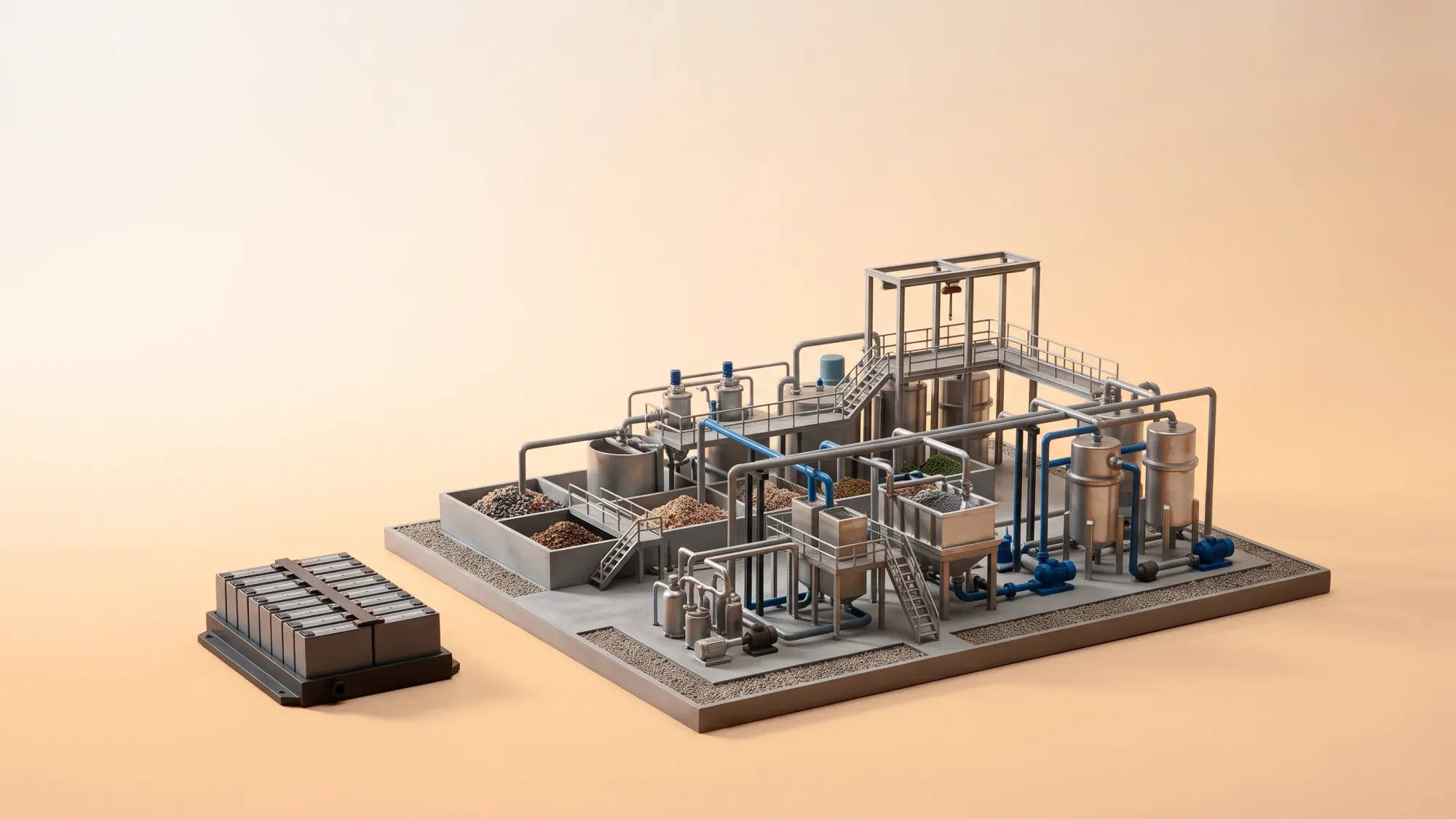
Linca, a clean-technology company, has successfully secured NZ$5 million in seed funding.1 This investment is earmarked for establishing a demonstration facility in the UK dedicated to electric vehicle (EV) battery recycling. The aim is to accelerate the scale-up of Linca's lithium-ion battery refining technology, directly addressing a significant gap in the UK's domestic processing capacity for critical minerals. The funding round, led by Motion Capital, is expected to reach NZ$7 million.
Thinking about how to manage your home's energy? Fuse Energy offers home batteries as part of its home solar systems, letting you store cheaper off-peak power and use it when standard rates climb. Tap the quote button below to get a quote.
Why EV battery recycling matters for the UK
The rapid adoption of electric vehicles is crucial for decarbonising transport and meeting climate goals. However, this shift also brings the growing challenge of managing end-of-life EV batteries. Effective recycling is not just an environmental necessity; it is vital for the UK's economic resilience and its ambition to build a robust, circular economy.
The environmental imperative of lithium-ion battery recycling
Lithium-ion batteries, while powerful, contain valuable and often finite materials such as lithium, nickel, and cobalt. Improper disposal can lead to environmental harm due to their chemical makeup. Recycling these batteries recovers these critical minerals, reducing the need for environmentally intensive mining of virgin materials and mitigating pollution risks.
Securing critical raw materials for a circular economy
The UK's transition to a green economy relies heavily on a secure supply of critical raw materials. By recovering minerals from end-of-life EV batteries, the UK can reduce its reliance on imports and strengthen its domestic supply chain. This circular approach treats batteries as a resource, not waste, fostering a more sustainable battery industry within the country.
The UK's EV battery recycling landscape: challenges and opportunities
The UK has made significant strides in supporting battery manufacturing and recycling, but a notable gap remains in the refining stage of the supply chain. This presents both a challenge and a substantial opportunity for domestic innovation.
The 'black mass' challenge and domestic refining gap
After EV batteries are collected and initially processed, they yield a material known as "black mass". This is a powder rich in valuable metals like lithium, nickel, and cobalt. Currently, most of the UK's black mass is exported overseas for further refining. This export means the UK loses out on the economic value and strategic control of these critical materials, which are then often repurchased after processing abroad.
What is 'black mass'?
'Black mass' is the dark, granular material produced after end-of-life lithium-ion batteries are dismantled and mechanically shredded during recycling. It is rich in critical minerals such as lithium, nickel, cobalt, and manganese, which are essential for manufacturing new batteries.
Linca's innovative hydrometallurgical process
Linca is addressing this refining gap with its innovative hydrometallurgical process. This technology uses water-based solutions to extract and recover high-purity critical minerals from black mass, including lithium, nickel, and cobalt. Unlike traditional large-scale refining plants, Linca's modular approach allows for smaller, regional facilities, enabling minerals to be processed closer to where batteries are collected. This reduces transport costs and environmental impact.
"The UK has made significant progress in supporting battery manufacturing and recycling, but refining remains a gap in the supply chain. Our technology is designed to help recover these critical materials domestically and support a more resilient, circular battery industry."
— Dr Ollie Crush, CEO of Linca
Government and industry support for the UK battery supply chain
The initiative to build a resilient and circular battery supply chain in the UK is receiving substantial backing. Linca's project, for instance, is supported by £4.05 million from the UK Department for Business and Trade through the Advanced Propulsion Centre UK (APC) in 2025. Such investments are crucial for developing the domestic refining capacity needed to meet future recycling mandates and secure the UK's position in the global battery economy.
What happens to an EV battery at end-of-life?
When an EV battery reaches the end of its useful life in a vehicle, it doesn't necessarily mean the end of its journey. There are two primary pathways: second life applications or full material recycling.
Second life applications: extending battery utility
Before full recycling, many EV batteries can be repurposed for "second life" applications. This typically involves using them in stationary energy storage systems, such as grid-scale batteries or home energy storage solutions. These batteries can still hold a significant charge, making them valuable for balancing renewable energy sources or providing backup power. This extends their utility, delaying the need for full material recovery.
The full recycling process: from collection to mineral recovery
Once a battery can no longer serve a useful purpose, even in second life applications, it enters the full recycling process. This involves several stages:
Collection and decommissioning: End-of-life EV batteries are safely collected and transported to certified facilities.
Disassembly: Batteries are carefully disassembled into modules and cells.
Black mass production: The modules and cells are shredded or mechanically processed to create black mass.
Refining: The black mass then undergoes advanced refining processes, such as Linca's hydrometallurgical method, to extract critical minerals like lithium, nickel, and cobalt. This step is vital for achieving high-purity materials.
Reintroduction: The recovered critical minerals are then reintroduced into the manufacturing supply chain for new batteries and other products, completing the circular economy loop.
Finding reputable EV battery recycling services in the UK
As the EV market grows, so does the importance of responsible battery disposal. For UK EV owners, knowing where and how to recycle their batteries is key.
Understanding the cost of EV battery recycling for owners
The cost of EV battery recycling for individual owners is often not a direct, upfront charge. Many manufacturers operate take-back schemes, and specialist recycling providers integrate these costs into their services or business models. Future regulations are also expected to mandate higher recycling rates.
For the avoidance of doubt, this article is provided for informational purposes only and is not intended to constitute legal or financial advice. The author and/or Fuse Energy shall not be responsible for any losses arising out of any reliance on the information contained herein.
Linca secures NZ$5 million for UK EV battery recycling facility