European data centre boom could drive up electricity prices, report warns
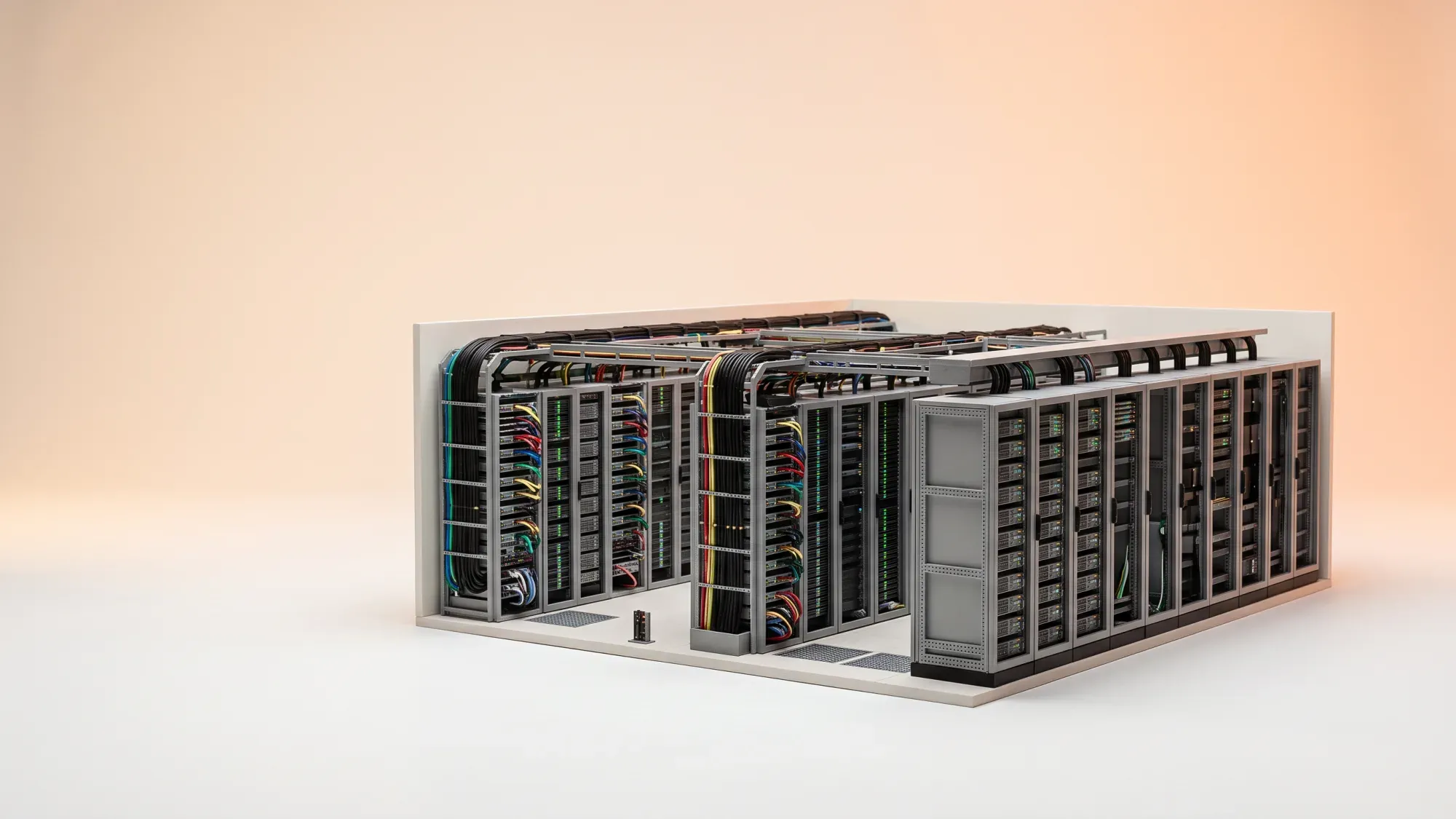
The rapid expansion of data centres across Europe is set to significantly increase electricity demand, placing a strain on existing energy grids and potentially leading to higher utility bills for consumers.1 This development raises critical questions about energy sustainability and affordability in the region.
Managing your home energy should be straightforward and clear. Fuse Energy focuses on transparent pricing and provides real-time usage data through its app, helping you understand and manage your electricity consumption. If you're looking for a modern energy experience designed around your needs, consider switching to Fuse Energy. Click here to get started.
Enter your address to get a quote and see how much you could save
The expanding footprint of European data centres
Europe's data centre market is experiencing substantial growth, driven by the accelerating pace of digital transformation and the widespread adoption of artificial intelligence (AI) technologies. This surge in demand for cloud services, data storage, and AI computing is leading to major investments across the continent. The UK, for instance, is emerging as a fast-growing region for data centres, propelled by increasing demand for digital services and cloud solutions.
Driving forces behind growth
The primary forces behind this expansion include the increasing demand for cloud services, the deployment of AI and Internet of Things (IoT) technologies, and a growing emphasis on sustainable infrastructure. Major tech companies are expanding their European data centre capacity to meet the growing need for cloud and AI infrastructure. This growth is not just about more data centres, but also a trend towards larger, more energy-efficient facilities.
Projected energy demand
The energy consumption of European data centres is projected to rise dramatically. In 2024, data centres consumed an estimated 96 terawatt-hours (TWh) of electricity, representing about 3% of Europe's total electricity demand. This figure is forecast to increase by nearly 150% over the next decade, reaching 168 TWh by 2030 and 236 TWh by 2035. By 2035, Moody's estimates that data centres could account for at least 5.7% of electricity demand in France and the UK, potentially reaching 17% in the Netherlands and 30% in Ireland. The EU aims to more than triple its data centre capacity within the next five to seven years.
Impact on Europe's energy grids and electricity prices
This escalating energy demand from data centres is creating significant challenges for Europe's energy infrastructure.
Grid strain and stability concerns
The rapid deployment of data-intensive technologies, particularly AI data centres, is outpacing the expansion of electricity infrastructure, raising concerns about the future reliability and resilience of energy systems globally. Data centres tend to concentrate in specific locations, making their integration into the grid particularly challenging. In 2023, data centres consumed between 33% and 42% of all electricity in Amsterdam, London, and Frankfurt, and nearly 80% in Dublin. This can lead to decreasing grid availability and increasing congestion in these major markets.
Rising electricity costs for consumers
The increased demand for electricity from data centres is a key factor contributing to rising electricity prices for consumers. While data centres typically cover the costs of their direct grid connections, the broader network reinforcement needed to support their growth is often borne by the grid operator. These additional costs, along with tighter supply-demand imbalances, could be passed on to end-users. Studies in the US have shown that data centres can meaningfully raise electricity prices, particularly for households, with some regions experiencing increases of up to 57% by 2030. Moody's forecasts that this growth in European data centres could lead to higher consumer energy bills and potential government interventions to limit the financial burden on customers.
How do data centres affect electricity prices?
Data centres increase electricity demand, which can strain existing grids and necessitate costly upgrades to infrastructure. These costs, along with tighter supply-demand imbalances, can be passed on to consumers through higher utility bills, impacting both households and businesses.
Sustainability and the future of data centre power
Addressing the energy demands of data centres requires a dual approach: improving current practices and pursuing systemic energy transformation.
Current approaches to green data centres
The European data centre industry is actively pursuing sustainability initiatives. The EU's Climate Neutral Data Centre Pact, a self-regulatory initiative backed by the European Commission, commits operators to ambitious 2030 targets. These include 100% renewable power, stringent Power Usage Effectiveness (PUE) requirements, water conservation, and waste heat reuse. The EU is also developing a common rating scheme for data centres to increase transparency on their energy and water use, and to support their sustainable integration into Europe's energy system. These efforts are driven by regulatory momentum, corporate ESG demands, and the economic imperative of high energy prices.
The need for systemic energy transformation
While current "green" certifications and efficiency measures are important, they are not sufficient to meet the long-term energy challenges posed by the expanding data centre industry. The sheer scale of projected demand necessitates a more fundamental shift in energy generation and distribution. The focus must move beyond incremental efficiency gains within the existing energy paradigm to a transformative approach that ensures abundant, cheap, and clean energy for all. This includes scaling up clean energy solutions like solar, wind, battery storage, and next-generation geothermal and nuclear power, while also improving demand flexibility and modernising the grid.
Strategic considerations for UK businesses
For UK business professionals, navigating this evolving energy landscape is crucial for informed decision-making regarding IT infrastructure.
Evaluating data centre locations and energy resilience
When selecting data centre locations in Europe, businesses must consider the stability and capacity of local energy grids. Traditional data centre hubs like Frankfurt, London, Amsterdam, Paris, and Dublin (FLAP-D) are experiencing grid saturation, pushing new capacity towards secondary cities. Some countries, such as Ireland and the Netherlands, have already introduced connection restrictions or constraints on where data centres can be built due to grid pressure. Evaluating providers based on their energy sourcing, efficiency, and long-term energy strategy is vital for ensuring operational resilience.
Long-term planning for energy cost and supply
Businesses need to develop long-term strategies for data centre energy that account for future price volatility and grid strain. This means assessing current and projected energy demands for IT infrastructure, researching energy market dynamics, and considering the broader impact of data centre energy consumption on regional sustainability goals. The cost of electricity can account for a significant portion of a data centre's operating expenses, making energy efficiency a financial imperative.
A vision for abundant energy in a digital future
The narrative of energy scarcity, often amplified by growing demand from sectors like data centres, can feel limiting. However, a different future is possible.
Moving beyond scarcity in energy planning
Instead of settling for a story of scarcity, we can envision a future where energy is so abundant it ceases to be a primary concern. This requires a shift in mindset, recognising that the fear of energy shortages is often manufactured, and that humanity has the right to use more energy, not less, to prosper. This vision challenges the prevailing notion that we must constantly "use less" and instead advocates for building an energy system that provides "power to play with" for everyone.
The role of innovation in meeting demand
Achieving this future demands transformative innovation in energy generation and distribution. Data centres, while currently straining power systems, are also catalysing innovation across generation, grid design, and business models. By investing in and deploying vast amounts of cheap, clean energy, and by vertically integrating and rebuilding the energy system from scratch, we can meet future demands without compromise. This includes leveraging technologies that allow data centres to contribute to grid balancing by adjusting their consumption, much like batteries or virtual interconnectors. This transformative approach, rather than incremental efficiency gains, is key to unlocking a future with abundant, clean energy for the digital age.
Take the stress out of managing your energy. With Fuse Energy, you get clear pricing, real-time usage data, 24/7 human customer support, and a modern energy experience designed around you. Signing up takes just a few minutes, so you can take control of your bills from day one. Click here to switch to Fuse Energy today and start saving.
Managing your energy bills should be clear and easy to understand. Fuse Energy focuses on straightforward pricing, so you can see exactly what you're paying without unnecessary complexity. If you have a smart meter, you can view detailed usage data through the app or website, helping you understand how you can lower your bills. If you don't have a smart meter, Fuse Energy can upgrade your non-smart meter, completely for free. This can make it easier to track spending and make informed decisions about your energy use. Our 24/7 human support team is always on hand with fast response times of under 5 minutes whenever you need help. Click here to switch to Fuse Energy today. Find out about our mission by clicking here.
References
Disclaimer
For the avoidance of doubt, this article is provided for informational purposes only and is not intended to constitute legal or financial advice. The author and/or Fuse Energy shall not be responsible for any losses arising out of any reliance on the information contained herein.