Europe's AI supercomputing boom strains power grids
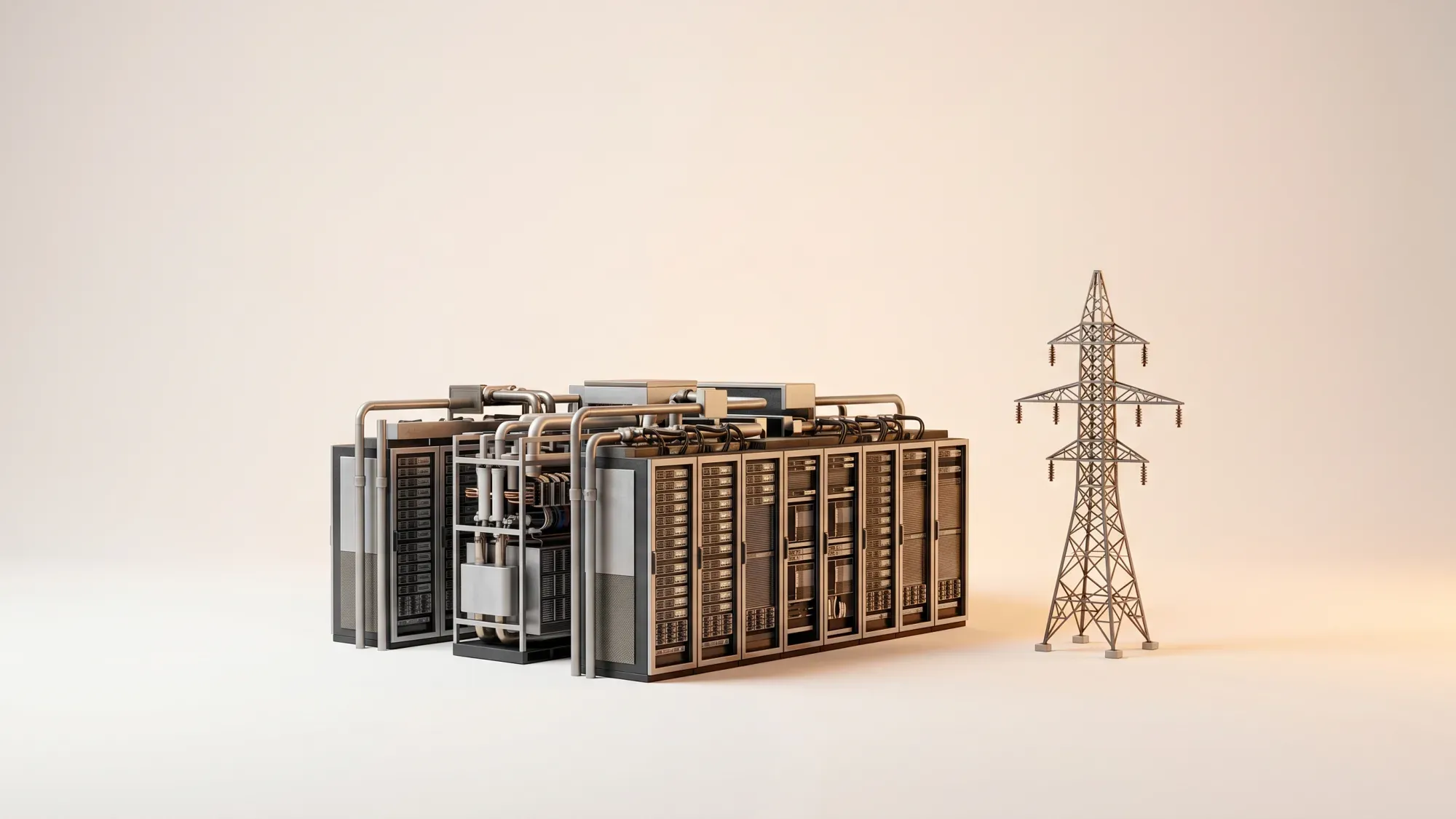
Europe is experiencing an unprecedented surge in AI supercomputing capabilities, with 35 new NVIDIA-powered systems under development. This expansion, representing roughly 800 AI exaflops deployed or announced since last year1, is largely driven by a strategic push for digital sovereignty. However, this rapid growth is placing immense strain on existing power grids, making grid access the primary bottleneck for new data centre development. Connection queues for new data centres can now stretch for years, creating a significant gap between Europe's compute ambitions and its infrastructure readiness. This challenge highlights the critical need for robust energy infrastructure to support technological advancement.
The rapid expansion of Europe's AI infrastructure highlights the critical need for robust and reliable energy supply. Fuse Energy is building a future where energy abundance supports technological advancement without straining the grid. Click here to switch to Fuse Energy today.
Enter your address to get a quote and see how much you could save
The surge in European AI supercomputing
Europe's commitment to advancing its AI capabilities is evident in the substantial investment in high-performance computing. The continent is seeing its largest one-year expansion of supercomputers, with 35 new NVIDIA AI high-performance computing (HPC) systems being built across the region. These systems collectively represent approximately 800 AI exaflops of deployed or announced capacity, powering research across critical fields such as climate science, healthcare, and clean energy decarbonisation.
Digital sovereignty and exascale ambitions
A key driver behind this aggressive expansion is Europe's pursuit of digital sovereignty. The goal is to develop, train, and operate advanced AI on European soil, under European data rules, reducing reliance on overseas cloud providers. This strategic imperative aims to ensure Europe's competitiveness in scientific research, technological innovation, and industrial applications. The ambition extends to the exascale era, where supercomputers can perform a quintillion (10) calculations per second, enabling breakthroughs in complex simulations and AI model training.
Key projects: JUPITER and MareNostrum5
Two flagship projects underscore Europe's exascale ambitions: JUPITER and MareNostrum5. JUPITER, hosted at Forschungszentrum Jülich in Germany, is Europe's first exascale supercomputer. It is designed to tackle major societal problems, from climate protection to the development of AI. Thomas Lippert, Director of the Jülich Supercomputing Centre, states that “With JUPITER, Europe doesn't just join the exascale era - it leads it, across the widest range of science and AI of any system worldwide.”
Meanwhile, the Barcelona Supercomputing Center's (BSC) upgraded MareNostrum5 is making significant contributions. Mateo Valero Cortés, Director of the BSC, noted that the upgraded MareNostrum5 will “With the upgrade to MareNostrum5 and NVIDIA accelerated computing, the consortium composed of Spain, Portugal and Türkiye will make available to European researchers the tools to tackle some of the world's most complex challenges, from climate modeling to biomedical discovery.”
The energy bottleneck: grid strain and capacity challenges
The immense power demands of these advanced AI supercomputing systems are creating significant pressure on Europe's existing energy infrastructure. Data centres are no longer a niche demand category; their rapid growth, driven by AI, is transforming them into systemically relevant electricity loads. This surge in demand is causing grid congestion and making grid access the primary bottleneck for new data centre development.
Connection queues and power demands
The challenge is particularly acute in traditional data centre hubs, where grid limitations are making them supply-constrained. Connection queues for new data centres can now extend for years, with some markets experiencing wait times of five to ten years. This significantly outstrips the typical two-year construction timeline for a data centre, creating a widening gap between compute ambitions and infrastructure readiness. Data centre electricity demand in Europe is projected to increase by well over 150% by 2035.
The shift to coastal data centres
In response to these grid constraints, data centre developers are increasingly looking beyond traditional inland hubs. A notable shift is occurring towards coastal locations, which offer strategic advantages such as access to cooling and potential alternative energy sources like wave power. This geographical redistribution aims to alleviate pressure on strained grids and leverage areas with more abundant energy resources and less congestion.
Strategic implications for Europe's tech race
The challenges posed by energy infrastructure are fundamentally reshaping Europe's technological ambitions. The race for AI leadership has evolved beyond raw compute power to become a race for the underlying infrastructure that can reliably support it.
The compute race becomes an infrastructure race
The ability to deliver firm power and undertake necessary transmission upgrades has become the critical factor in Europe's AI infrastructure race. High-voltage transmission projects routinely take five to ten years to go from application to delivery, a timeline that is far too slow for the rapid pace of data centre construction. This disconnect means that even with significant investment in supercomputing hardware, the lack of adequate energy infrastructure can stall progress.
Investment and innovation in energy solutions
Addressing this bottleneck requires substantial investment and innovation in energy solutions. This includes not only upgrading existing transmission networks and substations but also exploring new technologies and smarter regulations. The focus is shifting towards more flexible grid strategies, including non-firm grid connections and leveraging data centres themselves as active grid resources, given their power electronics and battery systems. The goal is to ensure that the energy system can keep pace with the exponential growth of AI and digital services.
Paving the way for future AI infrastructure
The current energy challenges facing Europe's AI infrastructure underscore a broader need to rethink fundamental energy systems.
Rethinking energy systems
The strain on European power grids highlights that the existing energy system, largely built for a different era, is struggling to accommodate the demands of modern, energy-intensive technologies like AI supercomputing. This necessitates a fundamental re-evaluation of how energy is generated, transmitted, and consumed. The transition requires not just more generation capacity, but also a more resilient, flexible, and intelligently managed grid capable of integrating diverse energy sources and responding to dynamic loads.
The vision for abundant power
The drive for exascale computing and digital sovereignty in Europe reflects a refusal to settle for limited capabilities. This ambition aligns conceptually with the vision for abundant, clean energy, where power is no longer a limiting factor for technological advancement. Fuse Energy's vision for a future with power to play with, where energy is so abundant it stops being a constraint, offers a conceptual framework for addressing these fundamental energy challenges. By focusing on rebuilding energy systems from scratch and never settling on scarcity, this vision supports the long-term enablement of ambitious projects like Europe's AI infrastructure expansion.
The challenges facing Europe's AI infrastructure underscore the importance of a modern, resilient energy system. At Fuse Energy, we believe in a future with power to play with, where energy is abundant and accessible. We're committed to rebuilding the energy system from scratch, offering clear pricing, real-time usage data, and 24/7 human customer support. Switching to Fuse is a power play, putting you in control of your energy. Click here to switch to Fuse Energy today and join us in building a future where energy empowers, rather than constrains. Find out more about our mission by clicking here.
References
- Highways Today. Power Ports Exaflops
Disclaimer
For the avoidance of doubt, this article is provided for informational purposes only and is not intended to constitute legal or financial advice. The author and/or Fuse Energy shall not be responsible for any losses arising out of any reliance on the information contained herein.