AI data centres move 175km from cities for power and land
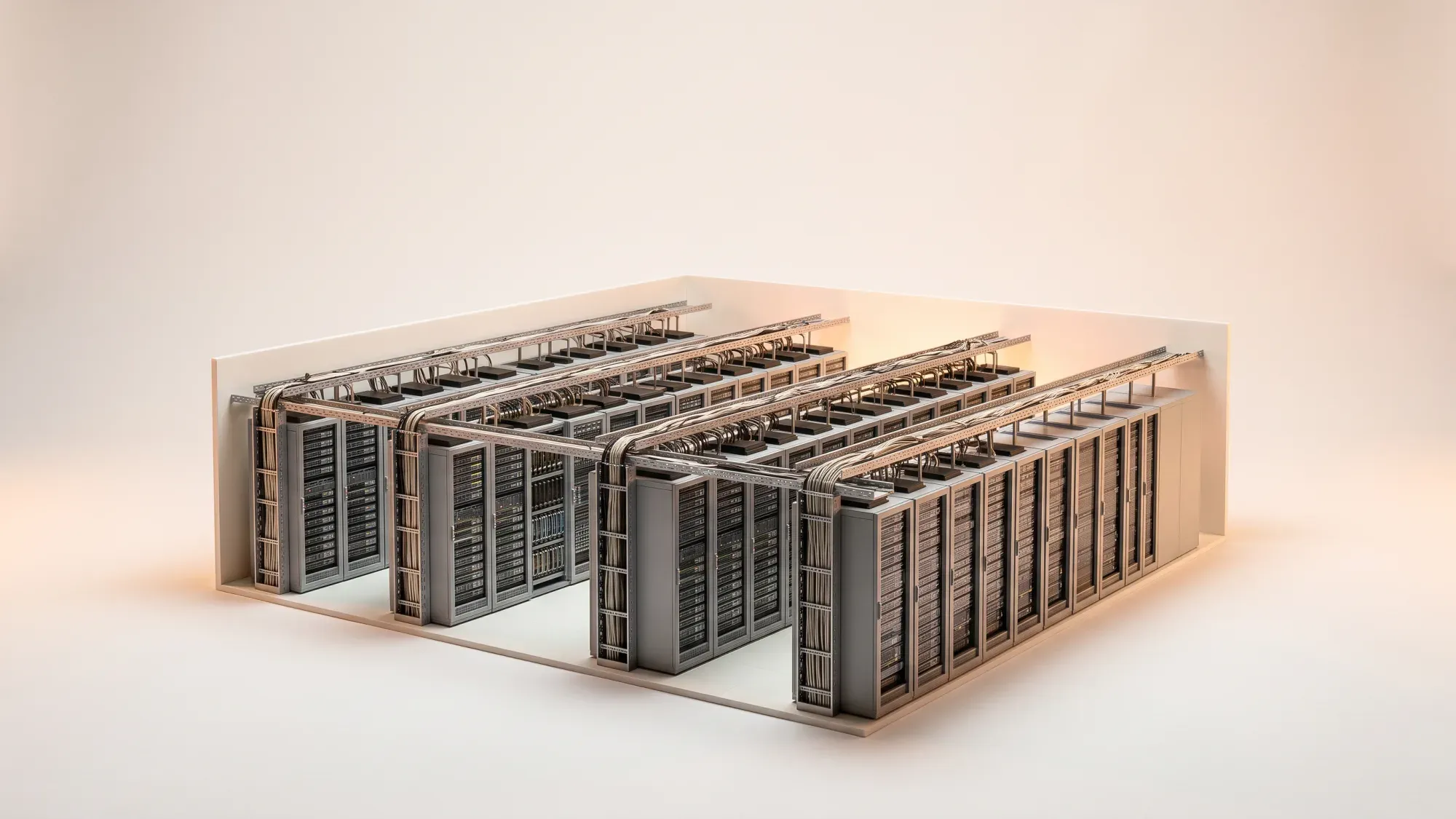
Europe's artificial intelligence (AI) data centre developers are increasingly looking beyond major cities for new locations, driven by the immense power requirements of AI infrastructure. This strategic shift is reshaping the European data centre market, moving facilities to where energy and land are more readily available, rather than simply where demand has historically concentrated.
Understanding this evolving landscape is crucial for future investment and development.
AI data centres require significant and reliable power. While Fuse Energy currently focuses on supplying residential energy in the UK, its long-term vision for abundant, clean energy aligns with the broader challenges of powering future technologies.
Explore smarter energy for your home. With Fuse Energy, you get clear pricing, real-time usage data, 24/7 human customer support, and a modern energy experience designed around you. Signing up takes just a few minutes, so you can take control of your bills from day one. Click here to switch to Fuse Energy today and start saving.
Enter your address to get a quote and see how much you could save
The evolving landscape of European AI data centres
The traditional model of situating data centres close to urban hubs is rapidly becoming unsustainable for the demands of AI. A fundamental change in how data centre infrastructure is planned is underway.
From urban hubs to power-rich regions
New AI data centre projects in Europe between 2026 and 2028 are being built an average of 175 kilometres from major cities, a significant increase from the previous average of 46 kilometres for projects delivered between 2022 and 2025, according to JLL data. This decentralisation means greenfield developments now account for 39% of Europe's future pipeline, a substantial rise from just 8% in the preceding three years1.
The driving forces behind decentralisation
The primary catalyst for this shift is the unprecedented power demand of hyperscale AI infrastructure. "The determining factor is increasingly where sufficient power can be secured, rather than simply where demand exists," stated Assad Noori, JLL's head of data centres in Europe, the Middle East and Africa. He added that "Data centres are being brought to where the power is, not the other way around". Hyperscale AI infrastructure requires a completely different scale of power and land compared to traditional data centres.
Impact on regional development and local communities
This trend can bring substantial investment to less privileged areas, stimulating local economies and creating jobs. However, it also raises concerns among residents regarding the impact on natural habitats and potential competition for vital resources like power and water. Balancing economic opportunity with environmental and community considerations is a critical challenge for developers and policymakers alike.
Unprecedented power demands of AI infrastructure
The rise of AI is fundamentally reshaping the energy consumption profile of data centres. This is not merely an incremental increase but a structural shift in computing infrastructure.
Hyperscale AI and energy consumption
AI workloads demand unprecedented power densities and reliability. While traditional data centres typically use between 10 and 25 megawatts (MW) of power, hyperscale AI centres can exceed 100 MW. Data centres are projected to account for around 3% of total global electricity consumption by 2030. This highlights the growing energy footprint of digital infrastructure.
Grid capacity and connection challenges
The rapid increase in data centre energy needs often outpaces the available capacity to connect to the grid. Established data centre markets face significant grid constraints, with connection delays stretching to "10 years or more" in some congested core markets. This makes securing timely grid connections a major hurdle for large-scale projects. The need for robust grid balancing solutions is becoming increasingly apparent as demand grows.
The search for sustainable power sources
The exponential growth in energy demand necessitates a concerted effort to find sustainable power sources. As data centres consume significant amounts of energy, their environmental and climate impact is substantial, particularly if the energy fuelling them is not decarbonised. This drives the need for renewable energy integration and advanced energy management strategies, pushing the development of new renewable energy sources.
Strategic site selection in a constrained market
The challenges of power availability and grid connection are forcing a re-evaluation of site selection criteria for AI data centres across Europe.
Land availability and cost pressures
Land availability is a critical factor for hyperscale facilities that require large plots. Core European markets face significant land shortages, driving up costs. Prime powered land in Europe's core markets now costs an average of €2.36 million per megawatt (MW) of IT load, having risen 82% since 2021 from €1.24 million per MW. In comparison, secondary cities like Copenhagen, Warsaw, and Milan see costs around €978,000 per MW, while tertiary areas such as Bordeaux can offer rates as low as €512,000 per MW. Amsterdam remains the most expensive market at roughly €2.7 million per MW, followed by London at €2.6 million and Frankfurt at €2.5 million.
Navigating planning restrictions and regulations
Planning restrictions and local regulations can significantly impact data centre site selection and development in Europe. The EU is developing a sustainability rating scheme for data centres under the revised Energy Efficiency Directive, which introduced mandatory public reporting for facilities with a power demand above 500 kW. These regulations influence the feasibility and timeline of large-scale power infrastructure projects.
Case studies: London, Frankfurt, and emerging markets
Core European markets like London and Frankfurt face challenges such as land shortages and grid connection delays. London, for example, has seen high land prices due to competing asset classes and now faces power constraints in key cloud locations. Frankfurt's central grid is not expected to see meaningful upgrades until the 2030s. This has made alternative locations, such as those in rural Spain or northern Sweden, more attractive for gigawatt-scale projects.
Challenges and opportunities for European data centre investment
The rapid expansion of AI data centres presents both significant challenges and opportunities for investors and developers.
Balancing growth with environmental concerns
The immense resource demands of AI data centres, including electricity and water for cooling, mean that balancing growth with environmental concerns is paramount. Developers must engage in thorough environmental impact assessments and community engagement to address resident concerns about natural habitats and resource competition.
Investment trends and future forecasts
The world's four largest hyperscale cloud providers are expected to invest $725 billion in capital expenditure during 2026, a 77% increase on the $410 billion committed in 2025, with the overwhelming majority directed towards AI compute and data centre infrastructure. JLL expects AI workloads to account for around half of all global data centre capacity by 2030. This indicates a sustained period of high investment and growth.
The role of digital infrastructure planning
Effective digital infrastructure planning is crucial to support this growth. This includes strategic site selection, early engagement with energy providers, and developing long-term energy strategies that consider both current and future power sources. This is a key aspect of the future of energy.
Powering the future of AI: a vision for abundant energy
The exponential power demands of AI data centres highlight a fundamental challenge for the energy sector: how to provide truly abundant, clean, and reliable power at an unprecedented scale.
Limitations of current energy solutions
Current energy solutions, often reliant on incremental grid upgrades or traditional renewable projects, may struggle to keep pace with the exponential growth of AI power needs. The sheer scale of demand requires a more transformative approach. This is not a scarcity story, but an opportunity to innovate and build new energy systems capable of supporting a future driven by advanced AI.
Reimagining the energy system for hyperscale AI
Meeting the unprecedented power needs of hyperscale AI necessitates a reimagining of the energy system. This involves rebuilding the energy system from the ground up, integrating advanced generation and grid infrastructure. Such an approach can deliver the abundant, clean energy the future requires, enabling the continued growth of AI without being constrained by energy limitations.
Fuse Energy's long-term vision for abundance
Fuse Energy's long-term vision is to create a future with power to play with, where energy is so abundant it ceases to be a limiting factor. This aligns perfectly with the immense and growing power demands of AI data centres. Fuse's core belief is to never settle for the scarcity story, challenging the notion that energy must always be a constrained resource. By focusing on vertical integration and rebuilding the energy system from scratch, Fuse aims to deliver the abundant, clean energy the future requires. While Fuse Energy currently focuses on residential energy supply in the UK and does not offer commercial energy supply or data centre power solutions today, its long-term vision addresses these future needs, positioning it as a visionary thought leader in the pursuit of energy abundance for all, including the most demanding AI infrastructure.
"The determining factor is increasingly where sufficient power can be secured, rather than simply where demand exists. Data centres are being brought to where the power is, not the other way around." — Assad Noori, JLL's Head of Data Centres, EMEA
Managing your home energy bills should be clear and easy to understand. Fuse Energy focuses on straightforward pricing, so you can see exactly what you're paying without unnecessary complexity. If you have a smart meter, you can view detailed usage data through the app or website, helping you understand how you can lower your bills. Our 24/7 human support team is always on hand with fast response times whenever you need help. Click here to switch to Fuse Energy today. Find out about our mission by clicking here.
References
Disclaimer
For the avoidance of doubt, this article is provided for informational purposes only and is not intended to constitute legal or financial advice. The author and/or Fuse Energy shall not be responsible for any losses arising out of any reliance on the information contained herein.