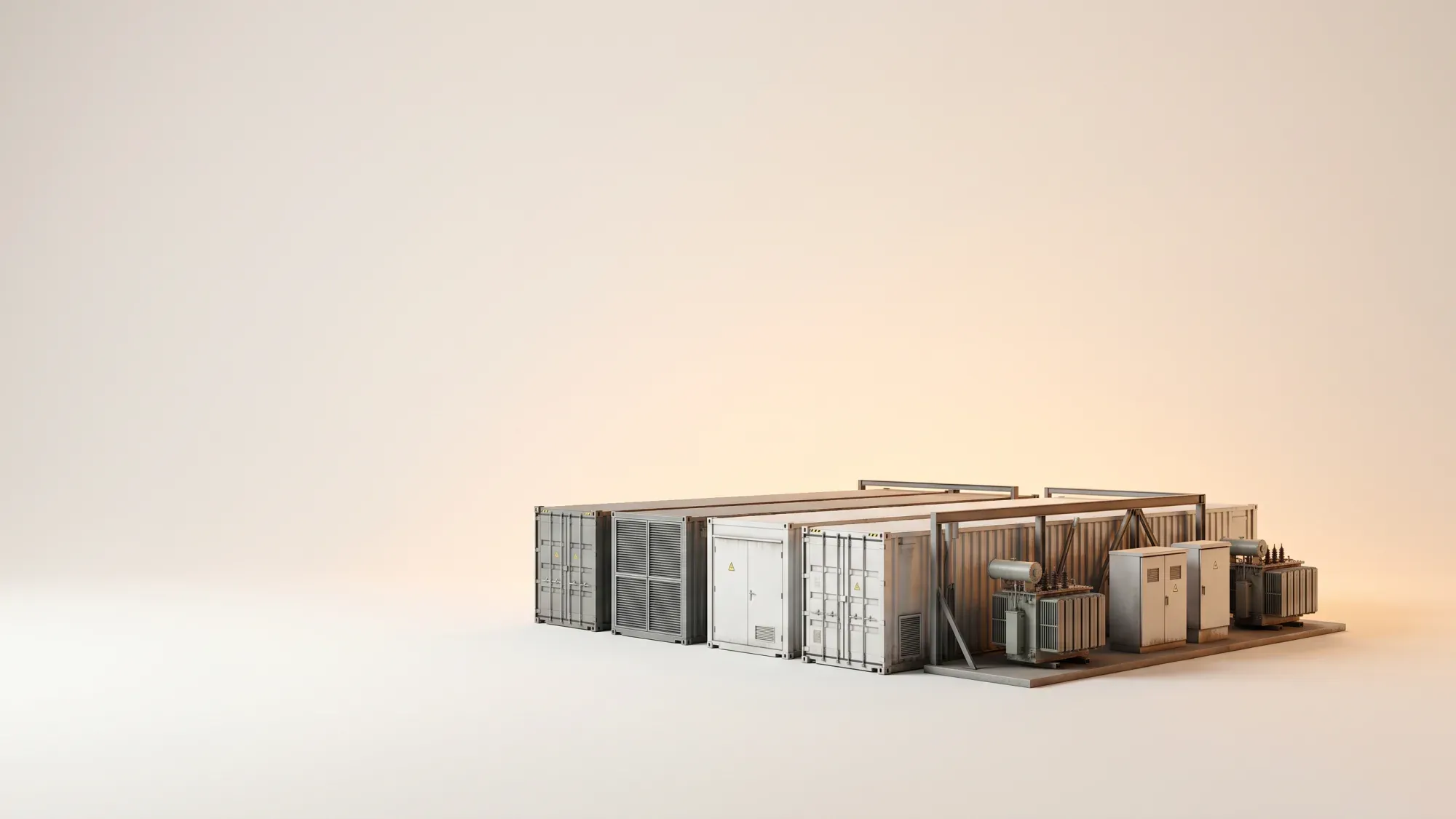
Engie has brought two new Battery Energy Storage Systems (BESS) in Scotland to full commercial operation1, significantly enhancing the UK's low-carbon electricity system. These facilities are set to play a crucial role in enhancing grid stability and accelerating the integration of renewable energy sources across the nation. This development aligns with the broader imperative for achieving energy abundance and grid resilience.
Understanding how large-scale battery storage strengthens the UK's energy network is key to a future with reliable, clean power. Fuse Energy is committed to a future where energy is abundant and accessible, empowering you with control over your home's energy use.
Key specifications and locations
Engie has brought two new 50MW/100MWh BESS in Scotland to full commercial operation. These facilities are located at Cathkin, near East Kilbride, and Broxburn, west of Edinburgh. Combined, they provide 200MWh of energy storage, each designed with a two-hour duration.
Enhancing grid flexibility and stability
The primary function of these BESS facilities is to capture surplus renewable electricity during periods of high generation and release it back to the grid when demand is higher. This mechanism improves network stability and reduces reliance on fossil fuel generation, contributing to a more resilient electricity network. Flexible storage infrastructure is essential as renewable energy becomes an increasingly important part of the electricity mix.
Integrating renewable energy sources
Large-scale battery storage systems are crucial for integrating intermittent renewable energy sources such as wind and solar power into the grid. By balancing electricity supply and demand, these systems enable greater use of clean energy, which is vital for a sustainable energy mix. Energy storage ensures that excess renewable energy generated during peak production periods is stored and made available when needed, facilitating a reliable transition to a clean energy grid.
Minimising wasted generation
One of the key benefits of BESS is its ability to minimise wasted renewable generation. Without adequate storage, surplus electricity produced by wind farms or solar arrays during low demand periods might be curtailed. Battery storage mitigates this by storing the excess, ensuring that valuable clean energy is not lost and can be deployed when needed.
Engie's ORUS platform
Engie's BESS facilities in Scotland participate in UK electricity and balancing markets, with their dynamic response to grid needs powered by the company's AI-driven optimisation platform, ORUS. This technology is central to maximising the efficiency and effectiveness of these storage assets.
Maximising operational performance
ORUS utilises real-time data, advanced analytics, and automated market participation to maximise operational performance. This intelligent approach helps to integrate increasing volumes of clean electricity into the grid more smoothly, unlocking value across multiple revenue streams.
Supporting low-carbon electricity
Scotland is a pioneer in renewable energy, making significant progress in electricity generation from zero or low-carbon sources. In 2023, 91.2% of Scotland's electricity consumption came from renewable sources, demonstrating a substantial achievement in decarbonisation. The Scottish Government aims for the equivalent of 50% of the country's overall energy consumption to come from renewable sources by 2030.
Pathway to net zero
Scotland has a legally binding commitment to achieve net-zero emissions by 2045, five years ahead of the rest of the UK. This ambitious target requires a near-complete decarbonisation of its energy system. Investments in infrastructure like large-scale battery storage are crucial for growing Scotland's renewable electricity generation capacity and ensuring the effective storage, transmission, and use of this energy.
Expanding storage capacity
The UK's energy storage market is experiencing significant growth, driven by the integration of renewable energy, technological advancements, and supportive regulatory frameworks. The government expects 23-27 GW of BESS will be needed by 2030, a substantial increase from current capacity. Industry is well-equipped to deliver this, with 45 GW of battery projects consented or under construction across the UK. Scotland is emerging as a key growth area for energy storage due to its high wind output and existing network constraints.
Towards a sustainable energy mix
The deployment of large-scale battery storage systems, such as those commissioned by Engie, represents a significant step towards a cleaner, more flexible, and sustainable energy future for the UK. These projects contribute to reducing reliance on fossil fuels, improving energy security, and making clean power dependable year-round. The ongoing investment in flexible, low-carbon infrastructure underscores a collective commitment to achieving net-zero targets and building an energy system with power to play with.
Managing your home's energy should be straightforward and transparent. Fuse Energy offers clear pricing, real-time usage data through our app, and 24/7 human customer support to help you take control of your bills. Switching to Fuse is quick and easy, designed to give you a modern energy experience.