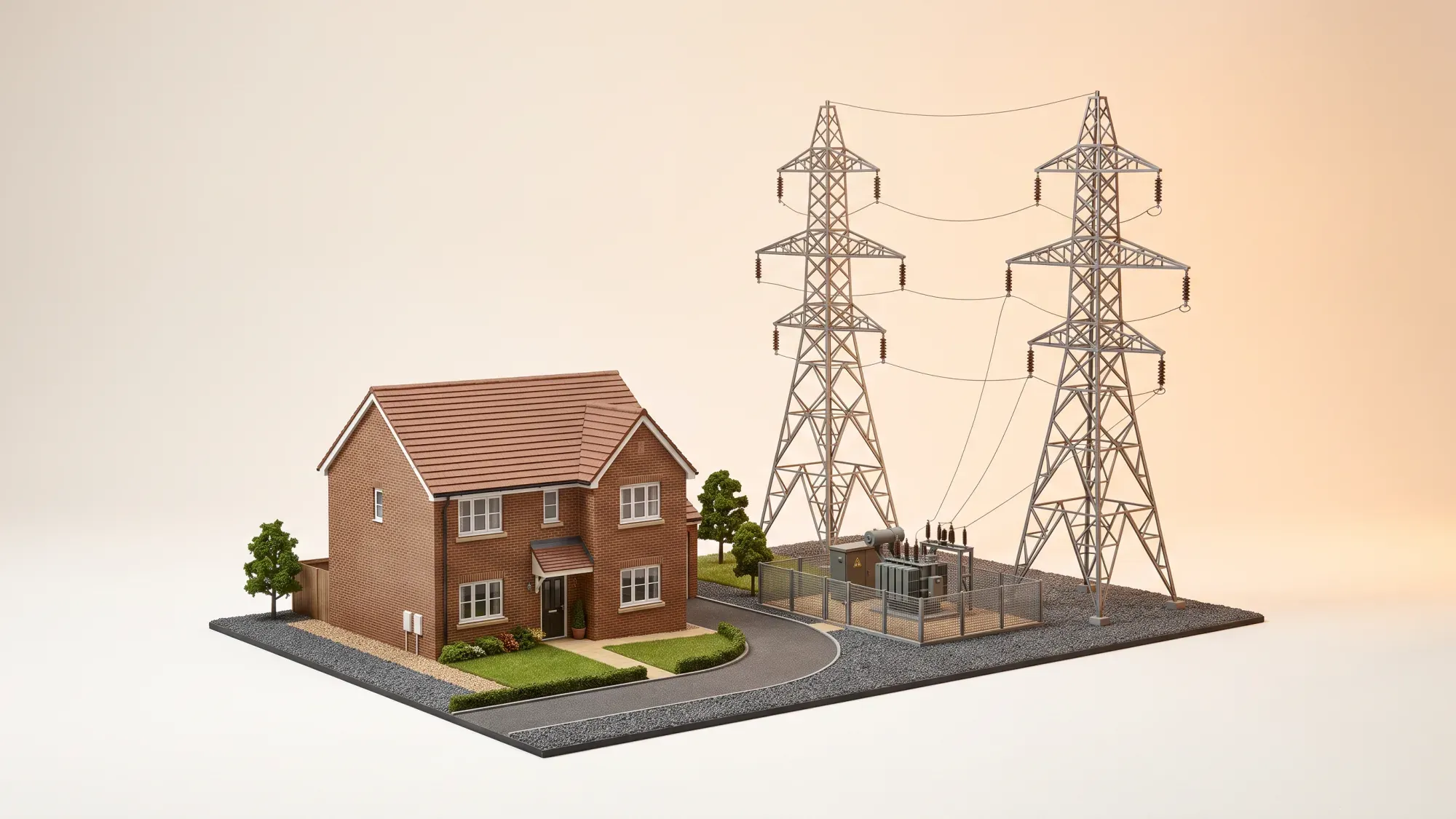
Households situated near new electricity transmission infrastructure are set to receive an annual energy bill discount, but the scheme's funding mechanism has ignited a debate. This article explores the details of this new residential discount, critically examines the controversy surrounding its funding, and outlines other key grants and schemes available to UK homeowners looking to invest in their home energy infrastructure.
Understanding the various energy discounts and grants available can help you manage your household bills more effectively. Fuse Energy is committed to providing transparent information and support to help you navigate these options. Click here to switch to Fuse Energy.
Energy infrastructure, from power stations to the transmission lines that deliver electricity to homes, plays a critical role in determining household energy bills. Efficient and modern infrastructure can help reduce costs and improve reliability, but its development often comes with local impacts.
The role of energy infrastructure in household bills
The vast network of pylons, cables and substations that make up the UK's electricity transmission infrastructure is essential for delivering power to homes. Investment in this infrastructure is necessary to upgrade an ageing grid and integrate new renewable energy sources. While these upgrades are crucial for a sustainable energy future, their costs are typically recovered through charges on all energy bills.
Overview of government support for homeowners
The UK government offers various schemes and discounts to encourage investment in home energy infrastructure and alleviate energy costs. These range from grants for installing energy-efficient measures to broader support for those struggling with fuel poverty. Understanding these programmes is key for homeowners seeking to reduce their energy bills and improve their home's energy performance.
A new initiative aims to recognise communities hosting vital energy infrastructure by offering direct financial benefits. However, its funding model has drawn significant criticism.
Who is eligible for the £250 annual discount?
Households located within 500 metres of new electricity transmission infrastructure are eligible for an annual discount of up to £250 on their energy bills. This support is designed to last for up to ten years, acknowledging the local impact of major grid developments.1
The controversial funding mechanism: burden on all billpayers
The funding for this specific residential discount scheme will be an obligation on electricity suppliers. This means the cost will be passed on to all billpayers across the country, including those already experiencing fuel poverty. This approach has sparked concern, as it effectively redistributes costs from one group of consumers to all others.
Criticism from the End fuel poverty Coalition and Citizens Advice
The funding mechanism has been sharply criticised by organisations advocating for vulnerable consumers. The End Fuel Poverty Coalition argues that while communities hosting new grid infrastructure deserve recognition, "taking money from everyone else’s energy bills is the wrong approach". They highlight that network companies have made substantial profits. Citizens Advice calculated that network companies received around £5 billion in windfall returns due to how Ofgem's price controls responded to inflation, a figure now projected to reach up to £7 billion by 2028. The Coalition contends that these profits should be used to fund such schemes instead of burdening all consumers.
While the new infrastructure discount addresses a specific local impact, broader national schemes exist to help homeowners improve energy efficiency and adopt low-carbon heating.
Boiler Upgrade Scheme (BUS)
The Boiler Upgrade Scheme (BUS) supports the decarbonisation of homes and small non-domestic buildings in England and Wales. It provides upfront capital grants to encourage property owners to replace existing fossil fuel heating systems with more efficient, low-carbon alternatives such as air source heat pumps, ground source heat pumps, or, in limited circumstances, biomass boilers. You can get £7,500 off the cost and installation of an air source or ground source heat pump, and £5,000 off a biomass boiler. The scheme is scheduled to run until 30 December 2029. Eligibility requires you to own the property, be replacing a fossil fuel heating system, and have a valid Energy Performance Certificate (EPC). The installer applies for the grant on your behalf, deducting the amount from your installation quote.
Energy Company Obligation (ECO4)
The Energy Company Obligation (ECO4) is a UK government energy efficiency scheme in Great Britain designed to tackle fuel poverty and reduce carbon emissions. It places obligations on large energy suppliers to fund home improvements, such as insulation, heating upgrades, and other energy-saving measures, for low-income and vulnerable households. The scheme runs from April 2022 to 31 December 2026. Eligible households can receive up to £25,000 for upgrades, with eligibility often based on receiving means-tested benefits and having an EPC rating of D-G.
Local authority grants and support
Many local authorities across the UK offer their own grants and support programmes for home energy improvements. These can vary significantly by region and may include funding for insulation, solar panels or other energy-saving measures. Homeowners should check with their local council for available schemes.
Smart meter upgrades and their benefits
Smart meters are being rolled out across the UK, offering homeowners more control and transparency over their energy usage. They provide real-time data, helping households understand where their energy is going and identify opportunities to save. Upgrading to a smart meter is typically free and can unlock access to tariffs designed for smart energy management.
Navigating the array of grants and schemes can be complex, but a strategic approach can help homeowners make the most of available incentives.
Assessing your home's needs for upgrades
Before applying for any scheme, it is crucial to assess your home's specific energy needs and identify the most impactful upgrades. This might involve a home energy audit to pinpoint areas of heat loss or evaluate the suitability of your property for solar panels or a heat pump. The average UK home uses around 2,500 kWh of electricity per year, so understanding your own consumption is a good starting point.
Navigating eligibility and application processes
Each grant and discount scheme has specific eligibility criteria and application procedures. Homeowners need to carefully review these requirements, gather necessary documentation and submit applications accurately and on time. Some schemes may require using accredited installers or specific product types.
Comparing long-term savings and environmental benefits
While upfront discounts are attractive, consider the long-term savings and environmental benefits of any home energy upgrade. Investments in insulation, solar panels or heat pumps can significantly reduce ongoing energy bills and lower your carbon footprint for years to come, contributing to greater energy independence.
Fuse Energy empowers homeowners to navigate the complex landscape of residential energy infrastructure discounts, offering transparency and support to achieve greater energy control and independence.
Challenging the 'scarcity story' in energy funding
Fuse challenges the notion that energy discounts must come at the expense of other consumers. We believe in a more equitable and abundant energy future where network company profits could fund such initiatives, rather than perpetuating a "scarcity story" that burdens all billpayers.
Empowering homeowners with 'power to play with'
Fuse empowers homeowners by clarifying available discounts and grants, enabling them to take control of their energy usage and invest in infrastructure that provides greater energy independence. This aligns with Fuse's vision of giving customers "power to play with" - the ability to manage and optimise their energy for their own benefit.
Transparency and support in a complex energy market
Fuse's commitment to transparency extends to explaining the true costs and funding mechanisms of energy discounts, helping homeowners make informed decisions about their energy future. Our 24/7 human customer support is available to assist homeowners in navigating complex energy schemes and understanding their eligibility for various grants and discounts.
Managing your energy bills should be clear and easy to understand. Fuse Energy focuses on straightforward pricing, so you can see exactly what you're paying without unnecessary complexity. If you have a smart meter, you can view detailed usage data through the app or website, helping you understand how you can lower your bills. Our 24/7 human support team is always on hand with fast response times whenever you need help. Click here to switch to Fuse Energy today. Find out about our mission by clicking here.