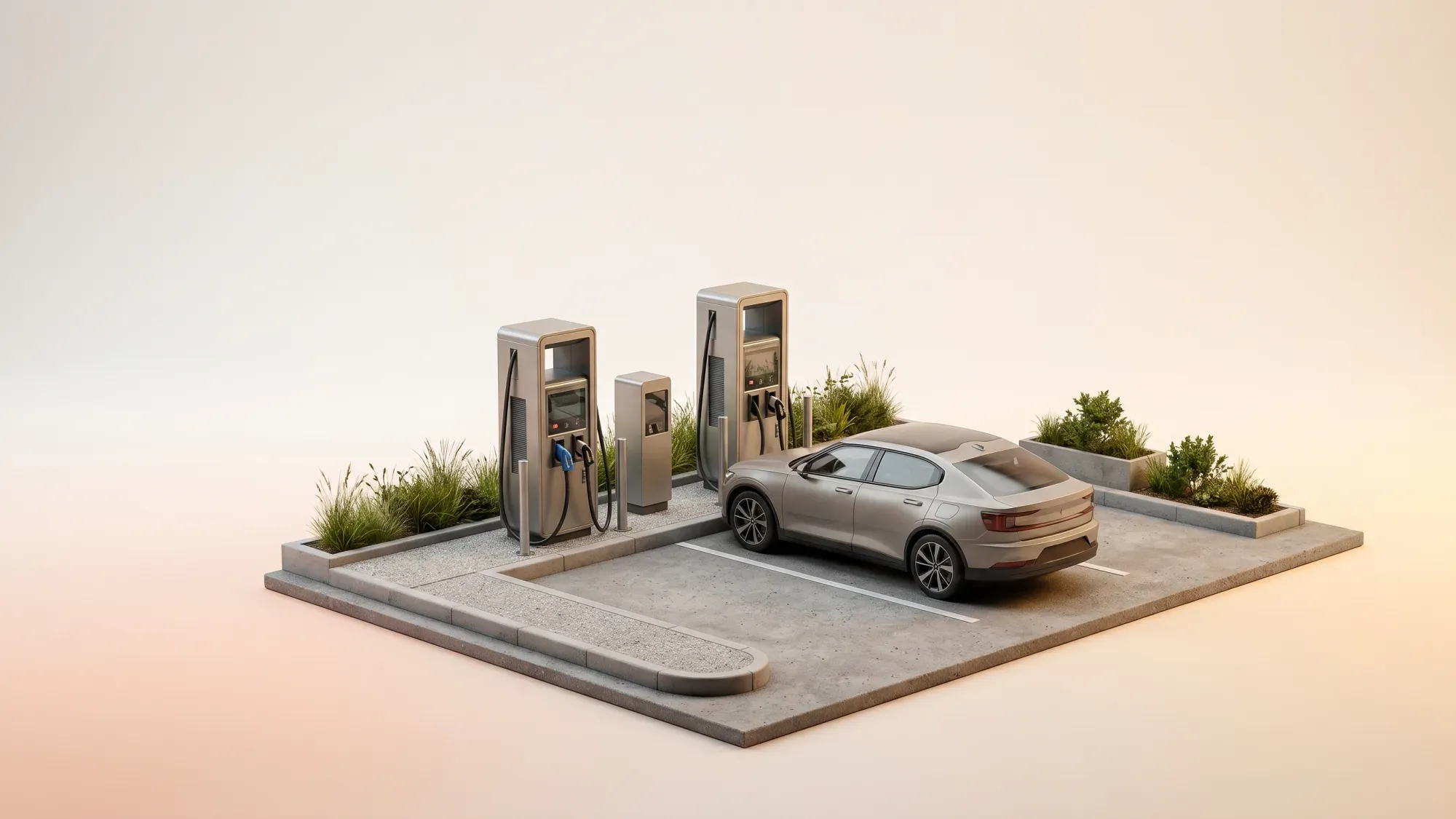
Motor Fuel Group (MFG) has announced a significant reduction in its ultra-rapid electric vehicle (EV) charging prices across its MFG EV Power network for the summer. From 1 July to 30 September, motorists can charge their EVs for 59p per kilowatt-hour (kWh), a 25% decrease from the previous 79p per kWh1. This move aims to make summer journeys cheaper and more convenient for EV drivers across the UK.
Thinking about MFG slashes EV charging price by 25% for summer? Fuse Energy installs the Easee One smart home EV charger for a flat £899 including full installation, up to 15m of cabling, surge protection, and a 3-year warranty. Tap the quote button below to get started.
MFG's summer price drop: what it means for EV drivers
The reduction in ultra-rapid charging costs by MFG is a notable development for electric car owners. It directly addresses one of the key concerns for EV drivers: the cost of public charging.
The 25% reduction explained
MFG has cut its ultra-rapid EV charging price to 59p per kWh for summer 2026, down from 79p per kWh. This represents a 25% decrease in cost for drivers using the MFG EV Power network. The summer price reduction is valid from 1 July to 30 September 2026.
Savings on ultra-rapid charging
This 20p per kWh saving is expected to put up to £6 back into drivers' pockets per typical charging session. MFG operates over 2,000 charging bays at 600 locations nationwide, offering charging capacities of 150 kW, 300 kW, and 400 kW. These ultra-rapid chargers can add up to 100 miles of range in approximately 10 minutes for compatible vehicles.
MFG's commitment to UK EV drivers
Martin Symes, EV Director of MFG, highlighted the company's dedication to supporting British EV drivers. MFG plans to install over 3,000 ultra-rapid chargers by 2030 as part of its long-term electrification strategy, aiming to offer some of the lowest rapid-charging prices in the UK.
"This summer price drop is our commitment to British EV drivers: we are putting you first, cutting our ultra-rapid charging rate to just 59p/kWh so that your summer journeys are cheaper, greener, and hassle-free."
— Martin Symes, EV Director, MFG
Understanding electric car charging prices in the UK
Electric car charging costs in the UK vary significantly, influenced by several factors. Understanding these can help drivers manage their expenses more effectively.
Factors influencing public charging rates
Public charging prices are influenced by charger speed (rapid, ultra-rapid), the network operator, location, and whether a subscription model is used. Ultra-rapid chargers, while offering convenience and speed, typically have higher per-kWh rates than slower public chargers.
Public charging network overview
The UK's EV charging infrastructure is expanding, with major operators like MFG investing in nationwide networks. These networks offer various pricing structures, including pay-as-you-go options and subscription services that can provide discounts.
Rapid versus ultra-rapid charging costs
Rapid and ultra-rapid charging stations offer quick top-ups, ideal for longer journeys or when time is limited. However, this speed often comes at a premium compared to slower charging options or home charging. The recent MFG price drop makes ultra-rapid charging more competitive for the summer period.
Optimising your home electric car charging price
While public charging networks are essential for travel, home charging generally offers the most cost-effective solution for EV owners.
The benefits of home charging
Home charging is generally cheaper than public charging, especially when utilising off-peak electricity tariffs. It provides convenience, allowing drivers to charge their vehicles overnight and wake up to a full battery.
Smart meters and time-of-use tariffs
Smart meters are crucial for optimising home EV charging costs. They enable access to time-of-use tariffs, which offer cheaper electricity rates during off-peak hours, typically overnight. By scheduling charging sessions during these periods, EV drivers can significantly reduce their electric car charging price. Fuse Energy focuses on smart meters and off-peak tariffs to align with efficient, cost-effective home EV charging.
Integrating renewable energy for cheaper EV charging
For those looking to further reduce costs and environmental impact, integrating home renewable energy sources like solar panels with EV charging can provide substantial savings. Excess solar energy can be used to charge an EV, making the process even greener and potentially free.
Strategies for cheaper EV charging
Managing electric car charging costs requires a proactive approach, combining smart home charging habits with informed public charging choices.
Comparing public charging networks and apps
The UK market has numerous public charging networks, each with its own pricing. Using apps that compare prices across different networks can help drivers find the cheapest options available in their area or along their route.
Leveraging loyalty programmes and subscriptions
Many charging point operators offer loyalty programmes or subscription services that provide discounted rates. For frequent users of a particular network, these can lead to significant savings over time.
Planning journeys for cost-effective charging
Planning longer journeys to incorporate cost-effective charging stops is a smart strategy. This might involve identifying locations with cheaper rapid chargers or utilising destination chargers at hotels or supermarkets while parked.
The future of electric car charging costs
The landscape of EV charging costs in the UK is dynamic, with ongoing developments promising further improvements for drivers.
Expansion of UK EV infrastructure
The UK's EV charging infrastructure continues to expand rapidly. MFG, for example, is investing significantly to deploy over 3,000 ultra-rapid chargers by 2030. This expansion will increase competition and accessibility, which could lead to more competitive pricing.
Potential for further price reductions
As the EV market matures and infrastructure grows, there is potential for further price reductions in public charging. Increased competition among charging providers and advancements in energy storage and grid management could contribute to lower costs for consumers.
Long-term electric car savings
Despite the variable costs of public charging, electric cars generally offer long-term savings compared to petrol or diesel vehicles, particularly when home charging is optimised. The ongoing efforts by companies like MFG to reduce public charging prices further enhance the financial appeal of electric vehicle ownership.
Thinking about MFG slashes EV charging price by 25% for summer? Fuse Energy installs the Easee One smart home EV charger for a flat £899 including full installation, up to 15m of cabling, surge protection, and a 3-year warranty. Tap the quote button below to get started.
For the avoidance of doubt, this article is provided for informational purposes only and is not intended to constitute legal or financial advice. The author and/or Fuse Energy shall not be responsible for any losses arising out of any reliance on the information contained herein.