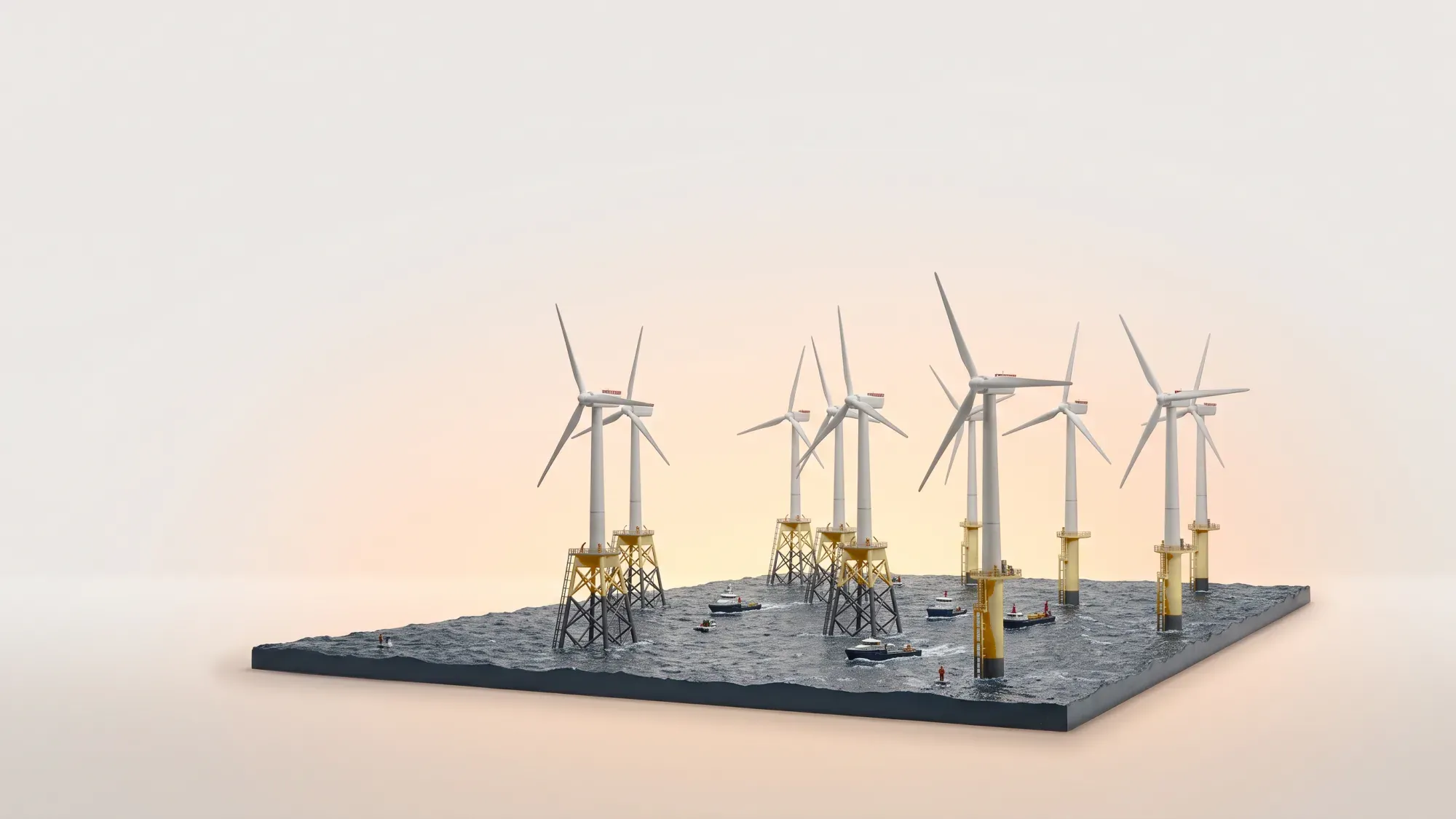
The East Anglia THREE offshore windfarm has completed the installation of all 95 foundations, marking a significant engineering milestone for the £4 billion project off the Suffolk coast. This 1.4GW windfarm, a joint venture between Masdar and ScottishPower Renewables, is set to provide clean electricity to over 1.3 million UK homes by the end of 2026.1
The progress on East Anglia THREE highlights the UK's commitment to large-scale renewable energy. If you're looking to make your own home energy more efficient and sustainable, Fuse Energy offers smart solutions designed to put you in control. Click here to switch to Fuse Energy today.
The East Anglia THREE project represents a monumental step in the UK's energy transition, demonstrating the sheer scale of modern renewable energy infrastructure. It is designed to deliver a substantial boost to the nation's clean power generation capacity, ensuring more homes have access to reliable, home-grown electricity.
The scale of East Anglia THREE
With an investment of approximately £4 billion, East Anglia THREE is one of the UK's largest offshore windfarms, poised to significantly contribute to the nation's energy independence. Its immense capacity underscores the commitment to developing large-scale renewable projects that can meet growing energy demands.
Location and capacity
Located off the Suffolk coast, the windfarm boasts a 1.4GW capacity, capable of powering more than 1.3 million average UK homes annually. This strategic location in the southern North Sea positions it as a vital asset for the East of England and the wider National Grid.
Key partners: Masdar and ScottishPower Renewables
The project is a 50:50 joint venture between Masdar, a clean energy developer, and ScottishPower Renewables. This partnership combines global expertise and investment to drive forward one of the UK's most ambitious renewable energy initiatives.
Constructing an offshore windfarm of this magnitude involves complex engineering challenges, with each milestone representing a significant achievement in renewable infrastructure development. The East Anglia THREE project has already seen remarkable progress in its construction phases.
Foundation installation: a remarkable achievement
The completion of all 95 foundation installations is a pivotal moment for the project. These monopiles, weighing between 1,200 and 1,800 tonnes and standing 67-84 metres tall, are among the largest ever installed from a jack-up vessel in Europe. Husain Al Meer, Executive Director, Global Offshore Wind and UK at Masdar, called the completion of foundation installation "a significant milestone and a remarkable engineering achievement". Charlie Jordan, CEO of ScottishPower Renewables, further described it as "a true engineering triumph", highlighting the scale of anchoring over 200,000 tonnes of steel into the seabed.
Turbine installation progress
Following the foundation work, turbine installation is now well underway, having passed the halfway mark. This phase involves fitting the massive turbines, each with 115-metre blades, onto the installed foundations, bringing the windfarm closer to generating clean power.
The role of Seaway7 and the supply chain
The foundation installation was delivered by Seaway7, utilising its jack-up vessel, Seaway Ventus. This collaboration highlights the specialised expertise required for such projects and the intricate network of companies involved in the offshore wind supply chain.
Beyond its environmental benefits, the East Anglia THREE offshore windfarm is a significant economic driver, injecting substantial investment into the UK economy and creating numerous job opportunities.
Billions in UK supply chain investment
The project has attracted nearly £2 billion in investment for the UK supply chain. This includes contracts for foundation design, manufacturing turbine blades at Siemens Gamesa's factory in Hull, and various vessel charters and consultancy services from UK-based firms.
Job creation in the East of England
East Anglia THREE is supporting 2,300 jobs during its construction phase. Additionally, it is expected to create around 100 long-term operation and maintenance roles in the East of England, providing stable employment and fostering specialist skills within the region.
Boosting local and national economies
This substantial investment and job creation not only benefits the East of England but also contributes to the national economy, strengthening the UK's position as a leader in renewable energy development and manufacturing. Understanding the broader UK energy crisis explained can provide further context on the importance of such projects.
The East Anglia THREE windfarm is a cornerstone of the UK's strategy to enhance energy security, reduce reliance on fossil fuels, and meet ambitious climate targets.
Contributing to renewable energy targets
The 1.4GW capacity of East Anglia THREE will play a crucial role in helping the UK achieve its renewable energy targets, contributing to a grid powered by zero-carbon electricity sources.
Reducing carbon emissions
By generating clean electricity for over 1.3 million homes, the windfarm will significantly reduce carbon emissions, contributing to the UK's broader carbon reduction initiatives and net-zero goals. For homeowners, exploring options like solar panel cost can also contribute to reducing individual carbon footprints.
Ensuring home-grown power at scale
Husain Al Meer emphasised that "offshore wind will be essential to delivering affordable, home-grown power at scale". Projects like East Anglia THREE are vital for ensuring the UK has a secure, independent, and sustainable energy supply, reducing vulnerability to global energy market fluctuations.
The East Anglia THREE offshore windfarm is more than just a power plant; it is a tangible representation of a future where energy is abundant and accessible, transforming the UK's energy landscape.
Operational timeline and expected impact
The windfarm is scheduled to be fully operational by the end of 2026. Once commissioned, it will immediately begin feeding 1.4GW of clean energy into the National Grid, providing a consistent and reliable source of power for over 1.3 million UK homes.
Offshore wind technology and development
The sheer scale and advanced engineering involved in East Anglia THREE highlight the rapid advancements in offshore wind technology. From the massive monopiles to the powerful turbines, these innovations are making large-scale clean power generation increasingly efficient and viable.
A vision for plentiful UK energy
Projects like East Anglia THREE are foundational to rebuilding the UK's energy system for a future of clean, abundant power. They challenge the notion of energy scarcity by demonstrating massive investment and engineering prowess to deliver plentiful, home-grown power, moving towards a world with "power to play with" for every UK home.
Fuse Energy champions the development of large-scale renewable energy projects that deliver abundant, clean power to UK homes. We believe in a future where energy is plentiful and accessible, and we're building the systems to make that a reality. Discover how Fuse is making energy simpler, fairer, and more sustainable for you. Our 24/7 human customer support is always on hand to help, and our app provides clear pricing and usage data. Click here to switch to Fuse Energy today and learn more about our mission here.