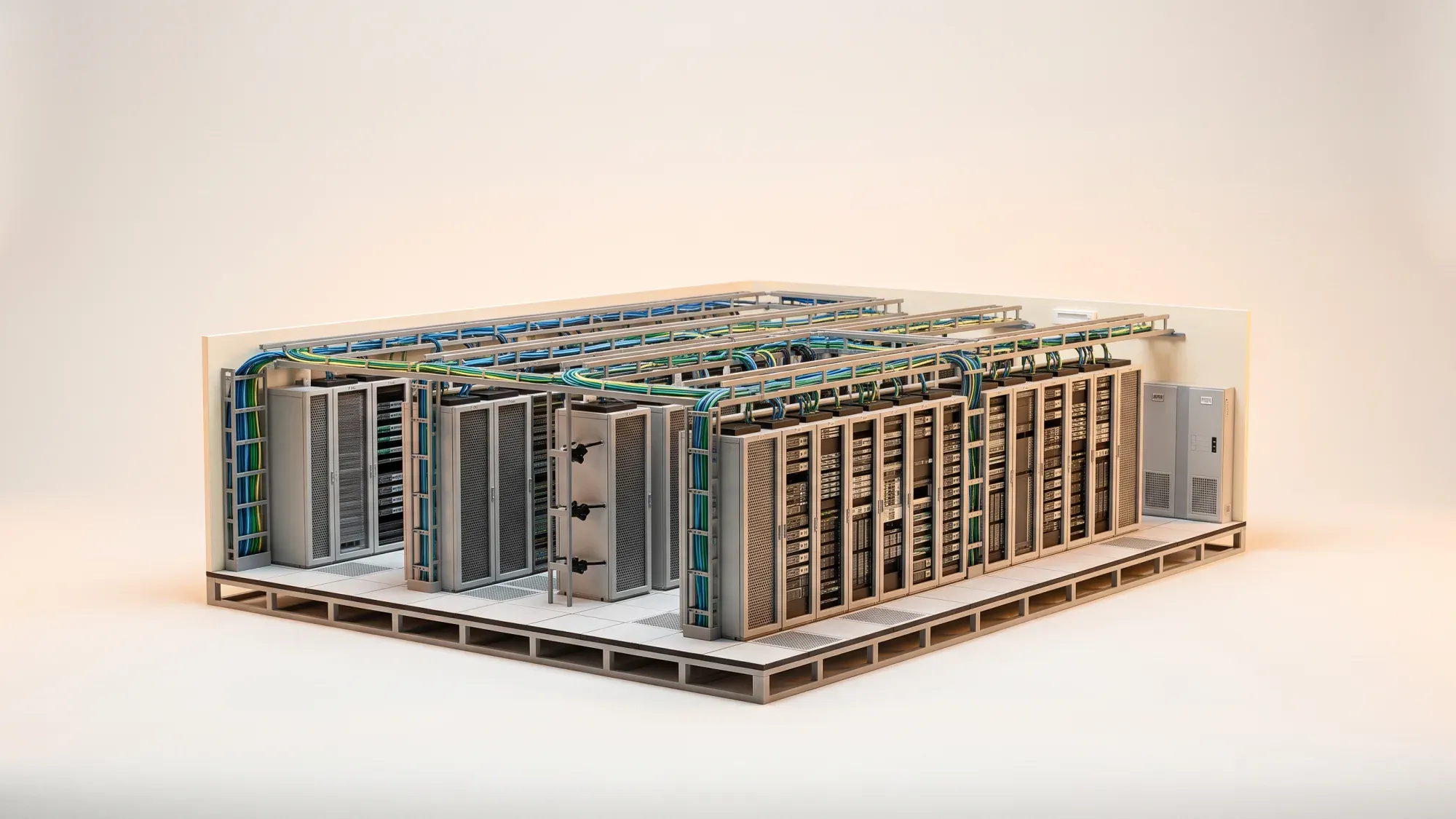
The escalating power demands of UK data centres, largely driven by the rapid expansion of artificial intelligence (AI) infrastructure, are reshaping corporate IT and operational costs. This trend is leading to a significant increase in power consumption and operational expenses for data centres. As TechRadar reports, "Data centres are swallowing more corporate IT than ever as AI infrastructure drives power consumption and operating costs sharply higher."1 This highlights the need for a clear understanding of energy consumption, effective measurement, and strategic optimisation to manage rising expenses and meet sustainability targets.
Thinking about your home's energy use? Fuse Energy offers transparent pricing, 24/7 human customer support, and a modern energy experience designed around you. If you have a smart meter, you can view real-time usage data through the app or website. Click here to switch to Fuse Energy today.
The digital transformation across industries, coupled with the computational needs of AI, is fuelling an unprecedented surge in data centre energy consumption. This shift is moving corporate IT operations from traditional on-premise setups to larger, more energy-intensive off-premise and hyperscale facilities.
The current landscape of UK data centre energy use
Data centres in the UK currently consume approximately 2.5% of the national electricity supply, a figure projected to quadruple by 2030. This highlights the significant and growing energy footprint of the sector.
Drivers of growth: digital transformation and cloud computing
The widespread adoption of cloud computing and ongoing digital transformation initiatives are fundamental drivers behind the increased demand for data centre capacity. As businesses migrate more of their operations online and rely on digital services, the underlying infrastructure must expand to support these workloads.
The shift to off-premise and hyperscale facilities
The move away from traditional on-premise IT setups towards off-premise and hyperscale data centres is accelerating. Hyperscale facilities, in particular, are massive data centres built and operated by major cloud providers, offering scalable and powerful computing resources that are often more energy-intensive than smaller, older facilities.
Artificial intelligence is rapidly becoming a primary factor in the escalating energy demands of data centres, presenting both operational and environmental challenges.
AI infrastructure: computational demands and energy intensity
AI infrastructure, particularly the training and deployment of complex AI models, requires immense computational power. This translates into significantly higher energy intensity compared to conventional IT services. AI computing racks can demand power densities of 30-100+ kilowatts (kW), a substantial increase over traditional server racks, which typically operate below 15 kW.
Projected growth in AI computing and its energy footprint
The International Energy Agency (IEA) projects that global electricity consumption by data centres, cryptocurrencies, and artificial intelligence could more than double by 2026 compared with 2022 levels, largely driven by the widespread adoption of AI technologies. In the UK, AI compute processing currently consumes approximately 5 terawatt-hours (TWh) of electricity per year, with forecasts suggesting this could exceed 100 TWh/y by 2030.
Challenges for grid infrastructure and energy supply
The concentrated energy demand from data centres places considerable strain on national electricity grids, challenging stability and capacity. The queue for grid connections in the UK saw a 460% increase in the first half of 2023 alone, with data centres accounting for a significant portion of this demand. Energy regulator Ofgem has proposed reforms, including a commitment fee for large data centre developments, to address speculative projects and ensure viable projects can connect to the grid more efficiently.
Effective measurement and monitoring are fundamental to managing energy consumption and driving sustainability in data centres.
Key metrics: power usage Effectiveness (PUE) and carbon usage Effectiveness (CUE)
Power Usage Effectiveness (PUE) is a crucial metric for assessing a data centre's energy efficiency. It is calculated by dividing the total energy consumed by the data centre facility by the energy used specifically by its IT equipment. A PUE of 1.0 indicates perfect efficiency, where all energy powers IT equipment, though this is practically unachievable due to auxiliary systems like cooling and lighting. Efficient data centres typically achieve a PUE of 1.2 or lower, while the global average hovers around 1.6-1.8.
Complementing PUE is Carbon Usage Effectiveness (CUE), a metric developed by The Green grid to measure a data centre's sustainability in terms of carbon emissions. CUE is the ratio of total CO2 emissions from the data centre's energy consumption to the energy consumed by its IT equipment, providing a clearer view of its environmental impact.
Implementing robust energy monitoring systems
Robust energy monitoring systems are essential for tracking energy usage at granular levels within a data centre. These systems provide insights into consumption patterns, identify peak demand periods, and help pinpoint areas for efficiency improvements. Data analysis plays a crucial role, allowing operators to gain valuable insights from sensor data to optimise energy use.
Benchmarking and reporting for UK data centres
The UK government and industry bodies are increasingly focused on the sustainability and energy efficiency of data centres. Benchmarking against industry standards and transparent reporting are vital for demonstrating progress towards sustainability targets and complying with evolving regulations.
Optimising data centre power consumption involves a multi-faceted approach, encompassing hardware, software, cooling, and energy procurement strategies.
Hardware and software efficiency improvements
Upgrading to more energy-efficient IT equipment, such as modern servers, storage systems, and networking devices, can significantly lower overall power consumption. Software optimisation, including virtualisation and workload management, ensures that computational resources are used as efficiently as possible. Machine learning can also be employed to predict power consumption based on workload and other factors, enabling proactive management.
Advanced cooling systems and thermal management
Cooling systems are notoriously energy-intensive, often accounting for a substantial portion of a data centre's total energy use. Innovations like free cooling, which uses external cool air, and liquid cooling technologies, can dramatically reduce the energy required for thermal management. Heat reuse and recovery, where waste heat is captured and repurposed for other uses like district heating networks, also offer significant opportunities for efficiency and sustainability.
Renewable energy integration and power purchasing agreements
Integrating renewable energy sources directly into data centre operations or through power purchasing agreements (PPAs) is a key strategy for reducing carbon footprints. Many UK data centres are at the forefront of this, with some facilities exclusively utilising renewables.
Demand-side response and grid flexibility programmes
Data centres can transition from passive consumers to active participants in the energy grid through demand-side response (DSR) and grid flexibility programmes. By flexing their energy use during periods of high demand or low supply, data centres can help stabilise the grid, integrate more renewable energy, and even generate new revenue streams. This can involve temporarily reducing power consumption or utilising on-site generation and battery storage.
The challenges posed by rising data centre power consumption, particularly from AI, can be reframed as opportunities within a future of abundant, clean energy.
Preparing for a future of limitless, clean energy
The prevailing narrative of energy scarcity often constrains innovation. However, a future with abundant, clean energy transforms this challenge. Data centre professionals can prepare by focusing on robust measurement, advanced optimisation, and designing for active grid participation, rather than just passive consumption.
Designing data centres for energy abundance, not scarcity
Imagine a world where energy is so abundant it ceases to be a primary constraint. In such a future, data centre design and operation would fundamentally change. The focus would shift from merely "using less" to "enabling more" - allowing for unprecedented scale and innovation without the current operational and environmental anxieties. This vision encourages designing facilities that can seamlessly integrate with and benefit from a future of plentiful, clean power.
Policy and innovation: supporting sustainable data centre growth
Government policy and continuous innovation are crucial for supporting sustainable data centre growth. Initiatives like the UK government's AI Growth Zones aim to establish AI innovation hubs and streamline planning approvals, underscoring the importance of sustainable energy solutions for powering AI infrastructure. These efforts, combined with advancements in energy technology, will pave the way for data centres to thrive in an energy-abundant future.
The escalating energy demands of data centres, particularly those driven by AI, present significant challenges for the UK's energy infrastructure and sustainability goals. However, by embracing advanced measurement techniques, implementing comprehensive optimisation strategies, and envisioning a future of abundant, clean energy, these challenges can be transformed into opportunities for innovation and sustainable growth.
At Fuse Energy, we believe in a future with power to play with. We're building an energy system from the ground up to deliver abundant, clean energy for homes across Great Britain. Our focus is on transparent pricing, 24/7 human customer support, and empowering you with real-time usage data to take control of your energy. Find out more about our mission to transform the energy landscape by clicking here, or switch to Fuse Energy today by clicking here.
References
- TechRadar. It's official - more IT work is now off-prem than ever before, and it's sucking up a whole load of power