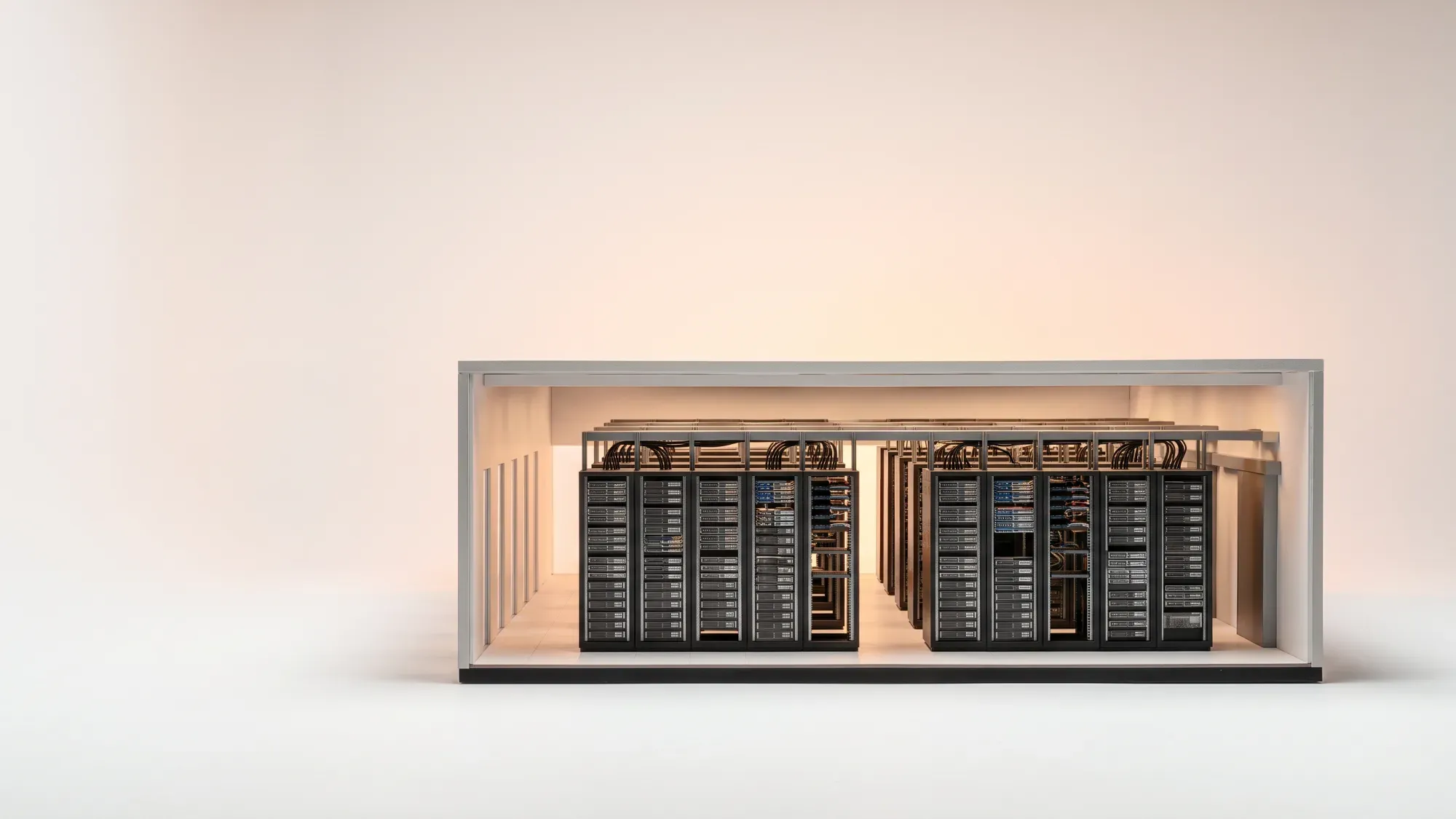
Installing batteries at data centres could cut their peak electricity imports from the grid by "between 10% and 15%"1, according to new research. This finding, from WU Vienna University of Economics and Business, highlights how on-site energy storage can significantly enhance the UK's electricity network, transforming data centres from passive consumers into active contributors to grid stability. This strategic integration offers a forward-looking approach to managing the escalating energy demands of the digital age.
The digital economy's rapid expansion, particularly driven by artificial intelligence (AI), is placing unprecedented demands on electricity grids. Data centres, which form the backbone of this infrastructure, are experiencing exponential growth in energy consumption.
AI's impact on electricity consumption
AI is creating an "unprecedented race for electricity". Behnam Zakeri, lead author from WU Vienna's Institute for Data, Energy and Sustainability, notes that the challenge extends beyond simply finding clean power; it is about how quickly that power can be delivered to meet AI’s escalating compute demand. This surge is fundamentally reshaping the energy landscape.
Projected growth in data centre energy use
Global electricity demand from data centres is projected to double by 2030, compared to 2024 levels, according to the International Energy Agency (IEA). The IEA forecasts that data centres could consume as much as 17% of US electricity by the end of the decade. This substantial increase underscores the urgent need for innovative energy solutions.
On-site battery storage at data centres offers a powerful mechanism to enhance grid stability and flexibility, moving beyond traditional backup power functions.
Reducing peak electricity imports
New research, which analysed energy consumption at 96 UK data centres using data from UK Power Networks, suggests that on-site batteries could reduce peak electricity imports from the grid by "between 10% and 15%". By discharging during periods of high demand, these batteries can alleviate stress on the network and optimise energy flow.
Enhancing grid flexibility and resilience
Data centres equipped with batteries can become active participants in grid management. They can store energy when supply is abundant (e.g., from renewable sources) and release it when the grid needs support, thereby enhancing overall system resilience and flexibility. This capability allows data centres to play a crucial role in balancing supply and demand.
Behind-the-meter storage benefits
Behind-the-meter storage refers to energy assets located on the consumer's side of the electricity meter. For data centres, this means batteries can store energy from the grid or on-site generation and supply it directly to their operations. This not only provides immediate backup power but also enables participation in demand reduction programmes, frequency regulation, and the storage of surplus renewable energy.
The choice of battery technology for data centres depends on various factors, including operational needs, performance attributes, and cost.
Lithium-ion batteries
Lithium-ion (Li-ion) batteries are a popular choice for data centres due to their high energy density, longer lifespan, and smaller footprint compared to older technologies. They are increasingly preferred for new and upgraded uninterruptible power supply (UPS) systems, offering improved monitoring and a stronger lifecycle value.
Other emerging battery technologies
While lithium-ion dominates, other battery technologies are also used or emerging in the data centre sector. These include Valve-Regulated Lead-Acid (VRLA) batteries, which remain common in many existing facilities, as well as nickel-zinc and nickel-cadmium. Emerging alternatives like iron-flow and zinc-bromine-based batteries are also being explored for their potential in long-duration energy storage.
Integrating battery storage into data centre operations offers significant economic and environmental advantages, aligning with broader sustainability goals.
Cost savings through demand reduction
By reducing peak electricity imports, data centres can lower their energy costs, particularly by avoiding high peak-time tariffs. This demand reduction strategy, enabled by on-site batteries, provides a tangible economic benefit and helps manage operational expenses in an increasingly volatile energy market.
Integrating clean energy generation
On-site batteries facilitate the integration of clean energy sources like solar and wind power directly at data centre locations. This allows data centres to maximise their use of renewable energy, reducing reliance on grid electricity and contributing to a greener energy mix.
Contributing to net zero targets
The deployment of data centre batteries supports the UK's net zero ambitions by enabling greater renewable energy uptake and reducing carbon emissions associated with electricity consumption. By becoming more self-sufficient and grid-friendly, data centres can significantly contribute to a sustainable energy future.
The successful deployment of data centre batteries requires careful consideration of the existing regulatory landscape and grid connection rules in the UK.
Understanding grid connection rules
Navigating the UK's grid connection rules, which are currently undergoing reform, can be complex for new energy infrastructure, including battery storage. The research highlights that grid connection rules should prioritise projects that deliver measurable benefits to the wider energy system. This suggests that future data centre proposals could be assessed based on their storage, flexibility, and clean generation capabilities, rather than solely as additional demand.
Addressing regulatory barriers
Current regulatory frameworks, often designed for centralised generation and passive demand, can pose barriers to the widespread adoption of data centre batteries and on-site generation. The research recommends removing these regulatory hurdles to enable data centres to fully participate in providing grid services and flexibility.
Assessing data centre proposals holistically
Researchers advocate for assessing data centre proposals not solely as additional demand, but based on their storage, flexibility, and clean generation capabilities. This holistic approach recognises the potential for data centres to offer measurable benefits to the wider energy system.