Community batteries: shared storage for UK homes
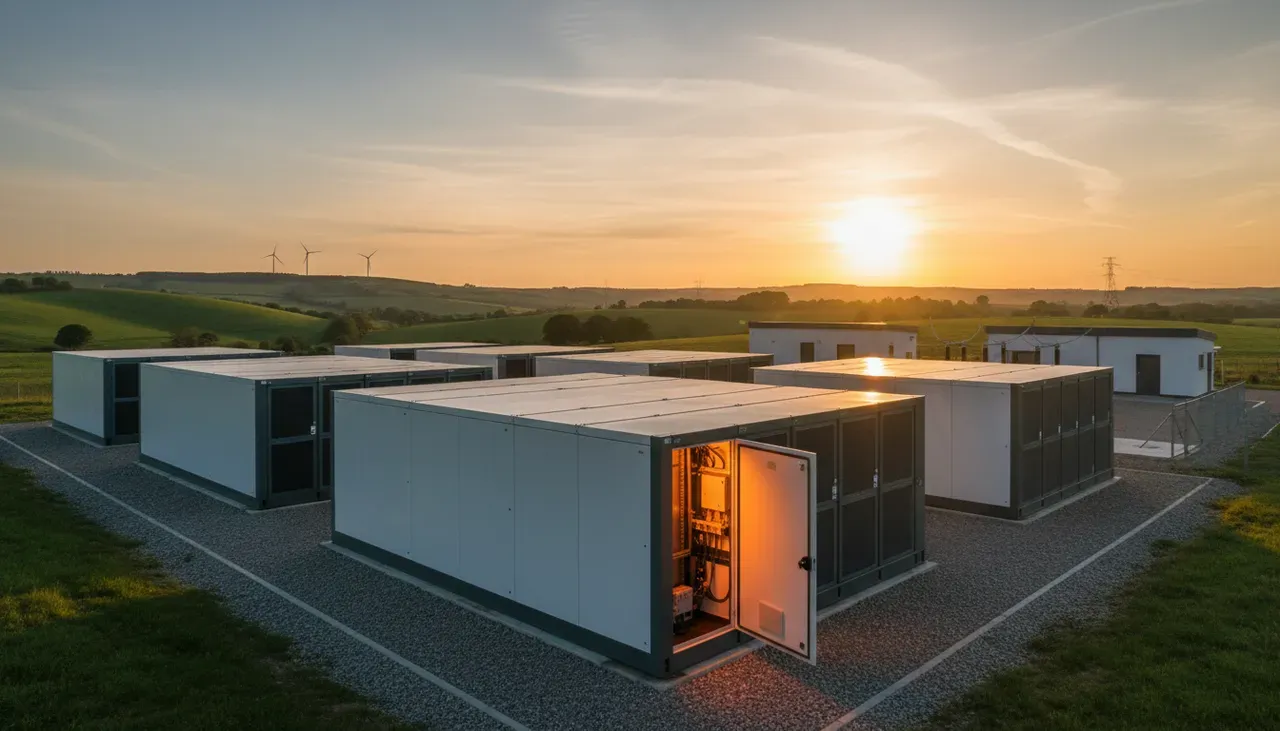
The UK government is investigating the widespread implementation of community batteries across the nation. This initiative aims to reduce energy bills and provide access to clean, affordable energy for all households, including renters and those residing in flats1. These shared energy storage systems allow multiple homes to access stored, locally generated, renewable energy, helping households make better use of clean, cheap energy and cut bills. This article will explain what community batteries are, their benefits, the government's policy, and how communities can implement them.
What are community batteries and how do they work?
Defining shared energy storage
Community batteries are shared energy storage systems that allow multiple homes to access stored, locally generated, renewable energy. These systems act as large-scale power banks for a neighbourhood or village. They capture excess electricity from local sources, such as solar panels on homes or community-owned wind turbines, for use when generation is low or demand is high. This means households can make better use of clean, cheap energy and cut bills.
What is a community battery?
A community battery is a shared energy storage system that allows multiple homes to access stored, locally generated, renewable energy. It acts as a local power bank, capturing surplus electricity from sources like solar panels for use when needed, helping to reduce energy bills and improve energy resilience.
How community batteries balance the grid
Beyond individual household benefits, community batteries play a crucial role in balancing the wider energy grid. By storing surplus local renewable generation, they can help manage peak energy demand, preventing strain on the national infrastructure. This is particularly important during periods of high electricity use, such as major national events. For instance, the Electricity National Control Centre forecasts that “each of Scotland and England's group games could see a national electricity pickup of around 600 MW” during the 2026 FIFA World Cup. Community batteries offer a decentralised way to absorb and release power, contributing to overall grid stability and reducing reliance on traditional, often carbon-intensive, peak generation methods.
Benefits of community batteries for UK households
Cutting energy bills and ensuring clean energy access
The primary appeal of community batteries for many UK households is the potential for significant savings on energy bills. By storing locally generated, cheaper renewable energy, communities can reduce their reliance on more expensive grid electricity, especially during peak times. This direct access to affordable, clean power helps insulate residents from volatile energy market prices. The initiative aims to benefit all households, including renters and those residing in flats, who might otherwise struggle to access the advantages of renewable energy generation.
Supporting local energy generation and grid stability
Community batteries foster greater energy independence at a local level. They enable communities to make the most of their own renewable energy assets, such as solar power storage, by ensuring that no excess generation goes to waste. This local energy generation strengthens the grid by providing a distributed source of power, reducing transmission losses, and enhancing energy security. It's a step towards a more resilient and sustainable energy solution for the UK.
Empowering renters and flat dwellers
One of the most compelling aspects of community batteries is their potential to democratise access to clean energy. Renters and those living in flats often face barriers to installing individual solar panels or home battery storage systems due to property ownership constraints or space limitations. Community batteries bypass these issues, offering a collective solution that allows these households to benefit from shared renewable energy, contributing to household energy savings and clean energy access regardless of their housing situation.
UK government policy and the call for evidence
The government's vision for community battery deployment
The UK Government is actively exploring the widespread implementation of community batteries as a key component of its energy strategy. This aligns with broader UK government energy policy goals to reduce energy bills and provide clean, affordable energy for all. The government sees these systems as vital for enhancing local energy resilience and supporting the transition to a smart energy grid.
Addressing peak demand: lessons from the 2026 FIFA world cup
The upcoming 2026 FIFA World Cup serves as a stark reminder of the challenges posed by fluctuating energy demand. As mentioned, the Electricity National Control Centre predicts substantial electricity pickups during group games. This highlights the need for robust energy demand management strategies. Community batteries offer a practical way to absorb excess generation when demand is low and discharge it rapidly when demand surges, helping to balance the energy grid and prevent potential blackouts during such high-profile events.
Opportunities and barriers under review
To inform its policy, the government has launched a call for evidence on community batteries. This consultation, which closes on 30 July, seeks information on the opportunities, barriers, safety considerations, and existing case studies for community battery deployment. It aims to gather insights from industry, communities, and individuals to shape future regulations and support mechanisms. Key areas of interest include funding models, grid connection challenges, and the technical specifications required for safe and effective operation.
Navigating the path to community battery implementation
Key considerations for local energy groups
For communities interested in developing a community battery project, several factors need careful consideration. This includes identifying potential local renewable energy sources, assessing community energy needs, and understanding the regulatory landscape. Engaging with local authorities, Distribution Network Operators (DNOs), and community energy groups is crucial for guidance and support. Planning, funding, and integrating such projects are complex, requiring a detailed project proposal that covers technical, financial, and community engagement aspects.
Funding and support for community energy projects
While the government's call for evidence is ongoing, various funding opportunities and grants may be available for community energy projects. These can come from government schemes, charitable foundations, or private investors. Exploring different financing models is essential, as is understanding the eligibility criteria and application processes for each. Organisations like the Low Carbon Hub demonstrate successful models for community-owned energy initiatives.
Case studies: learning from existing UK initiatives
Learning from existing projects is invaluable. The UK already has pioneering examples of community battery deployment. For instance, the Low Carbon Hub's Ray Valley Solar project in Oxfordshire includes a community-owned solar battery, showcasing how local energy generation and storage can work in practice. These case studies provide practical insights into the challenges and successes of implementing decentralised energy solutions, offering valuable lessons for new initiatives.
The future of decentralised energy in the UK
Community batteries as part of a smart energy grid
Community batteries are a vital component of the UK's transition to a smart energy grid. They represent a move towards a more decentralised energy infrastructure, where power generation and storage are distributed closer to the point of consumption. This model enhances grid flexibility, reduces reliance on large, centralised power stations, and supports the integration of more renewable energy sources. The smart energy grid will rely on such systems to manage energy flows efficiently and cost-effectively.
The role of innovation in UK energy security
Innovation in energy storage, including community batteries, is critical for UK energy security. By diversifying energy sources and enhancing local storage capabilities, the UK can reduce its vulnerability to global energy market fluctuations and geopolitical events. These sustainable energy solutions contribute to a cleaner, more reliable energy supply, fostering energy innovation and ensuring clean energy access for future generations.
Fuse Energy's vision for an abundant energy future
Fuse Energy's mission is to deliver the abundant, clean energy the future requires. We believe it's your right to use more energy, not less. Community batteries align perfectly with this vision by promoting local, clean energy generation and storage. By making energy cheaper and more accessible, community batteries support the idea that people should be able to use more energy without fear of cost or environmental impact.
While Fuse Energy currently focuses on residential energy supply and home battery solutions, we see community batteries as a complementary part of a decentralised energy system. Our approach is to vertically integrate and rebuild the energy system from scratch, optimising efficiency and cost. Distributed home energy solutions, such as those Fuse provides, are a vital component in achieving national energy resilience, cost reduction, and the broader vision of abundant, clean energy. Community batteries offer a path to both local energy resilience and cost savings, removing the trade-off between comfort and sustainability for communities, much like our home energy solutions empower individual households.
Complementing community efforts with home energy solutions
Fuse Energy is committed to innovation in energy storage and smart energy management. We recognise that while community batteries address shared energy needs, individual home energy solutions also play a crucial role. Our home battery offerings allow individual households to store cheaper off-peak power, manage their energy consumption, and contribute to grid stability from their own homes. These individual efforts, when scaled, collectively enhance the resilience and efficiency of the wider energy system, working in tandem with community-scale projects.
Building the infrastructure for the energy the future requires
Fuse Energy is committed to building the infrastructure for the energy the future requires. This involves not just supplying energy but also innovating in how it's generated, stored, and distributed. Community batteries represent a significant step towards a more robust and sustainable energy future for the UK. By supporting both community-level and individual energy storage, we move closer to a world where energy is abundant, clean, and accessible to all, enabling humanity to build the future we all imagined.
References
Disclaimer
For the avoidance of doubt, this article is provided for informational purposes only and is not intended to constitute legal or financial advice. The author and/or Fuse Energy shall not be responsible for any losses arising out of any reliance on the information contained herein.