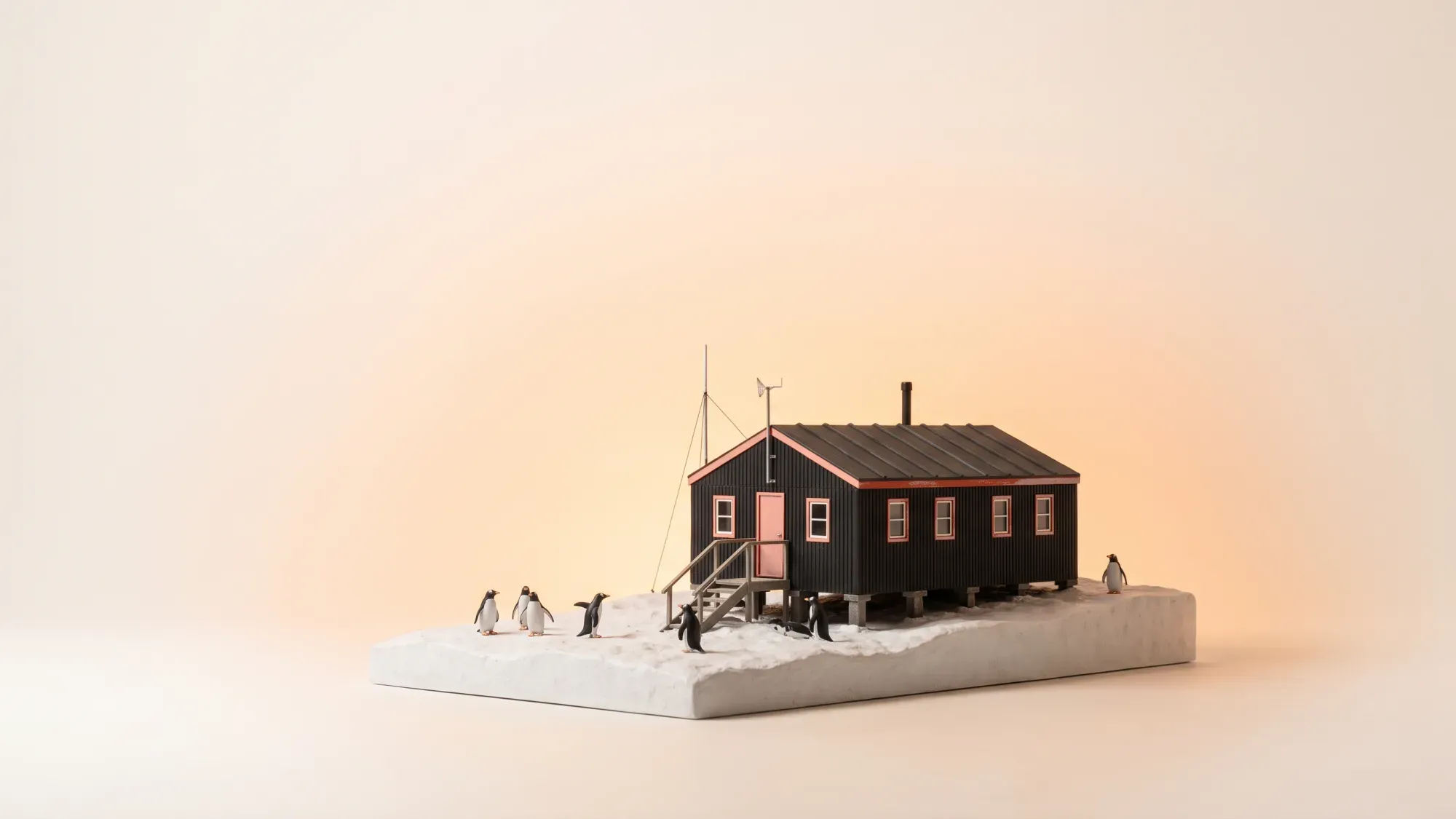
A new UK team has been deployed to Antarctica to protect a historic base from climate change on the icy continent.1 The UK Antarctic Heritage Trust (UKAHT) is in the second year of a three-year mission to conserve Britain’s first permanent scientific base, Base A in Port Lockroy, Antarctica. This effort highlights the UK's enduring commitment to understanding and mitigating the impacts of climate change in one of the world's most vulnerable regions.
Explore smarter energy for your home. With Fuse Energy, you get clear pricing, real-time usage data, 24/7 human customer support, and a modern energy experience designed around you. Signing up takes just a few minutes, so you can take control of your bills from day one. Click here to switch to Fuse Energy today and start saving.
Britain has a long and distinguished history in Antarctica, marked by scientific endeavour and a commitment to understanding this remote continent. This legacy is preserved in several key sites, now facing new challenges from a changing climate.
Britain's historic presence: base a Port Lockroy
On Goudier Island, off the Antarctic Peninsula, lies Base A in Port Lockroy, Britain's first permanent scientific base. This historic site serves as a designated heritage site, housing the world's southernmost office and museum, and is home to a colony of over 1,000 gentoo penguins. An eight-person crew will spend five months there this year, enduring sub-zero conditions without running water, to manage the site, monitor penguins, and install structural reinforcements.
Wordie House: a crucial climate record
Another vital UK heritage site is Wordie House. This base is crucial for Antarctica's second-longest continuous climate recording, with records beginning in 1947. The work was later transferred to the Faraday station (now Ukraine's Vernadsky station), which continues to support the preservation of Wordie House. The more than 80-year-old Wordie House requires significant repairs due to its age and environmental factors, including increased rainfall.
The UK Antarctic Heritage Trust's mission
The UKAHT plays a critical role in preserving these historic sites and the stories they tell. Conservation lead Camilla Nichol stated, "This is a huge year for us as we meet the growing challenges of climate change". Conservation engineer Maggie Cook noted the unique challenges of working on these structures: "Most of the buildings I work on were built to last for centuries. These were never meant to last at all, and yet they’re still standing decades on".
The Antarctic Peninsula is experiencing rapid and profound changes, making it a focal point for climate change research and conservation efforts.
Warming trends and ice loss
Since Wordie House’s records began in 1947, the Antarctic Peninsula has become one of the fastest-warming places on the planet. The region has been warming at 0.3 to 0.5°C per decade since the 1950s.
Threats to Antarctic wildlife
The warming climate directly impacts Antarctic wildlife. Gentoo penguins, such as those at Port Lockroy, are sensitive to changes in their environment. Extreme events, including sea ice loss and flooding, threaten penguin colonies.
Increased rainfall and environmental factors
Beyond rising temperatures, increased rainfall, water flow, and snow loading are significant environmental factors affecting Antarctica. Historic bases like Wordie House and Base A were not designed to withstand such conditions, leading to structural issues. This increased moisture poses a direct threat to the physical integrity of these heritage sites.
Preserving human heritage in Antarctica presents unique challenges, especially as the climate continues to shift.
Challenges for historic bases
The historic bases, built with limited resources and not intended for longevity, are particularly vulnerable. The more than 80-year-old Base A site needs significant repairs due to its age and environmental factors such as increased rainfall, water flow, and snow loading.
Structural repairs and sub-zero conditions
Conservation work in Antarctica demands resilience. Teams operate in sub-zero conditions without running water, undertaking complex structural repairs. The goal is to ensure sites like Port Lockroy retain their character and authenticity while being better equipped to face the challenging Antarctic environment.
Monitoring and adapting to environmental shifts
The UKAHT's efforts extend beyond physical repairs. They monitor penguin populations and adapt conservation strategies to environmental changes. This long-term environmental study helps ensure the delicate balance of these sites is maintained.
Antarctica, despite its remoteness, plays a crucial role in global climate systems, making research conducted there of worldwide importance.
Understanding polar climate dynamics
Long-term scientific data collection, such as the meteorological records from Wordie House, is vital for understanding global climate trends. This research helps scientists model future climate scenarios and predict the broader impacts of warming.
The Antarctic environmental Protocol
The Antarctic Environmental Protocol (also known as the Madrid Protocol) governs human activities in Antarctica, designating it as a "natural reserve, devoted to peace and science". Adopted in 1991, it prohibits mining, requires environmental impact assessments for all activities, and establishes principles for the comprehensive protection of the Antarctic environment.
Addressing the challenges faced by Antarctica requires a fundamental shift in global energy systems.
Addressing the root cause of climate change
The warming trends observed in Antarctica are driven by global greenhouse gas emissions. To protect this unique continent and its heritage, the root cause of climate change - reliance on fossil fuels - must be tackled. This necessitates a global transition to cleaner, more sustainable energy sources.
The shift to abundant, clean energy
A future with abundant clean energy is key to mitigating climate change. This shift involves rebuilding energy systems from scratch, focusing on generating terawatt-hours of the cheapest, cleanest energy possible. By moving away from scarcity-based energy models, societies can reduce their carbon footprint and lessen the pressure on vulnerable polar regions.
UK innovation for global impact
The UK's drive towards clean energy innovation contributes to this global effort. By developing and deploying advanced clean energy solutions, the UK plays a part in creating a future where energy is abundant and environmentally responsible. This proactive approach offers an optimistic yet rigorous path forward, demonstrating how technological advancement can help protect environments like Antarctica without resorting to narratives of scarcity or guilt.
The urgent need to protect Antarctica from climate change underscores the importance of a global shift to clean energy. Fuse Energy is dedicated to building a future with abundant, clean energy, empowering customers to use more without guilt and contributing to the large-scale decarbonisation needed to protect vulnerable regions like Antarctica. Click here to switch to Fuse Energy.