Powering the future with AI energy infrastructure
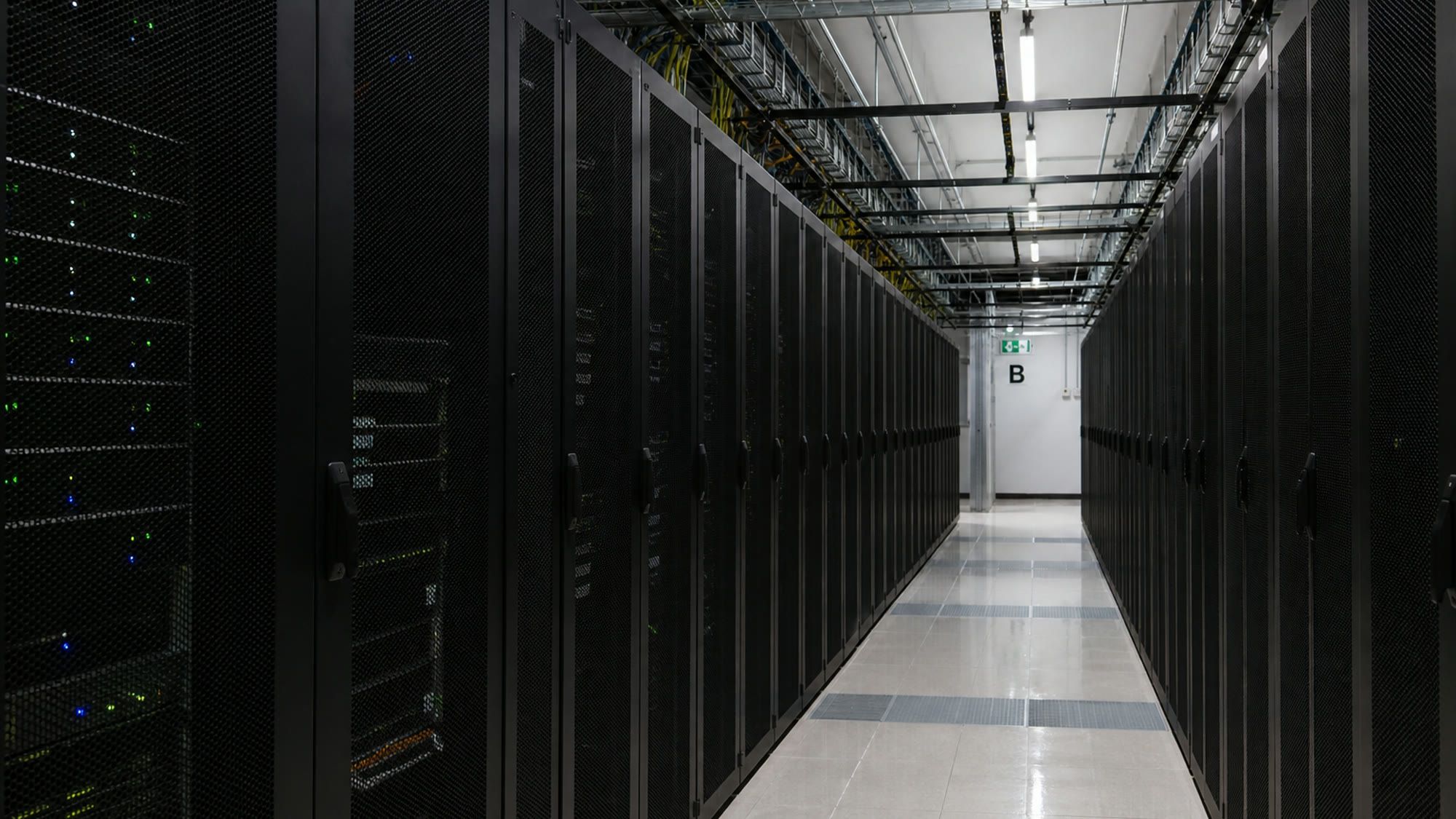
Many assume Artificial Intelligence (AI) exists purely in the digital realm, an intangible 'cloud' of data and algorithms. Yet, this perception overlooks a fundamental truth: AI's rapid growth is rooted in extensive physical infrastructure, demanding significant energy and a highly skilled workforce. This creates a unique challenge for the UK, where existing energy systems and workforce capabilities face immense pressure to adapt. The question isn't whether AI will transform our world, but whether our energy infrastructure and talent pipeline can keep pace.
Fuse Energy recognises the profound implications of AI's energy demands and the urgent need for a modern, resilient energy system in the UK. We believe the answer lies not in scarcity or conservation, but in building an infrastructure capable of delivering abundant, clean energy. Click here to switch to Fuse Energy.
Enter your address to get a quote and see how much you could save
The unseen appetite: AI's growing energy demand
The seemingly ethereal nature of AI belies its very real, very physical demands. The 'cloud' isn't a nebulous concept; it's a vast network of data centres, servers, and cooling systems, all consuming enormous amounts of electricity. This tangible reality is often underestimated.
The physical reality of the 'cloud'
Kevin Keable, Chair of the East of England Energy Group (EEEGR), succinctly puts it: "AI's 'cloud' is built on power-hungry infrastructure and a workforce Britain must grow fast". This highlights the critical link between digital ambition and physical capacity. Every AI query, every machine learning model trained, translates into a measurable energy draw. The infrastructure required to support this ranges from advanced microchips to the vast cooling systems that prevent data centres from overheating.
Data centres and their power consumption
Data centres are at the heart of AI's energy appetite. These facilities, often sprawling complexes, are becoming massive electricity consumers, fundamentally reshaping global energy demand1. Their power needs are not just for computation but also for cooling, which can account for a significant portion of their total energy usage. As AI models grow in complexity and scale, so too does the energy required to run them. Keable notes, "The "cloud" turns out to have a very large appetite for power." This surge in demand coincides with the broader electrification of society, from electric vehicles to heat pumps, placing unprecedented strain on energy infrastructure development.
"AI's 'cloud' is built on power-hungry infrastructure and a workforce Britain must grow fast." - Kevin Keable, Chair of the EEEGR
UK energy infrastructure: challenges and opportunities
The UK's energy infrastructure, largely designed for a different era, faces a dual challenge: meeting the escalating demands of AI while simultaneously pursuing ambitious decarbonisation goals.
Pressure on the National Grid
The National Grid is under increasing pressure. The electrification of transport and heating, coupled with the exponential growth of data centres, requires substantial upgrades and expansion. Existing grid infrastructure must become smarter, more resilient, and capable of handling greater loads and more dynamic energy flows. Without significant investment and strategic planning, the UK risks bottlenecks that could hinder both economic growth and AI development. The average UK home uses around 2,700 kWh of electricity per year, a figure dwarfed by the consumption of even a modest data centre. Scaling up to power an AI-driven economy requires a complete rethink of generation, transmission, and distribution.
The role of renewable energy development
Meeting AI's energy demands sustainably necessitates a massive acceleration in renewable energy development. The UK has significant potential, particularly in offshore wind, but deploying these assets at the required scale is a monumental task. This includes not only building more wind farms and solar arrays but also upgrading grid connections to bring this clean power to demand centres efficiently. Integrating intermittent renewables effectively requires sophisticated management systems, which is where AI itself can play a crucial role.
Bridging the skills gap: the human element of AI infrastructure
While technology often dominates discussions about AI and energy, the biggest challenge facing the UK is not technological, but human.
The shortage of technical and engineering talent
The UK faces a critical shortage of skilled technical and engineering talent across various disciplines - from electrical engineers and grid specialists to data scientists and AI architects. These are the people needed to design, build, maintain, and optimise the complex energy infrastructure that AI requires. Without a robust pipeline of these professionals, even the most innovative technological solutions will remain on the drawing board. This skills gap risks becoming a significant bottleneck for the UK's ambition to lead in the digital economy.
Investing in the future workforce
Addressing this shortage requires a concerted effort to inspire and train the next generation. This means investing in education, apprenticeships, and vocational training programmes that equip young people with the skills needed for the energy and digital sectors. Kevin Keable warns of the consequences of inaction: "If we do not inspire and train enough young people to build the infrastructure behind AI, we risk creating a double whammy for the next generation." This 'double whammy' refers to both a lack of economic opportunity and a failure to secure the energy future required for sustained progress. Regions like the East of England, with their existing energy assets and potential for combined digital and industrial growth, are crucial for cultivating this future workforce.
AI as a solution: optimising the energy system
Paradoxically, the very technology driving increased energy demand - AI - also offers powerful tools to optimise and enhance the energy systems it relies upon.
Enhancing grid management and stability
AI can revolutionise grid management. Advanced algorithms can analyse vast datasets in real-time, predicting demand fluctuations, identifying potential faults, and optimising power flow across the network. This enables more efficient use of existing infrastructure, reduces losses, and enhances grid stability, which is crucial for critical loads like data centres. AI-driven systems can respond to changes far faster and more accurately than human operators alone, ensuring a more reliable and resilient electricity supply.
Integrating intermittent renewables
The variability of renewable sources like wind and solar poses a challenge for grid operators. AI can significantly improve the forecasting of renewable generation, allowing for better integration into the grid. By predicting wind speeds and solar irradiance with greater accuracy, AI can help balance supply and demand, minimise curtailment (wasted renewable energy), and optimise the dispatch of energy storage systems. This makes the grid more flexible and capable of handling a higher proportion of clean energy.
Driving efficiency across the energy stack
Beyond grid management, AI can drive efficiency across the entire energy value chain. From optimising power plant operations and maintenance schedules to improving energy efficiency in buildings and industrial processes, AI offers opportunities to reduce waste and maximise output. In data centres themselves, AI can manage cooling systems, server loads, and power distribution to minimise energy consumption without compromising performance. This holistic approach to optimisation is essential for creating a sustainable and abundant energy future.
Fuse Energy's vision for an AI-ready UK
Fuse Energy's vertically integrated model is designed to rebuild the energy system from scratch, creating a framework capable of meeting the unprecedented demands of AI and the broader digital economy. We challenge the conventional notion of energy scarcity by investing in and deploying infrastructure that can deliver terawatt-hours of the cheapest, cleanest energy possible. This approach supports the growth of AI and human progress without compromise, aligning with our core belief: it's your right to use more energy, not less. We aim to enable a future where energy is no longer a constraint on ambition.
Fuse leverages AI not just to meet demand, but to optimise its own generation, transmission, and distribution. By owning and operating assets across the energy stack, Fuse can deploy AI to ensure unparalleled efficiency and reliability. This means AI-driven forecasting for our solar and wind projects, intelligent grid balancing, and dynamic management of energy flows to critical infrastructure. This integrated, AI-optimised system is designed to deliver the abundant, cheap, clean energy that unlocks the 'future you imagined' - a future where AI can flourish, driving innovation and prosperity for the UK.
Ready to be part of an energy future that supports innovation and abundance? Fuse Energy offers clear pricing, real-time usage data through our app, and 24/7 human customer support. Switching takes as little as 3 minutes, so you can take control of your home's energy bills from day one. Click here to switch to Fuse Energy today. You can also find out more about our mission to deliver abundant, clean energy by clicking here.
References
Disclaimer
For the avoidance of doubt, this article is provided for informational purposes only and is not intended to constitute legal or financial advice. The author and/or Fuse Energy shall not be responsible for any losses arising out of any reliance on the information contained herein.