AI data centre power demand strains UK energy infrastructure
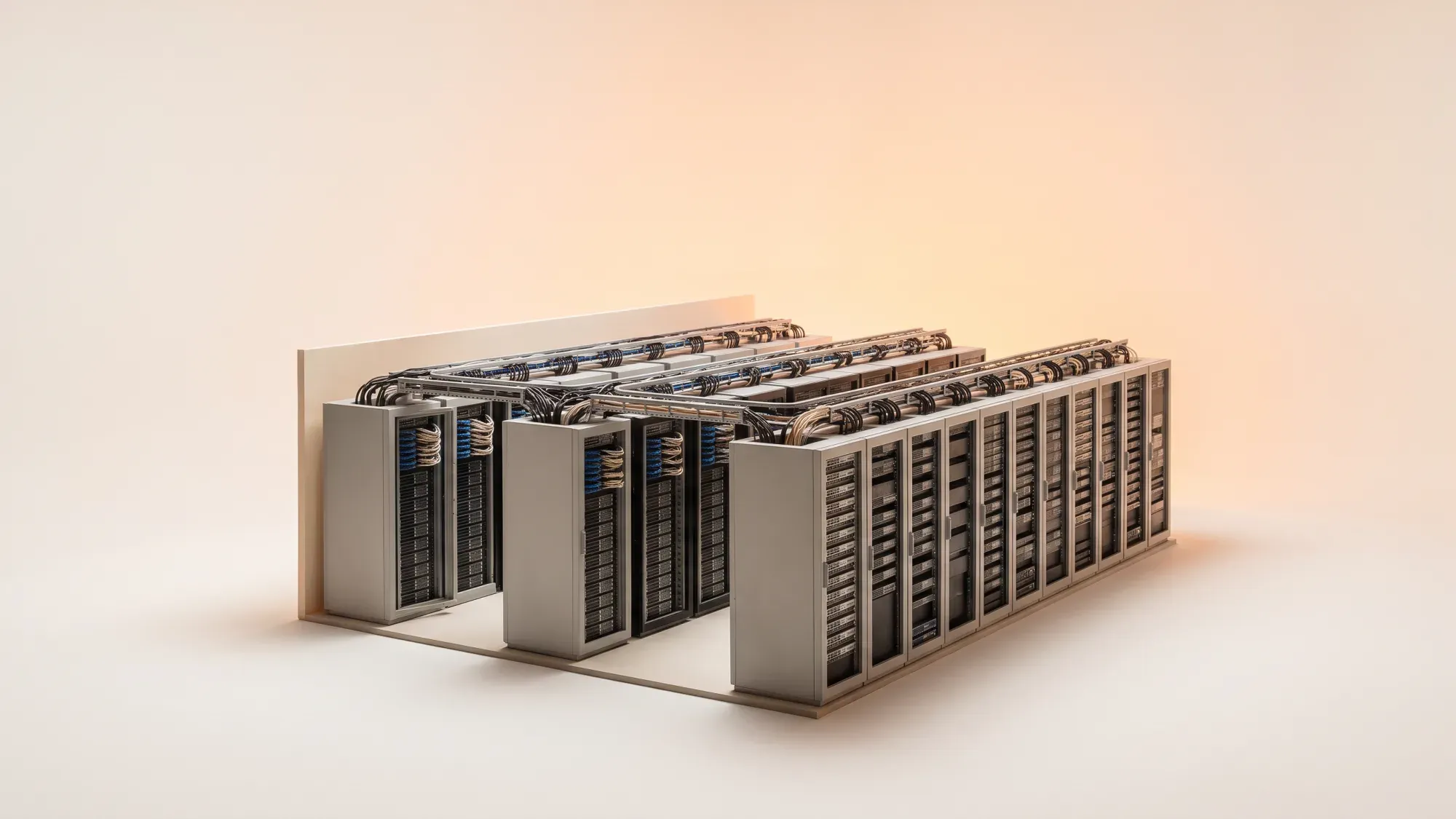
The escalating power demands of artificial intelligence (AI) data centres are placing unprecedented stress on the UK's energy infrastructure, challenging existing power management systems and raising concerns about operational stability. This surge in energy consumption, driven by the rapid advancement and deployment of AI technologies, necessitates a fundamental re-evaluation of how energy systems are designed and managed. Fuse Energy acknowledges this critical challenge and frames it within a vision for an abundant energy future, demonstrating how systemic changes and vertical integration can address such large-scale demands.
Managing your energy bills should be clear and easy to understand. Fuse Energy focuses on straightforward pricing, so you can see exactly what you're paying without unnecessary complexity. If you have a smart meter, you can view detailed usage data through the app or website, helping you understand how you can lower your bills. If you don't have a smart meter, Fuse Energy can upgrade your non-smart meter, completely for free. This can make it easier to track spending and make informed decisions about your energy use. Our 24/7 human support team is always on hand with fast response times of under 5 minutes whenever you need help. Click here to switch to Fuse Energy today.
Enter your address to get a quote and see how much you could save
The escalating power demands of AI data centres
AI data centres are not merely consuming more electricity; they are doing so with a volatility that strains vital equipment and infrastructure1. This dynamic power usage presents a complex challenge for data centre operators and the wider energy grid.
Understanding AI's energy footprint
AI's energy footprint is expanding rapidly, primarily due to the increasing complexity and size of AI models. This phenomenon, often referred to as "scaling laws," means that as models become more capable, they require exponentially more computations and, consequently, more energy. Training these advanced models involves billions of parameters and demands high-performance computing (HPC) infrastructure, often running for weeks or months on end. A single AI-powered query, for instance, can consume nearly ten times the energy of a standard Google search.
Beyond the computational intensity, the need for sophisticated cooling systems to prevent overheating in densely packed server racks significantly adds to the overall energy consumption. These factors combine to create an energy demand profile that is both massive and inherently volatile.
The volatility challenge for data centre equipment
The rapid, fluctuating power demands of AI data centres are causing considerable strain on critical equipment, including batteries, generators, and cooling systems. This stress can lead to premature malfunction or wear, impacting operational stability and increasing maintenance costs. Unlike traditional data centres with more predictable loads, AI facilities can experience power increments equivalent to entire factories or towns appearing and disappearing within seconds, creating repeated shocks to the system.
Data centre equipment is highly sensitive to even minor deviations in voltage or frequency. Automatic protective relays are designed to isolate facilities within milliseconds of detecting an abnormality, preventing damage but potentially leading to unnecessary disconnections during minor fluctuations. The "flapping" power transients and rapid load changes characteristic of AI workloads are not easily managed by traditional power infrastructure, posing a constant threat of downtime and stressing backup systems.
Impact on the UK's energy grid
The growing energy appetite of AI data centres has significant implications for the UK's national energy grid, raising concerns about capacity, stability, and future planning.
Grid capacity and stability concerns
Data centres already consume a notable portion of the UK's electricity supply. Recent analysis indicates that UK data centres now account for 5.9% of national electricity consumption. This figure is approaching the 5% threshold where community and political pushback against new facilities typically intensifies, according to research from the International Data Center Authority (IDCA). While an earlier UK government estimate from early 2025 placed the figure lower, at around 2.5% of Great Britain's electricity consumption, it predicted a four-fold increase by 2030. The National Energy System Operator (NESO) estimated total data centre electricity consumption in Great Britain at 7.6 TWh in 2023, though other estimates based on meter-level data suggest a lower figure of 4.1 TWh for the same year.
The sheer density of AI workloads presents a systemic challenge to regional electricity grids that were not designed for such concentrated, high-magnitude loads. These dynamic and fluctuating loads can cause grid instability, potentially leading to blackouts or power outages if not properly managed. This has made utility companies globally very worried, as the unique load characteristics and protective behaviours of data centres can pose stability threats to the wider network.
Future energy scenarios and AI growth
National Grid ESO, responsible for managing the UK's electricity system, annually publishes its Future Energy Scenarios (FES) to model how the UK energy landscape will evolve up to 2050. These scenarios consistently forecast increasing electricity demand from new technologies, including data centres. NESO's FES 2025 analysis projected annual electricity consumption from data centres in 2030 to be just over 20 TWh, with some estimates suggesting it could reach 26.2 TWh, approaching 9% of total UK electricity demand.
The FES highlights that the electrification of heat and transport, alongside growth in new sectors like data centres, will substantially increase annual and peak electricity demands. This necessitates strategic investment in generation and network infrastructure to meet future needs.
Current approaches and their limitations
The traditional approaches to managing energy demand and grid infrastructure are proving insufficient to cope with the scale and volatility of AI's power requirements.
Efficiency measures vs systemic demand
While energy efficiency measures within data centres are crucial, they are not a standalone solution to the systemic challenge posed by AI's escalating power demand. Innovations in chip efficiency and cooling technologies can reduce the energy intensity of individual operations, but the sheer volume and complexity of AI workloads often outpace these gains. The focus on incremental efficiency improvements, without addressing the fundamental grid resilience and supply challenges, risks underestimating the exponential growth of AI power consumption.
How much electricity do UK data centres consume?
UK data centres currently consume around 5.9% of the national electricity supply, with earlier estimates from early 2025 indicating figures closer to 2.5% but projecting a four-fold increase by 2030. This demand is expected to grow further, potentially reaching just over 20 TWh or approaching 9% of the UK's total electricity consumption by 2030, driven largely by AI.
The strain on legacy infrastructure
The UK's existing energy infrastructure, largely designed for a different era of predictable, centralised power generation and consumption, is ill-equipped to handle the dynamic and concentrated loads of modern AI data centres. Grid connection delays are a significant barrier, with some data centre developers facing waits stretching close to a decade before securing sufficient power. Ofgem has noted that 315 data centres are queuing to connect, representing 73 GW of demand, which is almost 30 GW above the entire country's peak energy demand of 45 GW. This has led to proposals for data centre projects to pay fees to access the grid to tackle the connection logjam.
Fuse Energy is building a future where energy is abundant and accessible, addressing the challenges posed by rapidly increasing demands from new technologies like AI. We believe in empowering customers with transparent pricing, real-time usage data, and 24/7 human support, making energy management simple and efficient. Join us in creating a more resilient and sustainable energy system. Click here to switch to Fuse Energy today. Find out about our mission by clicking here.
References
Disclaimer
For the avoidance of doubt, this article is provided for informational purposes only and is not intended to constitute legal or financial advice. The author and/or Fuse Energy shall not be responsible for any losses arising out of any reliance on the information contained herein.