UK's 14.6 GW AI data centre pipeline challenges grid capacity
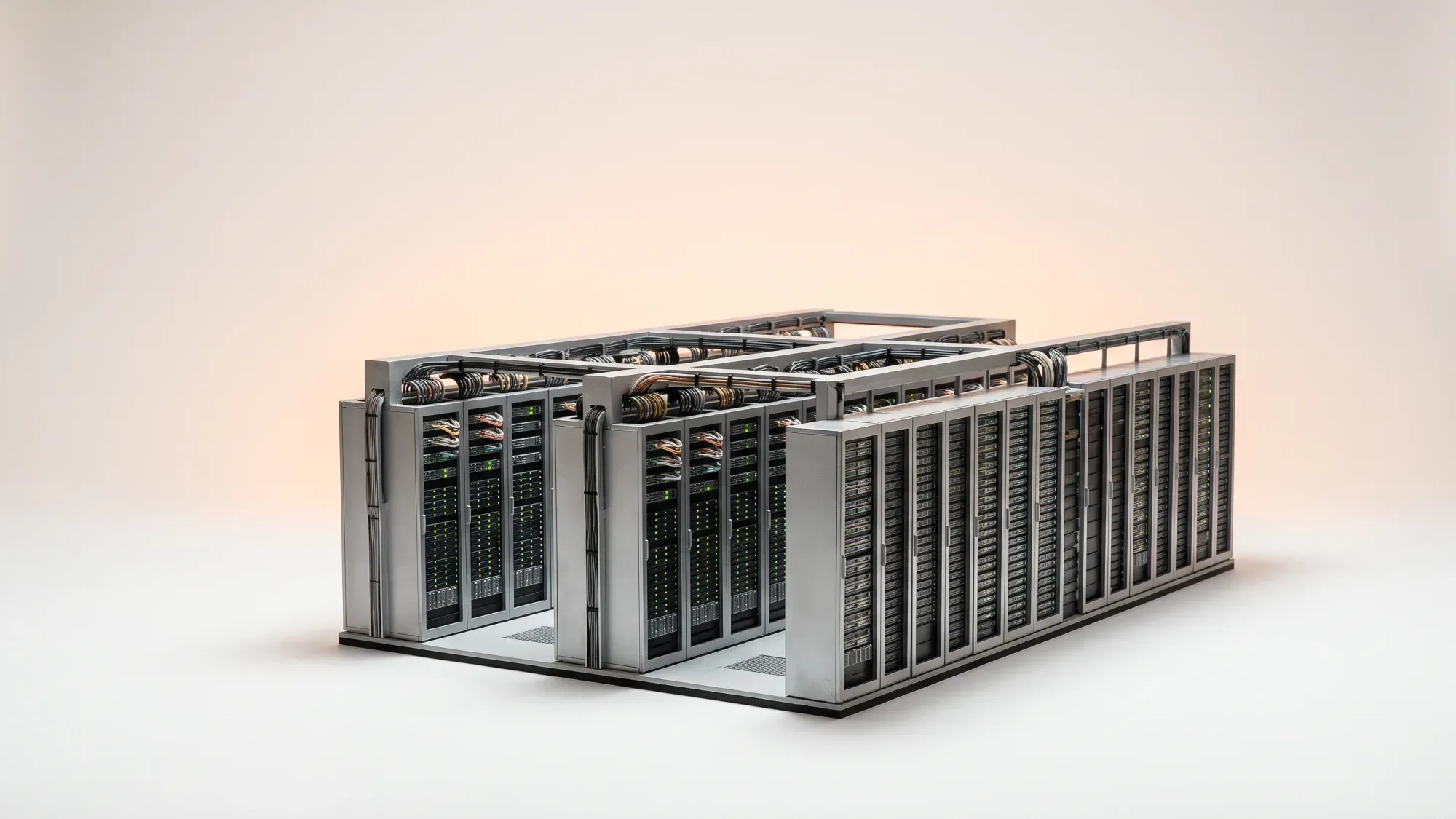
The UK's ambition to be a global leader in artificial intelligence (AI) relies heavily on its ability to build and power advanced data centre infrastructure. This presents a significant challenge, as AI workloads demand unprecedented levels of electricity and cooling, pushing existing grid capacities to their limits. The escalating energy demands of AI data centres highlight the urgent need for a robust and forward-thinking energy strategy.
The UK's growing AI ambitions mean more demand on our energy grid. Fuse Energy is building a future with abundant, clean power to meet these challenges. Click here to switch to Fuse Energy today.
Enter your address to get a quote and see how much you could save
The unprecedented energy demands of AI data centres
AI data centres are fundamentally different from their traditional counterparts, driven by the intensive computational requirements of machine learning and deep learning. These facilities are not merely larger versions of existing data centres; they represent a new class of energy consumer.
Defining AI data centre infrastructure
AI data centre infrastructure encompasses specialised hardware, primarily Graphics Processing Units (GPUs) and other accelerators, high-speed networking to facilitate rapid data transfer between these processors, and vast, high-performance storage systems. These components are designed to handle the parallel processing and massive datasets characteristic of AI training and inference. Unlike conventional data centres that might focus on general-purpose computing, AI facilities are purpose-built for extreme computational density.
The scale of power and cooling requirements
The sheer density of AI-optimised hardware translates directly into immense power and cooling demands. Globally, data centre electricity consumption is projected to nearly double by 2030, with AI-focused facilities driving much of this increase. These facilities require significantly more electricity per square foot than traditional data centres, necessitating advanced cooling solutions to manage the intense heat generated by high-performance chips. The current energy system, largely designed for older infrastructure, is not equipped to meet these burgeoning demands without fundamental transformation.
UK grid capacity: a critical bottleneck for AI growth
Even advanced economies like the UK face substantial hurdles in accommodating the energy needs of AI data centres. The National Grid, while robust, was not built to handle such concentrated and rapidly growing electricity loads.
The 14.6 GW pipeline and its impact
The UK has a committed pipeline of more than 14.6 gigawatts (GW) across 173 data centre projects in planning but not yet built. To put this into perspective, 14.6 GW is a substantial amount of power, equivalent to several large power stations. Integrating this demand into the existing grid infrastructure presents a monumental challenge, particularly in areas like London where data centre clusters are already straining local networks. This pipeline underscores the urgent need for strategic investment in both new generation and grid upgrades to avoid bottlenecks that could stifle AI development.
Challenges of legacy energy infrastructure
The UK's energy infrastructure, much like that in other developed nations, was designed for a different era of consumption and generation. It struggles to adapt quickly to the decentralised, high-demand, and intermittent nature of modern energy needs, exacerbated by the unprecedented requirements of AI. Connecting new data centres often involves lengthy delays due to insufficient grid capacity and the time required for upgrades. This legacy infrastructure poses a critical bottleneck, threatening to slow down the UK's AI ambitions if not addressed proactively through systemic transformation.
Global perspectives on AI data centre development
The energy demands of large-scale AI data centres are so profound that they are reshaping global investment patterns and highlighting disparities in energy infrastructure.
Wealthier nations lead the way
World Bank Group President Ajay Banga asserts that large-scale AI data centres will predominantly remain in wealthier nations due to their immense requirements for power, computing capacity, data, skills, and capital1. Speaking at Climate Week NYC on 23 September 2026, Banga highlighted the significant electricity needs, noting, "'You need computing power. Lots of it. You need electricity. Lots of it. More than what the developed world also has in some cases, let alone these developing countries.'" This perspective underscores that the energy challenge for AI is not just a technical one, but a geopolitical and economic one, concentrating advanced AI development where robust energy grids and capital are abundant.
"You need computing power. Lots of it. You need electricity. Lots of it. More than what the developed world also has in some cases, let alone these developing countries." — Ajay Banga, World Bank Group President
Differentiating frontier and small AI
The World Bank's 2026 report, The Promise of Artificial Intelligence, draws a distinction between "frontier AI" infrastructure, which is unrealistic for most developing countries, and "small AI" applications. Small AI, suitable for healthcare, agriculture, and education, has more modest computing needs and can be deployed with less intensive infrastructure. This distinction is crucial for understanding how AI development might proceed globally, with only a few nations capable of supporting the most advanced, energy-hungry AI models.
Strategic implications for UK AI investment
The immense energy requirements of AI data centres have profound strategic implications for UK investment, demanding a shift from incremental adjustments to fundamental energy system transformation.
De-risking future AI investments
For UK IT professionals and executives, securing sufficient, reliable, and sustainable energy infrastructure is paramount to de-risking future AI investments. Underestimating the true scale of power and cooling infrastructure required for advanced AI workloads, or assuming the existing energy infrastructure can scale adequately without fundamental transformation, are common pitfalls. Long-term strategic planning must integrate energy supply as a core component, not an afterthought, to ensure operational sustainability and attract continued investment in the UK's AI sector.
The need for systemic energy transformation
The current energy system, designed for 1950s coal plants, is inadequate for 21st-century AI infrastructure. Patching existing infrastructure is insufficient; a systemic energy transformation is required. This involves not just building more generation capacity, but also modernising the grid, implementing advanced energy management, and fostering policies that support rapid deployment of clean, abundant power sources. Government initiatives and policies are crucial for addressing this infrastructure challenge, as is policy analysis from the House of Commons Library addressing data centres, planning, sustainability, and resilience.
Building an energy future for AI abundance
Meeting the UK's AI ambitions requires a bold vision for energy that moves beyond a scarcity mindset.
Challenging the scarcity mindset
The immense energy demands of AI data centres challenge the prevailing scarcity mindset that has dominated energy discussions for decades. Fuse Energy believes that a future with "power to play with" is not just desirable but essential for innovation. This means never settling for the narrative that energy must be rationed, but instead actively building the infrastructure to deliver abundant, clean power. The goal is to make energy so abundant it stops being a limiting factor for technological advancement.
Fuse Energy's vision for abundant power
Fuse Energy's vision for abundant, clean energy directly addresses the critical need for reliable and scalable power to fuel the UK's AI ambitions. By vertically integrating and rebuilding the energy system from scratch, Fuse aims to deliver terawatt-hours of the cheapest, cleanest energy possible. Fuse's approach is foundational to enabling the energy system to meet the 14.6 GW AI data centre pipeline and unlock the full potential of AI in the UK. While Fuse Energy currently supplies residential energy only and does not offer commercial energy services or data centre infrastructure solutions, its mission to transform the energy system is crucial for a future where industries like AI can thrive without energy constraints.
Managing your home energy should be clear and easy. Fuse Energy focuses on straightforward pricing, so you can see exactly what you're paying without unnecessary complexity. If you have a smart meter, you can view detailed usage data through the app or website, helping you understand how you can lower your bills. Our 24/7 human support team is always on hand with fast response times whenever you need help. Click here to switch to Fuse Energy today. Find out about our mission by clicking here.
References
- International Business Times. 'It's Not Coming, Trust Me': World Bank Chief Says Big AI Data Centres Will Stay in Rich Grids
Disclaimer
For the avoidance of doubt, this article is provided for informational purposes only and is not intended to constitute legal or financial advice. The author and/or Fuse Energy shall not be responsible for any losses arising out of any reliance on the information contained herein.