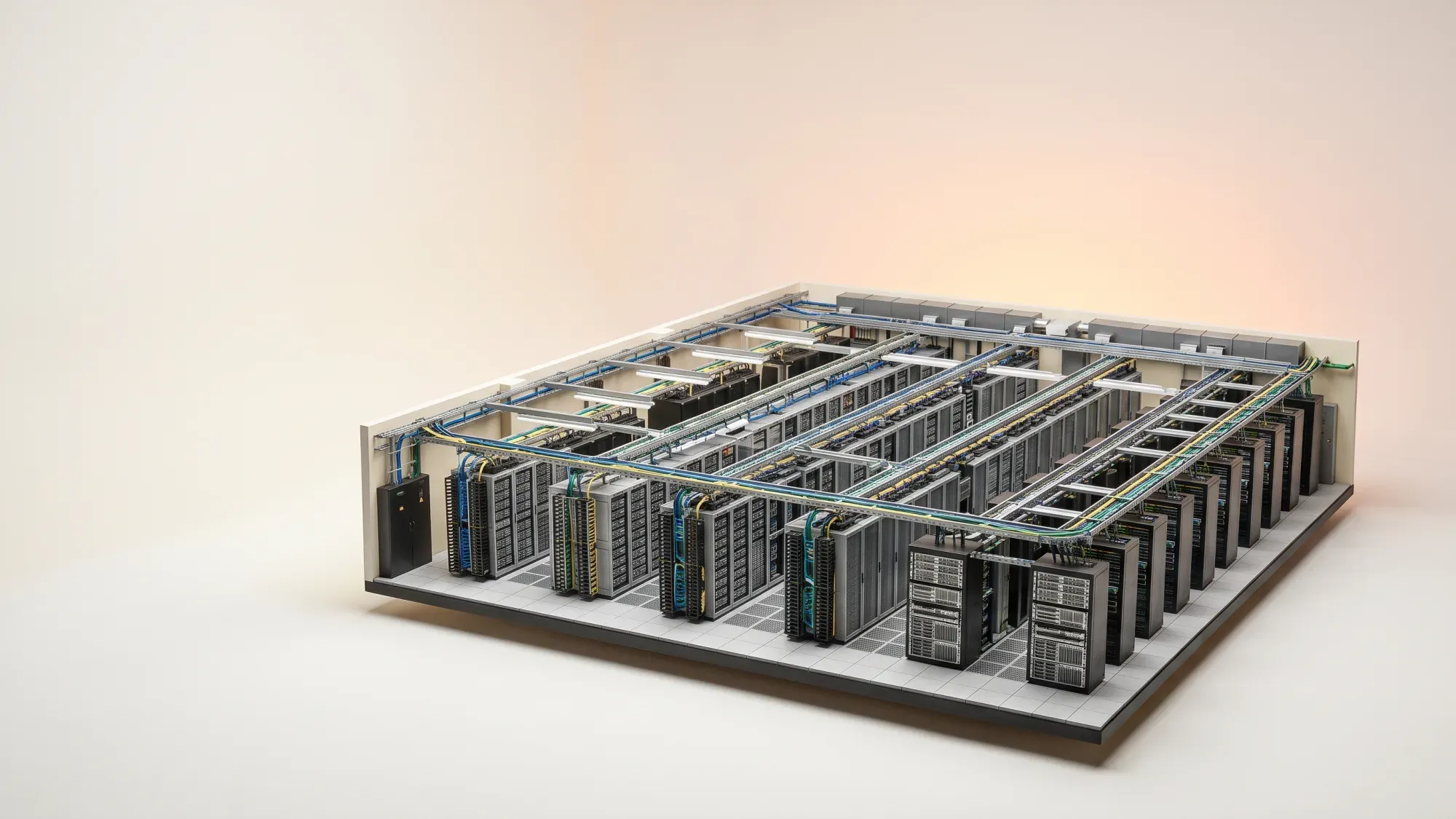
The rapid expansion of AI-enabled data centres is creating a significant grid capacity problem1, with construction outpacing electricity grid expansion. This imbalance means grid stress is becoming the next data centre bottleneck. These advanced AI facilities demand higher and more concentrated power loads than traditional operations, pushing existing electricity grids beyond their limits.
The increasing demand for electricity from new technologies like AI data centres highlights the importance of efficient energy management for every home. At Fuse Energy, we believe in making energy simple and transparent, helping you understand and control your household's usage. Click here to switch to Fuse Energy today.
Why AI workloads require more power
AI workloads are fundamentally different from traditional data centre operations. They require significantly more power and generate higher, more concentrated loads than traditional facilities. This substantial increase in power density means AI facilities need robust electrical infrastructure capable of handling both high constant loads and unexpected spikes during intensive AI training sessions.
The scale of the challenge for existing grids
The sheer scale of AI's power demands is rapidly outpacing the expansion of electricity grids. This creates a systemic challenge for regional electricity grids that were not designed for such concentrated, high-magnitude loads.
Long connection queues and transmission constraints
The mismatch between rapid data centre construction and slower grid expansion leads to significant bottlenecks. Across major European data centre hubs, developers can face waits of seven to 10 years for grid connections. This is a stark contrast to the one to three years it takes to build a data centre. These long connection queues, coupled with transmission constraints and equipment shortages, are common symptoms of grid stress.
Regulatory hurdles and energy costs
Regulatory constraints and high energy costs can significantly impact data centre development in the UK. OpenAI, for instance, cited these reasons for pausing its multi-billion-pound UK data centre development. High energy costs in Britain, coupled with delays in securing grid connections, have created substantial hurdles for operators. Governments and grid operators are beginning to address these issues, indicating a growing regulatory focus on this area.
Integrated planning and accelerated investment
Addressing the grid capacity challenge requires integrated planning between data centre developers and governments. This collaboration is crucial to align data centre growth with grid investment, preventing power constraints from limiting the rollout of AI infrastructure. Accelerated grid investment is essential, as planning and building new grid infrastructure can take five to 15 years, far longer than data centre construction.
Demand management and improved flexibility
Credible strategies to address grid stress tend to combine moving or shaping demand, accelerating grid network investment and permitting, and improving flexibility through various measures. Smart site selection that prioritises existing grid capacity offers a faster path to operational data centres.
The vision for abundant, reliable power
The current grid capacity issues for AI data centres highlight a broader challenge within the energy system. At Fuse Energy, we envision a future with power to play with - energy so abundant it stops being a concern. This vision directly addresses the scarcity mindset that currently impacts AI data centre development, where the focus is often on managing limited resources rather than creating an environment of plenty.
Modernising infrastructure for all large users
Our approach is to vertically integrate and rebuild the energy system from scratch. This means modernising grid infrastructure and deploying vast renewable generation to prevent future bottlenecks for all large energy users, including AI data centres. By acquiring and modernising grid infrastructure and deploying terawatts of solar and storage, Fuse aims to create a system where energy demand, like that from AI, can be met without constraint. This fundamental redesign is crucial for a future-ready grid that can support technological advancement.
Challenging the scarcity mindset
Fuse Energy challenges the status quo of grid limitations by actively building the infrastructure required for an abundant energy future. We believe that humanity has the right to use more energy, not less, to prosper and innovate. This perspective reframes AI demand not as solely a problem, but as a catalyst for energy innovation, driving the need for a more robust and flexible energy system.
Our commitment to rebuilding the energy system
Our core belief is to never settle - not on the scarcity story, not on waiting for change, and not on blaming people for their energy needs. While Fuse Energy currently supplies residential energy only, our strategic goal to deliver terawatt-hours of the cheapest, cleanest energy possible would ultimately benefit high-demand sectors like AI data centres by increasing overall supply and lowering costs. Our commitment to rebuilding the energy system from the ground up ensures that a future with abundant, reliable power is not just a dream, but a tangible goal we are actively working towards.
Managing your energy bills should be clear and easy to understand. Fuse Energy focuses on straightforward pricing, so you can see exactly what you're paying without unnecessary complexity. Our 24/7 human support team is always on hand with fast response times whenever you need help. Click here to switch to Fuse Energy today. Find out about our mission by clicking here.