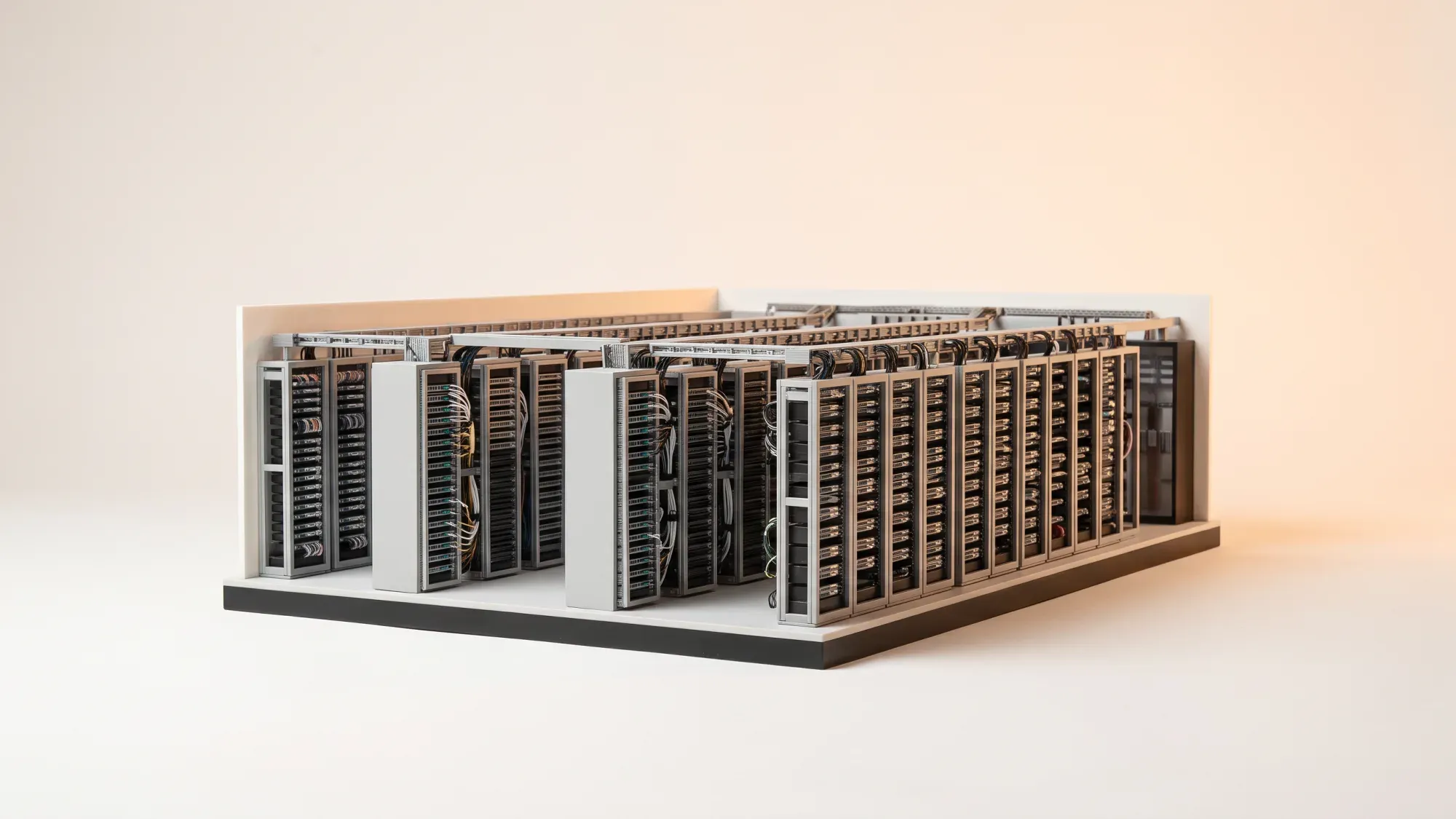
The escalating energy demands of Artificial Intelligence (AI) data centres present both a significant challenge and a powerful opportunity for the UK's energy grid. Rather than viewing this surge in electricity consumption as a burden, researchers argue that strategic policy reforms and technological advancements can harness it to strengthen grid stability and accelerate the deployment of clean energy technologies across the country.1
Fuse sells sovereign compute in UK data centres.
The digital infrastructure underpinning our modern world, from cloud computing to streaming services, relies heavily on data centres. The rapid rise of AI is now dramatically accelerating their energy consumption.
The 'unprecedented race for electricity'
AI is creating an "unprecedented race for electricity". Behnam Zakeri, a lead author from WU Vienna's Institute for Data, Energy and Sustainability, highlights that the challenge extends beyond simply finding clean power; it is about how quickly that power can be delivered to meet AI's escalating compute demand.
Global projections and UK grid pressure
Global electricity demand for new data centres is expected to double by 2030, outpacing the growth of renewable energy sources. This rapid increase places considerable pressure on existing energy grids, including the UK's, which must adapt to accommodate these growing loads while maintaining stability and progressing towards decarbonisation goals.
The substantial and growing energy needs of AI data centres, when managed strategically, can become a powerful asset for grid stability and the clean energy transition.
The role of on-site generation and energy storage
Investing in on-site energy solutions, particularly batteries, offers a tangible way to reduce peak demand on the grid. Analysis of 96 UK data centres showed that on-site batteries could reduce peak imported electricity from the grid by "10-15%". This not only eases grid pressure but also provides data centres with greater energy independence and resilience. Big tech companies are increasingly investing in energy storage as a solution to several of their power problems.
Treating computing load as a flexible resource
The computational demands of AI workloads are not always constant. By treating computing load as a flexible resource, data centres can adjust their energy consumption in response to grid conditions. This flexibility allows them to draw more power when renewable generation is abundant and reduce demand during periods of grid stress, effectively becoming active participants in grid balancing.
To fully realise the potential of AI data centres as grid assets, significant policy and market rule reforms are essential. These changes must incentivise data centres to operate in ways that benefit the wider energy system.
Incentivising net benefits to the energy system
Policy reforms are necessary to reward projects that offer net benefits to the energy system. This includes facilitating on-site clean generation and encouraging data centres to provide services that enhance grid stability. By creating market mechanisms that value flexibility and local generation, policymakers can encourage investments that align with national energy goals.
Accelerating clean energy deployment
With appropriate policies and market rules, investment in data centres could drive innovation and deployment of clean energy technologies and storage. This means that the demand created by AI could directly accelerate the build-out of new renewable generation and advanced energy storage solutions, benefiting the entire energy ecosystem.
The strategic integration of AI data centres into the UK's energy landscape holds the potential to accelerate the clean energy transition beyond the digital infrastructure sector itself.
Spillover effects beyond data centres
Under the right conditions, the digital infrastructure boom could help accelerate the clean-energy transition beyond data centres themselves, creating spillover effects across other sectors. This could manifest as increased investment in grid infrastructure, development of new energy management technologies, and a more robust and resilient energy system overall.
Building a future with abundant energy
By reframing AI energy demand as an opportunity rather than a constraint, the UK can foster an environment where technological advancement and energy sustainability go hand-in-hand. This approach aligns with a vision of abundant, clean energy, where innovation in one sector drives positive change across the entire energy system, creating a future with more "power to play with" for everyone.
Fuse has UK data centre capacity for sovereign compute.