Worcester boiler pressure: how to repressurise
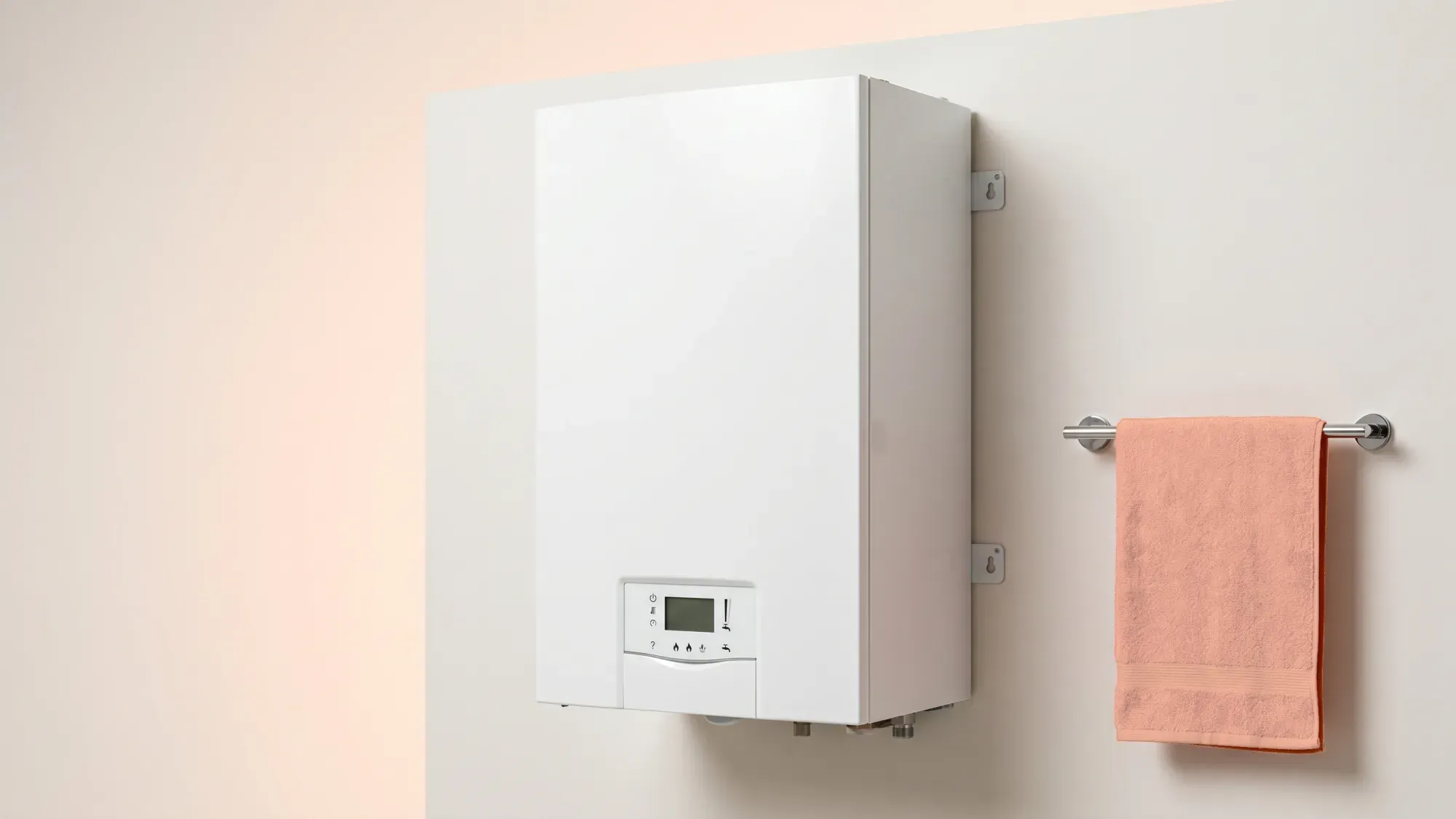
Keeping your Worcester Bosch boiler running efficiently is key to a warm home and reliable hot water. One common issue homeowners face is incorrect boiler pressure, which can lead to your heating system not working as it should, or even shutting down entirely. The good news is that understanding and adjusting your boiler's pressure is often a straightforward task you can handle yourself. While Fuse Energy specialises in installing Vaillant ecoTEC Plus boilers and does not supply, install, or service Worcester Bosch models, we believe in empowering all homeowners with the knowledge to manage their home energy systems effectively. This guide will walk you through checking, understanding, and safely adjusting your Worcester Bosch boiler pressure, covering both low and high pressure scenarios.
Understanding your Worcester Bosch boiler pressure
Your boiler's pressure gauge indicates the water pressure within your sealed central heating system. This pressure is crucial for circulating hot water through your radiators and providing hot water.
What the pressure gauge tells you
Most Worcester Bosch boilers feature either an analogue dial or a digital display to show the system pressure. On an analogue dial, you will typically see a "green zone" indicating the optimal pressure range. If the needle falls into a red zone, it means the pressure is either too low or too high. Digital displays might show a numerical reading and sometimes error codes (e.g., A1, 1017 W, 2971 B for low pressure) to alert you to a problem.
The ideal pressure range for your boiler
For most Worcester Bosch models, the ideal operating pressure is between 1 and 1.5 bar when the system is cold. When your heating is on and the water heats up and expands, it is normal for the pressure to rise slightly, usually to between 1.5 and 2 bar. What matters most is the reading when the system has cooled down.
Why your Worcester boiler pressure changes
Pressure fluctuations are a normal part of a central heating system's operation, but significant or frequent changes can signal an underlying issue.
Common causes of low pressure
Low boiler pressure usually means there has been a loss of water from the sealed system. Common reasons include:
- Bleeding radiators: Releasing air from radiators also releases some water, which can cause a slight pressure drop.
- Minor leaks: Even tiny "pinhole" leaks in pipes, radiators, or the boiler itself can lead to a gradual loss of pressure over time. These can be hard to spot as water might evaporate before you notice it, or the leak could be in a hidden location like under floorboards.
- Recent maintenance: Work carried out on your heating system can sometimes result in a temporary pressure drop.
- Expansion vessel issues: A faulty expansion vessel can lead to pressure drops.
If your pressure consistently drops below 0.5 bar, your boiler may shut down as a safety measure to prevent damage.
Common causes of high pressure
High boiler pressure is less common than low pressure but equally important to address. It can put unnecessary strain on your system and trigger safety devices.
- Overfilling the system: If you have recently repressurised your boiler and added too much water, the pressure can rise above safe levels.
- Faulty filling loop: If the valves on your filling loop are not closed properly, or if the filling loop itself is faulty, it can allow water to continuously enter the system, causing pressure to build.
- Expansion vessel issues: A malfunctioning expansion vessel, which is designed to absorb the expansion of water as it heats, can lead to consistently high pressure.
- Faulty pressure relief valve: While designed to release excess pressure, a faulty pressure relief valve can sometimes contribute to high pressure issues or leak inconsistently.
Pressure above 2.5 bar is generally considered too high, and if it reaches around 3 bar, the pressure relief valve may activate to release water.
What to do if pressure keeps dropping
If your Worcester Bosch boiler pressure keeps dropping frequently, it is a sign that something more than a simple top-up is needed. While a one-off drop might be normal, repeatedly having to repressurise (more than once or twice a year) suggests a leak or a component fault.
First, check all visible joints, radiator valves, and connections for any obvious signs of leakage. Also, inspect the pressure relief valve's discharge pipe (which usually goes through an outside wall) for dripping water, as this could indicate a faulty valve. If you cannot find an obvious leak, or if the problem persists, it is time to call a Gas Safe registered engineer to diagnose the issue. They can perform diagnostic tests to determine if the fault is within the boiler itself (e.g., a faulty heat exchanger or expansion vessel) or elsewhere in your heating system.
How to check your Worcester boiler pressure
Checking your boiler's pressure is a quick and easy way to monitor the health of your heating system.
Locating and reading the pressure gauge
Your Worcester Bosch boiler's pressure gauge is typically located on the front panel. It might be a traditional circular dial with a needle or a digital display.
To get an accurate reading, it is best to check the pressure when your heating system is cold - ideally, when it has been off for a few hours. If you have a dial, the needle should be in the green zone, usually indicating between 1 and 1.5 bar. If it is in the red zone below 1 bar, your boiler is under-pressurised.
Understanding different gauge types
- Analogue gauges: These are physical dials with a needle that points to the current pressure. They often have a green section for the ideal range and red sections for low or high pressure.
- Digital displays: Many modern Worcester Bosch boilers have digital screens that show the pressure numerically. These can also display error codes if the pressure is outside the optimal range.
What is the ideal cold pressure for a Worcester Bosch boiler?
The ideal cold pressure for most Worcester Bosch boilers is between 1 and 1.5 bar. This ensures the system has enough water to circulate efficiently. When the heating is on, the pressure will naturally rise slightly due to water expansion, typically to between 1.5 and 2 bar.
Step-by-step guide to repressurising your Worcester Bosch boiler
Repressurising your Worcester Bosch boiler is a common task that homeowners can often do themselves.
Safety first: preparing your boiler
Before you start, always turn off your boiler and allow the system to cool down completely. This prevents hot water or steam from escaping and ensures a more accurate pressure reading.
Identifying the filling loop
The filling loop is how you add water to your heating system. It is typically a silver braided hose with two valves, often found underneath your boiler. However, Worcester Bosch boilers can have different types of filling loops:
- External filling loop: A flexible metal pipe with two taps, connecting your mains cold water to the heating system.
- Keyed internal filling loop: Some older models use a small white key that fits into a port on the boiler. You insert and turn the key to open the valve.
- Keyless internal filling loop: Modern boilers might have a blue lever underneath that you pull down to repressurise.
If you are unsure, consult your boiler's manual or check for videos specific to your model.
Adding water to the system
Once you have identified your filling loop:
- External filling loop: Attach the hose to both valves. Slowly open the mains cold water tap, then the second valve to allow water into the system.
- Keyed internal filling loop: Insert the key into the port, align the arrow with the open padlock symbol, and turn it. Then, gently turn the white square clockwise to allow water in.
- Keyless internal filling loop: Pull down the blue lever.
As you add water, keep a close eye on the pressure gauge. Allow the pressure to rise slowly until it reaches between 1 and 1.5 bar.
Disconnecting the filling loop
Once the pressure is correct:
- External filling loop: Close both valves securely. Then, remove the hose. Be prepared for a small amount of water to drip out.
- Keyed internal filling loop: Turn the key back to the open padlock position and remove it.
- Keyless internal filling loop: Release the lever.
Make sure both valves are fully closed to prevent over-pressurisation. If you used an external filling loop, store it safely away.
What to do if your Worcester boiler pressure is too high
If your boiler pressure has climbed above the recommended range (typically above 2.5 bar when hot, or significantly above 1.5 bar when cold), you will need to reduce it.
Releasing excess pressure from radiators
The most common way to lower boiler pressure is by bleeding your radiators.
- Turn off your boiler and allow the system to cool down.
- Locate a radiator bleed key.
- Find the bleed valve on a radiator (usually at the top, on one side).
- Place a cloth or container underneath to catch any drips.
- Insert the key and slowly turn the valve anti-clockwise. You should hear a hissing sound as air escapes.
- Keep the valve open until water starts to come out steadily, then tighten it clockwise.
- Check your boiler's pressure gauge after bleeding a few radiators. Repeat the process if necessary until the pressure returns to the ideal 1 to 1.5 bar range when cold.
When to consider professional help for high pressure
If your boiler pressure consistently rises too high, even after bleeding radiators, or if the pressure relief valve is constantly dripping, it indicates a more serious issue. This could be due to a faulty expansion vessel, a problem with the filling loop, or other internal component failures. In these cases, it is best to contact a Gas Safe registered engineer to diagnose and fix the underlying problem.
When to call a gas safe engineer
While basic repressurising is a DIY task, some boiler pressure issues require professional expertise.
Signs of a serious boiler pressure problem
You should call a Gas Safe engineer if you notice any of the following:
- Persistent pressure drops: If you are constantly having to repressurise your boiler (more than once or twice a year), it suggests a leak in the system that needs to be found and repaired.
- Visible leaks: Any water leaking from your boiler or pipework should be addressed immediately by a professional.
- Boiler repeatedly locking out: Modern boilers have safety mechanisms that shut them down if an unsafe condition, like very low pressure, is detected. Frequent lockouts indicate a fault.
- Unusual noises: Banging, whistling, or gurgling sounds can signal pressure problems or trapped air that a professional should investigate.
- High pressure that will not resolve: If bleeding radiators does not bring the pressure down, or if it quickly rises again, there might be a faulty component like an expansion vessel or pressure relief valve.
- Error codes: If your digital display shows persistent error codes related to pressure that you cannot resolve with a simple repressurisation.
The importance of gas safe registration
All gas work, including boiler servicing and repair, must be carried out by a Gas Safe registered engineer in the UK. This ensures the work is done safely and to the correct standards. Never attempt complex repairs or adjustments yourself if you are unsure, as this can be dangerous and may invalidate your boiler's warranty.
By understanding your Worcester Bosch boiler's pressure and knowing when to call in a professional, you can help ensure your heating system remains safe and efficient.
Disclaimer
For the avoidance of doubt, this article is provided for informational purposes only and is not intended to constitute legal or financial advice. The author and/or Fuse Energy shall not be responsible for any losses arising out of any reliance on the information contained herein.