What size cable for an electric car charger
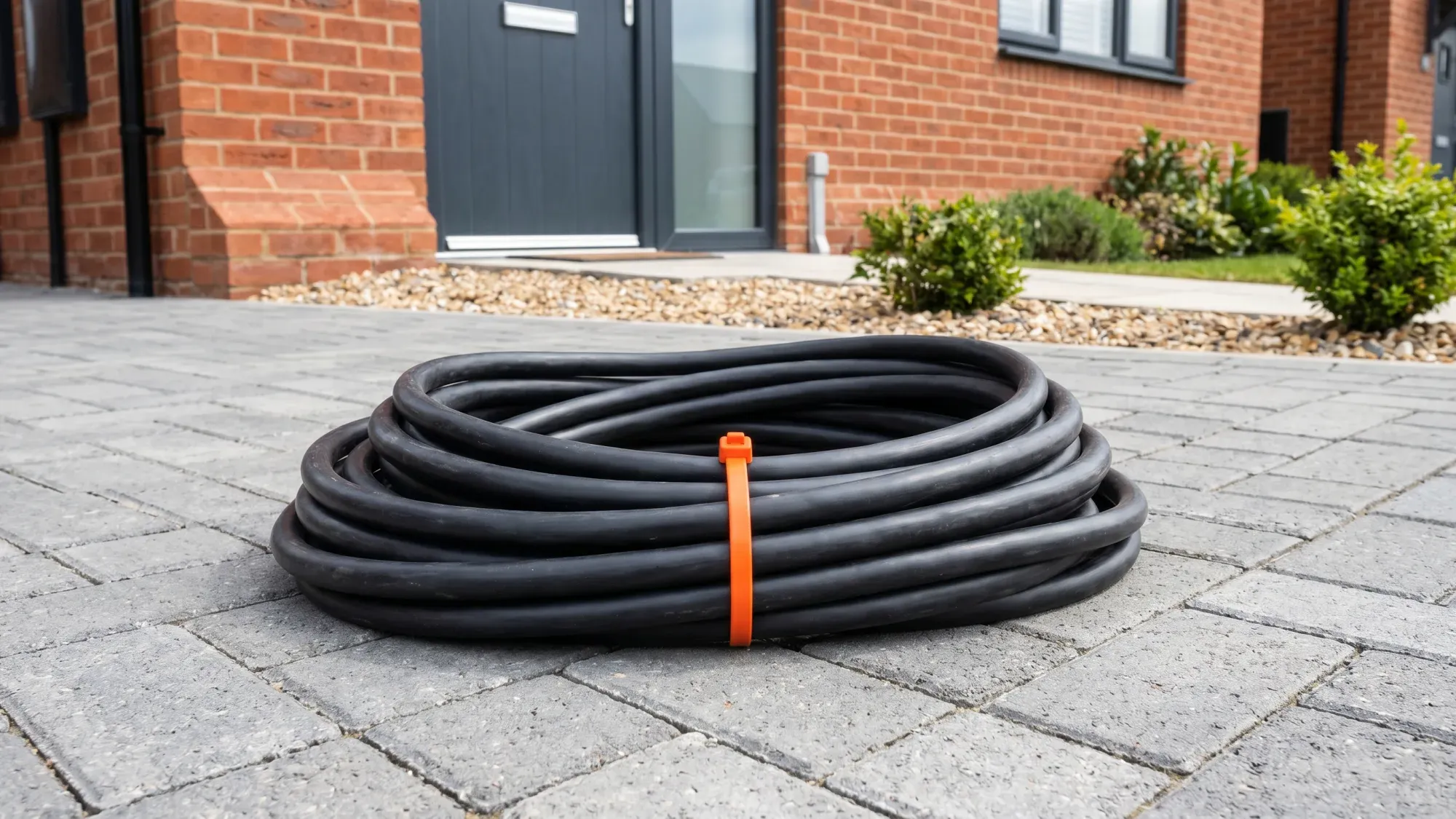
Installing an electric vehicle (EV) charger at home offers unparalleled convenience, but getting the electrical infrastructure right is paramount. The cable that connects your charger to your home's consumer unit must be correctly sized to safely handle the continuous power draw. An undersized cable risks overheating, fire hazards, and voltage drop, while an oversized one is an unnecessary expense. This guide demystifies the process for UK homeowners, focusing on common 7.4 kW (32amp) chargers.
Considering an EV charger for your home? Fuse Energy can help you get set up with a professional installation of the Easee One charger, ensuring you have the right infrastructure for efficient charging. Click here to get started.
Enter your address to get a quote and see how much you could save
Understanding your EV charger's power
Choosing the right cable begins with understanding your EV charger's power output. Unlike household appliances that draw power intermittently, an EV charger operates at high power for extended periods.
Common home charger outputs (7.4 kW / 32amp)
In the UK, the most common power output for domestic EV chargers is 7.4 kW, which corresponds to a continuous current draw of 32amps on a single-phase electricity supply. This is the typical rating for many popular home units, including the Easee One EV charger installed by Fuse Energy. Higher power chargers, such as 22 kW models, usually require a three-phase electricity supply, which is rare in most UK homes.
Why amperage matters for cable sizing
The amperage (current) your EV charger draws is the primary factor in determining the cable size. Cables are rated to safely carry a specific amount of current without overheating. A 7.4 kW charger drawing 32amps continuously demands a cable designed to sustain this load. Using a cable with an insufficient current rating for a 32amp load can lead to dangerous overheating and potential damage to your electrical system.
Key factors influencing cable size
Several critical factors influence the precise cable size required for your EV charger installation, all of which a qualified electrician will assess.
Cable length and voltage drop
The distance between your consumer unit and the proposed charger location significantly impacts cable sizing. The longer the cable run, the greater the potential for voltage drop. Voltage drop occurs when the electrical resistance of a long cable causes the voltage to decrease along its length. Excessive voltage drop reduces charging efficiency and can stress the charger and your vehicle's battery. To counteract this, longer cable runs often necessitate a larger cross-sectional area (mm²) to maintain adequate voltage. BS 7671, the UK's wiring regulations, permits a maximum 5% voltage drop for fixed equipment (excluding lighting circuits).
Installation method and thermal rating
How the cable is installed affects its ability to dissipate heat, known as its thermal rating. For instance, a cable clipped directly to a wall surface can cool more effectively than one enclosed in conduit, buried underground, or run through insulation. Cables installed in environments where heat dissipation is restricted (e.g., buried in soil or within insulated walls) will require a larger size to compensate for the reduced cooling.
Ambient temperature and grouping
The ambient temperature of the installation environment also plays a role. Cables installed in hotter areas or grouped with other cables carrying current will experience higher operating temperatures. This necessitates a larger cable size to prevent overheating, a process known as "derating." An electrician will apply correction factors based on these conditions during their calculations.
Recommended cable sizes for 7.4 kW chargers
For a standard 7.4 kW (32amp) home EV charger, two cable sizes are most commonly recommended in the UK: 6mm² and 10mm² armoured cable.
When 6mm² armoured cable is suitable
A 6mm² armoured cable is frequently suitable for 7.4 kW (32amp) EV charger installations, particularly for shorter cable runs. For typical domestic installations with cable runs up to approximately 15-20 metres, and where the cable is clipped direct or run through standard chases, 6mm² is often sufficient to safely handle the continuous 32amp load under normal installation conditions.
When to consider 10mm² armoured cable
For longer cable runs, especially those exceeding 15-20 metres, or in situations where specific installation conditions (such as burial, enclosure in conduit, or grouping with other cables) might lead to reduced heat dissipation or increased voltage drop, a 10mm² armoured cable may be required. Opting for a 10mm² cable in these scenarios helps prevent overheating and ensures the voltage drop remains within safe and efficient limits.
Understanding current ratings
The current rating of a cable indicates the maximum continuous current it can safely carry. For example, a 6mm² steel wire armoured (SWA) cable can typically carry between 34A and 47A for single-phase circuits, depending on installation method. A 10mm² SWA cable generally has a current rating of around 73amps. These ratings are crucial for ensuring the cable can handle the 32amp load of a 7.4 kW EV charger with an adequate safety margin.
The role of armoured cable (SWA)
Armoured cable, specifically Steel Wire Armoured (SWA) cable, is a common choice for EV charger installations, particularly for outdoor or buried runs.
What is armoured cable and why is it used?
Armoured cable is an electrical cable designed with a protective layer of steel wires (SWA) beneath its outer sheath. This armouring provides robust mechanical protection against impact, crushing, and moisture ingress, making it ideal for demanding environments. For EV charger installations, SWA cable is frequently used for runs that are exposed to potential physical damage, such as those installed outdoors, routed through garages, or buried underground.
Installation requirements for armoured cable
Installing armoured cable requires specific considerations to ensure its integrity and safety. When buried, it must be laid at an appropriate depth and often requires additional protection, such as being placed within ducts or conduits. The cable ends must be properly terminated using suitable glands to maintain the mechanical protection and earthing continuity.
Protecting your cable: ducts and conduits
Even with armoured cable, additional protection can be beneficial. Using ducts or conduits can provide an extra layer of mechanical protection, especially when cables are buried or run through areas where they might be disturbed. This helps safeguard the cable from external damage and can simplify future maintenance or replacement if needed.
Ensuring safety and regulatory compliance
All EV charger installations in the UK must adhere to strict safety and regulatory standards.
BS 7671 (IET Wiring Regulations)
Every EV charger installation in the UK must strictly comply with BS 7671 (the IET Wiring Regulations), currently BS 7671:2018+A4:2026. These regulations cover all aspects of electrical installations, including cable sizing, protection against electric shock, earthing arrangements, and the use of appropriate protective devices like Residual Current Devices (RCDs). Non-compliance can invalidate your installation's Electrical Installation Certificate and potentially affect your property's building insurance.
Notifying your distribution network operator (DNO)
It is a mandatory requirement to notify your local Distribution Network Operator (DNO) before installing an EV charger. The DNO is responsible for managing the local electricity network and needs to assess whether your home's existing supply and the local grid infrastructure can safely accommodate the additional load from an EV charger. This notification process ensures network stability and prevents potential overloads. Your installer will typically handle this notification on your behalf.
The importance of professional installation
Given the complexities of cable sizing, regulatory compliance, and the continuous high current draw of EV chargers, professional installation by a qualified electrician is not just recommended, but essential. Attempting a DIY installation can compromise safety, void warranties, and lead to non-compliance with UK electrical regulations. A professional installer ensures that all calculations are correct, the installation method is appropriate, and all safety standards are met.
Getting your EV charger installed
Once you understand the technical requirements, the next step is to choose a professional to handle the installation.
Choosing a qualified and OZEV-approved installer
When selecting an installer, look for a qualified electrician who is also OZEV (Office for Zero Emission Vehicles) approved. OZEV approval signifies that the installer meets specific standards for EV chargepoint installations and can ensure your installation complies with all relevant regulations. A reputable installer will conduct a thorough site survey to assess your home's electrical system, measure cable runs, and determine the precise cable size needed.
The Fuse Energy Easee one charger installation process
Fuse Energy provides professional installation of the Easee One EV charger, a 7.4 kW (32amp) unit. This service includes full installation, typically covering up to 15 metres of cabling, surge protection, and a 3-year warranty. Fuse Energy's installation process ensures that the correct cable size is selected based on your property's specific requirements and that the installation fully complies with BS 7671 and DNO regulations. This commitment to rigorous, data-backed guidance empowers customers to confidently embrace electric vehicles with reliable home charging.
Choosing the right cable size for your EV charger is a critical step towards safe and efficient home charging. By understanding the factors involved and opting for professional installation, you can ensure your setup meets all regulatory standards and provides reliable power for your electric vehicle. Fuse Energy is here to support your journey towards a greener future, offering expert installation and smart energy solutions.
Ready to power your electric vehicle with confidence? Switch to Fuse Energy today for straightforward pricing, real-time usage data, and 24/7 human customer support. Click here to switch to Fuse Energy and take control of your home energy. Find out more about our mission to build a sustainable energy future by clicking here.
Disclaimer
For the avoidance of doubt, this article is provided for informational purposes only and is not intended to constitute legal or financial advice. The author and/or Fuse Energy shall not be responsible for any losses arising out of any reliance on the information contained herein.