Virtual power Plant: how UK homes can earn
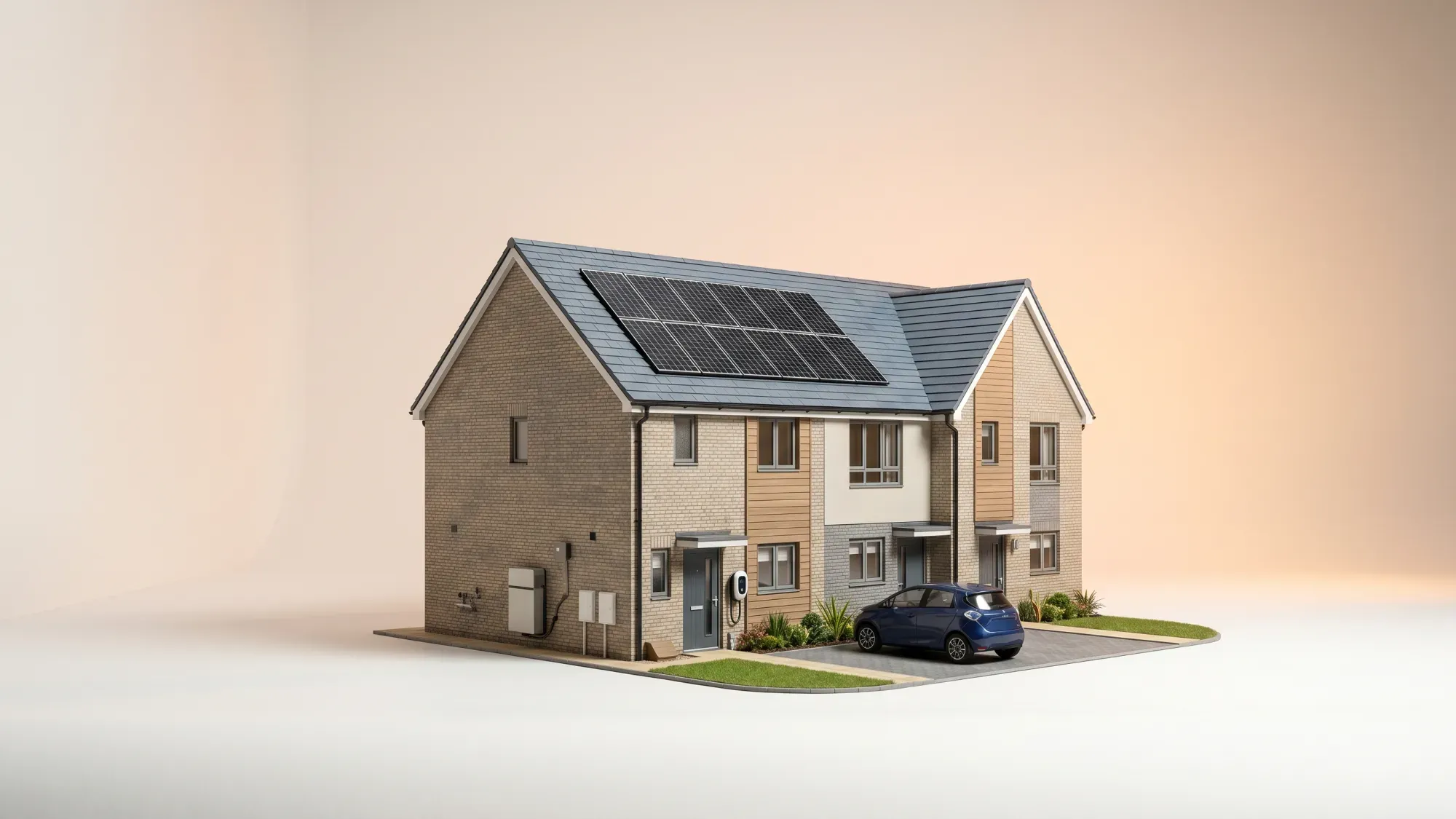
Virtual Power Plants (VPPs) are changing how UK homeowners interact with the energy grid, transforming household energy assets into active contributors to national energy stability. By aggregating distributed energy resources (DERs) like solar panels, home batteries, and electric vehicle (EV) chargers, VPPs create a flexible power source that helps balance the grid and offer financial incentives to participating homeowners. This guide explains what VPPs are, their benefits for UK households, and the practical steps to get involved.
Virtual Power Plants offer a new way to engage with your home energy, turning your assets into active contributors to the grid. If you are looking for clear pricing and smart ways to manage your energy, Fuse Energy provides the tools to help you take control. Click here to switch to Fuse Energy today.
Enter your address to get a quote and see how much you could save
What is a Virtual power Plant?
A Virtual Power Plant is not a physical power station but a sophisticated network of decentralised energy resources managed as a single, cohesive entity. Unlike traditional, large-scale power stations, a VPP coordinates many smaller units to provide electricity and grid services, helping to manage energy flow more efficiently across the National Grid.
Aggregating distributed energy resources
VPPs operate by pooling thousands of DERs together, creating a collective electricity source. These DERs can include rooftop solar panels, home battery storage systems, and EV chargers. Advanced software and control systems manage these diverse assets, optimising their output and consumption in real-time. This aggregation allows individual homeowners to contribute to grid stability in a way that would be impossible with standalone systems.
How VPPs support the UK grid
The UK National Grid constantly faces the challenge of balancing electricity supply and demand. VPPs contribute significantly to this balance by intelligently managing distributed energy assets across many homes. During periods of high demand, VPPs can instruct connected batteries to discharge or smart devices to reduce consumption, effectively acting as a collective power source to prevent strain on the grid. Conversely, during times of high renewable generation and low demand, VPPs can direct batteries to charge, absorbing excess energy. This rapid response helps enhance grid stability and resilience, especially during fluctuations from intermittent renewable sources.
Benefits for UK homeowners
Participating in a Virtual Power Plant offers several tangible benefits for UK homeowners, from earning revenue to contributing to a more sustainable energy future.
Earning from your energy assets
Homeowners can monetise their energy assets by participating in a VPP, typically by receiving payments for providing flexibility services to the grid. For example, your home battery might discharge stored solar power to the grid during peak demand, or your EV charger might pause charging during periods of grid stress. These actions, coordinated by the VPP, help balance supply and demand, and in return, participants receive financial compensation. While specific earnings vary based on market conditions and services provided, a typical UK household with a home battery could earn revenue, on top of other energy savings.
Enhancing grid stability and sustainability
VPPs play a vital role in supporting the integration of renewable energy sources like solar and wind power into the National Grid. By providing balancing services, VPPs help manage the variability of these renewables, making the grid more stable and resilient. Your participation directly contributes to a more sustainable energy future for the UK, reducing the need for fossil fuel-based generation during peak times.
Greater control over your energy use
Joining a VPP shifts the balance, providing homeowners with control and financial advantage from their distributed energy resources. Instead of being passive consumers, you become an active participant, contributing to grid stability and sustainability while potentially earning income. This enables homeowners to actively manage and optimise their energy assets.
How to participate in a Virtual power Plant
Getting involved with a Virtual Power Plant is a straightforward process for UK homeowners with compatible energy assets.
Eligibility and required home energy assets
Eligibility for VPPs typically depends on the type and capacity of your DERs. Most VPP providers require smart meters and compatible solar inverters, batteries, or EV chargers. The average UK home uses around 2,500 kWh of electricity per year, according to Ofgem, so understanding your own consumption patterns can help you gauge your potential contribution.
Choosing a VPP provider
Research different VPP providers operating in the UK market. Compare their participation requirements, financial models, and the types of DERs they support. Some providers, like Tesla, offer VPP programmes specifically for their Powerwall owners, often in partnership with energy suppliers. Others, such as Axle Energy, are more supplier-agnostic. Other notable providers include Octopus Kraken VPP, Limejump, and Statkraft.
Connecting your devices
Once you have chosen a provider, you will typically connect your eligible DERs to their VPP platform, often through an app or online portal. This allows the provider to coordinate your assets with the wider VPP network. The process usually involves signing up and giving the VPP software permission to communicate with your battery or EV charger via an API.
Maximising your VPP earnings
To get the most out of your Virtual Power Plant participation, understanding how earnings are generated and optimising your energy assets is key.
Understanding grid service payments
The primary financial benefit for homeowners comes from payments for providing flexibility and grid services. When the grid experiences a "grid event" - a period when extra power is needed - the VPP platform automatically instructs your connected devices to export stored energy or reduce consumption. You receive payment for the energy your assets provide during these events. These payments can be significantly higher than standard export tariffs.
Optimising your solar and battery use
For homeowners with solar panels and home batteries, optimising their use within a VPP involves intelligent charging and discharging. Your battery can store surplus solar energy generated during the day and then release it to the grid during high-demand periods, earning you revenue. Even without VPP participation, a home battery can save money through time-of-use (TOU) arbitrage, charging during cheap off-peak hours and discharging during expensive peak times. VPP earnings stack on top of these savings.
Smart EV charging integration
Electric vehicle chargers can also be integrated into VPPs. Smart EV chargers can pause or reduce charging during grid events, contributing to grid stability and potentially earning you payments. This allows your EV to charge when energy is cheapest or most abundant, and to adjust its schedule to support the grid when needed.
The future of home energy with VPPs
Virtual Power Plants are more than just a new technology; they represent a fundamental shift in how we generate, consume, and manage energy.
Empowering a decarbonised grid
VPPs are a key component in transitioning to a more resilient, decentralised, and decarbonised energy system in the UK. They enable the efficient integration of renewable energy sources, helping to reduce reliance on fossil fuels and lower carbon emissions. By participating, homeowners become active agents in this transition, contributing directly to a greener future.
Fuse Energy's approach to VPPs
Fuse Energy believes in a future where energy is abundant and homeowners have control. Fuse Energy's commitment to smart energy solutions and app-based management aims to provide homeowners with the tools to optimise their energy contributions. With Fuse, you get clear pricing, real-time usage data, and 24/7 human customer support, all designed to make managing your energy simple and effective. The Fuse app provides a transparent and engaging platform for homeowners to monitor their energy usage and manage their Fuse services, simplifying energy control.
Ready to take control of your home energy and contribute to a smarter grid? Fuse Energy offers clear pricing, real-time usage data through our app, and 24/7 human customer support to help you manage your energy effectively. Switching to Fuse is quick and easy, putting you in charge of your bills from day one. Click here to switch to Fuse Energy today. You can also learn more about our mission to make energy abundant by clicking here.
Disclaimer
For the avoidance of doubt, this article is provided for informational purposes only and is not intended to constitute legal or financial advice. The author and/or Fuse Energy shall not be responsible for any losses arising out of any reliance on the information contained herein.