Underfloor heating: costs and benefits
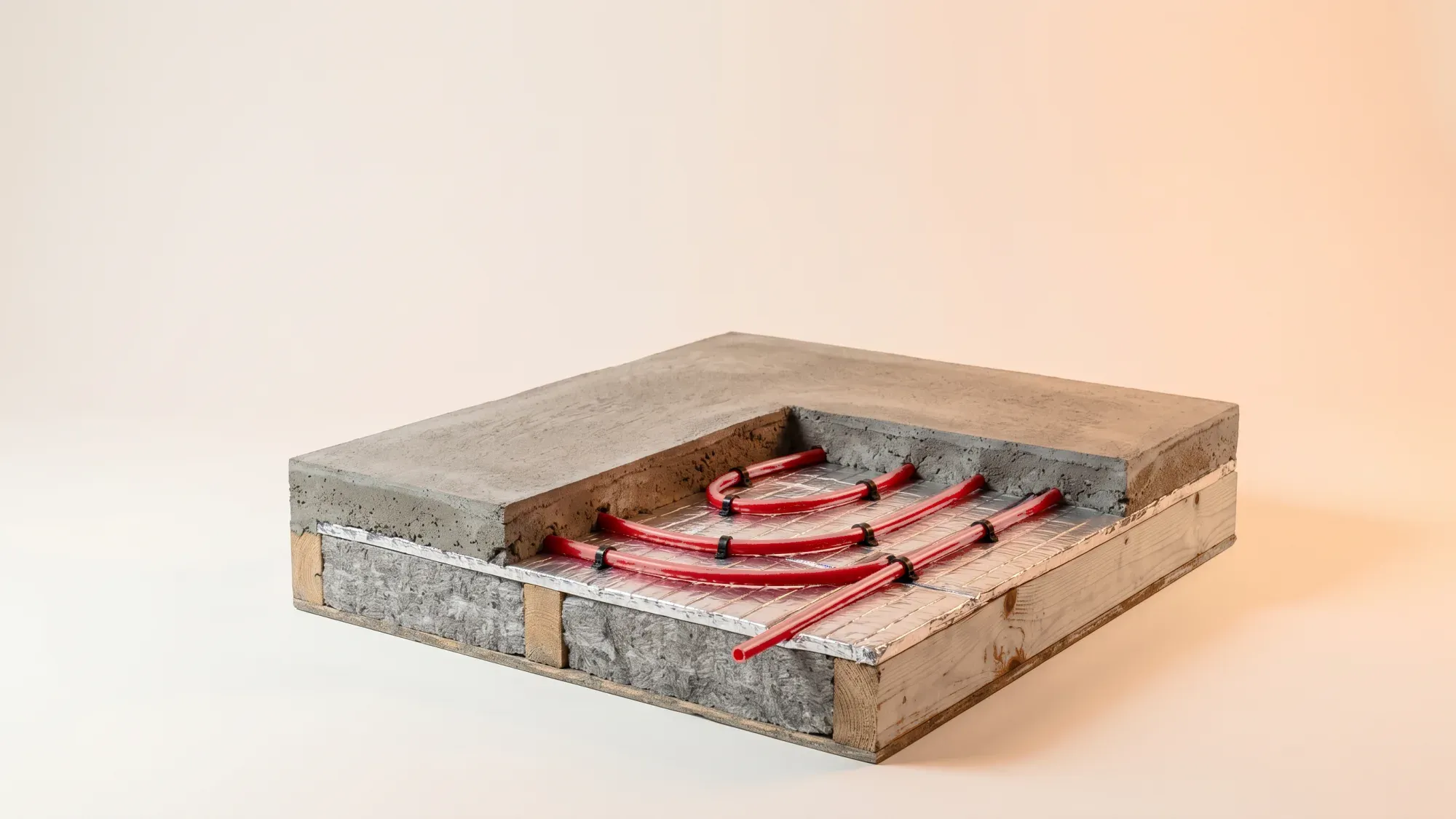
Underfloor heating (UFH) provides a comfortable, efficient, and modern way to warm your home, delivering radiant heat evenly across a room. Unlike traditional radiators, UFH operates at lower flow temperatures, making it an ideal partner for low-carbon heat sources such as heat pumps. This guide explores the benefits, types, costs, and installation considerations for homeowners considering this heating solution.
Fuse Energy sees underfloor heating as a key part of a modern, comfortable home, powered by abundant, clean energy. We aim to free homeowners from the anxiety of consumption. You can start your journey to smarter energy management by clicking here.
Enter your address to get a quote and see how much you could save
What is underfloor heating?
Underfloor heating is a system that uses a network of pipes or electric cables installed beneath your floor to distribute heat evenly throughout a room. Unlike radiators, which create localised warmth, UFH warms the entire floor surface, radiating heat upwards to provide consistent comfort.
How underfloor heating works
Underfloor heating systems work by circulating warm water through pipes (wet systems) or heating electric cables (electric systems) laid beneath the floor finish. This gently warms the floor, which then radiates heat into the room. This method provides a more uniform temperature from floor to ceiling compared to convection heating from radiators, which primarily heats the air. The radiant heat from UFH warms objects and surfaces directly, leading to a more pleasant and consistent warmth.
Types of underfloor heating systems
There are two primary types of underfloor heating systems available to UK homeowners, each with distinct characteristics regarding installation, running costs, and suitability for different projects.
Wet underfloor heating (hydronic)
Wet UFH systems circulate warm water through a series of pipes laid beneath the floor. These pipes are typically connected to a boiler, air source heat pump, or ground source heat pump.
- How it works: Water is heated by a central heat source and then pumped through the UFH pipework. The pipes are usually embedded in a screed layer or laid within a suspended floor system.
- Best for: Whole-house heating, new builds, and major renovations where the floor structure can be significantly altered. They are highly efficient when paired with low-temperature heat sources.
- Installation: More complex and time-consuming than electric systems, often requiring professional design and installation.
Electric underfloor heating (dry)
Electric UFH systems use electric heating cables or mats installed directly beneath the floor finish. These systems are powered by your home's electricity supply.
- How it works: Electric cables or mats generate heat when electricity passes through them. They are typically thinner than wet systems, making them suitable for shallower floor constructions.
- Best for: Smaller areas, single rooms (e.g., bathrooms, conservatories), and renovations where minimal floor height build-up is desired.
- Installation: Generally simpler and quicker to install than wet systems, often suitable for experienced DIYers or electricians.
Benefits of underfloor heating
Underfloor heating offers several advantages over traditional radiator systems, contributing to a more comfortable, efficient, and modern living environment.
Enhanced comfort and aesthetics
The radiant heat from UFH provides a gentle, even warmth across the entire room, eliminating cold spots and draughts often associated with radiators. This creates a superior level of thermal comfort. Aesthetically, UFH systems are completely hidden beneath the floor, freeing up wall space and allowing for greater flexibility in room design and furniture placement.
Energy efficiency
While the initial installation cost can be higher, UFH can be more energy-efficient in the long run. Because it operates at lower temperatures and distributes heat more evenly, you may feel comfortable at a lower thermostat setting compared to a radiator-heated room. This can lead to reduced energy consumption. Wet UFH, in particular, is highly efficient when integrated with modern, low-carbon heat sources like heat pumps.
Compatibility with modern heating
Wet UFH systems are perfectly suited for pairing with renewable heating technologies such as air source and ground source heat pumps. These heat pumps operate most efficiently when producing lower temperature water, which is exactly what wet UFH requires. This synergy makes UFH a future-proof heating solution for homeowners looking to reduce their carbon footprint.
Installation considerations
The installation process for underfloor heating varies significantly depending on the system type, the property's construction, and whether it is a new build or a renovation.
New builds vs renovations
- New builds: Installing UFH in a new build is generally more straightforward and cost-effective. The system can be designed into the initial construction, allowing for optimal pipe or cable layout and insulation.
- Renovations: For existing properties, wet UFH may require raising floor levels to accommodate the pipework and screed, which can be a more involved process. Electric UFH, with its thinner profile, is often a more practical choice for renovations where floor height is a concern.
Floor types and finishes
UFH is compatible with most floor finishes, including tiles, engineered wood, laminate, and carpet (with appropriate tog ratings). However, some materials conduct heat better than others. Tiles and stone are excellent conductors, while thicker carpets or certain types of solid wood may reduce heat output. Proper sub-floor insulation is crucial for efficient operation, preventing heat loss downwards.
Professional installation
While electric UFH mats can sometimes be a DIY project for those with electrical experience, wet UFH systems typically require professional design and installation. This ensures correct pipe sizing, manifold placement, and integration with your heat source for optimal performance and efficiency. Always consult with qualified installers to ensure your system meets UK building regulations and safety standards.
Understanding running costs
The running costs of underfloor heating are a key consideration for UK homeowners. These costs are influenced by several factors, including the type of system, the size of the heated area, insulation levels, and your energy tariff.
Factors affecting costs
- System type: Electric UFH generally has higher running costs per hour than wet UFH due to the higher unit cost of electricity compared to gas or the efficiency of heat pumps.
- Insulation: Good insulation in your home (walls, roof, windows, and sub-floor) is paramount. A well-insulated property will retain heat more effectively, reducing the amount of energy required to maintain comfort.
- Thermostat settings: Running UFH at lower, consistent temperatures is more efficient than frequently turning it on and off or setting it very high.
- Property size and usage: Larger areas and longer operating hours will naturally incur higher costs.
Comparing wet vs electric running costs
For illustrative purposes, consider the average UK home electricity unit rate, which is around 26.11p per kWh (inclusive of 5% VAT, based on Ofgem's price cap default tariff for 1 July to 30 September 2026).
- Electric UFH: A typical electric UFH system might consume between 100W and 150W per square metre. For a 10m² bathroom, this could be 1kW to 1.5kW per hour. Running for 4 hours a day at 26.11p/kWh would cost approximately £1.04 to £1.57 per day.
- Wet UFH: When powered by an efficient heat pump, wet UFH can be significantly cheaper to run. Heat pumps can produce 3 units of heat or more for every 1 unit of electricity consumed. While the electricity unit rate is the same, the effective cost per unit of heat delivered is much lower.
What is the average UK household electricity consumption?
The average UK home uses around 2,500 kWh of electricity per year. This figure, known as the medium Typical Domestic Consumption Value (TDCV), is updated by Ofgem to reflect current household energy use and is used as a benchmark for energy pricing and comparisons.
Smart controls and optimisation
Modern UFH systems benefit greatly from smart thermostats and zoning controls. These allow you to precisely manage temperatures in different areas of your home and schedule heating periods to match your lifestyle, further optimising energy use and reducing running costs. While Fuse Energy's app focuses on overall energy management, integrating smart UFH controls can contribute to a more efficient home energy ecosystem.
Is underfloor heating right for your home?
Underfloor heating offers a compelling blend of comfort, efficiency, and modern aesthetics. For UK homeowners seeking an advanced heating solution, UFH presents a strong case. Whether you are building a new home or undertaking a significant renovation, carefully considering the type of system, installation requirements, and potential running costs will help you make an informed decision.
By choosing UFH, especially a wet system paired with a low-carbon heat pump, you are investing in a heating solution that aligns with a future of abundant, clean energy and enhanced home comfort.
Considering underfloor heating is a step towards a more energy-efficient and comfortable home. At Fuse Energy, we believe in making your energy management as effortless as possible. Our app provides clear insights into your usage, helping you understand and control your energy consumption. With 24/7 human customer support, you are always in good hands. Switch to Fuse Energy today and experience a smarter way to power your home. Click here to get started. You can also learn more about our mission to create a future with abundant, clean energy here.
Disclaimer
For the avoidance of doubt, this article is provided for informational purposes only and is not intended to constitute legal or financial advice. The author and/or Fuse Energy shall not be responsible for any losses arising out of any reliance on the information contained herein.