Thermostatic radiator valve: explained
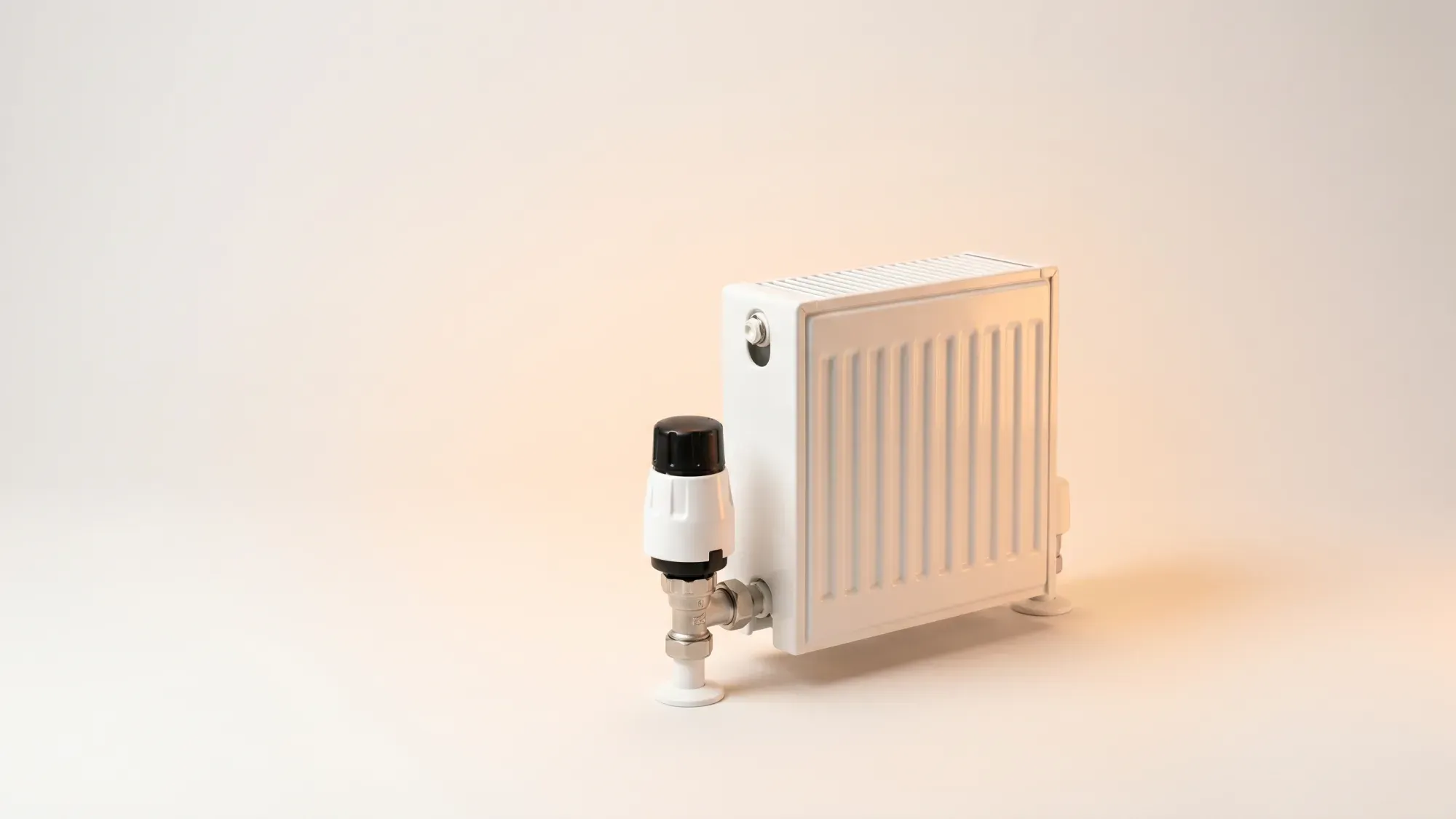
Thermostatic radiator valves (TRVs) offer a straightforward way to gain greater control over your home heating, making your system more efficient and comfortable. By allowing you to manage the temperature of individual rooms, TRVs help reduce energy waste and enhance comfort without unnecessary complexity. This aligns with Fuse Energy's commitment to empowering customers with smarter energy management, providing more control over their energy use.
Enter your address to get a quote and see how much you could save
What is a thermostatic radiator valve (TRV)?
A thermostatic radiator valve (TRV) is a self-regulating device fitted to a hot-water heating system radiator. It controls the temperature of a room by automatically adjusting the flow of hot water into that specific radiator. This means you can tailor the warmth to how each room is used, rather than heating your entire home to a single temperature.
Understanding radiator control
Traditional heating systems often rely on a single central thermostat to control the boiler for the whole house. While effective for overall temperature, this setup can lead to overheating in some rooms and underheating in others. TRVs address this by acting as mini-thermostats on individual radiators, sensing the ambient air temperature and regulating heat output accordingly.
The difference between TRVs and manual valves
Unlike a manual radiator valve, which simply turns the radiator on or off, or adjusts the flow manually, a TRV automatically responds to changes in room temperature. With a manual valve, the heat output is primarily controlled by your main thermostat. A TRV, however, constantly works to maintain your chosen temperature setting in its specific room, making your heating system more responsive and efficient.
How do thermostatic radiator valves work?
TRVs operate on a simple, mechanical principle, requiring no electricity or wiring for their basic function.
The internal mechanism
The core of a TRV is its sensor element, typically a sealed capsule filled with wax or liquid. This element is highly sensitive to changes in the surrounding air temperature.
Sensing room temperature
As the room air warms up, the wax or liquid inside the capsule expands. Conversely, as the room cools, the substance contracts. It's crucial that the TRV head is not covered by curtains or furniture, as this can trap warm air and cause the valve to shut off prematurely, leading to a cooler room than desired.
Regulating water flow
This expansion and contraction directly affect a pin within the valve body. When the room temperature rises and the capsule expands, it pushes the pin down, restricting the flow of hot water into the radiator. When the room cools, the capsule contracts, and a spring lifts the pin, allowing more hot water to enter the radiator. This continuous, automatic adjustment ensures the room maintains the desired temperature.
Benefits of installing TRVs in your home
Installing and correctly using TRVs can bring significant advantages to your home heating.
Enhanced energy efficiency
TRVs prevent overheating in individual rooms, meaning your boiler doesn't have to work as hard to heat the entire house to a uniformly high temperature. This reduces the overall heating demand, leading to more efficient energy use.
Improved comfort and zoned heating
By allowing you to set different temperatures for different rooms, TRVs enable "zoned heating". You can keep bedrooms cooler for sleeping, living areas warmer when in use, and spare rooms at a minimal temperature. This customisation enhances comfort throughout your home.
Potential cost savings
Preventing energy waste from overheating directly translates to potential savings on your heating bills. Studies have shown that installing and correctly using TRVs can reduce energy consumption. For instance, one study found TRVs could cut energy use by an average of 18% over an average UK heating season. Other estimates suggest savings of between 8% and 13% on energy. A typical UK home uses around 9,500 kWh of gas per year.
Types of thermostatic radiator valves
TRVs come in various forms, offering different levels of control and sophistication.
Manual vs thermostatic
The primary distinction is between manual valves, which you adjust by hand to turn a radiator on or off, and thermostatic valves, which automatically regulate heat based on room temperature. TRVs offer a more dynamic and energy-efficient approach to heating control.
Liquid, wax, and electronic sensors
Most conventional TRVs use a wax or liquid-filled sensor. Liquid models tend to react more quickly to temperature changes, offering more precise control. Electronic TRVs, often found in smart heating systems, offer even greater precision and programmability, sometimes with remote control via an app.
Smart TRVs: the next level of control
Smart TRVs integrate with smart home systems, allowing for advanced scheduling, remote control, and even learning capabilities. These can further optimise heating by adjusting to occupancy patterns and external weather conditions, potentially leading to greater energy savings.
Installation, placement, and optimisation
Effective use of TRVs depends on correct installation and thoughtful settings.
Where to install TRVs (and where not to)
TRVs should be installed on most radiators in your home. However, it's crucial not to install a TRV on the radiator in the same room as your main central thermostat. If both controls are present, they can conflict, leading to inefficient heating. In such a room, either leave the radiator valve fully open or use a manual valve.
Setting your TRVs for optimal comfort and efficiency
TRVs typically have settings from 0 to 5, where a setting of 3 often corresponds to an approximate room temperature of 20°C. However, the exact temperature for each number can vary by manufacturer.
- Living room: Start with a setting of 3 (around 20°C).
- Bedrooms: Settings of 2 to 3 are often comfortable, as many people prefer a cooler room for sleeping.
- Bathroom: A setting of 3 to 4 can be suitable, especially to help dry the room.
- Hallways and spare rooms: A setting of 1 or 2, or even the frost protection (snowflake) symbol, is often sufficient for less-used areas. Avoid turning them completely off in cold weather to prevent issues like condensation and mould.
Adjust settings gradually and allow a few hours for the room temperature to stabilise before making further changes. Turning a TRV to its maximum setting will not heat the room faster; it only allows the room to get hotter before the valve closes.
UK Building Regulations and TRVs
In the UK, Building Regulations Part L (Conservation of Fuel and Power) often mandate the installation of thermostatic room controls, including TRVs, when a new boiler is installed or replaced in existing dwellings. This requirement, which came into force in England in June 2022, aims to improve the energy efficiency of homes. The Boiler Plus standard, implemented in England from April 2018, also encourages the use of TRVs as part of efficient heating system installations, requiring new gas boiler installations to include time and temperature controls.
Common TRV issues and troubleshooting
While generally reliable, TRVs can sometimes encounter issues that affect your heating.
Dealing with a stuck TRV
A common problem is a TRV that gets stuck, often in the closed position, leading to a cold radiator. This usually happens when the internal pin seizes. You can often free a stuck pin by removing the TRV head and gently tapping or wiggling the pin until it moves freely. Lubricating it with a small amount of penetrating oil can also help.
What is the most common problem with a TRV?
The most common issue with a thermostatic radiator valve is a stuck pin. This internal pin, which regulates water flow, can seize in either an open or closed position, leading to a radiator that is either constantly hot or completely cold, regardless of the TRV's setting.
Radiator not heating evenly
If a radiator isn't heating evenly, or remains cold despite the TRV being open, it could be due to trapped air (requiring bleeding) or an unbalanced heating system. An unbalanced system means some radiators receive too much hot water, leaving others with insufficient flow. While TRVs help, proper system balancing is essential for overall efficiency.
When to call a professional
If you've tried basic troubleshooting and your TRV or radiator still isn't working correctly, it's best to call a professional heating engineer. They can diagnose more complex issues, such as a faulty valve body, and ensure your heating system is operating safely and efficiently. A professional can also help with system balancing or if you suspect a TRV needs replacing.
Disclaimer
For the avoidance of doubt, this article is provided for informational purposes only and is not intended to constitute legal or financial advice. The author and/or Fuse Energy shall not be responsible for any losses arising out of any reliance on the information contained herein.