Tethered vs untethered EV charger: which is right?
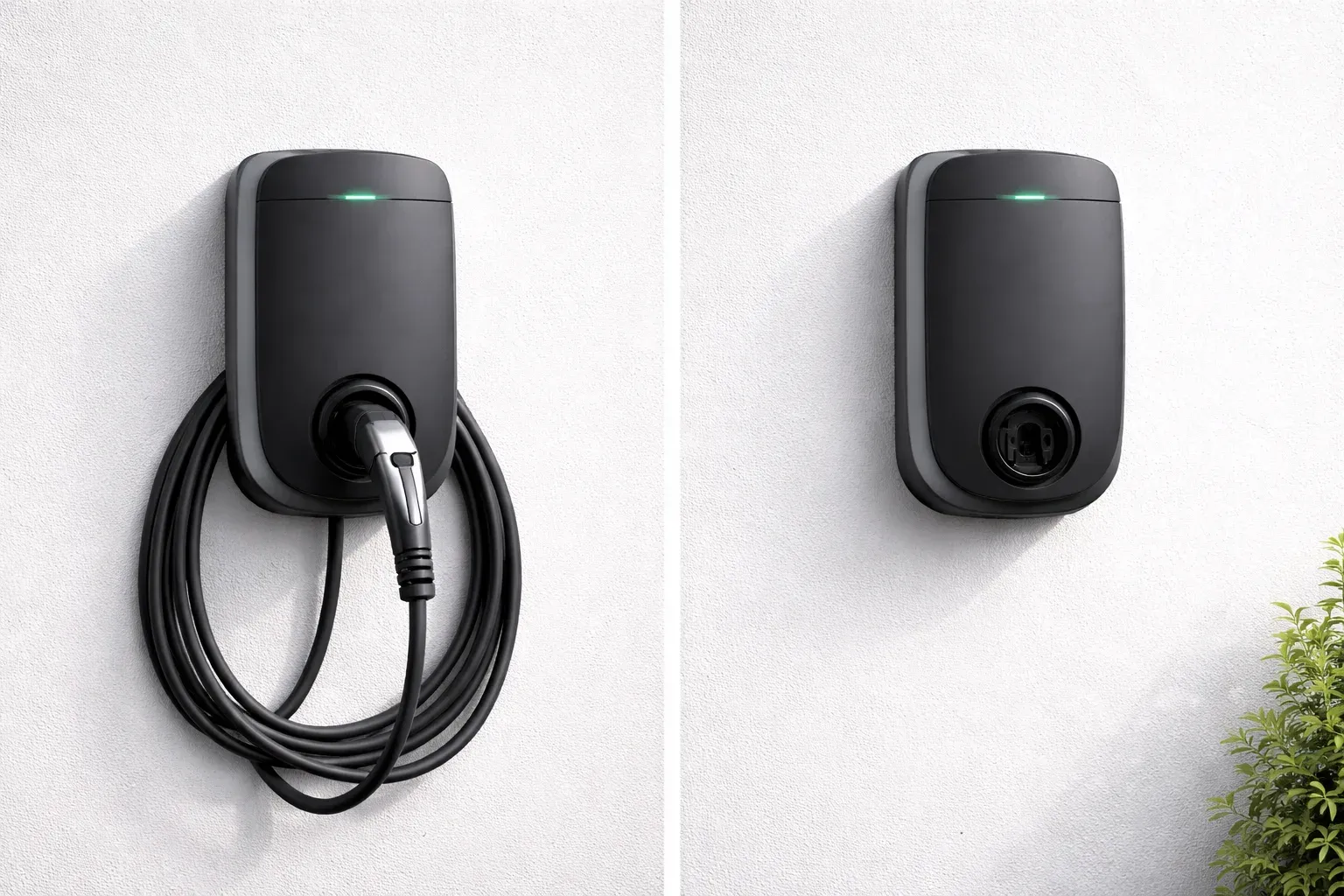
Choosing an electric vehicle (EV) charger for your home is a strategic move that gives you greater control and flexibility over your home energy. The decision between a tethered and an untethered unit has practical implications for convenience, aesthetics, and long-term suitability.
Understanding home EV chargers
Electric vehicle adoption is rapidly increasing in the UK, making home charging a key component of a smart home energy ecosystem. Understanding the options available is crucial for optimising electricity consumption and integrating with potential renewable energy sources.
What are the basic types?
Home EV chargers primarily come in two forms: tethered and untethered. A tethered charger has a charging cable permanently attached to the unit, while an untethered charger features a universal socket, requiring you to supply your own cable.
Why your choice matters for home charging
Your choice of home EV charger impacts daily convenience, the visual appeal of your charging setup, and how well it integrates with broader home energy management systems. Considering these factors upfront can help you make an informed decision that aligns with your lifestyle and future needs.
Tethered EV chargers: convenience and simplicity
What is a tethered charger?
A tethered EV charger comes with a charging cable permanently fixed to the charging unit. This means the cable is always ready for use, eliminating the need to retrieve and store a separate cable from your vehicle.
Advantages of tethered units
The primary advantage of a tethered charger is convenience; you simply pull up, plug in, and start charging. There's no fumbling with a separate cable, which can be particularly appealing in bad weather. Tethered units also ensure you always have the correct cable for your vehicle readily available.
Disadvantages of tethered units
One notable drawback of tethered chargers is the fixed cable. If you change your EV in the future to one with a different connector type, you might need to replace the entire charging unit. Cable management can also be a concern, as the cable needs to be neatly coiled and stored to prevent it from becoming a trip hazard or looking untidy.
Cable length and management considerations
Tethered chargers come with cables of varying lengths, typically between 5 and 10 metres. Consider your parking arrangements and the location of your EV's charging port to ensure the cable can comfortably reach without being stretched. For tidiness, many tethered units include integrated cable management solutions or can be paired with wall-mounted hooks.
Untethered EV chargers: flexibility and future-proofing
What is an untethered charger?
An untethered EV charger features a universal socket, usually a Type 2 socket in the UK, into which you plug your own charging cable. This design offers greater flexibility as it can accommodate different cable types.
Advantages of untethered units
The main benefit of an untethered charger is its flexibility. If you own multiple EVs with different connector types (though most modern EVs in the UK use Type 2 for alternating current (AC) charging), or if you anticipate changing your vehicle in the future, an untethered unit allows you to simply swap cables rather than replacing the entire charger. This makes them more future-proof. They also tend to have a neater appearance when not in use, as there's no cable hanging from the unit.
Disadvantages of untethered units
The primary disadvantage is the need to provide and manage your own charging cable. This means you'll always need to take the cable out of your car and put it back after charging, which can be less convenient than a permanently attached cable. There's also an additional cost for purchasing a suitable charging cable if one isn't supplied with your EV.
Cable compatibility and purchasing
Most modern electric vehicles sold in the UK use a Type 2 connector for AC home charging. When choosing an untethered charger, ensure you have a Type 2 to Type 2 charging cable that is compatible with both your vehicle and the charger's socket. Cables are available in various lengths and can be purchased from EV accessory suppliers.
Key factors for your decision
Vehicle compatibility and connector types
The vast majority of modern EVs in the UK use a Type 2 connector for AC charging at home. If your current or planned EV uses a Type 1 connector (more common on older models or some imports), you would need a tethered charger with a Type 1 cable or an untethered charger with a Type 2 socket and a Type 2 to Type 1 adapter cable.
Aesthetics and installation space
Consider where the charger will be installed and how it will look. Untethered units often appear more discreet when not in use, as there's no cable visible. For tethered units, think about cable management solutions to keep the area tidy and safe. The physical size of the unit and available wall space are also important considerations.
Long-term flexibility and future EV purchases
If you plan to keep your current EV for many years, a tethered charger might be perfectly suitable. However, if you anticipate upgrading your vehicle in the near future, an untethered charger offers greater flexibility, as you can simply use a new cable if your next EV has a different connector type.
Integration with smart home energy and tariffs
Both tethered and untethered smart chargers can integrate with home energy management systems and variable tariffs. Smart charging features allow EV owners to schedule charging during off-peak hours, potentially saving money on electricity costs by utilising cheaper variable energy tariffs. This capability is crucial for optimising costs and making the most of abundant, cheaper energy.
Cost implications and grants
Initial purchase and installation costs
The average cost for a home EV charger installation in the UK typically ranges from £1,000 to £1,350 for a fully installed 7kW smart charger, including the unit and labour. However, costs can vary, with some installations falling between £800 and £1,600. Factors influencing the total cost include the charger type, its power rating (e.g., 7kW), the distance from your fuse box, and any necessary electrical upgrades or groundworks. For example, a consumer unit upgrade could add £200-£500 to the total cost.
Understanding OZEV chargepoint grants
The UK government offers several Electric Vehicle Chargepoint Grants through the Office for Zero Emission Vehicles (OZEV) to help reduce the cost of installing a home EV charger. These grants are available until 31 March 2027.
The EV Chargepoint Grant for renters and flat owners provides up to £500 towards installing a chargepoint at the property, for those who own and live in a flat, or rent and live in any residential property, provided they have private off-street parking.
The EV Chargepoint Grant for households with on-street parking also offers up to £500 towards installation for those who own or rent their property, have only on-street parking, and are installing a cross-pavement solution (e.g., a charging gully).
It is important to note that a typical homeowner who owns and lives in a house with private off-street parking does not qualify for any current domestic chargepoint grant. For all domestic OZEV chargepoint grants, the customer applies for the grant themselves via the GOV.UK eligibility and application page; the OZEV-authorised installer's role begins only after the customer's application is approved.
Who is eligible for the OZEV EV Chargepoint Grant?
The OZEV EV Chargepoint Grant is primarily available to homeowners living in flats, and those living in rented accommodation, provided they have dedicated off-street parking. Households with on-street parking may also be eligible if they obtain local authority permission for a permanent cross-pavement charging solution.
Potential savings with smart charging and variable tariffs
Smart charging capabilities are increasingly important for optimising EV charging costs. By scheduling charging sessions during off-peak hours, when electricity is typically cheaper, EV owners can significantly reduce their energy bills. Many energy suppliers offer specific EV tariffs with lower rates during these periods, making the right charger choice a key part of a cost-effective home energy strategy. Pairing your EV charger with a smart meter installation can further enhance these savings by providing detailed usage data.
Making your informed choice
Assessing your daily charging routine
Consider your daily driving habits and how quickly you need to recharge your EV. If you typically charge overnight and have a predictable routine, either charger type can work well with smart charging. If you need more flexibility or frequently charge at different times, the convenience of a tethered unit might be more appealing. For more insights, you can read our guide on EV charging at home.
Consulting a qualified installer
All home EV charger installations in the UK must comply with IET Wiring Regulations (BS 7671) and be carried out by a qualified electrician. Installations must also adhere to specific building regulations and local planning requirements, particularly for external units. Consulting a qualified installer is essential for site-specific advice, ensuring regulatory compliance, and understanding any potential complexities or additional costs for your property.
The role of your charger in a smarter home
Choosing the right EV charger is a strategic 'power play' for homeowners to gain greater control and flexibility over their entire home energy ecosystem. An optimised EV charging solution helps maximise the use of abundant, cheaper off-peak energy, turning potential cost into surplus for other uses. This decision is a step towards a more integrated and flexible home energy system, aligning with a vision of a smarter, more efficient grid.
Managing your home energy should be simple and transparent. Fuse Energy offers clear pricing, real-time usage data through our app, and 24/7 human customer support to help you make the most of your energy. We're committed to making energy abundant and affordable for every home.
Disclaimer
For the avoidance of doubt, this article is provided for informational purposes only and is not intended to constitute legal or financial advice. The author and/or Fuse Energy shall not be responsible for any losses arising out of any reliance on the information contained herein.