Solar panels for EV charging explained
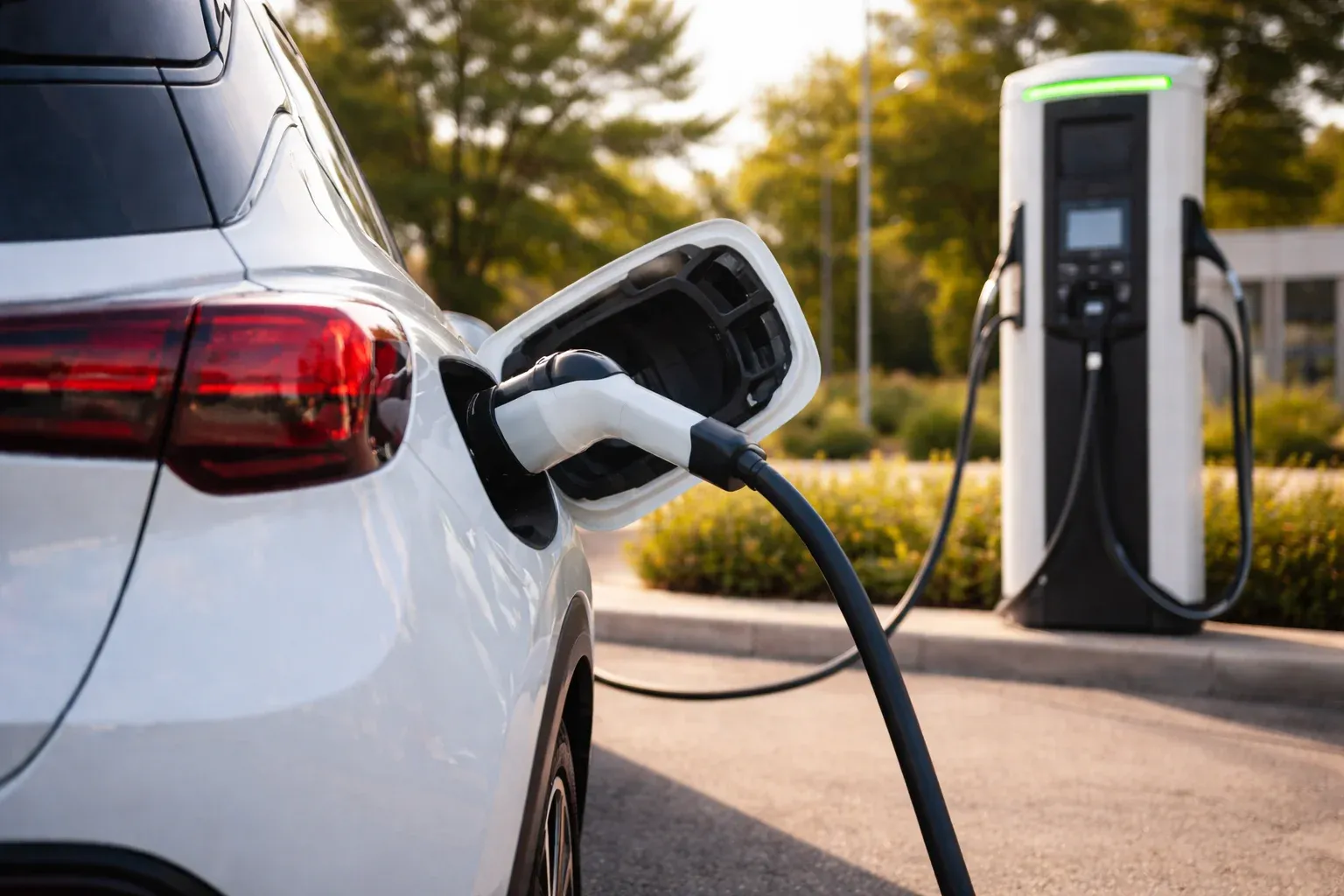
Electric vehicles (EVs) are becoming a common sight on UK roads, and powering them with clean, renewable energy from solar panels is a smart move. This approach not only reduces your carbon footprint but can also significantly lower your running costs. For both homeowners and businesses, a solar panel system for EV charging offers a path to greater energy independence.
Ready to explore how solar energy can power your EV and home? With Fuse Energy, you get clear pricing, real-time usage data, 24/7 human customer support, and a modern energy experience designed around you. Switching takes as little as 3 minutes, so you can take control of your bills from day one. Click here to switch to Fuse Energy today and start saving.
Understanding solar EV charging: benefits and how it works
So, how does it work? Solar photovoltaic (PV) panels convert sunlight into direct current (DC) electricity. An inverter then transforms this into alternating current (AC) electricity, suitable for your property and EV charger. When your solar panels generate more electricity than your home or business needs, this surplus can be directed to charge your EV, stored in a battery, or even sold back to the grid via the Smart Export Guarantee (SEG). This seamless integration ensures you're making the most of your self-generated power, turning your roof into a personal or commercial EV charging station.
Planning your solar EV charging system: components and sizing
Planning your solar panel for EV charging setup involves several key considerations. A typical solar panel kit for EV charging includes the solar panels themselves, an inverter, and often a battery storage system to capture excess energy for later use - crucial for charging your EV when the sun isn't shining. A smart EV charger is also vital, as it can communicate with your solar system to prioritise charging from your own generation.
When considering how many solar panels for EV charging you'll need, factor in your EV's battery size, your daily mileage, and your property's available roof space or land. An MCS (Microgeneration Certification Scheme) certified installer can help accurately size your solar panels and battery for EV charging to meet your specific requirements. Read more about EV charging here.
Costs, UK grants, and optimising your solar EV charging investment
The initial investment in solar panels for charging an EV can seem substantial, but numerous factors contribute to its long-term financial viability. Installation costs vary widely depending on system size, components chosen, and installation complexity. However, the UK government offers incentives to help offset these upfront expenses.
Navigating UK incentives and installation costs
The UK government offers various schemes to encourage the adoption of renewable energy and electric vehicles. The Office for Zero Emission Vehicles (OZEV) provides grants that support the installation of EV chargepoints for homes and workplaces1. From 1 April 2026, the financial support for EV charge points increased from £350 to up to £500 per socket, available until March 2027, covering various eligible households and businesses.
For solar panel installations, while there aren't universal "free solar panel grants," schemes like the Energy Company Obligation (ECO4) and the Home Upgrade Grant (HUG)2 offer support for low-income households or those meeting specific criteria. Additionally, the Warm Homes Plan, available from April 2025, is set to offer funding for low-income households and potentially low or zero-interest loans for others.
For residential properties and charitable organisations, there is currently a 0% VAT rate on solar panels and storage batteries in the UK, which is set to last until 31 March 20273. Always ensure you use MCS-certified installers for solar PV and qualified electricians for your EV charger installation to guarantee eligibility for any available schemes and to ensure a safe, compliant system. Understanding these incentives is key to making your solar panel for EV car charging project financially sound.
Gaining financial clarity and optimising bills with Fuse Energy
Integrating solar panels for home EV charging or for your business's fleet means a shift in your energy consumption and billing. This is where Fuse Energy steps in. We offer EV charger installation, alongside our expertise in providing transparent billing, payments, and meter management.
We help UK homeowners and businesses understand the true financial impact of their solar EV charging setup. Our detailed statements clearly break down your energy consumption and costs, allowing you to see how your reduced reliance on grid electricity translates into savings. By providing clear, accurate billing for grid energy, Fuse Energy empowers you to make informed decisions about when to charge your EV to maximise solar self-consumption and minimise reliance on potentially more expensive grid electricity. Our platform provides the financial transparency and data insights needed to navigate complex tariffs and optimise energy costs, ensuring you fully realise the economic benefits of your sustainable energy investments.
Take the stress out of managing your energy. With Fuse Energy, you get clear pricing, real-time usage data, 24/7 human customer support, and a modern energy experience designed around you. Switching takes as little as 3 minutes, so you can take control of your bills from day one. Click here to switch to Fuse Energy today and start saving. Find out about our mission by clicking here.
References
- DriveElectric. UK Government boosts EV charger grants to £500 from £350
- Eon. Home upgrade grant explained
- Solar Energy UK. VAT on Solar and Battery Storage
Disclaimer
For the avoidance of doubt, this article is provided for informational purposes only and is not intended to constitute legal or financial advice. The author and/or Fuse Energy shall not be responsible for any losses arising out of any reliance on the information contained herein.