Commercial solar panels: 4-7 year payback explained
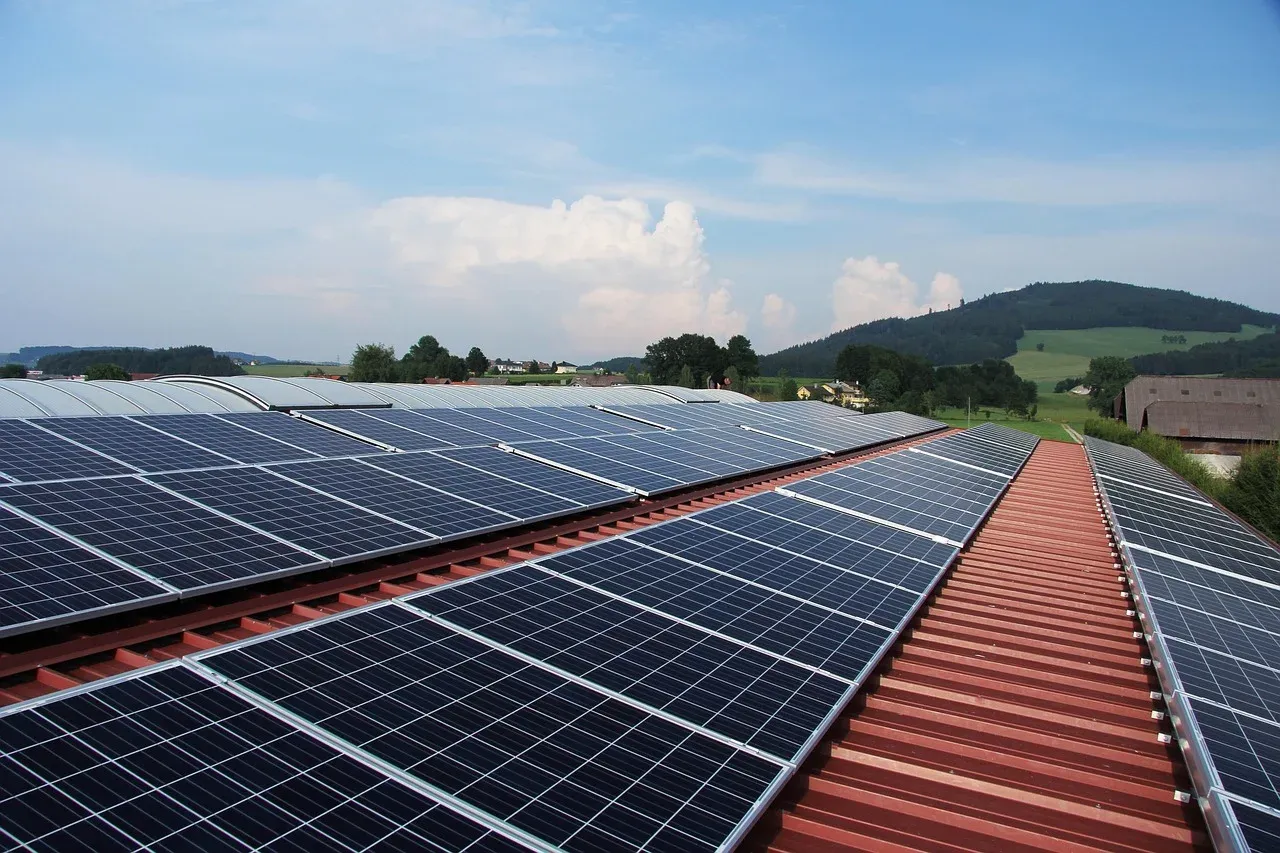
For UK businesses, investing in solar panels isn't just about going green; it's a smart financial decision. With energy costs on the rise and a growing emphasis on corporate social responsibility, installing a solar panel system offers a powerful way to reduce operational expenses, enhance energy independence, and demonstrate a commitment to sustainability. This guide will walk you through everything you need to know about commercial solar panels in the UK, from the tangible benefits to the practicalities of installation and ongoing energy management.
Even with commercial solar panels, managing your overall energy strategy is key. With Fuse Energy, you get clear pricing, real-time usage data, 24/7 human customer support, and a modern energy experience designed around you. Switching takes as little as 3 minutes, so you can take control of your bills from day one. Click here to switch to Fuse Energy today and start saving.
Key benefits of solar panels for commercial buildings
The advantages of installing solar panels for commercial buildings are compelling and multifaceted. Firstly, significant cost savings on electricity bills are often the primary driver. By generating your own power, you reduce reliance on grid electricity, shielding your business from volatile energy prices. This predictable energy cost allows for better financial planning and a healthier bottom line.
Beyond direct savings, renewable solar panels offer substantial environmental benefits. They drastically cut your carbon footprint, contributing to national climate targets and improving your company's Environmental, Social, and Governance (ESG) profile. This isn't just good for the planet; it resonates with environmentally conscious customers and partners, enhancing your brand reputation. Furthermore, generating your own solar energy can provide a degree of energy security, reducing vulnerability to power outages and supply disruptions.
Understanding costs, grants, and ROI for commercial solar panels UK
The initial cost of commercial solar panels can seem substantial, but it's crucial to look at the long-term return on investment (ROI). The payback period for commercial solar panels can vary, but many businesses see a return within 4-7 years, with some as low as 2-4 years, followed by decades of free electricity generation. The ROI typically ranges from 8% to 45%. Factors influencing cost include system size, panel type, and installation complexity. In 2026, businesses can expect to pay between £660 and £1,200 per kilowatt (kW) for a fully installed system.
Fortunately, several grants and incentives exist to help offset these upfront expenses. The Smart Export Guarantee (SEG) allows businesses to sell any excess electricity generated back to the grid, providing an additional revenue stream. Other financial incentives include the Annual Investment Allowance (AIA) and Full Expensing, which allow businesses to deduct 100% of qualifying capital expenditure from taxable profits. Local council schemes, such as the UK Shared Prosperity Fund (UKSPF), may also offer grants, often covering 30-50% of project costs.
Planning and installation considerations for commercial solar
Embarking on a commercial solar project requires careful planning. The first step is a thorough site assessment to evaluate roof suitability, structural integrity, and potential shading. Choosing the best solar panels for commercial buildings involves considering efficiency, durability, and warranty. Lightweight solar panels, for instance, might be ideal for older structures or those with specific load-bearing limitations, or for curved roofs.
Here's a typical process for planning and installation:
- Feasibility study: Assess your energy needs, site suitability, and potential solar generation.
- System design: A bespoke design tailored to your building and energy consumption.
- Financial modelling: Detailed ROI calculations, exploring financing options like Power Purchase Agreements (PPAs) or loans.
- Planning permission: For most commercial properties, rooftop solar photovoltaic (PV) systems fall under Permitted Development Rights, meaning a full planning application isn't needed if certain conditions are met, such as not projecting more than 200mm from the roof surface or being higher than the highest part of the roof. However, notification to your local authority is still required. Planning permission is typically needed for ground-mounted systems, installations on listed buildings, or in conservation areas if visible from a public road.
- Grid connection: The developer manages the grid application process. All Distribution Network Operator (DNO) works are handled under the private wire arrangement. The DNO will still assess whether the local network can accommodate any potential export and confirm compliance with safety standards. Typically, systems under 3.68 kW per phase fall under G98 notification, while larger systems require G99 approval prior to installation.
- Installer selection: Choose an accredited, experienced commercial solar specialist. Look for Microgeneration Certification Scheme (MCS) certified providers, as this is a government-recognised quality standard and is required for SEG eligibility.
- Installation and commissioning: Professional installation followed by testing and handover.
- Maintenance: Regular monitoring and maintenance ensure optimal performance and longevity.
While commercial solar installations are not typically offered as "free," under this model Fuse Energy funds all CapEx and OpEx. The client therefore avoids upfront investment and instead purchases an agreed volume of energy through a PPA, making the solution financially accessible and commercially viable.
Optimising your energy management with commercial solar and Fuse Energy
Once your commercial solar panels are up and running, managing your energy effectively becomes paramount. Fuse Energy currently has multiple commercial and industrial solar panel projects in the pipeline for big energy users. We make sure to optimise energy usage between solar and grid, prioritising the supply of low cost energy.
Fuse Energy's billing system offers clear transparency and precision in managing the grid-supplied portion of your energy consumption. We provide detailed, data-driven insights into import usage, standing charges, and payment management. This means you gain complete financial oversight of your total energy expenditure, allowing you to see the real impact of your solar investment on your overall energy bill. By providing detailed financial data on energy usage, Fuse Energy helps your business understand its energy expenditure and make informed decisions about energy usage, complementing your journey towards greater self-sufficiency with commercial solar.
Take the stress out of managing your energy. With Fuse Energy, you get clear pricing, real-time usage data, 24/7 human customer support, and a modern energy experience designed around you. Switching takes as little as 3 minutes, so you can take control of your bills from day one. Click here to switch to Fuse Energy today and start saving. Find out about our mission by clicking here.
Disclaimer
For the avoidance of doubt, this article is provided for informational purposes only and is not intended to constitute legal or financial advice. The author and/or Fuse Energy shall not be responsible for any losses arising out of any reliance on the information contained herein.