Maximising your home's output with a solar panel optimiser
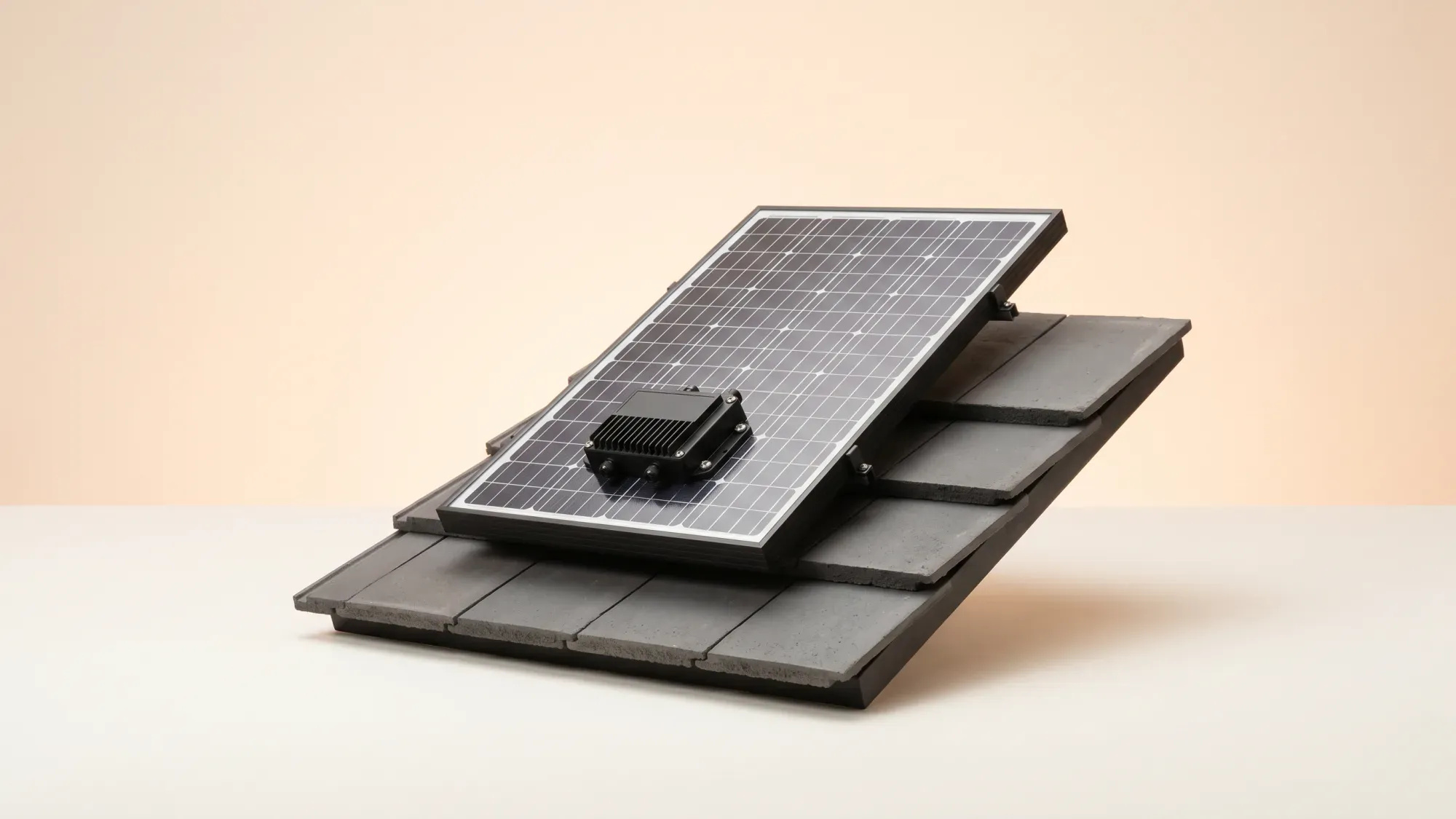
Solar panels offer a fantastic way to generate clean electricity, but their performance isn't always straightforward. Factors like partial shading or individual panel differences can significantly reduce your system's overall output. Solar panel optimisers address these challenges, ensuring each panel contributes its maximum potential.
What are solar panel optimisers?
Solar panel optimisers are clever electronic devices designed to maximise the energy harvest from individual solar panels. They are a type of Module-Level Power Electronics (MLPE), working at the panel level to fine-tune performance.
The role of optimisers in solar systems
In a traditional solar setup with a string inverter, all panels are wired in a series, forming a "string". The output of the entire string is limited by the weakest-performing panel within it. This means if one panel is shaded or underperforming, it can drag down the efficiency of every other panel in that string. Optimisers prevent this "weakest link" effect, allowing each panel to operate independently at its peak performance.
How they differ from traditional inverters
Traditional string inverters convert the direct current (DC) electricity from your entire solar array into alternating current (AC) for your home. They typically have one or two Maximum Power Point Trackers (MPPTs) that try to find the optimal operating point for a whole string of panels. Optimisers, however, are installed on each individual solar panel. They perform MPPT at the module level, then send the optimised DC power to a central string inverter, which then converts it to AC. This hybrid approach offers more granular control than a string inverter alone, but still relies on a central inverter for the final conversion.
How solar panel optimisers work
Optimisers are essentially intelligent intermediaries between your solar panels and your main inverter, ensuring no energy is left on the table.
Module-Level Power Electronics
Module-Level Power Electronics (MLPEs) are the core technology behind optimisers. Each optimiser constantly monitors and adjusts the electrical output of its specific panel. This means that if one panel's performance is affected by, say, a passing cloud or accumulated dirt, the optimiser on that panel will adjust its output to find its individual maximum power point, without impacting the performance of other panels in the array. This independent operation is crucial for maximising overall system efficiency.
Addressing shading and performance mismatch
Partial shading is a common issue in the UK, whether from chimneys, trees, or neighbouring buildings, and it can severely impact solar panel output. Studies have shown that even minimal shading on a single panel can significantly reduce its power output, potentially by as much as 75% in a traditional string system, as the shaded panel acts as a bottleneck for the entire string.
Optimisers mitigate this by isolating the shaded panel's performance issues. If one panel is shaded, its optimiser will adjust, allowing the other unshaded panels to continue producing at their full capacity. Similarly, solar panels typically degrade at a rate of about 0.5% to 1% per year. This natural degradation, along with manufacturing tolerances, means panels in an array will rarely perform identically. Optimisers ensure that these performance mismatches don't reduce the output of the entire system, treating each panel as a distinct power source.
Key benefits for UK homeowners
For UK homeowners, solar panel optimisers offer tangible advantages that translate into more energy and greater control over their renewable investment.
Increased energy harvest
By allowing each solar panel to operate independently at its peak, optimisers can significantly increase the total energy yield of your system. This is particularly beneficial in the UK's often overcast conditions and varied roof architectures, where partial shading is a common occurrence. More energy harvested means greater savings on your electricity bills and a faster return on your solar investment.
Enhanced monitoring and diagnostics
Optimisers enable Module-Level monitoring, providing detailed performance data for each individual solar panel. This level of insight allows you to see exactly how each panel is performing, helping to quickly identify any issues like shading, dirt build-up, or a fault with a specific panel. This transparency and control directly address the desire for transparency and mastery over energy, making your home energy setup a true 'power play'.
What is Module-Level monitoring?
Module-Level monitoring provides detailed performance data for each individual solar panel in your array. This allows homeowners to track the output of every panel, identify underperforming units due to shading or faults, and ensure their entire system is working efficiently. It offers a granular view of your solar generation, enhancing control and diagnostic capabilities.
Improved safety features
Many optimisers include built-in safety features, such as rapid shutdown capabilities. In the event of an emergency or maintenance, these systems can quickly reduce the voltage of each panel to safe levels, protecting installers and emergency services personnel. This is an increasingly important consideration for modern solar installations.
Solar panel optimisers vs microinverters
While both optimisers and microinverters are MLPEs designed to maximise individual panel performance, they achieve this in different ways.
Understanding the differences
Microinverters are installed on each solar panel and convert DC electricity to AC electricity directly at the panel level. This means there's no central string inverter required. Optimisers, as discussed, are also installed on each panel but condition the DC power before sending it to a central string inverter for the final DC-to-AC conversion.
The key difference lies in where the DC-to-AC conversion happens. Microinverters perform it at each panel, offering complete independence. Optimisers manage and condition the DC power at each panel, but the final conversion still happens centrally.
Choosing the right solution for your home
The choice between optimisers and microinverters often depends on your specific roof characteristics, budget, and desired level of monitoring. Microinverters offer maximum independence and are often favoured for very complex roofs with significant, unavoidable shading, or for systems that may be expanded panel-by-panel over time. Optimisers provide many of the same benefits, particularly in managing shading and performance mismatch, often at a slightly lower overall system cost than a full microinverter setup. A qualified solar installer can assess your property and recommend the most suitable technology for your needs.
Are solar panel optimisers worth the investment?
Deciding whether to invest in solar panel optimisers involves weighing the upfront cost against the long-term benefits in energy yield and system management.
Cost-benefit analysis for UK homes
For many UK homes, the investment in optimisers can be highly worthwhile. Given the prevalence of partial shading and the natural degradation of panels over time, optimisers can significantly boost your system's overall output. The average UK home uses around 2,700 kWh of electricity per year1. By increasing the efficiency of your solar array, optimisers can help you generate more of this energy yourself, reducing reliance on grid electricity and leading to greater savings. While they add to the initial installation cost, the enhanced energy production and detailed monitoring can lead to a quicker return on investment and greater peace of mind.
Scenarios where optimisers excel
Optimisers are particularly beneficial in several scenarios:
- Partial shading: If your roof is prone to shading from trees, chimneys, or nearby buildings at any time of day, optimisers are highly recommended to prevent significant energy losses.
- Complex rooflines: Homes with multiple roof sections, different orientations, or varying panel angles will benefit from optimisers ensuring each section performs optimally.
- Future expansion: If you plan to expand your solar array in stages, optimisers can make it easier to integrate new panels without affecting the performance of existing ones.
- Varied panel performance: As panels age and degrade at slightly different rates, optimisers ensure that these differences don't compromise the entire system's output.
- Enhanced monitoring needs: Homeowners who want granular data on individual panel performance for diagnostics and peace of mind will find optimisers invaluable.
Integrating optimisers with your home energy system
Optimisers are designed to integrate seamlessly with both new and existing solar installations, enhancing their overall efficiency and longevity.
Compatibility with existing solar installations
Many solar panel optimisers can be retrofitted to existing solar PV systems, particularly those using string inverters. This allows homeowners to upgrade their current setup without needing a complete overhaul, unlocking improved performance from their existing panels. It's an easy home energy upgrade that can significantly enhance the value and performance of your solar installation.
Future-proofing your solar investment
By maximising energy harvest and providing detailed monitoring, optimisers help future-proof your solar investment. They ensure your system operates at peak efficiency for longer, adapting to changes in shading patterns (e.g., growing trees) and the natural degradation of panels. This aligns with a 'never settle' ethos, encouraging homeowners not to settle for suboptimal solar performance. With more energy to play with, you gain greater control and efficiency over your solar generation, truly making your energy setup a 'power play'.
Managing your home energy should be simple and transparent. Fuse Energy offers clear pricing, real-time usage data through our app, and 24/7 human customer support to help you make the most of your energy. We believe in empowering you with the tools and information to take control of your energy use.
References
Disclaimer
For the avoidance of doubt, this article is provided for informational purposes only and is not intended to constitute legal or financial advice. The author and/or Fuse Energy shall not be responsible for any losses arising out of any reliance on the information contained herein.