Solar panel farms for landowners explained
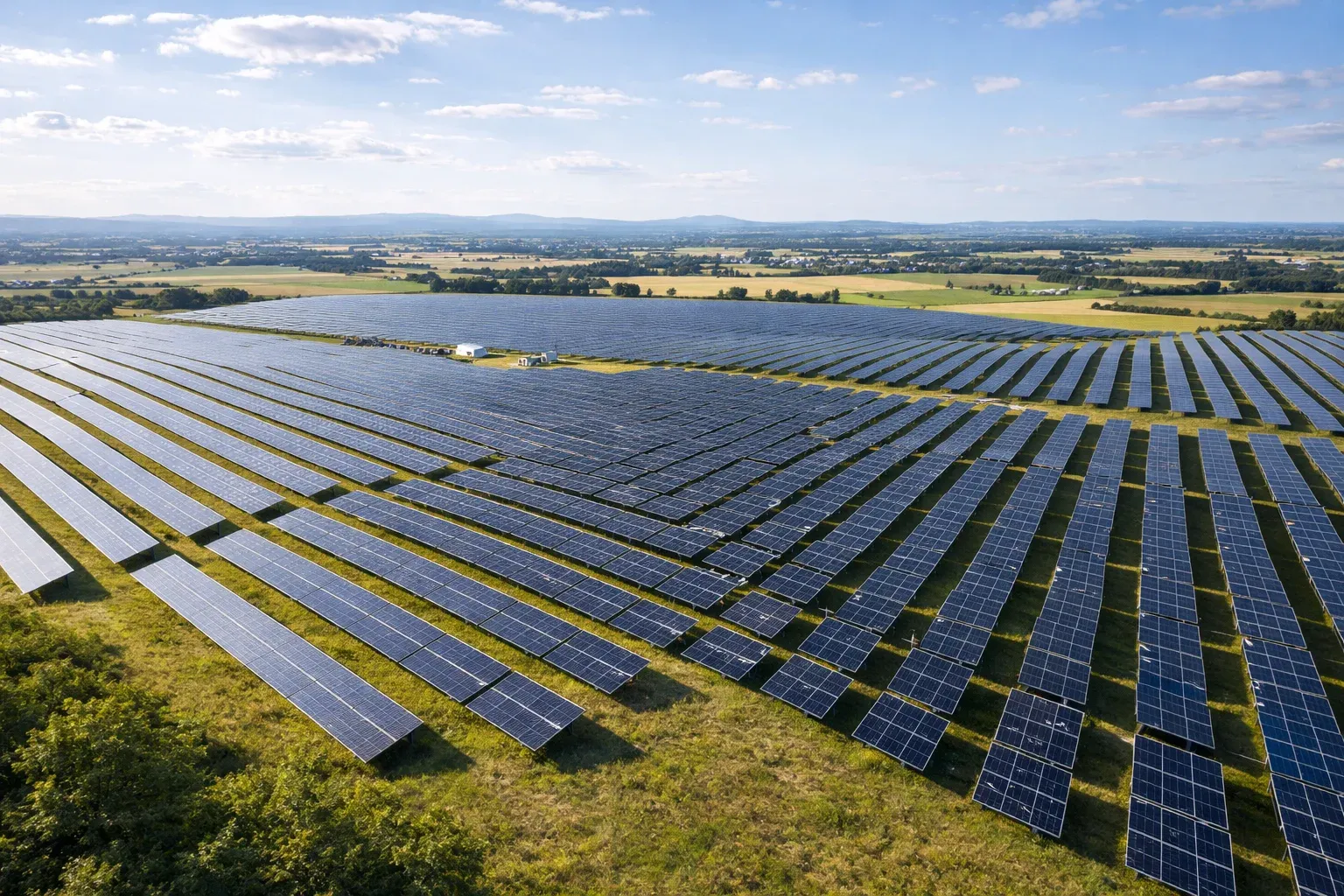
The UK is rapidly accelerating its transition to renewable energy, and large-scale solar panel farms are at the forefront of this green revolution. For landowners and businesses across the country, this presents a significant opportunity. Establishing a solar panels farm on your land isn't just about generating clean electricity; it's about securing a stable, long-term income stream, diversifying your assets, and making a tangible contribution to the nation's net-zero targets. This guide will walk you through the essential considerations, from initial planning to optimising your energy management, helping you unlock the full potential of your land for a sustainable future.
Explore how solar panels can benefit your home and the projects we have. With Fuse Energy, you get clear pricing, real-time usage data, 24/7 human customer support, and a modern energy experience designed around you. Switching takes as little as 3 minutes, so you can take control of your bills from day one. Click here to switch to Fuse Energy today and start saving.
Why consider a solar panel farm for your UK land?
Investing in a solar panel farm offers compelling advantages for UK landowners and businesses. Firstly, it provides a highly stable and predictable income, often through long-term lease agreements or power purchase agreements (PPAs) that can span 25 to 40 years. This offers a welcome diversification from traditional revenue streams, particularly for agricultural land. Secondly, it's a powerful statement of environmental stewardship. By generating clean, renewable energy, you're directly contributing to reducing carbon emissions and enhancing the UK's energy security. Many “solar panels on farms” projects also incorporate biodiversity enhancements, turning fields into havens for local wildlife. Finally, the UK government continues to support renewable energy with various schemes and potential financial incentives available, making the financial case even stronger.
Key stages in developing a UK solar panel farm
Developing a large-scale solar panel farm is a multi-faceted project requiring careful planning and execution. Here's a simplified breakdown of the key stages:
Planning, grid connection, and regulatory compliance
- Initial feasibility and land assessment: This crucial first step involves evaluating your land's suitability. Factors like size, topography, shading, flood risk, and proximity to existing grid infrastructure are all considered. A typical solar panel farm in the UK requires several acres of land, and the number of solar panels a solar panel farm can have can range from thousands to hundreds of thousands, depending on scale.
- Grid connection application: Securing a viable grid connection is paramount. You'll typically need to apply to the relevant Distribution Network Operator (DNO) to assess capacity, obtain cost estimates, and understand timelines, although with larger projects, the process may be different. This can be a lengthy and complex process, so early engagement is key1.
- Planning application and environmental impact assessment (EIA): This is often the most challenging stage. You'll submit a comprehensive planning application to your local authority, including detailed environmental, landscape, and visual impact assessments. Robust community engagement is vital to address local concerns and build support.
- Financing and investment: Secure funding through various avenues, including project finance, private equity, or joint ventures with experienced developers. This stage involves detailed financial modelling to ensure a strong return on investment.
- Land lease/purchase agreements: Finalise long-term agreements with landowners, typically 25-40 years, outlining lease terms, rental rates, and operational responsibilities for the solar panel farm.
- Construction and installation: Oversee the engineering, procurement, construction (EPC), and installation of solar panels, inverters, cabling, and substation infrastructure, adhering to strict safety and environmental standards.
- Operation and maintenance (O&M): Establish ongoing monitoring, maintenance, and repair protocols to ensure optimal performance, efficiency, and longevity of the solar farm.
- Energy export and revenue generation: Manage the export of generated electricity to the grid, often through Power Purchase Agreements (PPAs), to generate revenue.
Financial returns and investment for farm solar panels
The profitability of solar panel farms is a common question, and the answer is generally positive, assuming careful planning and execution. While the initial investment for a “solar panels farm” can be substantial, the long-term financial returns are attractive. Revenue is primarily generated by selling the electricity produced, often via PPAs with energy suppliers or corporate buyers. These agreements provide price certainty and a stable income stream for decades. Additionally, the UK's commitment to decarbonisation means that the market for renewable energy is robust and growing, ensuring continued demand for the power your solar farm generates. Understanding the evolving regulatory landscape and potential investment incentives is crucial for maximising your project's financial viability.
Optimising energy management for your solar farm
Even with a large-scale solar farm generating significant electricity, businesses still need to manage their energy consumption from the grid. This is where smart energy management becomes critical. Understanding your net energy balance, how much you generate versus how much you still import, is key to financial and operational efficiency.
- Precisely understand your net energy balance: See clearly what you import from the grid versus what your “solar panels for farms” generate.
- Optimise consumption patterns: Identify opportunities to reduce grid reliance during peak times or when your generation is low.
- Ensure transparent and correct grid energy bills: Fuse Energy ensures all imported energy charges are fully transparent and accurate, complementing your on-site generation efforts by providing a clear picture of the other side of your energy ledger.
By offering superior consumption billing and data insights, Fuse Energy becomes an essential partner for managing the import side of your complex energy profile, ensuring you have complete control and understanding of your overall energy expenditure.
Getting started with solar panels for farms
Establishing a solar panel farm is a significant undertaking, but one with immense potential for both profit and positive environmental impact. The journey requires diligence, expert advice, and a clear understanding of the UK's regulatory and energy landscape. By carefully navigating the planning, grid connection, and financial stages, landowners and businesses can transform their assets into powerful engines of renewable energy, securing a sustainable future for their operations and the country. If you're considering this path, begin by seeking professional advice to assess your specific site and circumstances.
Managing your energy bills should be clear and easy to understand. Fuse Energy focuses on straightforward pricing, so you can see exactly what you're paying without unnecessary complexity. If you have a smart meter, you can view detailed usage data through the app or website, helping you understand how you can lower your bills. Our 24/7 human support team is always on hand with fast response times of under 5 minutes whenever you need help. Click here to switch to Fuse Energy in as little as 3 minutes. Find out about our mission by clicking here.
References
Disclaimer
For the avoidance of doubt, this article is provided for informational purposes only and is not intended to constitute legal or financial advice. The author and/or Fuse Energy shall not be responsible for any losses arising out of any reliance on the information contained herein.