Solar battery storage: your guide to energy independence
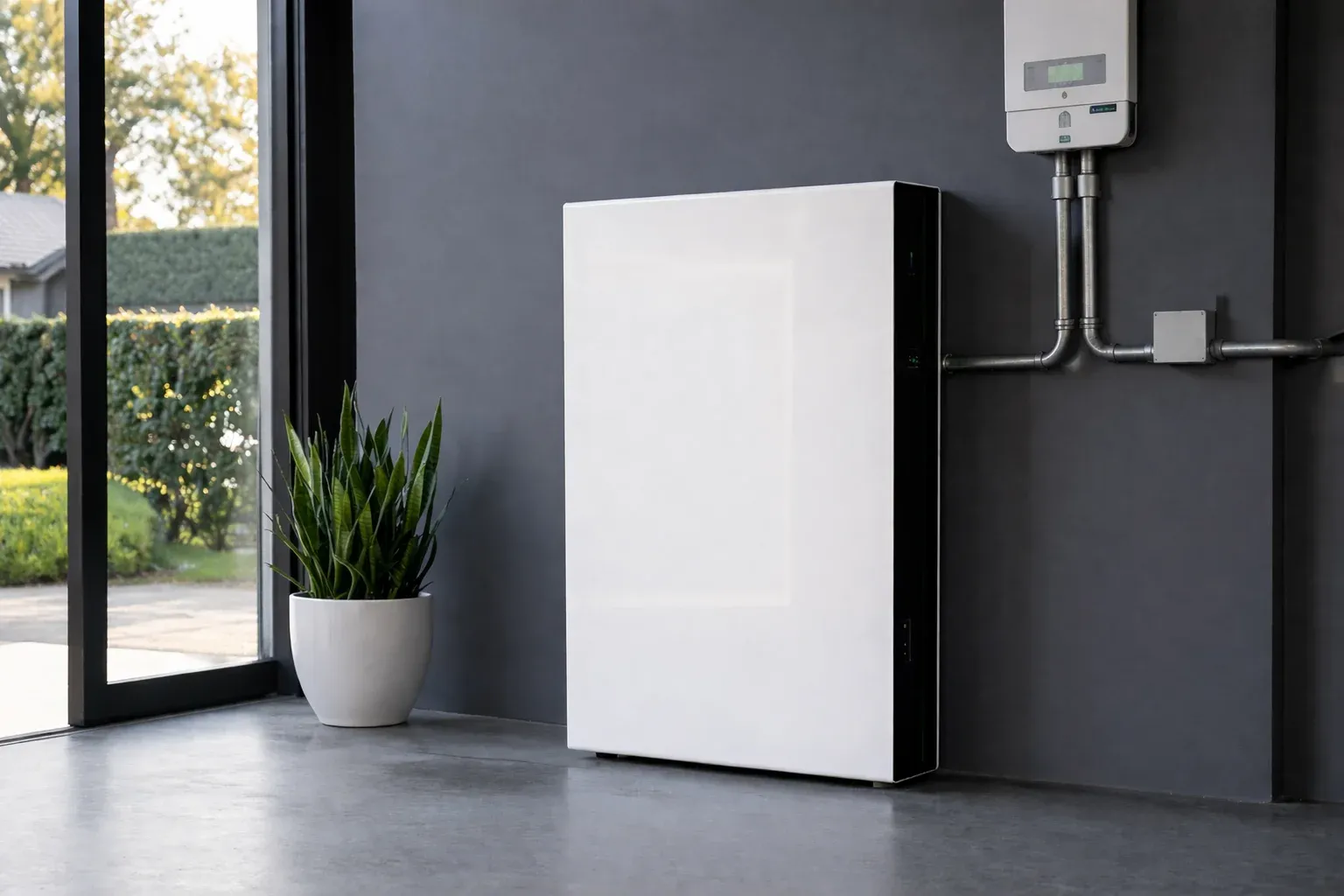
Solar battery storage allows UK homeowners to store excess electricity generated by their solar panels for later use, significantly reducing reliance on the grid. These systems enhance energy independence and can substantially lower electricity bills by enabling greater self-consumption and optimising energy export. This article will guide homeowners on how Fuse's smart tariffs and Smart Export Guarantee (SEG) can maximise their financial savings and energy independence once a solar battery system is installed.
What is solar battery storage and how does it work?
Solar battery storage is a system that captures and stores surplus electricity generated by solar panels, making it available when needed, rather than exporting it immediately to the grid. This "personal energy bank" allows you to use more of the clean energy your home produces.
The basics of solar energy storage
When sunlight hits your solar panels, they convert it into direct current (DC) electricity. This DC power is then converted into alternating current (AC) by an inverter, which is the type of electricity your home appliances use. If your solar panels generate more electricity than your home is currently consuming, a solar battery stores this surplus instead of sending it directly to the grid. Later, when your solar panels are not generating enough power (e.g., in the evening, overnight, or on cloudy days), your home draws electricity from the battery rather than importing it from the grid. Once the battery is full or empty, the system automatically switches to drawing power from, or exporting to, the grid.
Components of a home battery system
A home battery storage system is a sophisticated assembly of several key components working together. The core is the battery itself, typically made of lithium iron phosphate (LiFePO4) cells, which store the electrical energy. These batteries are chosen for their safety, long lifespan, and thermal stability.
An inverter is crucial, converting the DC power from your solar panels into AC power for your home. Many modern systems use a hybrid inverter, which manages both solar generation and battery charging/discharging. A Battery Management System (BMS) continuously monitors cell voltage, current, temperature, and state of charge to safeguard the battery's health and optimise its performance. Finally, cabling and safety components like fuses and disconnects ensure the system operates safely and efficiently.
How solar batteries integrate with your home
A home battery storage system sits between your solar panels and your home's electrical supply. It's designed to manage the flow of electricity automatically. During the day, solar panels generate electricity, which is first used by your home. Any excess charges the battery. When solar generation drops, the battery supplies your home. If both solar and battery cannot meet demand, the grid provides the rest. When the battery is full, any further surplus solar electricity can be exported to the grid. This seamless integration means you don't need to manually manage the system; it handles everything automatically.
Key benefits of solar battery storage for UK homeowners
Installing solar battery storage offers multiple advantages, from cutting electricity bills to enhancing your home's energy resilience.
Maximising self-consumption and reducing bills
Without a battery, many UK homes only use around 20-30% of the electricity their solar panels generate, with the rest exported to the grid. A solar battery dramatically changes this, allowing you to store surplus daytime energy and use it later when demand is higher, such as in the evenings. This can increase on-site solar use to over 70%, significantly reducing the amount of electricity you need to buy from the grid. By using your own stored energy instead of purchasing power at peak prices, you can achieve substantial savings on your electricity bills.
Achieving energy independence and resilience
A solar battery system provides greater control over when electricity is stored, imported, and used, making your home less reliant on the National Grid. This enhanced energy independence offers peace of mind, especially during periods of volatile energy prices or power cuts. Many batteries can automatically switch to backup mode during outages, keeping essential appliances running.
Earning through the Smart Export Guarantee (SEG)
The SEG is a government-backed scheme that mandates licensed electricity suppliers to pay small-scale generators for low-carbon electricity exported to the National Grid. If your solar panels generate more electricity than your home and battery can use, the surplus can be sold back to the grid, providing an additional revenue stream. To be eligible for SEG, your installation must be certified under the Microgeneration Certification Scheme (MCS) or an equivalent, and you need a smart meter capable of providing half-hourly export readings.
Choosing the right solar battery storage system
Selecting the ideal solar battery system requires careful consideration of your energy habits and the system's specifications.
Assessing your energy needs and solar generation
The first step is to understand your household's energy consumption patterns and your solar panel's generation capacity. Your installer will typically assess your current energy usage and solar generation to determine the appropriate battery needs. This ensures you choose a battery size that matches how much energy you use and when you use it, preventing both under- and oversizing.
Understanding battery capacity and power
Battery capacity, measured in kilowatt-hours (kWh), indicates how much energy the battery can store. A typical 5kWh solar battery can store enough energy to power an average UK home for several hours during peak demand. Power rating, measured in kilowatts (kW), determines how much electricity the battery can deliver at one time. A higher power rating means the battery can discharge more energy quickly, which is important for running multiple high-demand appliances simultaneously.
Important considerations: lifespan, warranty, and safety
Modern solar batteries, particularly those with lithium iron phosphate (LFP) chemistry, typically come with warranties of 10 to 15 years. These warranties usually guarantee that the battery will retain at least 60-70% of its original capacity by the end of the warranty period. It's important to review the warranty terms carefully, as they often include limits on cycles or total energy throughput. Safety is also paramount; LiFePO4 batteries are preferred for their superior safety profile and thermal stability.
Solar battery storage cost and return on investment
Understanding the financial aspects of solar battery storage is key to making an informed decision.
Breakdown of system costs (battery, inverter, installation)
The average cost for a home solar battery storage system in the UK, including installation, typically ranges from £4,000 to £10,000. This cost varies depending on the battery's capacity, brand, and the complexity of the installation. For instance, a small 5kWh system might cost £2,000-£4,000, while a larger 13.5kWh system could be £8,000-£10,000+. The price includes the battery unit, the inverter (or a hybrid inverter), and labour for installation. Currently, a 0% VAT rate applies to qualifying solar battery installations in Great Britain until March 2027, reducing the upfront cost.
Potential savings and financial incentives
Adding a battery to your solar panels can significantly increase your savings by allowing you to use more of your self-generated electricity. Beyond self-consumption, the SEG allows you to earn money by selling any excess energy back to the grid. While SEG rates vary between suppliers, they must be above zero.
Calculating your return on investment
The return on investment (ROI) for a solar battery system typically ranges from 8-12% per year, with payback periods estimated between 5 and 12 years. This depends heavily on your energy usage, electricity tariff rates, and battery capacity. To calculate ROI, you generally consider the net system cost (total installed price minus any grants or incentives) and your annual savings (value of self-consumed electricity, SEG income, and avoided fuel costs). Maximising self-consumption and leveraging smart tariffs are crucial for improving your ROI.
Optimising your solar battery system with smart energy management
Once your solar battery system is installed, active management through smart tariffs and apps can unlock its full potential.
Leveraging smart tariffs for cheaper charging
Smart tariffs, also known as time-of-use tariffs, offer different electricity rates depending on the time of day. Typically, rates are significantly lower during off-peak periods, often overnight, and higher during peak demand times. With a smart meter, your battery can be programmed to charge from the grid during these cheaper off-peak hours and then discharge to power your home when grid electricity prices are at their highest. This strategy, known as energy arbitrage, can generate substantial savings by reducing your net energy cost.
Maximising export earnings with the SEG
Beyond self-consumption, smart energy management allows you to strategically export surplus electricity to the grid when SEG rates are most favourable. Some variable SEG tariffs pay higher rates during peak demand times, allowing you to earn more for the energy you sell. By combining high self-consumption with strategic peak-time exports, you can optimise your system for maximum financial benefit.
The role of smart apps in energy management
Modern solar battery systems often come with smart apps that provide tools for monitoring energy usage and battery performance. These apps empower you to manage your energy independence by offering real-time data on generation, consumption, and battery charge levels. Some advanced apps can even use AI to optimise your battery's charging and discharging schedule based on forecasted prices and your energy habits. This level of control allows you to make informed decisions, whether you choose automated optimisation or prefer to manage your energy manually.
Fuse Energy helps homeowners unlock the full potential of their solar battery investment by providing smart tariffs that enable optimal charging and discharging. Fuse's SEG allows customers to maximise earnings by selling surplus stored solar energy back to the grid at competitive rates. The Fuse app provides tools for monitoring energy usage and battery performance, empowering customers to manage their energy independence.
Disclaimer
For the avoidance of doubt, this article is provided for informational purposes only and is not intended to constitute legal or financial advice. The author and/or Fuse Energy shall not be responsible for any losses arising out of any reliance on the information contained herein.