Roof insulation types and savings
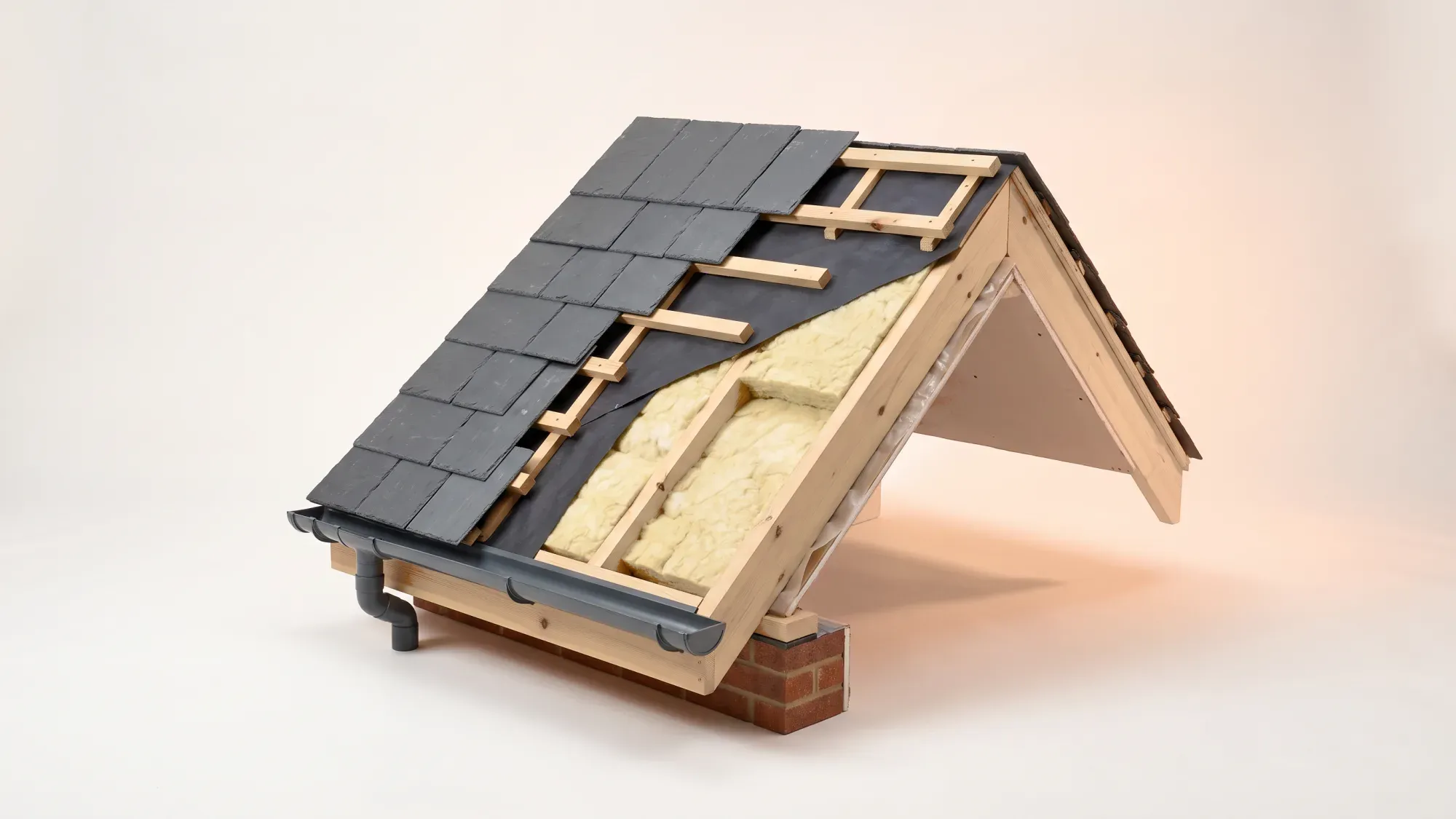
Roof insulation is one of the most impactful ways to improve your home's energy efficiency, leading to a more comfortable living space and lower bills.
Enter your address to get a quote and see how much you could save
Why roof insulation matters for your home
Preventing heat loss and reducing energy bills
An uninsulated roof can be responsible for up to 25% of a home's heat loss, turning your heating efforts into wasted energy . This means your heating system works harder and for longer to maintain a comfortable temperature, directly impacting your energy bills. Effective roof insulation acts like a thermal barrier, trapping heat inside during colder months and keeping it out when temperatures rise.
Enhancing home comfort and property value
Beyond the financial savings, a well-insulated roof creates a more consistent and comfortable indoor climate. You'll experience fewer cold spots and draughts, making your home a more pleasant place to be year-round. Improving your home's energy efficiency through insulation can also increase its value. For instance, a report by Rightmove highlighted that sellers who upgrade their homes from an Energy Performance Certificate (EPC) rating of F to C could see an average price premium of £55,786 . Improving from an E to C rating could add £26,603, and from D to C, £11,157 .
The link to smart energy management
Effective roof insulation is a foundational step that reduces energy waste, giving homeowners more control over their energy use. By minimising heat loss, roof insulation directly enhances the value of smart energy management, allowing Fuse customers to maximise comfort and savings. This makes Fuse's smart tariffs and app more impactful, as less energy is simply escaping through the roof.
Types of roof insulation for UK properties
Choosing the right roof insulation depends heavily on your property's specific construction. UK homes feature various roof types, each requiring a tailored approach to insulation.
Pitched roof insulation: warm vs cold roofs
Pitched roofs, common in many UK homes, can be insulated in two primary ways:
- Cold roof insulation: This is typically applied at the joist level, effectively insulating the ceiling of the top floor and leaving the loft space unheated. It's generally simpler and less expensive to install.
- Warm roof insulation: Here, the insulation is fitted directly between and over the rafters, turning the loft into a warm, habitable space. This method is often used when converting a loft into a room.
Flat roof insulation methods
Flat roofs require insulation to be installed either above or below the roof deck.
- Warm flat roof: Insulation is placed above the structural deck, beneath the waterproof membrane. This keeps the roof structure warm and dry, reducing condensation risks.
- Cold flat roof: Insulation is fitted between the joists, with a ventilated void above it. This method is less common now due to potential condensation issues if not properly ventilated.
Room-in-roof insulation considerations
If you have a room in your roof, such as a loft conversion, insulation needs to be applied to the sloping ceilings and any dwarf walls. This is a more complex process, often involving rigid insulation boards or mineral wool fitted between and over the rafters and studs. Proper ventilation is critical to prevent moisture build-up.
Loft insulation vs roof insulation: what's the difference?
While often used interchangeably, there's a key distinction. Loft insulation typically refers to insulating the floor of an unused loft space, usually with rolls of mineral wool laid between and over the joists. This keeps the living spaces below warm but leaves the loft cold.
Roof insulation, on the other hand, involves insulating the roof structure itself (rafters or roof deck), often to create a warm, habitable space within the loft or to insulate flat roofs. Conflating the two can lead to inappropriate material choices or ineffective installation.
Roof insulation costs and potential savings
The cost of roof insulation varies significantly based on the type of roof, materials chosen, and the complexity of the installation. However, the investment can lead to substantial long-term savings on energy bills.
Average costs by insulation type
The cost of roof insulation in the UK can vary. For basic loft insulation, costs typically range from £654 for a terraced property to £1,206 for a detached house . Flat roof insulation often costs between £30 and £35 per square metre . For more complex room-in-roof solutions, you might expect to pay around £1,500 to £3,000 .
Factors influencing insulation price
Several factors impact the final price:
- Roof type: Pitched, flat, or room-in-roof all have different material and labour requirements.
- Material choice: Options range from mineral wool and rigid insulation boards to spray foam, each with varying costs and performance .
- Accessibility: Difficult-to-access lofts or complex roof structures will incur higher labour costs .
- Existing insulation: Removing old insulation can add to the expense.
- Ventilation requirements: Ensuring proper airflow to prevent damp can add to the project's scope.
Calculating your potential energy savings and roi
With up to 25% of heat lost through an uninsulated roof , installing effective insulation can significantly reduce your heating demand. This directly translates into lower energy bills. While specific savings depend on your home's size, existing insulation, and heating habits, the investment in roof insulation typically pays for itself over several years through reduced energy consumption.
What is a U-value in insulation?
A U-value measures how effectively a building element, like a roof, prevents heat from passing through it. A lower U-value indicates better insulation performance and less heat loss. For lofts, the recommended standard for mineral wool insulation aims for a U-value of approximately 0.16 W/m²K .
UK grants and funding for roof insulation
Several government-backed schemes and local initiatives are available to help homeowners with the cost of energy efficiency improvements, including roof insulation.
Understanding the Energy Company Obligation (ECO4) scheme
The Energy Company Obligation (ECO4) scheme provides grants for energy efficiency measures, including insulation, for eligible low-income households . This scheme is available until 31 December 2026 . It aims to tackle fuel poverty and reduce carbon emissions by improving the energy efficiency of homes across Great Britain .
The Great British Insulation Scheme (GBIS) was another government initiative that offered support for insulation. The GOV.UK referral service for GBIS officially closed on 31 March 2026 .
Local authority grants and other support
Beyond national schemes, some local authorities offer their own grants or support programmes for energy efficiency upgrades. These can vary by region, so it's worth checking with your local council to see what's available in your area. Organisations like Citizens Advice can also provide information on grants and benefits to help with energy bills.
Eligibility and application process
Eligibility for schemes like ECO4 is typically based on factors such as household income, receipt of certain benefits, and the property's energy efficiency rating . The application process usually involves contacting an approved installer who can assess your eligibility and help you apply for funding.
Choosing the right roof insulation solution
Making an informed decision about roof insulation involves assessing your home's specific needs, understanding material performance, and deciding on the installation approach.
Assessing your roof type and home's needs
Start by identifying your roof type (pitched, flat, room-in-roof) and its current insulation levels. Consider how you use your loft space - if it's just for storage, cold loft insulation might suffice. If you plan to convert it or already have a room in the roof, warm roof insulation is necessary. Older homes, in particular, may have unique structural considerations that influence material choice and installation methods.
Considering u-values and material performance
When comparing materials, pay attention to their U-values. For lofts, the recommended insulation depth for mineral wool is typically 270mm, aiming for a U-value of around 0.16 W/m²K . Different materials offer varying thermal performance, fire resistance, and moisture handling properties . Researching these aspects will help you choose the best fit for your home and budget.
Professional installation vs DIY: what to know
While some basic loft insulation can be a DIY project, more complex roof insulation, especially for warm roofs, flat roofs, or room-in-roof conversions, often requires professional installation . Professionals ensure correct material application, proper ventilation, and compliance with building regulations. Attempting complex projects without adequate knowledge can lead to poor results, condensation issues, or safety hazards.
Optimising your home's energy efficiency through roof insulation is a smart investment. Once your home is better insulated, you can truly make the most of Fuse Energy's smart tariffs and energy management tools. Our clear pricing, real-time usage data in the app, and 24/7 human customer support are designed to help you take control of your energy bills. Ready to experience energy abundance? Click here to switch to Fuse Energy today. You can also learn more about our mission to build a future with power to play with here.
Disclaimer
For the avoidance of doubt, this article is provided for informational purposes only and is not intended to constitute legal or financial advice. The author and/or Fuse Energy shall not be responsible for any losses arising out of any reliance on the information contained herein.