Repressurise boiler: a step-by-step guide
Low boiler pressure can leave your home without heating or hot water, but restoring it is often a straightforward task you can do yourself. Fuse empowers homeowners and renters with the knowledge to safely manage common home energy issues, positioning itself as the trusted 'adult in the room' for practical solutions. This guide will walk you through the process of safely repressurising your boiler, helping you regain warmth and hot water.
Understanding boiler pressure
Boiler pressure measures the balance of water in your central heating system, crucial for its efficient and safe operation. If the pressure is too low, your boiler may struggle to circulate hot water, leading to a loss of heating and hot water in your property.
Why boiler pressure matters
The water in your heating system needs to be at a specific pressure to circulate effectively through your boiler and radiators. Without adequate pressure, your boiler cannot function correctly and may even shut down as a safety precaution. Maintaining the correct pressure ensures your system operates efficiently, providing consistent heating and hot water.
Identifying low pressure
You can check your boiler's pressure using the pressure gauge, typically a small dial or digital display on the front of the unit. For most domestic boilers, the ideal operating pressure is between 1 and 1.5 bar when the system is cold. If the reading falls below 1 bar, your boiler pressure is too low. Some boilers may also display a warning message or flashing reading to indicate low pressure.
Safety first: before you begin
Repressurising your boiler is a DIY task, but safety must always come first.
Essential safety checks
Always turn off your boiler and allow it to cool completely before you begin any work. This prevents accidental burns or injuries. Familiarise yourself with your boiler's manual, as specific instructions and component locations can vary between models.
When not to DIY
Do not attempt to open the boiler casing or tamper with internal gas components. All gas work, including boiler repairs beyond simple repressurisation, must be carried out by a Gas Safe registered engineer. If you are unsure about any step, or if your boiler frequently loses pressure, it's always best to call a qualified professional.
How to repressurise your boiler
The process involves locating your boiler's filling loop and allowing water into the system.
Locating your filling loop
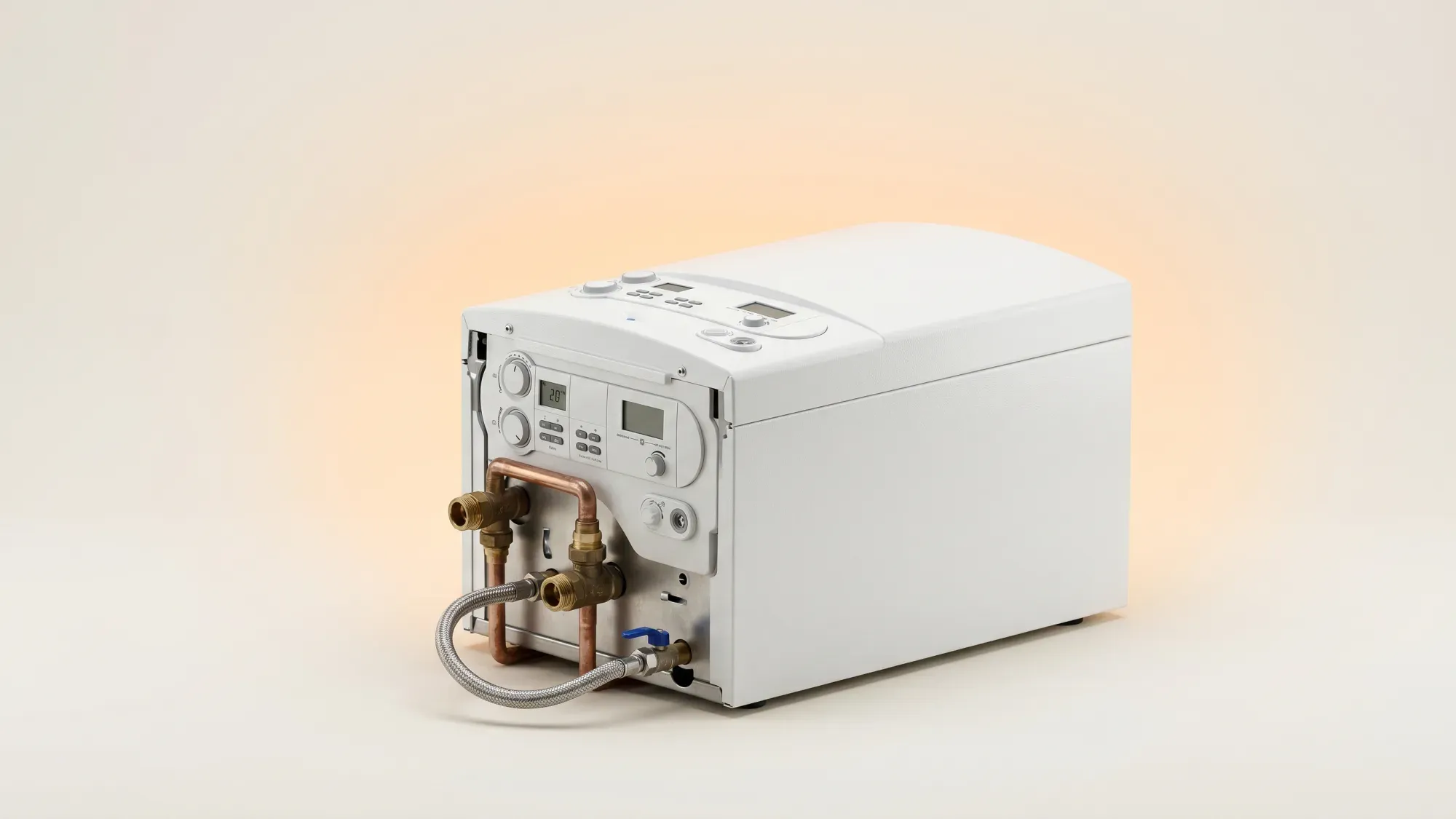
The filling loop is a connection that allows mains water into your heating system. It can be either an external hose, typically a silver braided flexible pipe, or an internal key or lever system built into the boiler itself. External filling loops are often found underneath the boiler or nearby, sometimes under a sink if the boiler is in the kitchen. Internal filling loops are integrated into the boiler unit.
External filling loop instructions
- Turn off the boiler and let it cool. Ensure the system is completely cold for safety.
- Locate the external filling loop. This is usually a flexible metal hose with two valves, one connected to the mains water and the other to the heating system.
- Attach the filling loop. If it's not already connected, securely attach both ends of the hose to the designated valves, ensuring a tight fit.
- Open the valves. Slowly open both valves on the filling loop, one at a time. You should hear water entering the system.
- Monitor the pressure gauge. Watch the boiler's pressure gauge carefully. As water enters, the needle will rise.
- Close the valves. Once the pressure reaches between 1 and 1.5 bar, close both valves, starting with the second one you opened, then the first. Ensure they are fully closed to prevent over-pressurising.
- Disconnect the filling loop. Carefully disconnect the hose, catching any residual water with a towel. Store the filling loop in a safe, clean place.
- Restart the boiler. Turn your boiler back on. You may need to press a reset button depending on your model.
Internal filling key instructions
- Turn off the boiler and let it cool. Safety first: ensure the system is cold.
- Locate the internal filling key/lever. This is typically found underneath the boiler.
- Engage the key/lever. Insert the key into its slot and turn it, or operate the lever, to open the water flow. You should hear water entering the system.
- Monitor the pressure gauge. Watch the pressure gauge as it rises.
- Disengage the key/lever. When the pressure reaches between 1 and 1.5 bar, close the key or lever to stop the water flow.
- Restart the boiler. Turn your boiler back on.
Repressurising Vaillant ecotec Plus boilers
Modern Vaillant ecoTEC Plus boilers commonly feature an internal filling key or built-in filling loop, which simplifies the repressurisation process.
Specific steps for Vaillant models
For Vaillant ecoTEC Plus boilers, the filling loop typically has two isolation valves that can be turned by hand.
- Turn off the boiler and cool. As with any boiler, switch it off and let it cool down.
- Locate the internal filling loop. This is usually underneath the boiler.
- Open the first isolation valve. Turn the first valve 90 degrees anti-clockwise until it's in line with the pipe.
- Slowly open the second valve. While watching the main display, gradually open the second valve. You will hear water entering the boiler.
- Monitor and close. Close the second isolation valve when the pressure display reaches between 1.2 and 1.5 bar.
- Close the first valve. Ensure both filling valves are completely closed.
- Restart the boiler. Your boiler will run a quick start-up sequence and then be ready for use.
Understanding the Vaillant internal filling key
The internal filling key or built-in loop on Vaillant ecoTEC Plus models is designed for convenience, remaining permanently installed and making the process easier than with external hoses.
Troubleshooting common repressurisation issues
While repressurising is often effective, sometimes issues persist.
Boiler pressure keeps dropping
If your boiler pressure keeps dropping after repressurising, it often indicates an underlying problem such as a leak in the system or a faulty component. Leaks can be subtle, appearing as damp spots on walls or floors, or water pooling near radiators. A faulty pressure relief valve or a damaged expansion vessel can also cause persistent pressure loss. If you find you are having to repeatedly repressurise your boiler, you should contact a Gas Safe registered engineer to check for any potential issues.
Over-pressurising your boiler
Over-pressurising occurs if too much water is added to the system, causing the gauge to go above the recommended 1.5 bar, sometimes into the red zone (above 2.5 bar). While modern boilers have a pressure relief valve to release excess pressure, consistent over-pressurisation can stress components, leading to leaks or reduced efficiency over time. If you've overfilled your system, you can often reduce the pressure by bleeding a radiator.
What is the safe pressure range for a cold boiler?
For most domestic boilers, the safe and ideal operating pressure is typically between 1 and 1.5 bar when the system is cold. This range ensures efficient operation and prevents strain on components. If the pressure drops below 1 bar, it's too low; above 2.5 bar is generally considered too high.
No change after repressurising
If you've followed the steps and there's no change in pressure, or the boiler still isn't working, double-check that the filling loop valves are fully open and then fully closed. Ensure the boiler has had time to cool down before attempting to restart. If the problem persists, or you suspect a fault with the pressure gauge itself, it's time to call a professional.
When to call a gas safe registered engineer
Knowing when to call a professional is crucial for safety and effective resolution.
Persistent low pressure
Boilers that frequently lose pressure may indicate an underlying leak or fault that requires inspection by a Gas Safe registered engineer. Ignoring this can lead to more serious problems and potentially higher repair costs.
Visible leaks or faults
Any visible leaks from your boiler, pipes, or radiators, or unusual noises, smells, or error codes, are clear signs that professional help is needed. Do not attempt to repair loose or broken pipework joints yourself unless you are trained to do so.
Annual servicing and maintenance
Regular annual servicing by a Gas Safe registered engineer helps ensure your boiler operates safely and efficiently, catching potential issues before they become major problems. The Gas Safe Register is the official list of gas engineers legally qualified to work on gas appliances in the UK. You can find a registered engineer in your area by visiting the Gas Safe Register website.
Fuse installs Vaillant ecoTEC Plus boilers, but does not offer general boiler servicing or repair for all brands; persistent pressure issues require a Gas Safe registered engineer.
Disclaimer
For the avoidance of doubt, this article is provided for informational purposes only and is not intended to constitute legal or financial advice. The author and/or Fuse Energy shall not be responsible for any losses arising out of any reliance on the information contained herein.