Plugging in an air conditioner safely
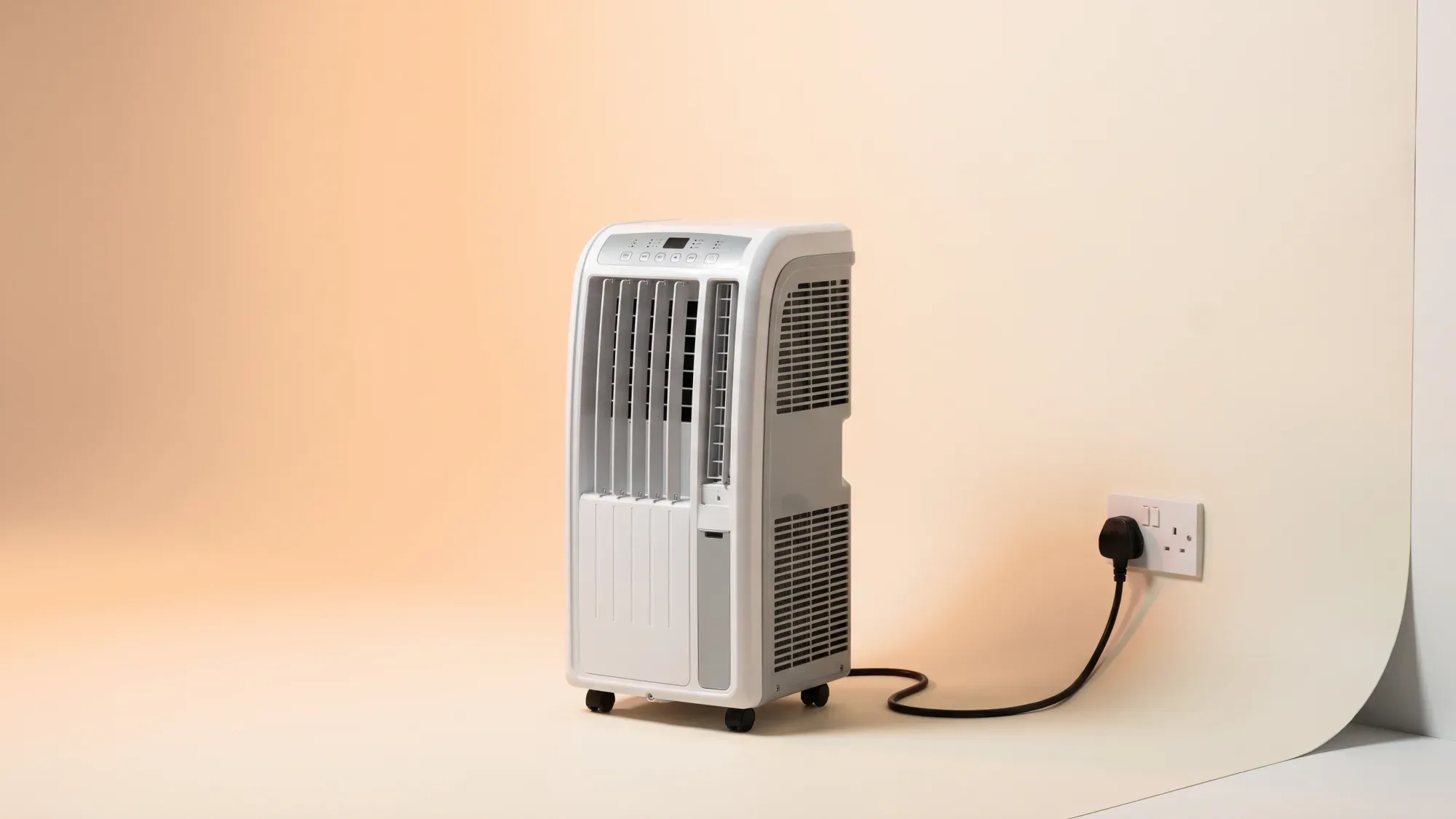
Plugging in an air conditioner in the UK requires careful attention to electrical safety and compliance with national standards. This guide provides practical steps for safely connecting a domestic air conditioning unit, ensuring you understand UK-specific electrical requirements and avoid common pitfalls.
Considering an air conditioner for your home? Understanding its electrical needs is key to safe operation. Fuse Energy offers clear pricing and smart meter insights to help you manage your energy usage efficiently. Click here to switch to Fuse Energy today.
Enter your address to get a quote and see how much you could save
Understanding your air conditioner's power needs
Before plugging in any air conditioner, it is crucial to understand its electrical demands. Matching the unit's power requirements to your home's electrical capacity is the first step in ensuring safe operation.
Checking the unit's wattage and amperage
Every air conditioner comes with a label detailing its electrical specifications. Look for the unit's wattage (W) and amperage (A) ratings. These figures indicate how much power the appliance will draw from your electrical supply. For instance, a typical portable air conditioner might use around 1,200 Watts (1.2kW). This information is usually found on a sticker on the unit itself, in the user manual, or on the packaging.
Types of domestic air conditioners and their power draw
Domestic air conditioners vary significantly in their power consumption. Small portable units typically draw between 700W and 1,500W, while larger portable units can require more, sometimes exceeding 2,000W. Most portable air conditioners require a standard 230V, 13A UK plug (BS 1363). Fixed split-system units, which are professionally installed, usually have much higher power demands and are wired directly into a dedicated circuit by an electrician. For example, a fixed split system might use around 1,000W at full power, dropping to 200W once the room reaches the target temperature.
UK electrical standards and your home
Understanding UK electrical standards is paramount for safely operating high-power appliances like air conditioners.
BS 1363 plugs and 13amp fuses explained
The BS 1363 standard governs the design and performance of electrical plugs and sockets in the United Kingdom. These are the familiar rectangular 3-pin plugs, rated for up to 250V and 13A. A key safety feature of the BS 1363 system is the user-replaceable Fuse located within the plug itself, which protects the appliance's flexible cord from overcurrent. Standard UK wall sockets are typically rated for 13amps and protected by a 13amp Fuse.
Assessing your home's circuit capacity
Your home's electrical system is divided into circuits, each protected by a circuit breaker in your consumer unit (fuse box). Each circuit has a maximum amperage it can safely handle. Overloading a circuit by plugging in too many high-power appliances can trip the circuit breaker, or worse, create a fire hazard. To assess capacity, you may need to know which sockets are on which circuit and the rating of their respective circuit breakers (e.g., 16A, 20A, 32A). If you are unsure, consulting a qualified electrician is advisable. A typical 3-bedroom UK house needs around 10 to 14 ways (circuit slots) in its consumer unit.
Dedicated circuits: when are they necessary?
A dedicated circuit is an electrical circuit that serves only one appliance. For air conditioners drawing high amperage, a dedicated circuit is often recommended to prevent overloading. This ensures the unit has a stable power supply and reduces the risk of tripping circuit breakers or causing electrical strain. If your air conditioner's power demands are close to or exceed the capacity of an existing shared circuit, or if you plan to run it frequently, a dedicated circuit might be a necessary upgrade. For fixed air conditioning systems, BS 7671 recommends a dedicated final circuit protected by a Type C MCB (miniature circuit breaker) and 30mA RCD protection for outdoor equipment.
Essential safety precautions for plugging in AC
Safety should always be your top priority when dealing with electrical appliances, especially those with high power consumption.
Why extension leads are a fire risk for AC units
Extension leads and multi-socket adaptors are generally not recommended for high-power appliances like air conditioners. These devices can overheat, leading to a fire risk, especially if the extension lead is not rated for the appliance's power draw or if it is coiled up, preventing heat dissipation. Electrical Safety First estimates that misuse of extension leads contributes to hundreds of house fires every year. Always plug your air conditioner directly into a suitable wall socket. A standard UK extension lead is typically rated for 13amps, or roughly 3,120 watts. High-power appliances like kettles (around 3,000W) can nearly reach this limit on their own.
The importance of RCD protection
Residual Current Device (RCD) protection is crucial for circuits supplying outdoor equipment or in areas where there is a risk of electric shock. An RCD is a safety device that monitors the flow of electricity in a circuit. If it detects an imbalance, for example, due to electricity leaking to earth through a fault or a person, it can disconnect the supply very quickly, reducing the risk of serious injury or fatal electric shock. Many modern consumer units have RCD protection built-in, but if you are unsure, you can purchase a plug-in RCD for added safety.
Signs of an overloaded circuit
An overloaded circuit can present several warning signs. These include frequently tripping circuit breakers, dimming lights when the appliance turns on, a burning smell from outlets or the consumer unit, or warm-to-the-touch wall sockets. If you notice any of these signs, immediately unplug the air conditioner and investigate the cause.
What is BS 7671?
BS 7671, also known as the IET Wiring Regulations, is the national standard for electrical installations in the UK. It sets out the requirements for the design, installation, inspection, and testing of electrical systems to ensure safety. Compliance with BS 7671 is essential for all electrical work in the UK.
Step-by-step: safely plugging in your air conditioner
Once you have assessed your unit's needs and your home's electrical capacity, follow these steps to safely plug in your air conditioner.
Preparing the unit and the electrical connection
- Read the manual: Always start by reading your air conditioner's instruction manual for specific guidance.
- Inspect the unit and plug: Check the air conditioner and its plug for any damage. Ensure the plug is a standard UK 3-pin BS 1363 type.
- Identify a suitable socket: Choose a wall socket that is easily accessible, not shared with other high-power appliances, and ideally on a circuit with sufficient capacity.
Direct connection: best practices
Plug the air conditioner directly into the chosen wall socket. Avoid using any adaptors or extension leads. Ensure the plug is fully inserted into the socket.
Initial power-up and checks
- Turn on the unit: Switch on the air conditioner and monitor its operation.
- Listen and observe: Listen for any unusual noises, and check for any burning smells or flickering lights.
- Feel the plug and socket: After a short period of operation, carefully feel the plug and the wall socket. They should not be excessively warm. If they are, unplug the unit immediately and seek professional advice.
When to call a qualified electrician
While plugging in a portable air conditioner can often be a DIY task, certain situations require the expertise of a qualified electrician.
Identifying complex electrical requirements
If your air conditioner's power requirements exceed the capacity of your existing circuits, or if you need a new dedicated circuit installed, you must contact a qualified electrician. Attempting complex electrical work yourself is dangerous and illegal under UK regulations. All electrical work and installations in the UK must adhere to BS 7671 Wiring Regulations.
Professional installation for fixed units
For fixed air conditioning units, such as split-system models, professional installation by a qualified electrician is legally required. This ensures compliance with Part P of the Building Regulations, which covers electrical safety in dwellings in England. An electrician will safely wire the unit into your home's electrical system, often requiring a dedicated circuit, and provide the necessary certification. Any work involving refrigerants (F-gases) must also be carried out by an F-Gas certified engineer, which is a legal requirement.
Troubleshooting common electrical issues
If you experience persistent issues like frequently tripping circuit breakers, dimming lights, or unusual smells when your air conditioner is running, it is best to consult a qualified electrician. They can diagnose underlying electrical problems, ensure your wiring is safe, and recommend appropriate solutions.
Managing your home's energy use, especially with appliances like air conditioners, is easier when you have clear insights into your consumption. Fuse Energy provides straightforward pricing and in-app usage data, helping you understand and control your bills. Our 24/7 human support team is also on hand to assist you. Click here to switch to Fuse Energy and take control of your home energy. You can also learn more about our mission to make energy simpler and fairer by clicking here.
Disclaimer
For the avoidance of doubt, this article is provided for informational purposes only and is not intended to constitute legal or financial advice. The author and/or Fuse Energy shall not be responsible for any losses arising out of any reliance on the information contained herein.