Passive home: energy efficiency explained
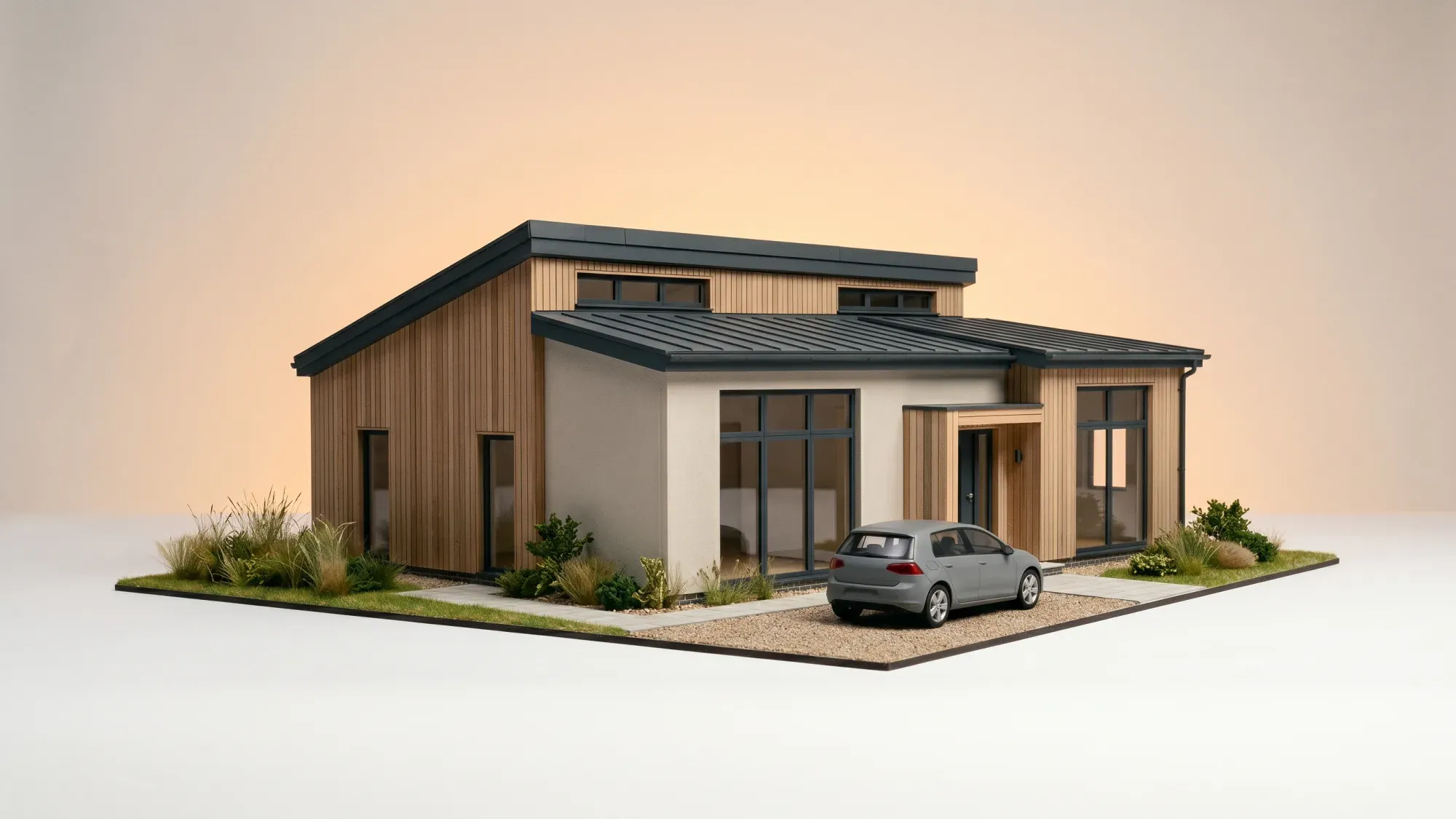
Building a passive home in the UK offers a compelling path to significantly lower energy bills and a more comfortable living environment. These highly energy-efficient properties, often built to the rigorous Passivhaus standard, drastically reduce the need for conventional heating and cooling, providing a foundation for true energy independence.
For homeowners looking to maximise their energy efficiency and take control of their bills, Fuse Energy offers smart tariffs and technology designed to complement ultra-low energy demand. Click here to switch to Fuse Energy today.
Enter your address to get a quote and see how much you could save
What is a passive home?
A passive home, or Passivhaus, is an international building standard developed in Germany. It focuses on reducing a building's energy demand through superior design and construction, rather than relying heavily on renewable systems to compensate for poor performance. It is a voluntary certification that sets stringent targets for energy efficiency and comfort.
Defining the Passivhaus standard
The Passivhaus standard is considered a "gold standard" for energy-efficient homes. It is a voluntary certification in the UK, not a regulatory requirement, but it often exceeds current building regulations. Achieving Passivhaus certification requires meeting stringent criteria, including an annual heating demand of no more than 15 kWh per square metre of usable living space. Passive homes can achieve significant reductions in heating and cooling energy, with some consuming up to 90% less than conventional buildings. They can also achieve a 75% reduction in space heating requirements compared to standard practice for new builds in the UK.
Beyond building regulations
Current UK building regulations (e.g., Part L) set minimum energy performance standards for new and existing dwellings. The Passivhaus standard typically surpasses these minimums, offering a pathway to significantly higher energy efficiency and a near-zero carbon footprint for the operational energy of a home. This commitment to performance means a Passivhaus often delivers benefits far beyond what standard compliance achieves.
What is the primary goal of the Passivhaus standard?
The primary goal of the Passivhaus standard is to achieve ultra-low energy consumption, mainly for heating and cooling, through superior design and construction. This voluntary certification sets stringent criteria to ensure exceptional energy efficiency and comfort in buildings.
The five principles of Passivhaus design
The Passivhaus standard relies on five key principles to achieve its ultra-low energy consumption targets. These principles work in concert to create a highly efficient and comfortable living space.
Superior insulation
Excellent insulation is fundamental to a passive home. Thick layers of high-performance insulation are applied to the walls, roof, and floor, creating a continuous thermal envelope around the building. This minimises heat loss in winter and heat gain in summer, drastically reducing the need for active heating and cooling systems.
High-performance windows and doors
Windows and doors in a passive home are not standard. They are typically triple-glazed, often with insulated frames, and carefully positioned to maximise solar gain in winter while preventing overheating in summer. Their superior thermal performance prevents significant heat transfer, maintaining stable indoor temperatures.
Airtight construction
Achieving airtightness is crucial for preventing uncontrolled air leakage, which can account for a significant portion of heat loss in conventional buildings. Passive homes are meticulously constructed to eliminate gaps and cracks in the building fabric, ensuring that all ventilation is controlled and intentional. This prevents draughts and improves thermal efficiency.
Thermal bridge-free design
Thermal bridges are areas in a building's envelope where heat can easily escape or enter, often occurring at junctions between different building elements (e.g., where a wall meets a floor). Passivhaus design eliminates these thermal bridges through careful detailing and construction, ensuring a continuous insulation layer and preventing localised heat loss or cold spots.
Mechanical ventilation with heat recovery (MVHR)
Given the extreme airtightness, a mechanical ventilation with heat recovery (MVHR) system is essential. MVHR systems continuously supply fresh, filtered air while extracting stale air. Crucially, they can recover between 70% and 95% of the heat from the extracted air and transfer it to the incoming fresh air, ensuring excellent indoor air quality without significant heat loss. This system is vital for comfort and health in a passive home.
Benefits of living in a passive home
Living in a passive home offers a range of advantages that extend beyond just energy savings, impacting comfort, environmental footprint, and even property value.
Drastically reduced energy bills
The most immediate and tangible benefit for homeowners is the dramatic reduction in energy bills. With an annual heating demand of no more than 15 kWh per square metre of usable living space, passive homes require very little energy for heating and cooling. This translates to significantly lower operational costs compared to conventional properties. The average UK home uses around 2,700 kWh of electricity per year, highlighting the potential for substantial savings in a passive home where heating demand is minimal.
Exceptional comfort and air quality
Passive homes maintain a consistently comfortable indoor temperature year-round, free from draughts and cold spots. The MVHR system ensures a continuous supply of fresh, filtered air, removing pollutants, allergens, and excess humidity. This results in superior indoor air quality, which can benefit occupants' health and well-being.
Environmental impact and sustainability
By drastically reducing energy consumption, passive homes contribute significantly to lowering carbon emissions. Their focus on durable construction and high-quality materials also means a longer lifespan and reduced need for maintenance, making them a highly sustainable choice. This aligns with a broader commitment to a greener future.
Increased property value
While the initial investment can be higher, passive homes often command a premium in the property market. Their superior energy performance, comfort, and sustainability features are increasingly valued by buyers, leading to higher resale values and a more future-proof investment.
Addressing common passive home concerns
Building or retrofitting a passive home involves specific considerations, but with the right approach, these can be effectively managed.
Understanding the upfront investment
The initial investment for Passivhaus construction or deep retrofits is typically higher than for conventional builds. This is due to the superior materials, meticulous construction techniques, and specialised systems like MVHR. However, it's crucial to view this as a long-term investment. The significant reduction in energy bills over the home's lifetime, coupled with increased comfort and property value, often outweighs the higher upfront cost. Planning for these costs early and exploring financing options is key.
Finding certified professionals
Engaging certified Passivhaus designers, architects, and builders early in the project is paramount. Their specialised knowledge ensures that the stringent standards are met, avoiding common pitfalls like underestimating the importance of airtightness or thermal bridge-free design. The Passivhaus Trust in the UK can provide resources for finding accredited professionals.
Design and planning considerations
The design process for a passive home is more integrated and detailed than for a conventional build. It requires careful consideration of orientation, shading, window placement, and material selection from the outset. This holistic approach ensures optimal performance and avoids costly rectifications later. Early consultation with experts can streamline this process and ensure the final design meets both the Passivhaus standard and the homeowner's needs.
Optimising energy in your passive home
Even with ultra-low energy consumption, a passive home can be further optimised to maximise savings and control. This is where smart energy management becomes a powerful tool.
Smart tariffs for ultra-low consumption
Passive homes inherently use very little energy, but the energy they do consume can be managed intelligently. Smart tariffs, particularly those that offer cheaper rates during off-peak hours or when renewable generation is high, allow passive home owners to maximise their financial advantage by consuming energy when it is cheapest and cleanest, further reducing their already low bills.
App control and energy management
An intuitive energy app provides granular visibility and control over your home's energy usage. For passive home owners, this means truly understanding their minimal energy footprint and making informed decisions. Monitoring consumption patterns or timing appliance use to align with cheaper tariff periods becomes simple, putting the power of energy management directly into your hands.
Maximising renewable integration
While passive homes minimise demand, integrating renewable energy sources like solar panels can push them towards true energy independence. With smart energy management, any surplus energy generated can be stored or sold back to the grid at optimal times, further reducing reliance on external energy suppliers and contributing to a greener grid.
Making the switch to Fuse Energy
Fuse Energy is the essential partner that turns the inherent efficiency of a passive home into an ongoing 'power play' for its owners. We focus on optimising your home's operation to maximise savings and control over the minimal energy still consumed.
How Fuse amplifies your passive home's efficiency
Fuse's smart tariffs are designed to work with your passive home's ultra-low energy demand. By allowing you to consume energy when it's cheapest and cleanest, we help you maximise the value of your energy efficiency investment and get more from your optimised energy use, further reducing your already low bills. This approach challenges the scarcity mindset, enabling you to get more from your optimised energy use.
Seamless control for smart energy choices
The Fuse app provides granular visibility and control over your energy usage, allowing you to truly understand and manage your home's minimal energy footprint. This empowers you to make smart energy choices, aligning your consumption with periods of high renewable generation and actively participating in a smarter, greener grid. With Fuse, you gain unparalleled control, ensuring your passive home delivers maximum financial and environmental returns.
Ready to experience the benefits of smart energy management in your passive home? Switch to Fuse Energy today and take control of your energy bills. Click here to get started. You can also learn more about our mission to make energy abundant by clicking here.
Disclaimer
For the avoidance of doubt, this article is provided for informational purposes only and is not intended to constitute legal or financial advice. The author and/or Fuse Energy shall not be responsible for any losses arising out of any reliance on the information contained herein.