Is gas cheaper than electricity?
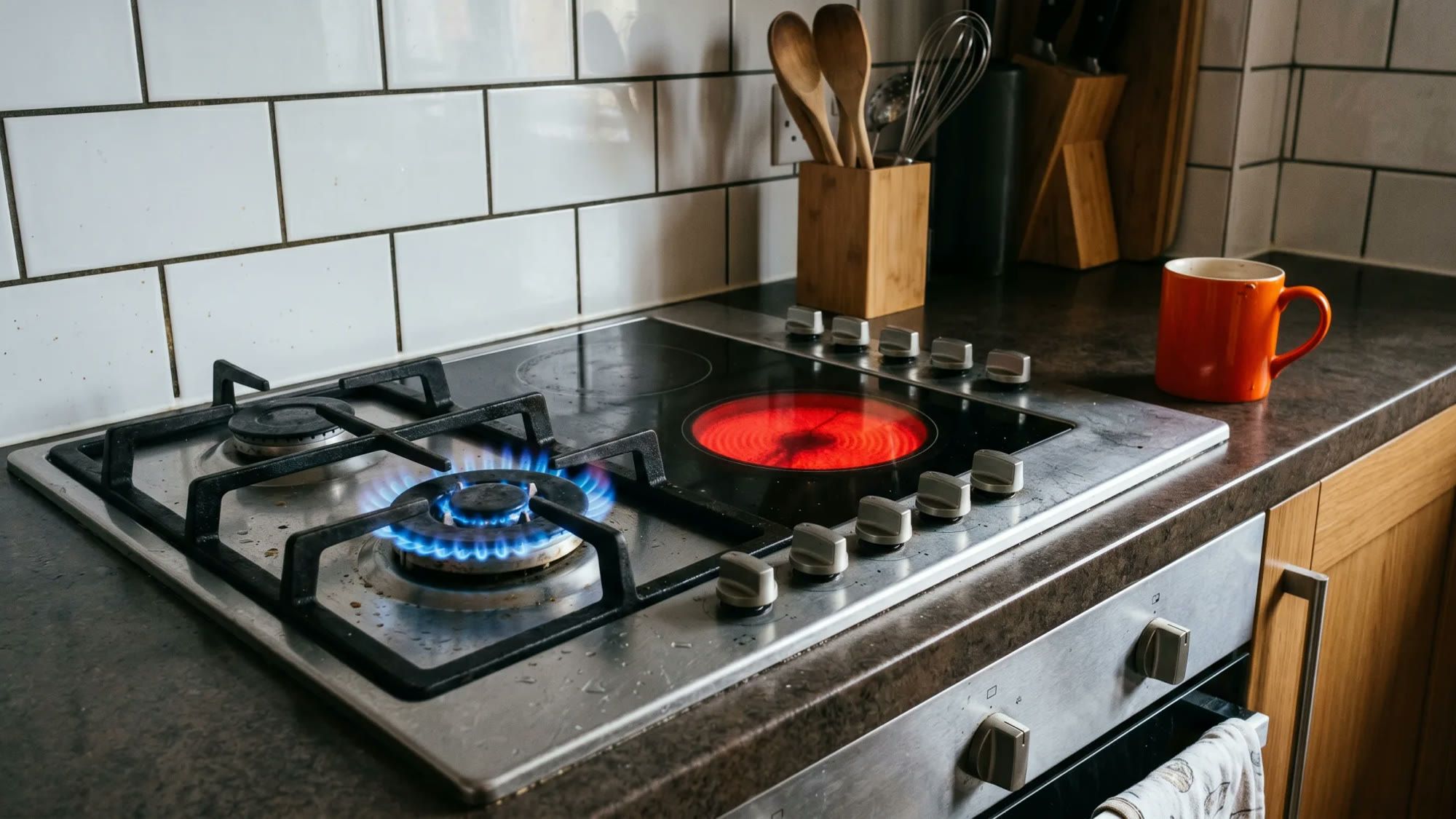
Fuse Energy empowers customers to make "power plays" in their energy management by providing transparent, data-driven insights into whether gas or electricity is cheaper for their specific household needs. For most UK homes, gas typically has a lower unit rate per kilowatt-hour (kWh) than electricity, making it generally cheaper for high-demand uses like heating. However, overall cost depends significantly on appliance efficiency and how energy is used.
Understanding whether gas or electricity is more cost-effective for your home can help you make smarter energy choices. Fuse Energy provides clear pricing and usage insights to help you manage your energy effectively. Click here to switch to Fuse Energy today.
Enter your address to get a quote and see how much you could save
Understanding UK energy costs
Navigating energy costs in the UK requires understanding the components that make up your bill. It is not just about the headline price; unit rates, standing charges, and your household's consumption all play a crucial role.
Unit rates and standing charges explained
Your energy bill is primarily composed of two charges: the unit rate and the standing charge. The unit rate is what you pay for each kilowatt-hour (kWh) of energy you use. Electricity unit rates are generally higher than gas unit rates. As of the current price cap (effective 1 July 2026), the average unit rate for electricity in the UK is approximately 26.11p per kWh, while for gas, it is around 7.33p per kWh.
The standing charge is a fixed daily fee that covers the cost of supplying energy to your home, regardless of how much you use. This includes maintaining the energy network and other operational costs. Standing charges apply to both gas and electricity supplies. For a typical dual-fuel household paying by Direct Debit, the electricity standing charge is 57.19p per day, and the gas standing charge is 29.04p per day.
Typical household consumption (tdcvs)
To understand your potential costs, it helps to know typical usage patterns. Ofgem, the energy regulator, provides Typical Domestic Consumption Values (TDCVs)1 that represent average household energy use. The average UK home uses around 2,500 kWh of electricity and 9,500 kWh of gas per year. These figures are based on a medium-sized household and can vary significantly depending on your home's size, insulation, and the number of occupants.
Gas vs electricity: a direct cost comparison
Comparing gas and electricity costs is not straightforward; it depends heavily on the appliance and its purpose. While gas often has a lower unit rate, electricity can be more efficient for certain tasks.
Heating your home
Heating is typically the largest energy expense for UK households. Gas central heating, usually powered by a modern gas boiler, is often the most cost-effective option for heating a whole home. Modern gas boilers typically operate at over 90% efficiency, meaning most of the energy from the gas is converted into heat.
Electric heating, such as direct electric heaters or electric radiators, converts almost 100% of electricity into heat. However, given electricity's higher unit rate, direct electric heating can be more expensive to run than gas central heating for the same amount of heat output. Heat pumps, which run on electricity, offer a more efficient electric heating solution as they extract heat from the air or ground, making them significantly more efficient than direct electric heaters, though their upfront installation cost is higher.
Cooking appliances
When it comes to cooking, the cost comparison varies between ovens and hobs. Electric ovens are generally more energy-efficient than gas ovens for cooking, often heating up faster and maintaining a more consistent temperature. This can offset some of the higher electricity unit rate.
For hobs, gas can be cheaper to run than electric induction hobs for short bursts of high heat, as gas provides instant heat and precise control. However, induction hobs are highly efficient at transferring heat directly to the pan, making them very effective.
Hot water systems
Heating water is another significant energy consumer. Gas-fired combi boilers or hot water cylinders are common and generally cost-effective for heating water with gas. Electric immersion heaters, while simple to install, can be more expensive to run due to the higher electricity unit rate. Electric showers heat water on demand, which can be efficient for individual use but still draw on the more expensive electricity supply.
Why the price difference?
The disparity in unit rates between gas and electricity stems from several factors, including how they are generated, transported, and regulated.
Wholesale market dynamics
The wholesale cost of energy is a primary driver of unit rates. Gas prices are influenced by global supply and demand, geopolitical events, and storage levels. Electricity prices are also affected by these factors, as a significant portion of the UK's electricity is still generated from gas. However, electricity also incorporates costs associated with renewable generation, grid infrastructure, and balancing the grid, which can add to its unit cost.
Energy efficiency and appliance impact
A lower unit rate does not automatically translate to a lower overall cost. Appliance efficiency is crucial. For example, a highly efficient electric appliance might cost less to run than a very inefficient gas appliance, even with electricity's higher unit rate. Modern appliances are designed to maximise energy conversion, meaning less energy is wasted.
Why is gas cheaper per unit than electricity?
Gas is typically cheaper per unit than electricity primarily because of differences in generation, infrastructure, and regulation. Electricity production often involves converting primary fuels (like gas) into electricity, incurring conversion losses and additional transmission costs. Gas, as a primary fuel, has fewer steps in its supply chain to the home, contributing to its lower unit cost.
Factors influencing your energy bills
Beyond unit rates, several household-specific factors significantly impact your total energy expenditure. Understanding these can help you identify areas for potential savings.
Property insulation and size
The size of your home and its insulation levels are major determinants of energy consumption, especially for heating. A larger home naturally requires more energy to heat. Poor insulation - in walls, lofts, or windows - allows heat to escape quickly, forcing your heating system to work harder and consume more energy to maintain a comfortable temperature. Improving insulation is one of the most effective ways to reduce heating bills.
Appliance efficiency ratings
Appliance come with energy efficiency ratings, usually on a scale from A to G (or A+++ to D for older ratings), with A being the most efficient. Choosing highly-rated appliances can lead to substantial long-term savings, even if the initial purchase price is higher. An efficient washing machine, fridge, or oven uses less energy to perform its function, directly reducing your electricity consumption.
Your tariff type
The type of energy tariff you are on also affects your costs. Standard variable tariffs are subject to Ofgem's price cap, meaning unit rates and standing charges can change quarterly. Fixed tariffs, on the other hand, lock in your unit rates for a set period, offering predictability but potentially missing out if prices fall. Choosing the right tariff for your consumption habits and risk tolerance is key to managing your bills.
Making smart choices to reduce costs
Taking control of your energy bills involves a combination of improving your home's efficiency, optimising appliance usage, and selecting the best energy tariff.
Improving home efficiency
Investing in home efficiency upgrades can significantly reduce your energy consumption. This includes measures like upgrading loft and wall insulation, installing double glazing, and sealing draughts around windows and doors. These improvements reduce the amount of heat lost from your home, meaning you need less energy to keep it warm.
Optimising appliance usage
Simple changes in how you use your appliances can lead to savings. For example, only filling the kettle with the water you need, running washing machines and dishwashers with full loads, and switching off lights and electronics when not in use all contribute to lower energy bills. Using smart plugs can also help you control and monitor the energy consumption of individual devices.
Choosing the right energy tariff
Regularly reviewing your energy tariff is essential. Compare offers from different suppliers to ensure you are on the most cost-effective plan for your household's needs. Consider whether a fixed-rate tariff offers the stability you prefer or if a variable tariff, subject to the price cap, suits your usage patterns.
Managing your energy bills should be clear and easy to understand. Fuse Energy focuses on straightforward pricing, so you can see exactly what you are paying without unnecessary complexity. If you have a smart meter, you can view detailed usage data through the app or website, helping you understand how you can lower your bills. If you do not have a smart meter, Fuse Energy can upgrade your non-smart meter, completely for free. This can make it easier to track spending and make informed decisions about your energy use. Our 24/7 human support team is always on hand with fast response times whenever you need help. Click here to switch to Fuse Energy today. Find out about our mission by clicking here.
References
Disclaimer
For the avoidance of doubt, this article is provided for informational purposes only and is not intended to constitute legal or financial advice. The author and/or Fuse Energy shall not be responsible for any losses arising out of any reliance on the information contained herein.