Invest in home renewable energy
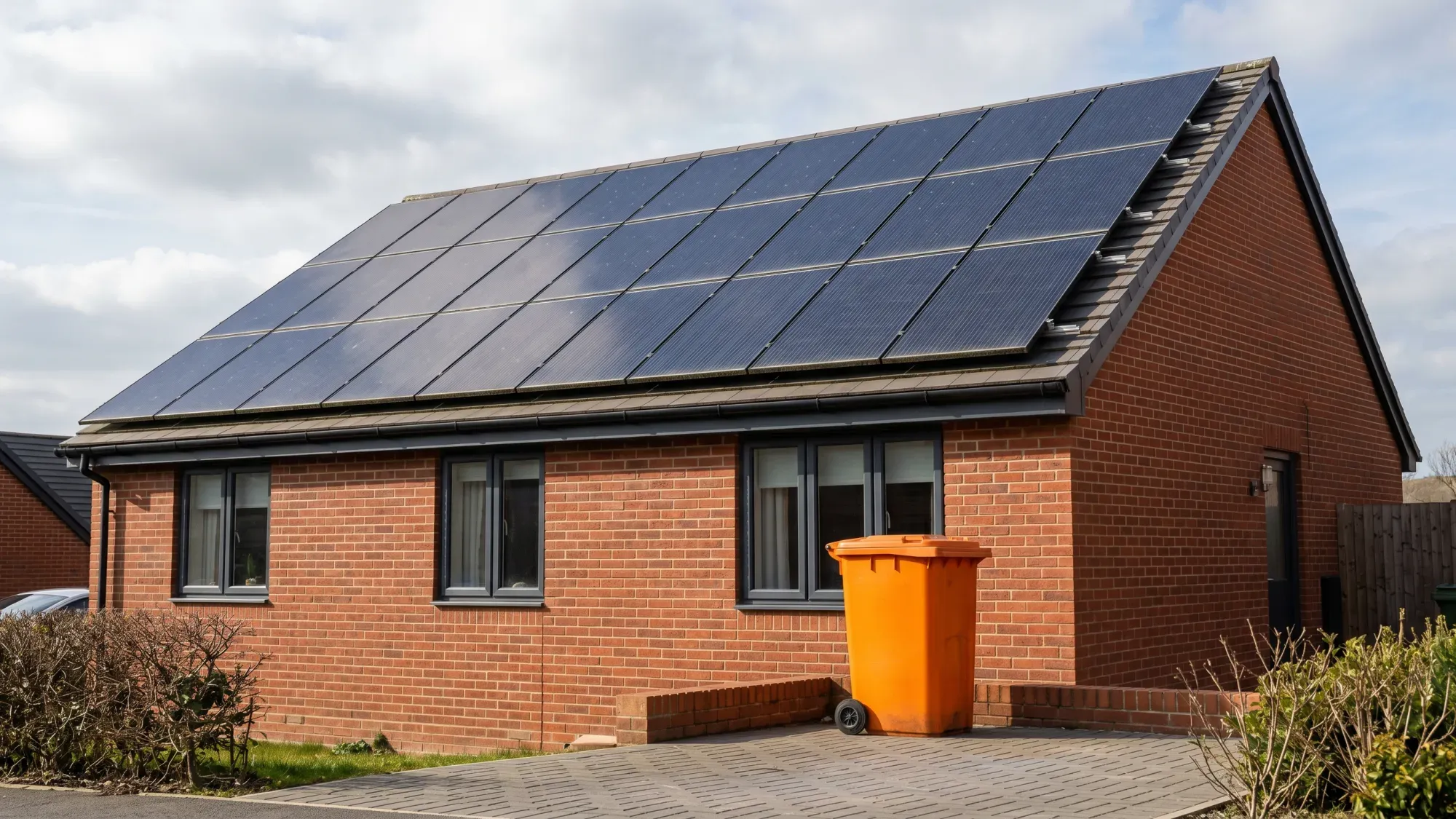
Investing in renewable energy at home offers UK homeowners a tangible path to financial returns, energy independence, and a more sustainable future. This approach focuses on practical home upgrades that deliver direct benefits, aligning with the idea of having more energy and more control over your household's power.
Ready to take control of your home's energy? Fuse Energy offers clear pricing, real-time usage data, and 24/7 human customer support to help you manage your energy more effectively. Click here to switch to Fuse Energy today.
Enter your address to get a quote and see how much you could save
Why invest in home renewable energy?
Upgrading your home with renewable energy systems is a proactive step that yields multiple benefits, extending beyond environmental impact to tangible financial and lifestyle improvements.
Financial returns and energy independence
Direct home energy upgrades can significantly reduce your reliance on grid electricity, leading to substantial savings on your energy bills. By generating your own power, you gain a degree of energy independence, shielding your household from volatile energy prices and supply uncertainties. Considering the overall efficiency of your home's energy systems, including options like improving air source heat pump efficiency, can further enhance these savings.
Contributing to a sustainable future
Every unit of renewable energy generated at home reduces your carbon footprint, contributing directly to a cleaner, more sustainable environment. This personal contribution aligns with broader efforts to combat climate change and transition to green energy sources.
Protecting against rising energy costs
With energy prices subject to global markets and regulatory changes, generating your own power provides a buffer against future increases. Investing in home renewable energy offers long-term financial predictability and stability, making your household more resilient.
Practical home renewable energy investments
Several accessible technologies allow UK homeowners to invest directly in renewable energy, each offering distinct advantages.
Plug-in solar panels: accessible generation
Plug-in solar panels represent an accessible entry point into home energy generation. These small systems plug into a standard wall socket, allowing for self-installation without the need for an electrician or permanent fixtures. This makes them particularly suitable for renters or those with limited outdoor space, such as balconies or patios. Statutory Instrument (SI) 2026/848 has applied to compliant plug-in solar since 27 August 2026, legalising self-installation of systems with an 800W AC export limit per device. Homeowners or their suppliers must notify the Distribution Network Operator (DNO) under G98 regulations within 28 days of installation. While plug-in solar does not typically qualify for the Smart Export Guarantee (SEG) due to certification and metering requirements, self-consumption of the generated electricity is the primary financial benefit, offsetting the energy you would otherwise buy from the grid.
Home battery storage: maximising self-consumption
Home battery storage systems act like a power bank for your home, storing electricity for later use. This is particularly useful for plug-in solar setups, as it allows you to save surplus solar power generated during the day and use it during the evening, rather than exporting it to the grid. Batteries can also charge from the grid during cheaper off-peak hours and discharge during more expensive peak times. It is important to note that SI 2026/848 legalises compliant standalone plug-in solar only; plug-in batteries and hybrid solar-battery kits are not covered by this legislation.
Electric vehicle chargers: smart charging at home
Installing an electric vehicle (EV) charger at home is another practical investment in green energy. Smart EV chargers allow you to schedule charging during off-peak hours when electricity is cheaper and often greener. This optimises your energy consumption and can lead to significant savings on your transport costs.
Smart meters: your gateway to optimisation
Smart meters are crucial for optimising home energy use and unlocking the full potential of your renewable energy investments. They provide real-time data on your energy consumption and, in some cases, generation. This data allows you to make informed decisions about when to use appliances, charge your EV, or store energy, potentially enabling access to time-of-use tariffs that offer cheaper electricity during specific periods.
Understanding the financial benefits and savings
Investing in home renewable energy systems can lead to substantial financial benefits and long-term savings.
Reducing your electricity bills
The most immediate benefit is a reduction in your electricity bills. By generating your own power, you directly offset the amount of electricity you purchase from your supplier. For an illustrative Direct Debit household on the Ofgem price-cap default tariff (1 July to 30 September 2026), electricity costs 26.11p per kWh. The average UK home uses around 2,500 kWh of electricity per year, according to Ofgem's medium Typical Domestic Consumption Value (TDCV) effective from 1 July 2026. Self-generating a portion of this can lead to considerable savings. Understanding the air source heat pump running cost can also provide a useful comparison for long-term energy savings from other renewable technologies.
Potential for exporting surplus energy
While self-installed plug-in solar kits do not typically qualify for the SEG, some energy suppliers may offer their own export tariffs for unused generation that flows back to the grid. However, the primary financial benefit for plug-in solar remains self-consumption, as this directly reduces the amount of electricity you need to buy.
Increasing your property value
Homes equipped with renewable energy systems, such as solar panels and EV chargers, are often more attractive to potential buyers. These upgrades can increase your property's value by offering lower running costs and a reduced environmental impact.
Calculating your payback period
The payback period is the time it takes for the savings from your renewable energy investment to equal the initial cost. This calculation depends on the system's cost, your energy consumption patterns, the amount of energy you self-consume, and prevailing electricity prices. Many suppliers and installers offer tools to help estimate this, providing a clear financial roadmap for your investment.
Government support and regulations
The UK government supports the adoption of home renewable energy through various grants and regulatory frameworks.
Plug-in solar legislation: SI 2026/848 explained
SI 2026/848 has applied to compliant plug-in solar since 27 August 2026, providing a legal framework for these systems. This legislation permits self-installation of plug-in solar systems with an AC export limit of 800W per device. It is crucial to understand that this regulation specifically covers standalone plug-in solar and does not extend to plug-in batteries or hybrid solar-battery systems.
What is the 800W AC export limit for plug-in solar?
The 800W AC export limit refers to the maximum alternating current power a self-installed plug-in solar system can feed into your home's electrical system and, potentially, the grid. This limit, set by SI 2026/848, ensures the system's safety and compatibility with standard household wiring.
OZEV grants for EV chargers: eligibility and application
The Office for Zero Emission Vehicles (OZEV) offers grants for EV chargepoints, but eligibility varies. For domestic installations, the EV Chargepoint Grant for renters and flat owners provides up to £500 towards installation costs for those with private off-street parking. Similarly, the EV Chargepoint Grant for households with on-street parking offers up to £500 for those installing a cross-pavement solution. However, these grants do not typically apply to homeowners with private off-street parking, such as a driveway. It is essential to check the specific criteria on the government's website to determine if you qualify.
Smart Export Guarantee (SEG) and other export tariffs
The SEG mandates that larger energy suppliers pay customers for electricity they export to the grid. However, self-installed plug-in solar kits generally do not qualify for SEG because they often lack the necessary certification and metering. Despite this, some energy suppliers may offer their own export tariffs outside the SEG scheme, providing a payment for any surplus energy you generate and do not use.
DNO notification requirements (G98)
For any plug-in solar system installation, the DNO must be notified under G98 regulations within 28 days of commissioning. This notification ensures the DNO is aware of generation sources connected to their network, maintaining grid stability and safety. Either the homeowner or their chosen supplier can complete this notification. You can find your DNO by postcode using the Energy Networks Association (ENA) tool.
Getting started with home renewable energy
Embarking on your home renewable energy journey involves several practical steps to ensure you choose the right systems for your property and maximise your investment.
Assessing your home's potential
Begin by evaluating your home's energy consumption and its potential for renewable generation. Consider factors like roof orientation for solar panels, available outdoor space for plug-in solar, and your current electricity usage patterns. Understanding your baseline helps you identify the most impactful upgrades.
Choosing the right system for your needs
Research the various home renewable energy technologies available and determine which ones best suit your property, budget, and energy goals. This might involve comparing different plug-in solar kits, assessing battery storage options, or selecting an EV charger that integrates with your lifestyle.
Installation and maintenance considerations
For plug-in solar, self-installation is a key benefit, but ensure you follow all instructions and regulatory requirements. For more complex systems like wired EV chargers, professional installation is typically required. Consider the long-term maintenance needs of each system to ensure continued efficiency and optimal performance.
Making smart energy choices for your home can lead to significant savings and a more sustainable lifestyle. Fuse Energy is here to help you manage your energy effectively, offering transparent pricing and tools to understand your usage. Switch to Fuse Energy today and experience a modern approach to home energy. Find out more about our mission here.
Disclaimer
For the avoidance of doubt, this article is provided for informational purposes only and is not intended to constitute legal or financial advice. The author and/or Fuse Energy shall not be responsible for any losses arising out of any reliance on the information contained herein.