How much space does an air source heat pump need?
Understanding the space requirements for an air source heat pump is crucial for UK homeowners considering this energy-efficient heating upgrade. Most properties can accommodate a heat pump system, which typically involves an outdoor unit and indoor components like a hot water cylinder, provided you plan for specific dimensions and clearances. This guide aims to demystify these requirements, offering clear, actionable steps to confidently assess your property's suitability.
Understanding air source heat pump components and their space needs
An air source heat pump system comprises both an outdoor unit, which extracts heat from the air, and indoor components that distribute this heat throughout your home. Knowing the size and function of each part is the first step in planning your installation.
The outdoor unit: dimensions and placement
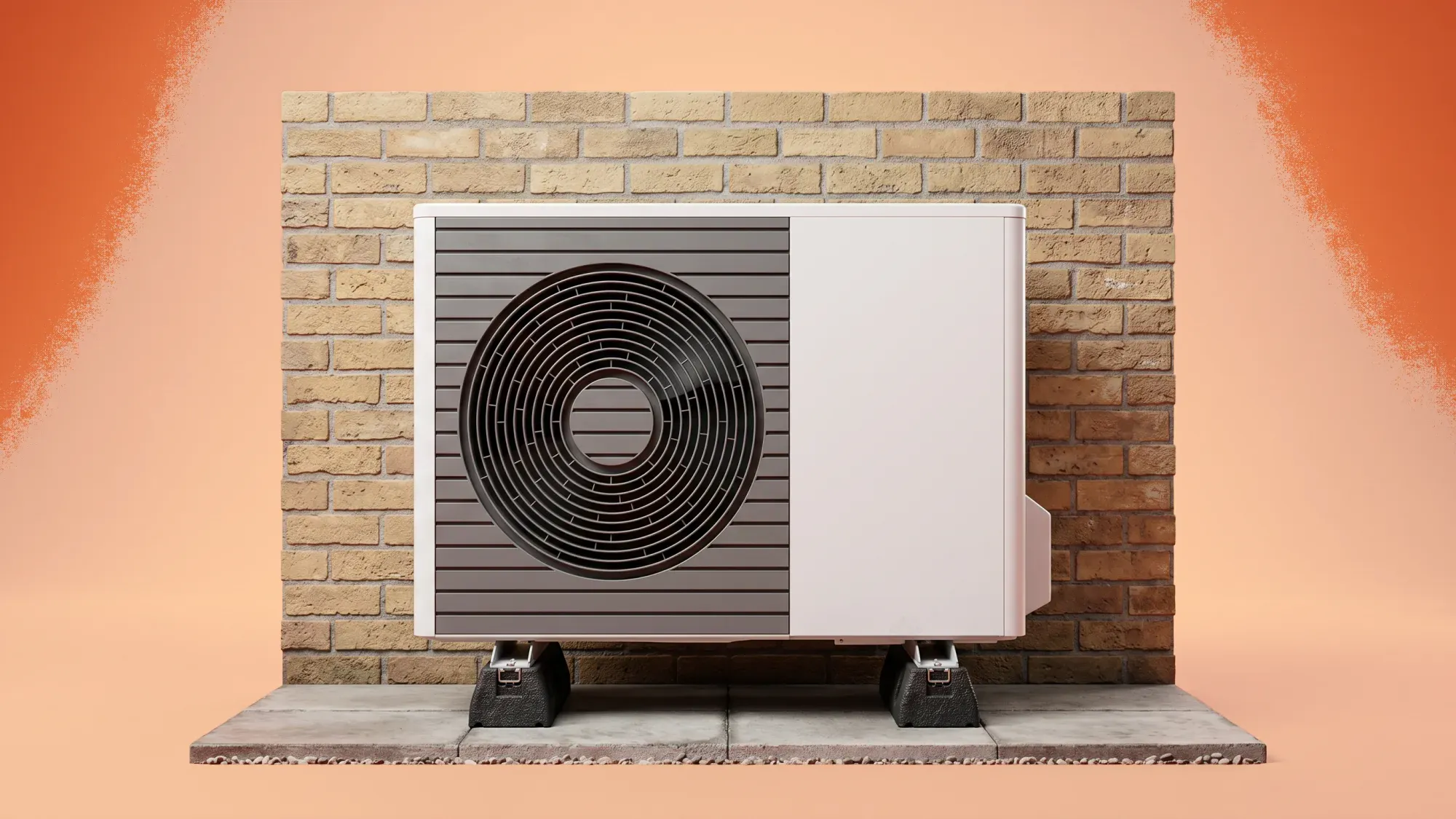
The outdoor unit of an air source heat pump resembles an air conditioning unit, housing a fan, evaporator, and compressor. Its physical size varies significantly based on your home's heating demand, with larger properties often requiring more powerful, and thus larger, units.
Typically, outdoor air source heat pump units range from 80 to 160 cm in height, 50 to 140 cm in width, and 30 to 60 cm in depth. Some models might be around 1 metre high, 1 metre wide, and 0.4 to 0.6 metres deep. These units are usually installed on a flat, solid surface, such as a concrete pad, or mounted securely on an external wall.
Indoor components: hot water cylinder and buffer tank
Unlike traditional boilers, air source heat pumps often require a dedicated hot water cylinder. This is because they heat water to a lower temperature over a longer period, necessitating storage for hot water demand.
A standard hot water cylinder for an air source heat pump typically ranges from 150 to 300 litres in capacity, depending on household size and hot water usage. These cylinders generally require a footprint of approximately 60 cm by 60 cm and stand between 125 cm to 175 cm tall. While a typical footprint might be around 80cm x 80cm, slimline options are available, measuring as little as 43 cm wide for tighter spaces.
Some systems may also include a buffer tank, which acts as a thermal store to improve efficiency and reduce the heat pump's cycling. Buffer tanks can be similar in size to hot water cylinders and may be integrated or wall-mounted to save space. A general rule for sizing is 10 to 20 litres of buffer tank capacity for every kilowatt (kW) of heat pump output.
Outdoor unit siting: clearances, noise, and aesthetics
The placement of your outdoor unit is critical for its performance, compliance with regulations, and maintaining good neighbourly relations.
Minimum clearances for optimal performance
Adequate clearance around the outdoor unit is essential for efficient operation and maintenance. Manufacturers specify minimum distances to ensure unrestricted airflow, as blocking it can reduce efficiency, increase energy consumption, and shorten the unit's lifespan.
Typically, illustrative clearances suggest at least 30 cm of clear space around the sides and rear of the unit. The front, where the fan expels cold air, usually requires between 0.5 to 2 metres of clear space. It is also commonly recommended to have at least 1 metre of clear space above the unit. Any nearby plants or shrubs should be kept at least 1 metre away. These clearances also ensure technicians can easily access the unit for servicing and repairs. A professional installer will provide exact figures based on a site survey and manufacturer guidelines.
Managing noise emissions and neighbour relations
Air source heat pumps do produce some noise, typically ranging from 40 to 60 decibels (dB), which is comparable to a refrigerator or a quiet conversation. However, noise levels are a key consideration for siting, especially concerning neighbours.
For an air source heat pump installation to qualify as permitted development in England and Wales, it must comply with the Microgeneration Certification Scheme (MCS) 020(a) noise standards. This sets a strict limit: the sound pressure level at the nearest neighbour's habitable window must not exceed 37 dB(A) measured 1 metre from the window. The previous MCS 020 standard used a limit of 42 dB(A). Installers will perform a noise assessment to ensure compliance. Positioning the unit away from bedroom windows can help minimise disturbance.
Aesthetic considerations and visual impact
While functionality is paramount, the visual impact of the outdoor unit on your property and its surroundings should also be considered. Planning rules often state that the system should not visually dominate the property. Choosing a discreet location, perhaps at the side or rear of the house, can help integrate the unit more harmoniously with your home's exterior.
Indoor unit placement: integrating with your home
Integrating the indoor components of an air source heat pump system requires careful thought about available space, particularly for the hot water cylinder and any associated pipework.
Sizing and locating your hot water cylinder
The hot water cylinder's capacity should align with your household's demand. For instance, a 150-210 litre cylinder might suit 1-2 people, while a larger family of 4-5 people could need a 250-300 litre cylinder. These cylinders are generally taller and wider than conventional immersion tanks, so accurate measurements of your available space are essential.
Many homes can house the cylinder in an existing airing cupboard, especially if replacing a traditional cylinder. If you are replacing a combi boiler, you will need to identify a new suitable location.
Space for buffer tanks and associated pipework
If your system includes a buffer tank, it will also require space. These can sometimes be integrated with the hot water cylinder or wall-mounted to conserve floor space. Additionally, space is needed for associated pipework, a circulation pump, and control units. While these components are often compact, their collective footprint needs to be accounted for.
Optimising utility room or cupboard space
Utility rooms, basements, or even lofts can be suitable locations for indoor components, provided they offer sufficient space and accessibility. The aim is to create a plant space that allows for comfortable access for installation and future maintenance. Careful planning can ensure these essential components are integrated without major disruption to your living areas.
Navigating UK planning permission and regulations
Understanding the planning rules and regulations for air source heat pumps in the UK is vital to a smooth installation process.
Permitted development rights for heat pumps
In England, most air source heat pump installations fall under "permitted development rights," meaning they generally do not require a full planning application, provided specific conditions are met.
Key conditions for permitted development include:
- Only one outdoor unit is permitted for semi-detached or terraced properties, though detached houses can install up to two.
- From 29 May 2025, the requirement for the unit to be 1 metre from a property boundary was removed in England. The maximum allowable volume for the outdoor unit on a dwelling house also increased from 0.6 cubic metres to 1.5 cubic metres.
- The unit must not be installed on a pitched roof.
- Installations must comply with MCS 020(a) noise standards.
- Permitted development rights do not apply to listed buildings or properties in conservation areas, particularly if the unit is on a wall or roof fronting a highway. In such cases, or if conditions are not met, planning permission will be required.
Noise assessment and local authority guidelines
Noise emissions are a significant regulatory factor. For permitted development, the installation must meet the MCS 020(a) noise limit of 37 dB(A) at the nearest neighbouring window. Installers must conduct a noise assessment to ensure the proposed installation meets these limits. Local authorities can investigate noise complaints and issue enforcement notices if a unit is deemed a nuisance.
MCS certification and grant eligibility
MCS certification is the UK's recognised quality mark for small-scale renewable energy technologies, including air source heat pumps. Choosing an MCS-certified installer is not just about ensuring a high-quality installation; it is also a mandatory requirement for accessing government grants, such as the Boiler Upgrade Scheme (BUS). The standard BUS grant is £7,500 for air source and ground source heat pumps. Since 21 July 2026, households in England and Wales currently on heating oil or LPG can claim an uplifted £9,000. For the BUS, the MCS-certified installer applies for the grant on the homeowner's behalf, and the grant value is deducted from the installation quote.
Your property assessment checklist and next steps
Making an informed decision about installing an air source heat pump involves a thorough assessment of your property and consulting with professionals.
A step-by-step guide for homeowners
Here is a checklist to help you assess your home's suitability:
- Measure outdoor space: Check the dimensions of potential outdoor locations for the unit. Ensure there is enough room for the unit itself and the typical clearances (e.g., 30 cm around sides/rear, 0.5-2m in front, 1m above).
- Assess indoor space: Measure available space in airing cupboards, utility rooms, or other areas for the hot water cylinder (typically 60x60x125-175cm) and any buffer tank.
- Consider noise: Identify locations away from bedroom windows and neighbouring properties to minimise potential noise disturbance.
- Check planning rules: Understand if your property's location (e.g., listed building, conservation area) or the proposed installation falls outside permitted development rights. Be aware of the updated rules from 29 May 2025 regarding boundary distances and unit volume in England.
- Research MCS installers: Look for MCS-certified installers who can provide a professional site assessment and ensure compliance with all standards.
The importance of a professional site survey
While this guide provides a solid starting point, a professional site survey by a qualified heat pump installer is indispensable. They can accurately assess your property's heat demand, recommend the appropriate system size, confirm optimal placement for both indoor and outdoor units, and advise on any specific planning or regulatory requirements for your home. This tailored advice ensures your system is correctly sized and installed for maximum efficiency and compliance.
Making an informed decision for your home
By understanding the space requirements, noise considerations, and planning regulations, you can approach the decision to install an air source heat pump with confidence. This rigorous, fact-backed approach empowers you to make an informed choice, contributing to a more energy-efficient future for your home.
Disclaimer
For the avoidance of doubt, this article is provided for informational purposes only and is not intended to constitute legal or financial advice. The author and/or Fuse Energy shall not be responsible for any losses arising out of any reliance on the information contained herein.