How much is 1 unit of electricity? 26.11p Under the cap
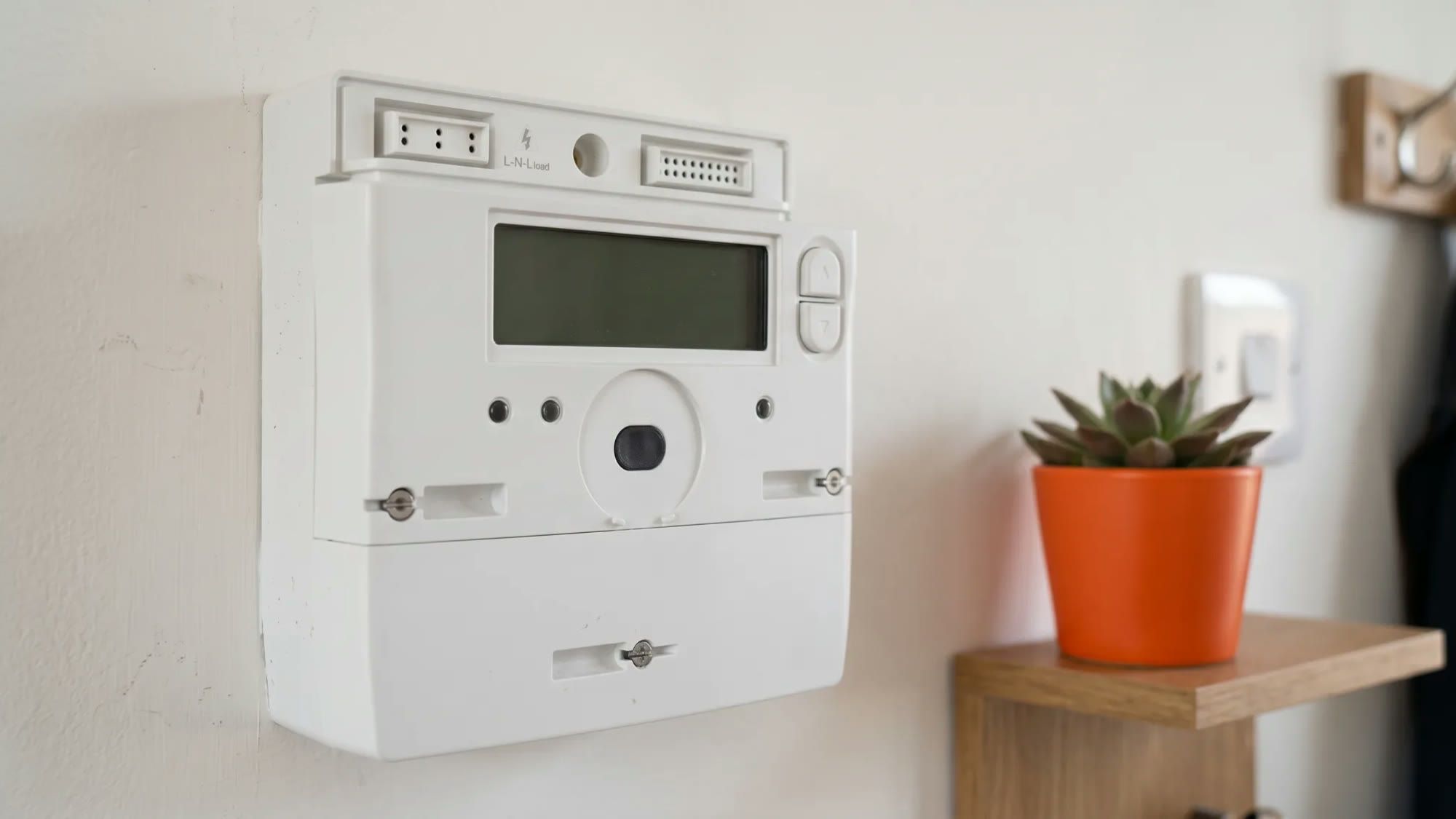
Understanding your energy bill can feel like a complex task, especially when trying to decipher what a 'unit' of electricity actually means and how its cost impacts your household budget. Fuse Energy aims to provide clear and actionable insight into electricity costs, empowering households to make informed energy decisions.
Managing your home's energy should be straightforward. Fuse Energy helps you understand your electricity usage and costs, so you can make smarter choices for your household. Click here to see how easy it is to switch to Fuse Energy.
Enter your address to get a quote and see how much you could save
What exactly is a unit of electricity?
A 'unit' of electricity is the standard measure of energy consumption, formally known as a kilowatt-hour (kWh). It represents the energy used by a 1,000-watt (or 1-kilowatt) appliance running for one hour. This fundamental unit allows you to track and understand your energy usage.
Kilowatt-hours (kWh) explained
Think of a kilowatt-hour as the total amount of energy consumed over a period. For example, a 100-watt light Bulb left on for 10 hours uses 1,000 watt-hours, which equals 1 kWh. Similarly, a 2,000-watt electric heater running for 30 minutes would also consume 1 kWh. One kilowatt-hour (kWh) is equivalent to 3.6 megajoules (MJ) of energy.
Differentiating between kW and kWh
It is crucial to distinguish between kilowatts (kW) and kilowatt-hours (kWh). A kilowatt (kW) measures the rate at which an appliance uses power at any given moment, much like speed measures how fast a car is going. In contrast, a kilowatt-hour (kWh) measures the total energy consumed over time, akin to the distance a car has travelled. Confusing these two can lead to miscalculations of your energy consumption.
Why understanding kWh matters for your bill
Every charge on your electricity bill is ultimately driven by how many kWh your meter has recorded. By understanding kWh, you can accurately calculate the running costs of your appliances, make informed decisions about your energy usage, and manage your household budget more effectively. This knowledge shifts the focus from merely "using less" to understanding and managing your energy for greater control.
What is a kilowatt-hour (kWh)?
A kilowatt-hour (kWh) is the standard unit of electrical energy measurement. It quantifies the energy consumed by a 1,000-watt (1-kilowatt) appliance operating for one hour. This is the unit energy suppliers use to calculate your electricity bill, making it essential for understanding and managing your household energy usage.
The current cost of 1 unit of electricity in the UK
The cost of electricity in the UK is influenced by various factors, with the Energy Price Cap set by Ofgem playing a significant role. This cap limits the maximum amount suppliers can charge for each unit of energy and the daily standing charge.
Typical unit rates under the energy price cap
As of 1 July 2026, the typical unit rate for electricity under the Ofgem Energy Price Cap is 26.11 pence per kilowatt-hour (p/kWh) for Direct Debit customers. This is the price you pay for each unit of electricity you consume. It's important to note that this figure is an average across Great Britain and includes VAT.
Understanding the daily standing charge
In addition to the unit rate, your electricity bill includes a daily standing charge. This is a fixed daily fee, regardless of how much electricity you use, designed to cover the costs of providing and maintaining the electricity network. As of 1 July 2026, the typical daily standing charge for electricity under the Ofgem Energy Price Cap is 57.19 pence per day for Direct Debit customers. Overlooking this charge can lead to an incomplete understanding of your total electricity costs.
Regional variations in electricity costs
The actual amount you pay for electricity can vary depending on where you live in the UK. Regional differences in distribution costs mean that unit rates and standing charges can differ slightly across the country. Payment method (e.g., Direct Debit, prepayment meter) and meter type can also affect your specific costs.
Key factors influencing electricity unit prices
Electricity unit prices are not static; they are determined by a complex interplay of regulatory frameworks, market forces, and infrastructure costs.
Ofgem's role and the energy price cap
Ofgem, the energy regulator for Great Britain, sets the Energy Price Cap, which limits the maximum unit rate and standing charge suppliers can impose. This cap is reviewed and updated quarterly, with changes typically taking effect in January, April, July, and October. All licensed energy suppliers in the UK must adhere to these regulations.
Wholesale energy market dynamics
A significant component of your electricity bill is the wholesale cost of energy, which suppliers pay to purchase electricity from the market. Fluctuations in global wholesale prices, influenced by factors such as geopolitical events, supply and demand, and fuel costs, directly impact the unit rates passed on to consumers.
Distribution and transmission charges
These charges cover the costs associated with building, maintaining, and operating the vast network of power lines and infrastructure that transmit electricity from power stations to your home. These network costs are a fixed part of the overall price cap calculation.
Government levies and VAT
Government obligations, such as those supporting social and environmental schemes, are factored into electricity prices. The Warm Home Discount, for example, is a £150 one-off government credit applied to eligible customers' electricity bills in England, Wales, and Scotland1. All tariff rates (unit rates and standing charges) are quoted inclusive of Value Added Tax (VAT) at 5%.
Calculating your appliance running costs
Understanding how to calculate the energy consumption of your appliances empowers you to manage your electricity usage and costs effectively. The average UK home uses around 2,500 kWh of electricity per year2.
Step-by-step guide to estimating appliance usage
To estimate how much an appliance costs to run, follow these steps:
- Find the wattage: Locate the power rating (in watts, W) on the appliance's label or in its manual.
- Convert to kilowatts: Divide the wattage by 1,000 to convert it to kilowatts (kW).
- Estimate usage time: Determine how many hours per day or week you use the appliance.
- Calculate kWh: Multiply the kilowatts by the hours of usage. This gives you the kilowatt-hours (kWh) consumed.
- Calculate cost: Multiply the kWh by your current electricity unit rate (e.g., 26.11p/kWh).
Examples of common appliance consumption
Different appliances consume varying amounts of electricity. For instance, a 100-watt light Bulb running for 10 hours uses 1 kWh. A 2,000-watt oven might use 1 kWh in just 30 minutes. Appliances with thermostats, like refrigerators, cycle on and off, meaning their effective consumption is lower than if they ran continuously at their maximum rating.
Translating kWh into pence and pounds
Once you have calculated the kWh for an appliance over a given period, multiplying this by your unit rate (e.g., 26.11p/kWh) will give you the cost in pence. Divide by 100 to convert this to pounds. This simple calculation allows you to see the direct financial impact of your appliance usage.
Managing your electricity consumption and costs
Taking control of your electricity consumption and costs is about understanding your usage and making informed choices, rather than simply cutting back.
Reviewing your energy bills for clarity
Your energy bill is a crucial tool for understanding your consumption. It details your energy usage in kWh, the unit rate applied, and the daily standing charge. Regularly reviewing your bills helps you track your actual consumption and identify patterns, enabling you to make more precise adjustments to your energy habits. For more detailed insights, you might find our guide to understanding your energy bill helpful.
Exploring different tariff options
While the Energy Price Cap sets a maximum, suppliers may offer different tariffs, including fixed or variable rates. Fixed tariffs lock in your unit rate for a set period, offering predictability, while variable tariffs can fluctuate with market conditions. Comparing available tariffs and understanding their terms can help you find a deal that aligns with your household's energy usage patterns and preferences. Learn more about the differences between fixed vs variable energy tariffs to make an informed choice.
Smart meters and real-time usage insights
Smart meters provide real-time data on your electricity consumption, offering valuable insight into how and when you use energy. This immediate feedback can help you identify energy-intensive habits and make timely adjustments, empowering you to manage your usage more effectively and gain a clearer picture of your energy expenditure. If you don't have one, consider a smart meter installation to help track your usage.
Managing your energy bills should be clear and easy to understand. Fuse Energy focuses on straightforward pricing, so you can see exactly what you're paying without unnecessary complexity. If you have a smart meter, you can view detailed usage data through the app or website, helping you understand how you can lower your bills. Our 24/7 human support team is always on hand with fast response times whenever you need help. Click here to switch to Fuse Energy today. Find out about our mission by clicking here.
References
- UK Government. Warm Home Discount Scheme
- Ofgem. Review of typical domestic consumption values
Disclaimer
For the avoidance of doubt, this article is provided for informational purposes only and is not intended to constitute legal or financial advice. The author and/or Fuse Energy shall not be responsible for any losses arising out of any reliance on the information contained herein.