How much electricity does a wind turbine produce?
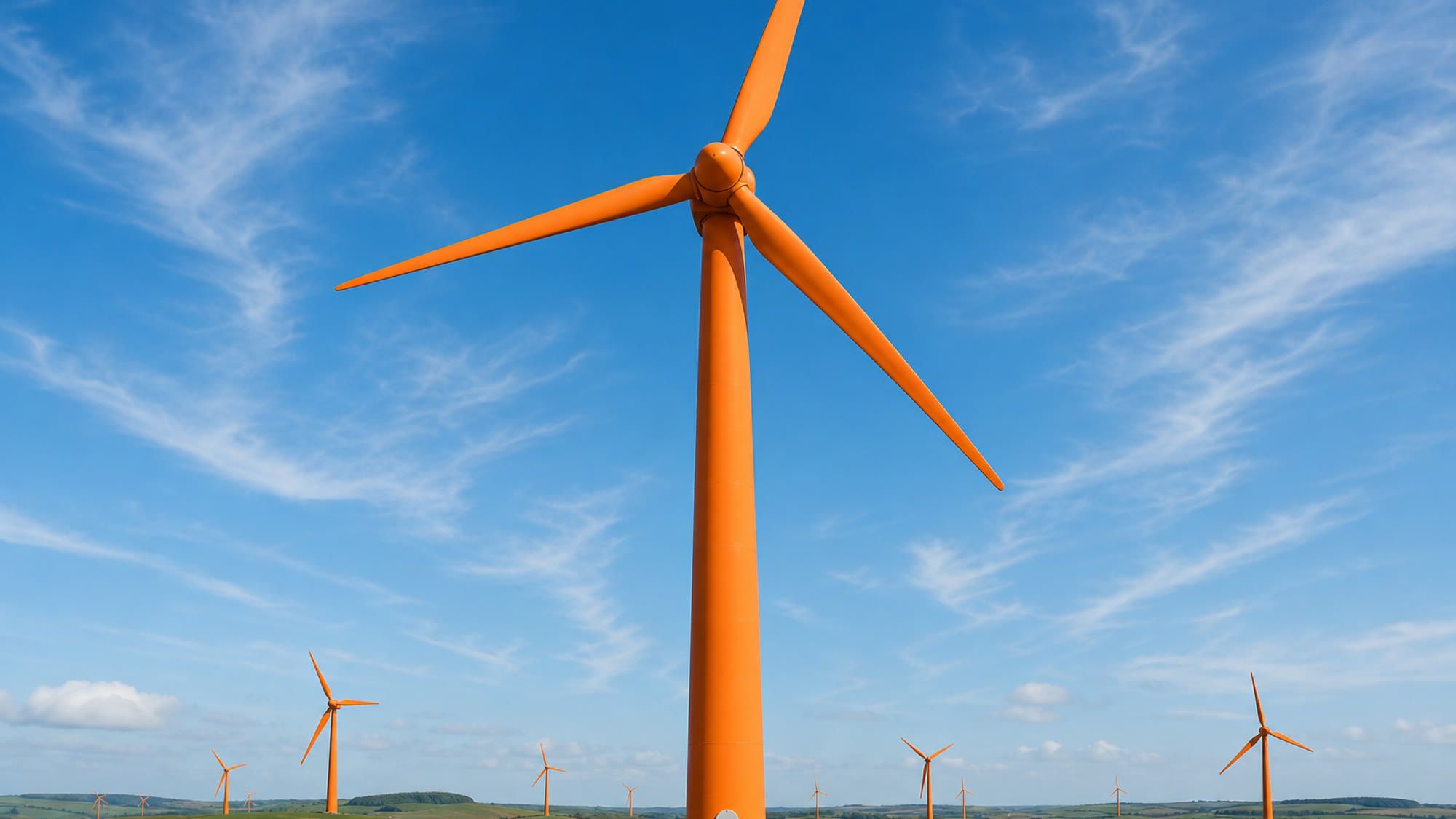
Many homeowners want to know how much electricity a wind turbine produces, both in terms of its actual output and how that translates into powering homes. It is a fair question, as the figures can vary significantly depending on the turbine's size, location, and even the daily weather. This guide provides clear, fact-backed figures specific to the UK, covering everything from small domestic units to vast offshore installations. We will explore how these impressive machines contribute to our energy supply, helping you understand the real-world impact of wind power.
Understanding the output of wind turbines can highlight the potential of renewable energy. At Fuse Energy, we are committed to making clean energy accessible and affordable for your home. Click here to see how easy it is to switch to a smarter energy supplier.
Enter your address to get a quote and see how much you could save
Understanding wind turbine electricity production
When discussing wind turbine output, it is crucial to distinguish between a turbine's theoretical maximum power and its actual, averaged generation. This difference is key to understanding how much electricity a wind turbine truly produces over time.
Rated power versus actual output
A wind turbine's rated power (often expressed in kilowatts (kW) or megawatts (MW)) refers to its maximum electricity generating capacity under ideal wind conditions. This is the headline figure you typically see advertised. However, wind does not blow at its optimal speed constantly. Therefore, a turbine rarely operates at its full rated power for extended periods.
The actual output is the amount of electricity a turbine generates over a specific timeframe, such as a day or a year. This figure is always lower than what its rated power might suggest, as it accounts for varying wind speeds, maintenance, and other operational factors.
The importance of capacity factor
The capacity factor is a crucial metric that bridges the gap between rated power and actual output. It is the ratio of the actual electrical energy produced by a power plant over a period to the maximum possible electrical energy that could have been produced over the same period. Essentially, it tells you how efficiently a turbine is converting its potential into real electricity.
For example, UK onshore wind farms average a capacity factor of around 27%. This means they produce 27% of the electricity they would if they ran at full power 24 hours a day, 365 days a year. Offshore wind farms, benefiting from more consistent and stronger winds, achieve a higher average capacity factor of around 41%.
What is a wind turbine's capacity factor?
The capacity factor is the ratio of the actual electricity a wind turbine produces over a period to its maximum possible output. It accounts for varying wind speeds, maintenance, and other operational factors, providing a realistic measure of a turbine's real-world performance.
Electricity output of different wind turbine types
The amount of electricity a wind turbine produces varies significantly with its size and location. Here is a breakdown of typical outputs for different types of turbines in the UK. For context, the average UK home uses around 2,700 kWh of electricity per year. You can learn more about average electricity usage in UK homes.
Small domestic wind turbines
Small domestic wind turbines are designed for individual homes. They typically have a capacity ranging from 1 kW to 6 kW. While their output is modest compared to commercial turbines, they can significantly offset a household's electricity consumption.
A 6 kW domestic turbine, in a good location with consistent wind, can produce roughly 9,000 kWh per year. This is over three times the annual electricity usage of an average UK home. Understanding how much is 1 kWh of electricity can help put these figures into perspective.
Modern onshore wind turbines
Modern onshore wind turbines are much larger, with capacities typically between 2 MW and 3 MW. These are the turbines commonly seen in wind farms across the UK's landscapes.
With an average UK capacity factor of 27%, a 2 MW onshore turbine produces roughly 4,700 MWh (4,700,000 kWh) of electricity per year. This is enough to power around 1,700 average UK homes (4,700,000 kWh / 2,700 kWh per home).
Modern offshore wind turbines
Offshore wind turbines are the giants of the industry, benefiting from stronger and more consistent winds out at sea. Their capacities typically range from 8 MW to 15 MW, with new models pushing even higher.
Given the higher UK offshore capacity factor of 41%, an 8 MW offshore turbine can generate approximately 28,700 MWh (28,700,000 kWh) annually. This immense output is sufficient to power around 10,600 average UK homes (28,700,000 kWh / 2,700 kWh per home).
Factors influencing wind turbine output
Several factors dictate how much electricity a wind turbine can produce. Understanding these helps to appreciate the complexities of wind energy generation.
Wind speed and consistency
This is the most critical factor. Wind turbines are designed to operate within a specific range of wind speeds. Too little wind, and they will not generate electricity; too much, and they will shut down for safety. Consistent, moderate to strong winds are ideal for maximising output. Offshore locations often excel here, offering steadier wind regimes than many onshore sites.
Turbine size and design
Larger turbines with longer blades can capture more wind energy, leading to higher electricity generation. Modern designs also incorporate advanced aerodynamics and control systems to optimise energy capture across a wider range of wind speeds, improving overall efficiency and capacity factor.
Location and site specifics
The geographical location plays a huge role. Open plains, hilltops, and coastal areas generally offer better wind resources than sheltered valleys or urban environments. Local topography, obstacles like buildings or trees, and even the spacing between turbines in a wind farm can all impact the efficiency of energy capture.
Wind energy's contribution to the UK grid
Wind energy is a cornerstone of the UK's strategy for a cleaner, more secure energy future. Its contribution is growing rapidly, helping to power homes and reduce reliance on fossil fuels.
Powering UK homes: the 'homes powered' metric
The 'homes powered' metric provides a tangible way to understand wind energy's impact. As demonstrated, a single modern offshore turbine can power thousands of homes. When multiplied across hundreds or thousands of turbines in large wind farms, the collective contribution becomes enormous. This metric helps to challenge narratives of energy scarcity, showing how abundant clean energy can be generated.
The role of wind in the UK's energy mix
Wind power has become a dominant force in the UK's electricity generation, frequently supplying a significant proportion of the national demand. It is integral to the country's decarbonisation targets and efforts to achieve energy independence. By building out more wind capacity, the UK is rebuilding its energy system from the ground up, moving towards a future where clean, affordable energy is the norm.
Fuse Energy and the future of wind power
At Fuse Energy, we believe in a future where energy is abundant, clean, and no longer a constraint on ambition. Wind power is a vital component of this vision, demonstrating that we can have more energy without compromising the planet, moving away from fossil fuels and into renewables - part and parcel of the Fuse Energy mission.
Our commitment to abundant, clean energy
We challenge the scarcity consensus by showing that wanting more energy is not only possible but necessary for human progress. Our approach is optimistic but rigorous, backed by data and a commitment to rebuilding the energy system. We see wind turbines, from small domestic units to vast offshore arrays, as key infrastructure in delivering the terawatt-hours of cheap, clean energy the future requires. Fuse's own Balnamoon wind site, an onshore project in Moray, is a tangible example of our commitment to generating renewable energy and feeding it into the grid.
Connecting you to renewable generation
We aim to provide insights into renewable generation through our app, helping you understand where your power comes from and showcasing Fuse's own operational solar and wind projects. This empowers you to make informed choices and participate in the energy revolution.
Managing your home's energy should be simple and transparent. Fuse Energy offers clear pricing, real-time usage data through our app, and 24/7 human customer support to help you take control of your bills. Switching to Fuse Energy takes as little as 3 minutes, allowing you to quickly join the movement towards abundant, clean energy. Click here to switch to Fuse Energy today and discover a smarter way to power your home. You can also find out more about our mission to deliver the abundant, clean energy the future requires by clicking here.
References
- arXiv. AI and the future of pharmaceutical research.
- Desalination Journal. Energy use for membrane seawater desalination - current status and trends.
- eBus Expert. How London's Electric Bus Fleet Reduced Emissions by 50%.
- Hydrogen UK. Splitting the Difference: Reducing the Cost of Electrolytic Hydrogen to Accelerate Deployment (Ending Fossil Fuel Reliance: Green Hydrogen Below $2/kg Powers a Net-Zero Future).
- Sustainability. Towards Sustainable Vertical Farming: A Systematic Review of Energy Return on Investment Efficiency and Optimization Strategies.
- ESIG (Energy Systems Integration Group). How Feasible Is Green Hydrogen? Some Back-of-the-Envelope Calculations.
- MDPI Machines. A Scoping Review of Energy Consumption in Industrial Robotics.
- Ammonia Energy Association. Round-trip Efficiency of Ammonia as a Renewable Energy Transportation Media.
- Royal Society of Chemistry. Future costs of hydrogen: a quantitative review.
- MRS Energy & Sustainability. Atmospheric alchemy: The energy and cost dynamics of direct air carbon capture.
- Hydrogen UK. Splitting the Difference: Reducing the Cost of Electrolytic Hydrogen to Accelerate Deployment (Creating Synthetic Fuels from Sunlight: Renewable Hydrogen Enables Fossil-Free Energy).
- NBER. Energy Prices and Electric Vehicle Adoption.
Disclaimer
For the avoidance of doubt, this article is provided for informational purposes only and is not intended to constitute legal or financial advice. The author and/or Fuse Energy shall not be responsible for any losses arising out of any reliance on the information contained herein.