Electric car range: how far can you go?
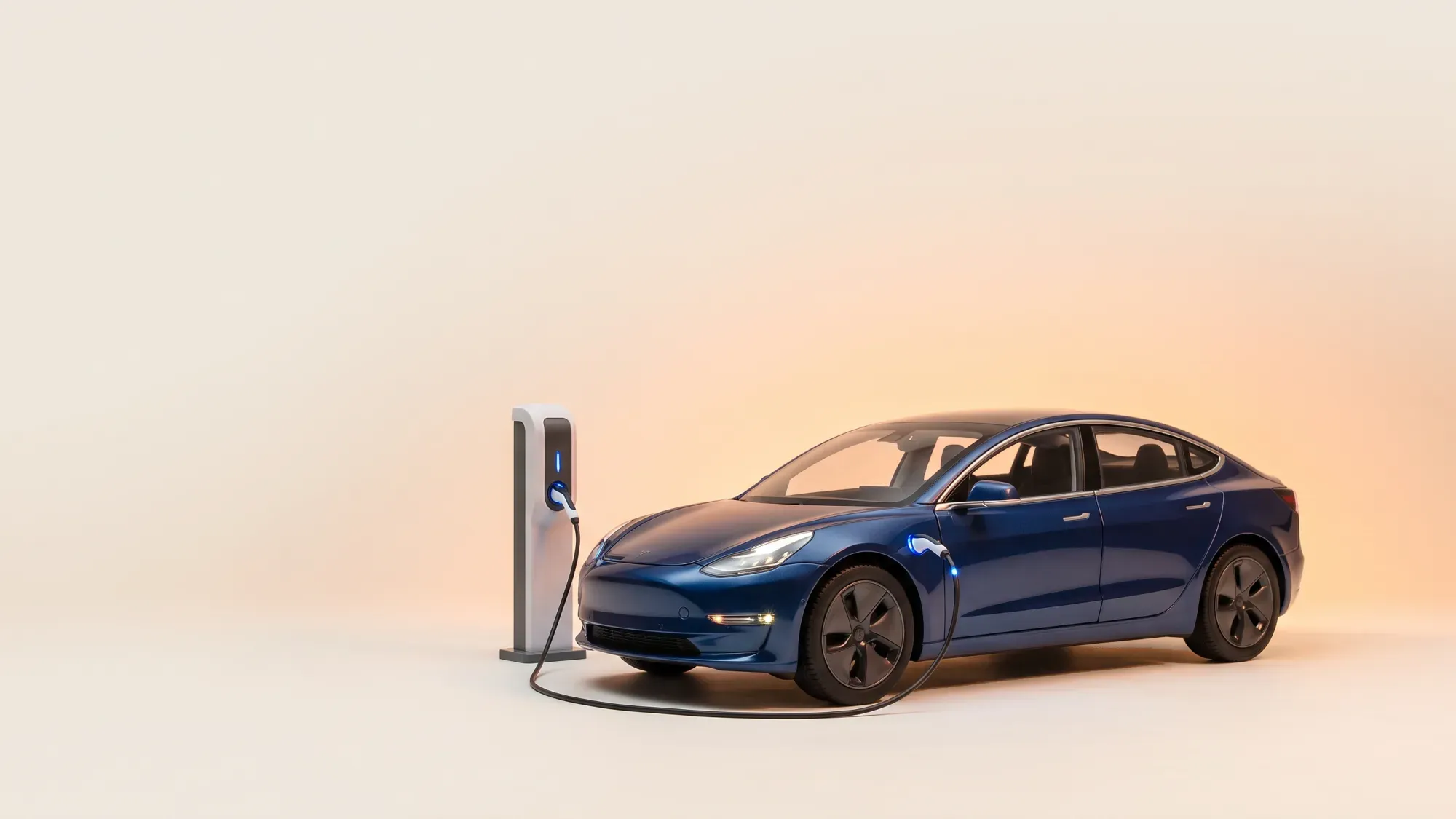
Electric vehicles (EVs) are becoming a common sight on UK roads, but a key question for many drivers is how far they can travel on a single charge. Understanding electric car range is crucial for both daily commutes and longer journeys, helping to alleviate 'range anxiety' and build confidence in EV ownership.
Managing your EV's energy should be straightforward. With Fuse Energy, you get clear pricing, real-time usage data, and 24/7 human customer support. Our app helps you manage your home energy, including smart charging for your EV. Click here to switch to Fuse Energy today.
Enter your address to get a quote and see how much you could save
Understanding electric car range
The distance an electric car can travel on one charge depends on several factors, from the car's battery size to how it is driven. For UK drivers, understanding these influences helps in making informed choices and optimising their EV experience.
WLTP vs real-world figures
Official electric car range figures are typically based on the Worldwide Harmonised Light Vehicle Test Procedure (WLTP). This standardised laboratory test provides a baseline for comparing vehicle efficiency under controlled conditions, including a constant temperature of 23°C and an average speed of 46.5 km/h (around 29 mph) with climate control off.
However, real-world driving conditions in the UK rarely match these ideal laboratory settings. Consequently, real-world EV range is typically 10% to 30% lower than the official WLTP figures. This discrepancy can widen further in cold weather or at sustained motorway speeds, sometimes reaching 30% to 40% below WLTP. For practical planning, especially for longer journeys, it is often more realistic to expect around 60% to 70% of the WLTP figure as a safe working range.
Average EV range in the UK
The average real-world range for new electric cars in the UK is approximately 200-250 miles on a single charge. Many family EVs offer 250-300+ miles WLTP, with long-range variants exceeding 300 miles. For most UK drivers, who travel an average of about 17 miles a day, this range is more than sufficient for daily use, often requiring charging only once or twice a week at home.
Key factors affecting EV range
Several elements combine to determine how far an electric car can go on a charge. Understanding these helps drivers manage their expectations and adapt their habits.
Battery size and efficiency
The primary determinant of an EV's range is its battery capacity, measured in kilowatt-hours (kWh). A larger battery generally means a longer range. However, the vehicle's overall energy efficiency - how effectively it converts stored energy into motion - also plays a significant role. A more efficient EV can travel further on the same size battery.
Driving style and speed
Your driving style has a substantial impact on range. Aggressive acceleration and frequent harsh braking consume more energy than smooth, steady driving. Regenerative braking, which converts kinetic energy back into electricity when decelerating, helps to recover some of this energy.
Speed is another critical factor. Driving at higher speeds, such as 70 mph on a motorway, significantly increases energy consumption due to aerodynamic drag, which rises exponentially with speed. Electric cars are generally more efficient at speeds between 50-60 mph.
Temperature and weather conditions
Cold weather significantly affects EV range. Lithium-ion batteries operate less efficiently in lower temperatures, and the chemical reactions within them slow down. This can lead to a range reduction of around 20% to 35% on a typical cold UK day (around 0-5°C) compared to milder conditions. Below freezing, or on short, stop-start trips, this reduction can be 30% to 50% or more. A major contributor to this loss is the energy drawn directly from the battery for cabin heating and demisting, unlike petrol cars that use waste engine heat.
Auxiliary features and terrain
Using auxiliary features like air conditioning, heating, and even heated seats and steering wheels draws power from the battery, reducing range. While heated seats are generally more energy-efficient than heating the entire cabin, their use still impacts the available driving distance.
Terrain also plays a part; driving uphill requires more energy, while downhill sections can benefit from regenerative braking. Carrying extra weight, such as passengers or luggage, also increases energy consumption.
Battery degradation
Like all rechargeable batteries, EV batteries gradually lose some capacity over time, a process known as degradation. This means an older battery may not hold as much charge as it did when new, leading to a slight decrease in achievable range. However, modern EVs are designed to maintain 80% to 90% of their capacity after 8-10 years. Studies suggest that battery degradation is generally manageable, with some models retaining over 97% of their original capacity after significant mileage.
Maximising your electric car's range
Adopting a few simple habits can significantly extend your electric car's range and make your driving experience more efficient.
Efficient driving techniques
Smooth and anticipatory driving is key. Avoid aggressive acceleration and harsh braking, instead opting for gentle inputs. Utilise regenerative braking effectively, allowing the car to slow down naturally and recover energy. Maintaining a steady speed, particularly on motorways, and driving in 'Eco' mode if available, can also help conserve battery power.
Pre-conditioning your EV
Pre-conditioning involves warming or cooling your car's cabin and battery while it is still plugged into a charger. This draws energy from the grid rather than your car's battery, allowing you to start your journey with a comfortable cabin and an optimally conditioned battery, preserving your range.
Tyre pressure and maintenance
Properly inflated tyres reduce rolling resistance, meaning the car's motor does not have to work as hard. Regularly checking and maintaining correct tyre pressure is a simple yet effective way to improve efficiency. Removing unnecessary weight from the car, such as items from the boot, also reduces the energy required to move the vehicle.
Smart charging habits
Charging your EV between 20% and 80% can help prolong battery life. While occasional full charges are fine, consistently charging to 100% or letting the battery frequently drop to 0% can accelerate degradation. Smart charging solutions can help automate this, ensuring your car is charged optimally and ready when you need it, often taking advantage of off-peak electricity rates. You can learn more about electric car charging at home to make the most of your setup.
Longest range electric cars in the UK
The range of electric cars available in the UK is continually improving, with many models now offering substantial distances on a single charge.
Top performers by range
The longest range electric cars available in the UK can exceed 400 miles on a single charge. Some top models boast official WLTP ranges of up to 542 miles, such as the Mercedes EQS. Other vehicles offering significant range include the Volvo EX60 (up to 503 miles), BMW iX3 (up to 500 miles), and the Tesla Model 3 Long Range (up to 466 miles). These figures represent the maximum available range for specific trims and battery configurations.
Considering your needs vs maximum range
While impressive, the absolute maximum range is not always the most important factor. For most UK drivers, an EV with a real-world range of 200-250 miles is more than adequate for daily driving. When choosing an EV, consider your typical journey lengths, access to charging, and how frequently you undertake long trips. A car with a slightly lower range but better efficiency or a more suitable price point might be a better fit for your lifestyle. Understanding EV tariffs explained can also help you choose the most cost-effective option.
Overcoming range anxiety with smart energy management
Range anxiety, the concern that an EV will run out of battery before reaching a charging point, is often a psychological barrier rather than a practical limitation. With advancements in EV technology and charging infrastructure, it is becoming less of an issue.
The role of home charging
Home charging is a cornerstone of confident EV ownership. Having a dedicated home charger allows you to start each day with a full battery, negating most daily range concerns. Charging overnight, especially during off-peak hours, can also be more cost-effective. Smart home charging solutions integrate your EV's charging with your household energy management, ensuring efficiency and convenience.
Planning longer journeys
For longer trips, careful planning can eliminate range anxiety. Most modern EVs and charging apps can help you plan routes that include charging stops. The UK's public charging infrastructure continues to expand, with 124,738 public EV chargers across 48,298 locations as of September 2026. This growing network makes long-distance EV travel increasingly feasible.
Fuse's approach to empowering EV drivers
Fuse Energy believes in a future with abundant power, turning energy management into an opportunity for capability. The Fuse app's 'Add EV' feature gives drivers control and visibility over their EV's charging, empowering them to manage their vehicle's energy needs seamlessly. By enabling smart, cost-effective home charging, Fuse helps EV owners maximise their available range, challenging the scarcity mindset around EV range. Fuse also offers 24/7 human customer support for home charging queries, providing peace of mind for EV drivers managing their vehicle's range.
The future of EV range
The future of electric car range is bright, with continuous advancements in technology and infrastructure. Battery technology is evolving rapidly, with new developments promising even greater energy density, lighter weight, and faster charging speeds. The shift towards 800-volt electrical systems in newer EVs, for instance, allows for much quicker charging times, adding significant range in minutes. Solid-state batteries, though still some years away, are also expected to offer substantial improvements in range and charging speed.
Beyond battery improvements, the UK's charging infrastructure is set to expand further, with government commitments to significantly increase the number of public chargers. This, combined with smart energy management solutions and grid integration technologies like Vehicle-to-grid (V2G), will make EV ownership even more convenient and efficient.
Conclusion
The question of "how far can an electric car go on one charge?" has an increasingly reassuring answer for UK drivers. While official WLTP figures provide a useful comparison, understanding real-world factors like driving style, speed, and temperature is essential for accurate range planning. With average ranges well-suited for daily commutes and a growing number of long-range models exceeding 400 miles, electric cars are more capable than ever. By adopting efficient driving techniques, utilising smart home charging, and leveraging tools like the Fuse app, drivers can confidently manage their EV's range, making the transition to electric driving a seamless and empowering experience.
Ready to take control of your home energy and EV charging? Fuse Energy offers clear pricing, real-time usage data, and 24/7 human support to help you make the most of your electric vehicle. Switch to Fuse Energy today and experience energy management designed around you. Click here to get started, or find out more about our mission here.
Disclaimer
For the avoidance of doubt, this article is provided for informational purposes only and is not intended to constitute legal or financial advice. The author and/or Fuse Energy shall not be responsible for any losses arising out of any reliance on the information contained herein.