How do night storage heaters work?
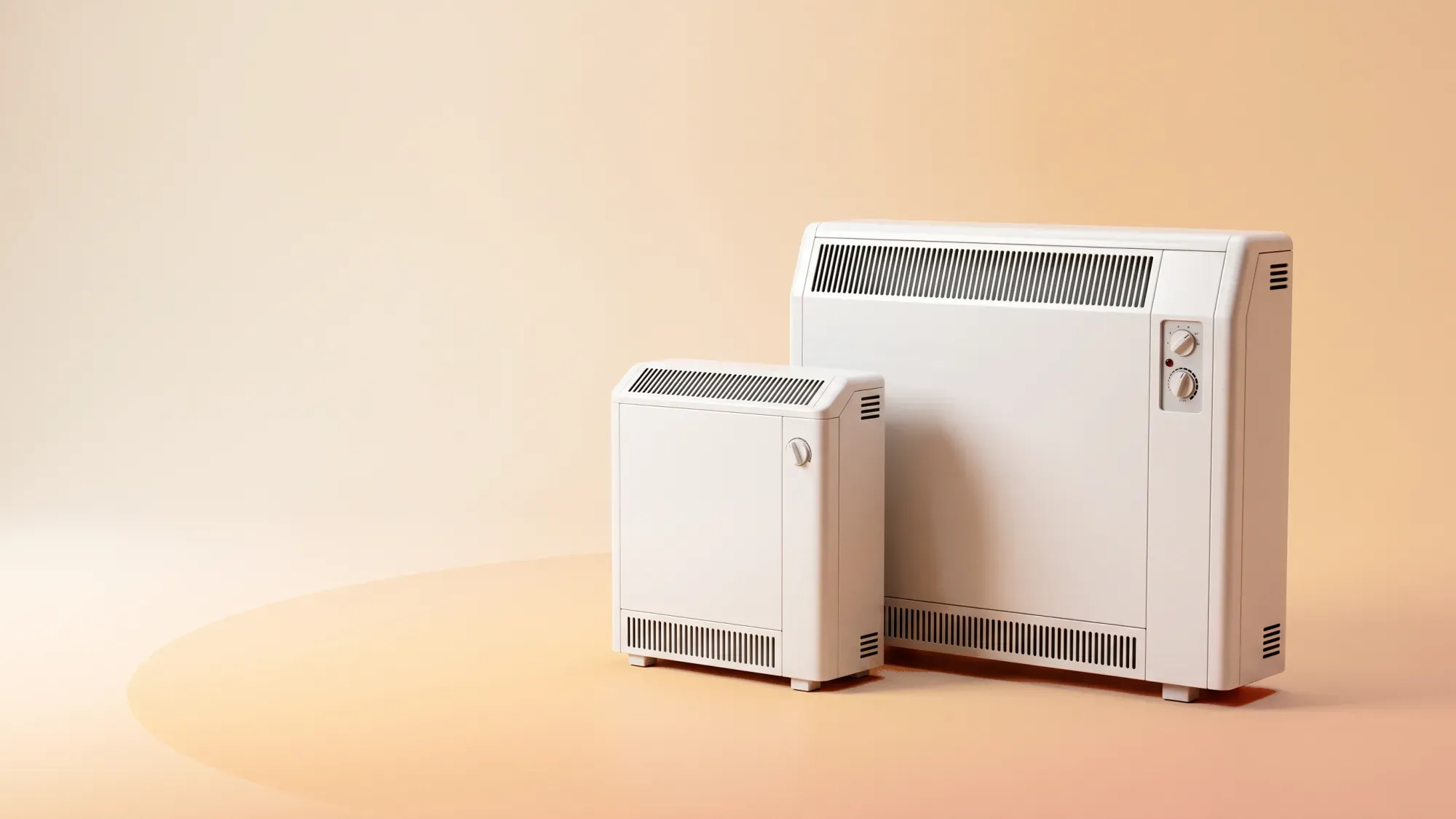
Night storage heaters store thermal energy by heating internal ceramic bricks using electricity, typically during off-peak hours, then release this heat gradually throughout the day. This approach allows you to manage your heating effectively, reduce running costs, and maintain comfortable indoor temperatures.
Fuse Energy helps you make your night storage heaters work smarter. By providing the tools and insights to optimise usage and costs through smart meters and dual-rate tariffs, you can take control of your heating. Click here to switch to Fuse Energy today.
Enter your address to get a quote and see how much you could save
The fundamentals of night storage heaters
What is a night storage heater?
A night storage heater is an electric heating appliance designed to store thermal energy. Instead of heating a room directly when switched on, it uses electricity to warm up dense ceramic bricks or blocks inside its casing. This process primarily occurs during specific off-peak periods when electricity is cheaper. These heaters are a common sight in many UK homes, particularly those without access to a gas supply.
How they store and release heat
The core principle involves charging the heater with electricity, usually overnight, to heat its internal storage core. This stored heat is then released slowly into the room over the following day. Heat is emitted through a combination of convection (warm air circulating) and radiation (heat radiating directly from the heater's surface). The amount of heat stored and released can typically be controlled by the user, allowing for adjustment based on daily needs.
The role of Economy 7 and dual-rate tariffs
The cost-effectiveness of night storage heaters relies heavily on using dual-rate electricity tariffs, such as Economy 7. These tariffs offer cheaper electricity rates for a set number of hours overnight, typically seven, allowing the heater to charge at a lower cost. Without such a tariff, running a night storage heater can be significantly more expensive, as it would be charging at standard, higher daytime rates.
What is an Economy 7 tariff?
An Economy 7 tariff provides cheaper electricity for seven hours overnight, typically between midnight and 7am, in exchange for higher daytime rates. It's designed to benefit households that can shift a significant portion of their electricity consumption, like charging night storage heaters or electric vehicles, to these off-peak hours.
The average UK home uses around 2,500 kWh of electricity per year, according to Ofgem's medium typical domestic consumption value (TDCV) effective from 1 July 2026. However, for homes with multi-register meters, often associated with dual-rate tariffs like Economy 7, the medium TDCV for electricity is 3,400 kWh per year. Dual-rate tariffs like Economy 7 typically offer cheaper electricity for seven hours overnight.
Understanding your night storage heater controls
Operating your night storage heater efficiently hinges on understanding its controls. Most models, whether older or modern, will feature at least two primary controls: input and output.
Input control: charging your heater
The input control, sometimes labelled 'charge' or 'input', determines how much heat the heater stores during its charging period. Setting this too high on a mild day can lead to wasted energy and an overheated room, while setting it too low on a cold day will result in insufficient heat. The ideal setting depends on the expected external temperature and your heat demand for the following day.
Output control: releasing stored heat
The output control, often labelled 'output' or 'boost', regulates how quickly the stored heat is released into the room. A higher output setting will release heat more rapidly, warming the room faster but depleting the stored energy sooner. A lower setting provides a more gradual release, extending the warmth throughout the day. Some modern heaters may also have a 'fan' or 'boost' setting for a quick burst of heat.
Optimising settings for efficiency
Optimising your heater's settings involves a balance between input and output. Start by adjusting the input based on the weather forecast; colder days require a higher input. Then, use the output control to manage the heat release throughout the day. Many users find it efficient to keep the output low in the morning, gradually increasing it as the day progresses and the stored heat naturally begins to wane. Experimentation and monitoring your comfort levels are key to finding the sweet spot for your home.
Maximising efficiency and minimising running costs
Are night storage heaters expensive to run?
Night storage heaters can be expensive to run if not managed correctly, particularly if you're not on a suitable dual-rate electricity tariff. The primary factor influencing running costs is the price of electricity during the charging period. If you're paying standard daytime rates to charge your heater, it will likely be costly. However, when paired with a dual-rate tariff like Economy 7, they can be a cost-effective heating solution. Modern models also offer significant improvements in efficiency.
Tips for efficient usage
To keep running costs down and maximise comfort:
- Ensure you're on a dual-rate tariff: This is the single most important step for cost-effective operation.
- Match input to demand: Adjust the input control daily based on the weather forecast and your anticipated need for heat.
- Manage output wisely: Use the output control to release heat gradually. Avoid opening it fully too early, as this will deplete the stored heat before you need it most.
- Don't block heaters: Ensure furniture or curtains aren't obstructing the heater, as this can reduce its effectiveness.
- Insulate your home: Good insulation (walls, loft, windows) helps retain heat, making your storage heater more efficient.
When to consider upgrading your heater
Older night storage heaters can be less efficient due to poorer insulation and simpler controls. Modern storage heaters, especially high heat retention models, can be up to 27% cheaper to run than older or standard models due to improved insulation and smart controls. Upgrading to a newer model can offer better heat retention, more precise temperature control, and features like fan-assisted output or smart controls, leading to greater comfort and lower running costs. If your current heater is very old, difficult to control, or your bills are consistently high despite careful management, an upgrade might be a worthwhile investment.
Troubleshooting common night storage heater issues
How to tell if your heater is working correctly
A working night storage heater should feel warm to the touch in the morning after its charging period. You should also notice a gradual release of heat into the room throughout the day. If the heater remains cold, or if it's not emitting heat when expected, there might be an issue. Check the power supply and ensure the controls are set correctly.
Addressing lack of heat or excessive heat
If your heater isn't providing enough heat, first check your input setting - it might be too low for the ambient temperature. Also, verify that your electricity tariff is correctly switching to off-peak rates. Conversely, if the room is too hot, your input setting might be too high, or the output control might be open too wide. Adjust these settings gradually over a few days to find the right balance.
Common problems and simple solutions
- No heat at all: Check the circuit breaker or fuse box. Ensure the heater is plugged in and switched on at the wall.
- Heat runs out too early: Increase the input charge for the next night, or reduce the output setting during the day.
- Room too cold in the evening: This often means the stored heat has been released too quickly. Try a lower output setting earlier in the day and consider a small "boost" from the output control if available in the late afternoon.
- High electricity bills: Reconfirm you are on a dual-rate tariff and that your heater is only charging during the cheaper off-peak hours.
Smart energy management with Fuse
Leveraging smart meters for better control
Smart meters are a game-changer for managing night storage heaters. They provide accurate, real-time data on your electricity consumption, allowing you to see exactly how much energy your heater is using and when. This visibility is crucial for ensuring your heaters are charging during the cheaper off-peak hours of your dual-rate tariff. A smart meter helps you understand your usage patterns, empowering you to make informed decisions about your heating.
Monitoring usage and costs with the Fuse app
The Fuse app, combined with smart meter data, offers a transparent way to monitor and adjust your night storage heater settings. You can track your energy consumption and costs directly from your phone, giving you granular control over your heating budget. The app helps you ensure you're maximising heat storage during cheaper off-peak hours and releasing it efficiently during the day, aligning with your comfort needs and financial goals.
Making your night storage heater work smarter
Fuse Energy helps you make your night storage heater work smarter by giving you the tools to optimise its usage. By understanding your energy consumption through the Fuse app and leveraging dual-rate tariffs, you can take tangible control over your heating costs and comfort. Our 24/7 human customer support is also available to help you understand your heater's performance and optimise your energy usage, ensuring you get the most out of your heating system.
Managing your home's energy should be straightforward and efficient. Fuse Energy offers clear pricing, real-time usage data via the app, and 24/7 human customer support to help you make the most of your heating system. Switching is quick and easy, allowing you to take control of your energy bills. Click here to switch to Fuse Energy today and discover a smarter way to power your home.
Disclaimer
For the avoidance of doubt, this article is provided for informational purposes only and is not intended to constitute legal or financial advice. The author and/or Fuse Energy shall not be responsible for any losses arising out of any reliance on the information contained herein.